
The Core Purpose: What Is the Green Wire in Electrical Wiring?
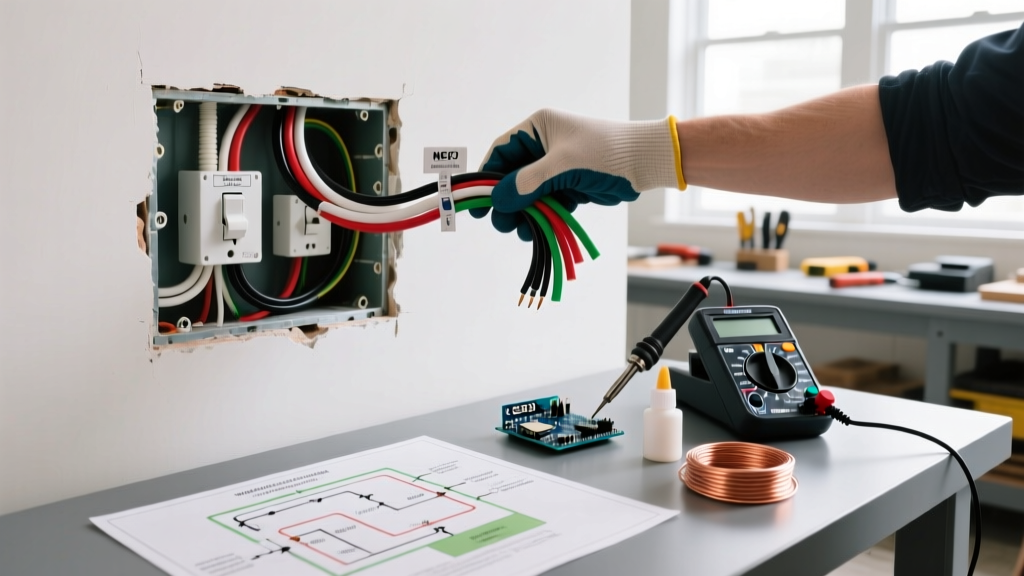
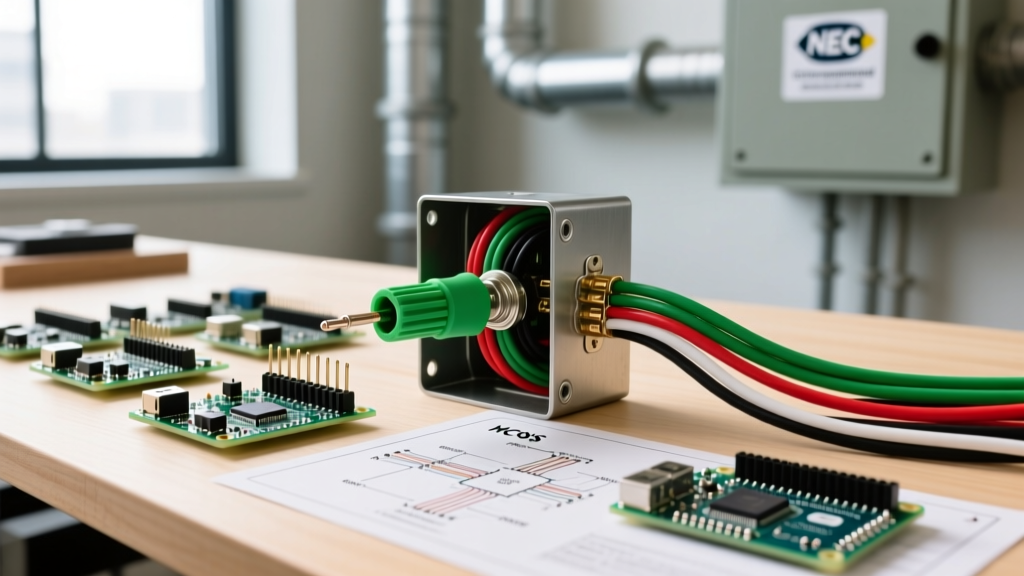
When navigating a commercial electrical pull box or panelboard, the color-coded conductors tell a strict operational story. While black, red, and blue carry the active phase currents, and white or gray serves as the grounded neutral, the green wire holds a distinct, life-saving role. To answer the fundamental question—what is the green wire in electrical wiring?—it is the Equipment Grounding Conductor (EGC).
Unlike the current-carrying conductors, the green EGC does not carry current during normal operation. Its sole purpose is to provide a low-impedance fault current path back to the electrical source (the transformer or main service panel). In the event of a ground fault—such as a frayed phase wire touching a metal equipment chassis—the green wire ensures the fault current is high enough to instantly trip the overcurrent protective device (OCPD), like a circuit breaker, thereby preventing lethal electric shocks and electrical fires.
Commercial vs. Residential: When the Green Wire Disappears
In residential wiring (typically non-metallic Romex cable), you will always see a bare copper or green insulated wire acting as the EGC. However, in commercial electrical installations, the physical green wire is often entirely absent from the conduit. Why? Because the National Electrical Code (NEC) allows the metal raceway itself to serve as the grounding path.
NEC Article 250.118: Raceways as Equipment Grounding Conductors
Under NEC Section 250.118, rigid metal conduit (RMC), intermediate metal conduit (IMC), and electrical metallic tubing (EMT) are recognized as effective EGCs, provided they are installed with listed, tight-fitting couplings and connectors. When a commercial electrician pulls THHN conductors through a run of 3/4-inch EMT, they typically only pull the phase conductors and the neutral. The steel or aluminum conduit acts as the green wire.
When Must You Pull a Green Wire in Commercial Conduit?
Despite the allowance for metal raceways, commercial electricians must still pull a dedicated green (or green/yellow) insulated grounding wire in several specific scenarios:
- Flexible Metal Conduit (FMC): If the run exceeds 6 feet, or if the circuit is rated over 20 amps, a separate EGC must be pulled.
- Healthcare Facilities: NEC Article 517 mandates an insulated copper EGC for all branch circuits serving patient care spaces, regardless of the metal conduit used.
- High-Vibration Equipment: Motors and heavy machinery subject to vibration can loosen EMT set-screw connectors over time, compromising the conduit's grounding continuity. A dedicated green wire provides a fail-safe.
- Non-Metallic Raceways: When using PVC or RTRC conduit in commercial underground or corrosive environments, a green EGC is mandatory.
The Green Wire with a Yellow Stripe: Isolated Grounds (IG)
In advanced commercial environments like data centers, hospital MRI suites, and high-end audio/video production rooms, you will encounter a green wire featuring a yellow stripe. This designates an Isolated Equipment Grounding Conductor.
Standard grounding ties the receptacle's metal yoke directly to the ground busbar via the metal conduit and panel enclosure. This can inadvertently create a 'ground loop,' allowing electromagnetic interference (EMI) and stray harmonic currents to travel through the grounding system, corrupting sensitive microprocessor data. An isolated ground (IG) circuit bypasses the metal conduit and panel enclosure entirely, running an uninterrupted, insulated green-with-yellow-stripe wire directly from the receptacle's green grounding terminal back to a dedicated, isolated ground busbar in the main panel.
Pro-Tip for Commercial Installations: When specifying IG receptacles, such as the Hubbell IG5362 (20A, 125V, orange-face isolated ground), ensure the isolated ground busbar in the panel is bonded to the main grounding electrode system. 'Isolated' means isolated from conduit noise, not isolated from the earth.
NEC Table 250.122: Sizing the Equipment Grounding Conductor
A critical mistake in commercial wiring is sizing the green wire to match the phase conductors. The EGC is sized based on the rating of the Overcurrent Protective Device (OCPD), not the load current. As of the latest NEC cycles leading into 2026, Table 250.122 dictates the minimum sizes. If you have upsized your phase conductors for voltage drop over a long commercial feeder run, you must proportionally upsize the green EGC as well.
| OCPD Rating (Amps) | Minimum Copper EGC (AWG) | Minimum Aluminum EGC (AWG) |
|---|---|---|
| 15A | 14 | 12 |
| 20A | 12 | 10 |
| 30A | 10 | 8 |
| 60A | 10 | 8 |
| 100A | 8 | 6 |
| 200A | 6 | 4 |
| 400A | 3 | 1 |
| 800A | 1/0 | 3/0 |
Step-by-Step: Terminating and Torquing Ground Connections
According to OSHA electrical safety standards and NEC 110.14(D), all commercial terminations must be torqued to the manufacturer's specifications using a calibrated torque tool. A loose green wire at the ground busbar increases impedance, which can prevent a breaker from tripping during a fault.
- Strip the Wire: Use an automated wire stripper (like the Klein 11057) to remove exactly the required length of insulation, ensuring no copper is nicked.
- Prepare the Busbar: If terminating to a painted or powder-coated panelboard enclosure, you must scrape away the finish to ensure bare metal-to-metal contact, or use a listed bonding jumper.
- Insert and Tighten: Insert the green conductor into the ground lug. Use a UL-listed torque screwdriver, such as the Ideal 30-165, set to the manufacturer's specified value.
- Verify Torque: For standard commercial panelboards (e.g., Square D NF or QO series), the typical torque requirement for 12-10 AWG copper grounding conductors is 35 in-lbs, and 45 in-lbs for 8 AWG. Always verify against the specific panel's wiring diagram.
Common Failure Modes and Edge Cases
Even experienced commercial journeyman electricians can encounter grounding failures. Watch out for these specific edge cases:
- The 'Painted Panel' Trap: Modern commercial panelboards often arrive with a baked-on enamel or powder-coated finish. If a grounding lug is bolted directly to the painted surface without a star washer or scraping, the circuit lacks a true ground path.
- EMT Set-Screw Loosening: In commercial spaces with heavy foot traffic or adjacent to elevator shafts, micro-vibrations can loosen EMT set-screw couplings over time. Using compression fittings or applying a torque-seal witness mark on set-screws is a best practice for maintenance tracking.
- Shared Neutrals on Multi-Wire Branch Circuits (MWBC): While not directly related to the green wire, improperly breaking the handle-ties on MWBCs can cause return current to seek alternative paths, sometimes overloading the EGC if a fault occurs simultaneously.
Expert FAQ: Commercial Grounding Nuances
Can I use green electrical tape to re-identify a black wire as a ground?
No. NEC Section 250.119 strictly dictates that equipment grounding conductors must be bare, covered, or insulated. If insulated or covered, the finish must be continuous green, or green with one or more yellow stripes. You cannot re-identify a black or white wire as a ground using tape in commercial or residential wiring.
Does the green wire need to be the same length as the phase wires in a junction box?
Yes, for maintenance and safety reasons. Electrical Contractor Magazine and NEC best practices dictate that all conductors in a junction box, including the EGC, should be cut to the same length and leave at least 6 inches of slack. Cutting the green wire short to 'save copper' makes it incredibly difficult for future technicians to safely make pigtails or add devices.
What is the difference between the green wire and the grounding electrode conductor (GEC)?
The green wire (EGC) connects equipment to the panelboard to clear internal faults. The Grounding Electrode Conductor (GEC), which is often bare copper but can be insulated, connects the main panel's neutral busbar to the earth (ground rods, ufer grounds, or water pipes) to stabilize system voltage and dissipate lightning strikes. They serve entirely different functions in the commercial electrical ecosystem.