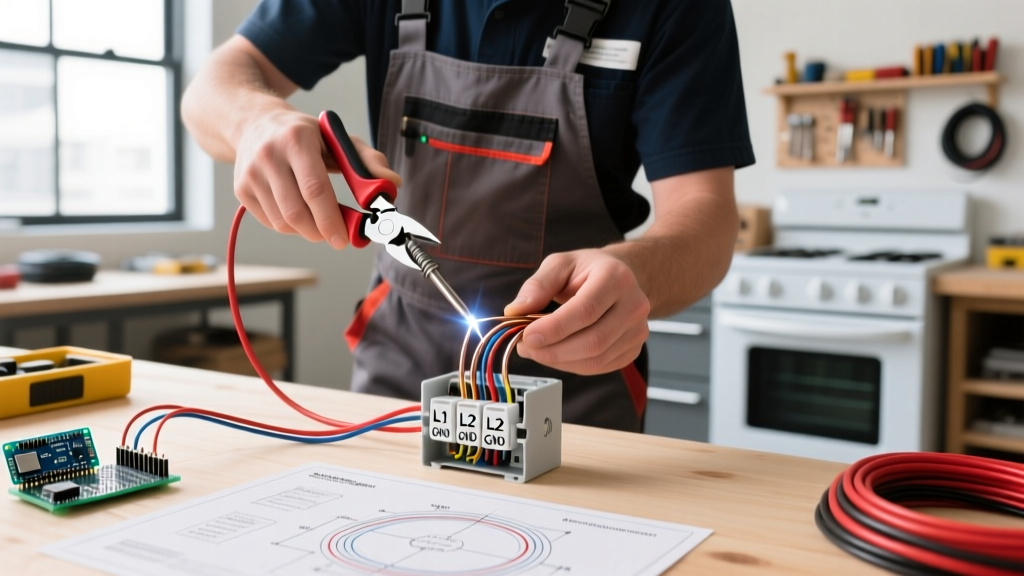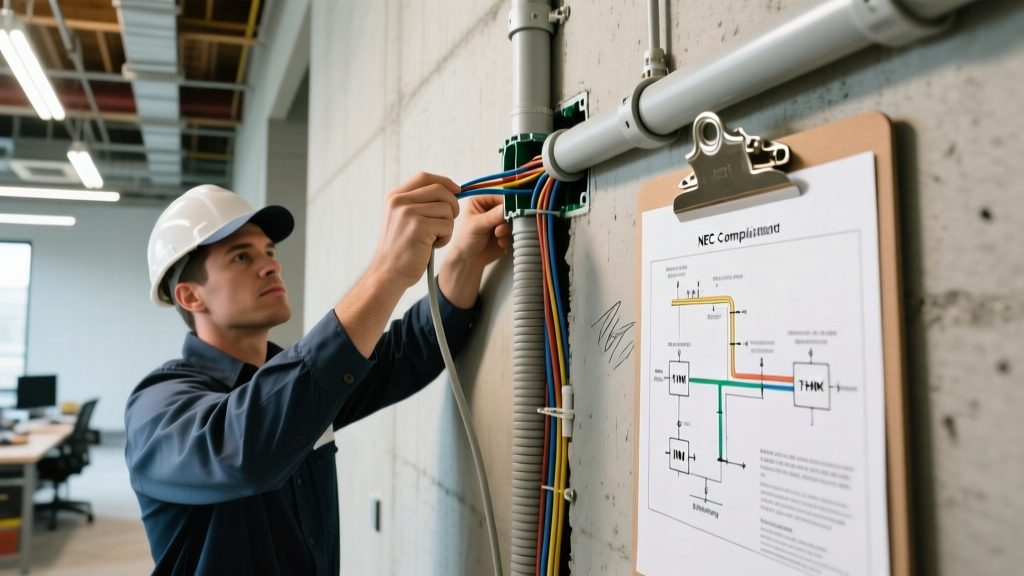

The Blueprint: Understanding Commercial Power Systems
When figuring out how to run electrical wiring in a commercial environment, the first major shift from residential work is the power architecture. While homes rely on single-phase 120V/240V systems, commercial buildings typically utilize three-phase power to handle heavy HVAC loads, industrial machinery, and high-density lighting. In 2026, the standard commercial service is either a 480Y/277V system (used for heavy equipment and fluorescent/LED lighting) or a 208Y/120V system (used for standard receptacles and office equipment).
Running wire in these environments means abandoning non-metallic sheathed cable (Romex) in favor of individual conductors pulled through metal raceways. This guide details the exact materials, code requirements, and physical techniques required to execute a commercial wiring project safely and efficiently.
Phase 1: Selecting the Right Raceway and Conductors
Before you bend a single piece of pipe, you must select the appropriate raceway. The National Electrical Code (NEC) dictates strict rules on raceway fill and environmental protection. According to the National Fire Protection Association (NFPA), NEC Chapter 9, Table 1 limits conduit fill to 40% when pulling three or more conductors to prevent overheating and jamming.
Commercial Conduit Comparison Matrix
| Conduit Type | Acronym | Wall Thickness | Best Application | 2026 Avg Cost (3/4" per 10ft) |
|---|---|---|---|---|
| Electrical Metallic Tubing | EMT | Thin (0.049") | Interior walls, exposed ceilings, dry locations | $18.00 - $22.00 |
| Intermediate Metal Conduit | IMC | Medium (0.083") | Exterior walls, mild physical exposure | $35.00 - $42.00 |
| Rigid Metal Conduit | RMC | Thick (0.113") | Heavy physical damage, direct burial, hazardous areas | $55.00 - $68.00 |
For the conductors themselves, THHN/THWN-2 (Thermoplastic High Heat-resistant Nylon-coated) is the undisputed industry standard. It is rated for 90°C in dry locations and 75°C in wet locations. For a standard 20A commercial receptacle circuit, you will pull four individual 12 AWG wires: three hots (for a multi-wire branch circuit or 3-phase), one neutral, and one green equipment grounding conductor (EGC).
Phase 2: Bending and Mounting EMT Conduit
Learning how to run electrical wiring through a commercial space is largely about mastering conduit bending. EMT is bent using a mechanical or hydraulic bender. For 3/4" to 1" EMT, a manual ratcheting bender like the Greenlee 881 (retailing around $185) is the gold standard for precision offsets and saddles.
Executing a Perfect Offset Bend
When routing conduit over HVAC ductwork or structural beams, you must calculate offsets accurately to avoid misaligned junction boxes.
- Measure the Rise: Determine the height of the obstacle (e.g., a 4-inch duct).
- Select the Multiplier: For a standard 30-degree offset, the multiplier is 2.0. Multiply the rise (4") by 2.0 to get 8".
- Mark the Conduit: Measure from your target end to the center of the obstacle, subtract the shrinkage (1/8" per inch of rise for 30 degrees), and mark your first bend point.
- Make the Second Mark: Measure exactly 8" (your calculated multiplier distance) from the first mark. This is your second bend point.
- Bend: Align the bender's arrow with the first mark and pull to 30 degrees. Flip the bender, align with the second mark, and pull to 30 degrees in the opposite direction.
Phase 3: The Wire Pulling Process
Pulling THHN through 100+ feet of conduit with multiple 90-degree sweeps generates immense friction. If you exceed the maximum pulling tension, you risk stretching the copper, compromising the insulation, or snapping the wire. The Occupational Safety and Health Administration (OSHA) emphasizes that proper ergonomic tools and techniques must be used to prevent severe musculoskeletal injuries during heavy wire pulls.
Step-by-Step Commercial Wire Pull
- Step 1: Feed the Fish Tape. Use a high-tensile steel fish tape (like a 250ft Klein Tools model) or a fiberglass push-pull rod system for shorter runs. Feed it from the destination box back to the source panel.
- Step 2: Prepare the Pull Head. Strip 6 inches of insulation from all conductors. Stagger the cuts by 2 inches each to create a tapered, aerodynamic pull head. Wrap the staggered ends tightly with vinyl electrical tape, ensuring no sharp copper edges protrude.
- Step 3: Apply Lubricant. This is non-negotiable for commercial pulls. Apply a UL-listed wire pulling lubricant like Polywater J directly into the conduit and onto the wire bundle. This reduces friction by up to 60%.
- Step 4: Communicate and Pull. Use two-way radios. The person at the feed end pushes the wires into the conduit while the person at the pull end maintains steady, rhythmic tension on the fish tape. Never use a vehicle or winch to pull standard branch circuit wiring.
Critical Code Warning (NEC 300.17): Raceways must not be filled with conductors to a degree that prevents the ready installation or withdrawal of wires. If a pull requires excessive force, the conduit run is improperly designed. You must install a pull box or junction box to break up the run, as mandated by NEC 300.18.
Phase 4: Terminations, Torque, and Color Coding
Once the wires are pulled, the focus shifts to panel dressing and terminations. Commercial panels require meticulous organization. Wires must be laced and tied using nylon cable ties or Velcro straps, maintaining strict separation between line and load sides.
Strict Commercial Phase Color Coding
Unlike residential wiring where black and red are standard, commercial three-phase systems require specific color coding to prevent catastrophic cross-voltage connections. While the NEC does not strictly mandate specific colors for ungrounded conductors in all scenarios, industry standards and local AHJs (Authorities Having Jurisdiction) universally enforce the following via NEMA guidelines and standard engineering practices:
- 208Y/120V Systems: Phase A (Black), Phase B (Red), Phase C (Blue). Neutral is White or Grey.
- 480Y/277V Systems: Phase A (Brown), Phase B (Orange), Phase C (Yellow). Neutral is White with a distinct Orange tracer, or Grey.
- Equipment Ground: Always Green, Green with a Yellow tracer, or bare copper.
The Torque Requirement
One of the most common failure modes in commercial electrical systems is a loose termination leading to an arc fault or thermal meltdown. Under NEC 110.14(D), all electrical connections must be tightened to a specific torque value using a calibrated instrument. You cannot rely on "hand tight." For standard 12 AWG and 10 AWG commercial terminations, electricians must use a calibrated torque screwdriver, such as the Klein Tools 69000, set precisely to the manufacturer's specified inch-pound rating (typically 20 to 25 in-lbs for small breakers). Additionally, when terminating aluminum conductors in commercial feeders, an anti-oxidant paste like Noalox must be applied to prevent galvanic corrosion.
Frequently Asked Questions (FAQ)
Can I use PVC conduit instead of EMT in a commercial building?
PVC (Schedule 40 or 80) is permitted in commercial buildings, but its use is heavily restricted by the NEC and local fire codes. It is generally limited to direct burial underground, embedded in concrete slabs, or in highly corrosive environments (like chemical plants). For exposed interior walls and ceilings, metal conduit (EMT/IMC) is required to provide physical protection and a reliable equipment grounding path.
How do I handle grounding in long commercial conduit runs?
While metal conduit (EMT/IMC/RMC) and its fittings are recognized by the NEC as an Equipment Grounding Conductor (EGC) under Article 250.118, best practice in commercial settings is to pull a dedicated, insulated green copper ground wire alongside your phase conductors. Over time, vibration and thermal expansion can loosen set-screw fittings, increasing the impedance of the conduit ground path. A dedicated wire ensures a low-impedance fault path back to the panel, guaranteeing the breaker trips instantly during a short circuit.
What is the maximum number of 90-degree bends allowed between pull boxes?
NEC 300.18 strictly limits the total number of bends (including offsets) in any single run of conduit to 360 degrees (four 90-degree bends) between boxes or fittings. This rule exists to ensure that wire insulation is not destroyed by friction during the pulling process. If your layout requires more bends, you must install an accessible pull box to reset the 360-degree count.