
Navigating Residential Wire Selection in 2026
Selecting the correct electrical wiring types for a house is the foundational step in any residential build, remodel, or addition. With copper prices stabilizing in early 2026 and the latest National Electrical Code (NEC) updates enforcing stricter arc-fault and ground-fault protections, understanding the physical and chemical properties of your cable jackets is no longer optional—it is critical for passing inspection and ensuring long-term fire safety.
This material guide bypasses generic advice to provide a deep dive into the exact wire specifications, real-world pricing, failure modes, and termination tools required for modern residential wiring.
Decoding Wire Anatomy and Ampacity Limits
Before purchasing, you must understand the relationship between American Wire Gauge (AWG), insulation temperature ratings, and breaker sizing. A common edge case that fails inspection is using 90°C rated wire but failing to apply the 60°C ampacity derating required for standard residential breakers and receptacles.
- 14 AWG: Rated for 15 Amps. Used exclusively for lighting circuits and low-draw receptacles.
- 12 AWG: Rated for 20 Amps. The standard for kitchen, bathroom, and general-purpose receptacles.
- 10 AWG: Rated for 30 Amps. Required for electric water heaters, dryers, and heavy window AC units.
- 8 AWG: Rated for 40-50 Amps (depending on insulation). Used for electric ranges and sub-panels.
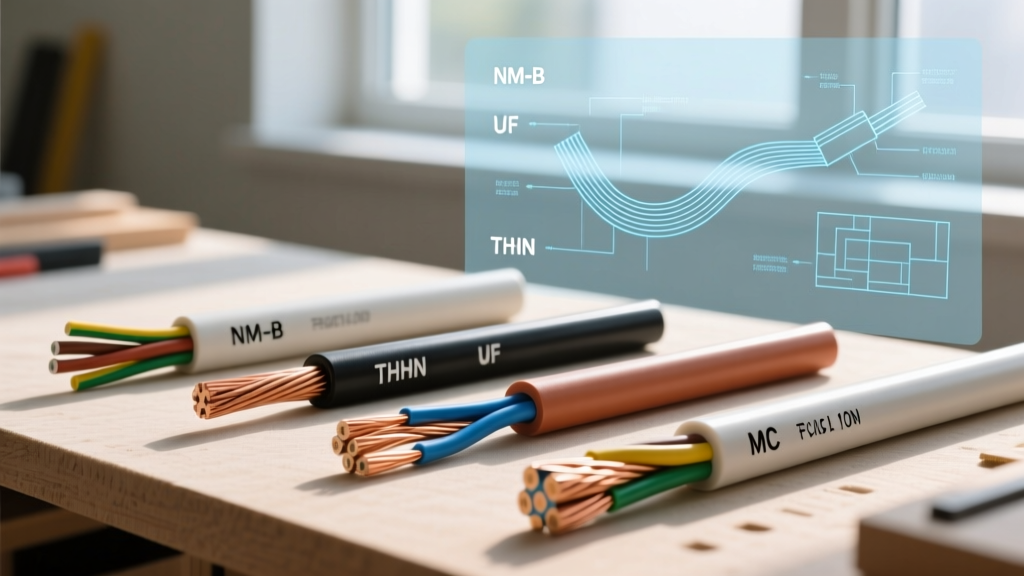
Comparison Matrix: Core Electrical Wiring Types for a House
| Cable Type | Primary Application | Jacket Material | 2026 Avg. Cost (250ft Roll) | NEC Article |
|---|---|---|---|---|
| NM-B (Romex) | Interior dry walls, ceilings | PVC (Non-Metallic) | $145 - $165 (12/2) | Article 334 |
| UF-B | Underground, outdoor wet | Solid PVC | $180 - $210 (12/2) | Article 339 |
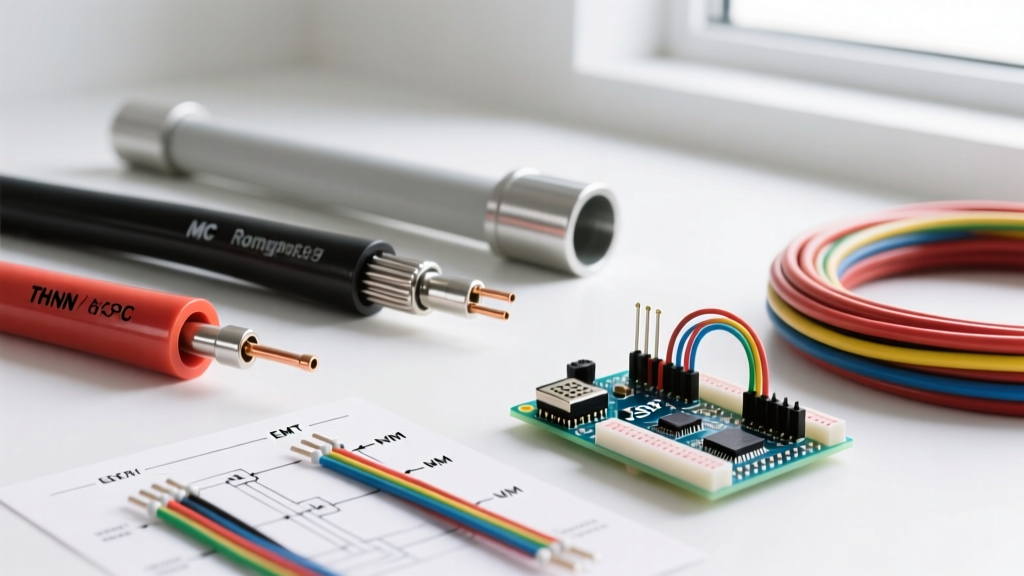
| THHN/THWN-2 | Conduit pulls, panel wiring | Nylon/PVC | $90 - $110 (500ft spool) | Article 310 |
| MC (Metal-Clad) | Exposed walls, commercial | Interlocked Aluminum | $220 - $260 (250ft) | Article 330 |
Deep Dive: Non-Metallic Sheathed Cable (NM-B)
Often referred to by the trademarked brand name Romex®, NM-B is the undisputed workhorse for interior residential wiring. In 2026, the industry standard is Southwire SIMpull®, which features a proprietary lubricated jacket that reduces pulling friction by up to 50%, significantly reducing the risk of jacket tearing when fishing wires through existing walls.
Specific Product Recommendations
- Southwire SIMpull 12/2 with Ground: Ideal for 20A small-appliance circuits. Expect to pay around $155 per 250-foot coil at major retailers.
- Southwire SIMpull 10/3 with Ground: Necessary for 30A appliances like electric dryers. The '3' denotes three current-carrying conductors (Black, Red, White) plus a bare ground.
Common Failure Modes and Edge Cases
The most frequent cause of NM-B failure is mechanical damage during installation. Using the wrong staple or over-driving a standard staple can compress the PVC jacket, forcing the internal paper separator into the THHN insulation and causing dielectric breakdown over time. Always use Gardner Bender HSW-316 wire staples for 14/12 AWG cables, and drive them flush—never hammer them tight against the wood. Additionally, NM-B is strictly prohibited in wet locations or where exposed to direct sunlight, as UV radiation rapidly degrades the PVC jacket.
Underground and Wet Locations: UF-B Cable
Underground Feeder (UF-B) cable replaces the paper filler of NM-B with a solid, extruded PVC core that completely encapsulates the conductors. This makes it impervious to moisture and suitable for direct burial.
Burial Depth and Code Requirements
According to NFPA 70 (National Electrical Code) Article 339, UF-B cable must be buried at specific depths to prevent mechanical damage from shovels or landscaping equipment:
- 24 Inches: Minimum depth for standard residential branch circuits (e.g., 120V outdoor receptacles) without rigid metal conduit.
- 12 Inches: Permitted if the circuit is GFCI protected and limited to 120V/20A, provided a warning ribbon is placed 12 inches above the cable.
- 18 Inches: Required for pool and spa wiring applications.
Pro Tip: Never pull UF-B through conduit that is exposed to sunlight or buried underground where condensation can accumulate. While UF-B is rated for wet locations, the heat buildup inside a sealed, sun-baked conduit can exceed the 90°C thermal limit of the wire, triggering premature insulation failure.
Conduit Pulls and Panel Terminations: THHN/THWN-2
When wiring requires the physical protection of EMT (Electrical Metallic Tubing) or PVC conduit, individual THHN/THWN-2 conductors are used. The dual rating means it is approved for both dry, high-heat environments (THHN - 90°C) and wet locations (THWN-2 - 75°C).
For residential sub-panels and main service entrances, electricians increasingly prefer stranded THHN over solid core for gauges 8 AWG and larger. Stranded wire is vastly superior for pulling through conduit sweeps and bends, reducing the physical strain on the installer and preventing the wire from kinking inside the raceway. A 500-foot spool of Southwire 12 AWG stranded THHN typically retails for about $98 in 2026.
Premium Protection: Metal-Clad (MC) Cable
While traditionally reserved for commercial builds, MC cable is seeing increased adoption in high-end residential builds, barndominiums, and garage workshops where walls may remain exposed. MC features an interlocked aluminum armor that provides superior crush resistance compared to standard AC (Armored Cable) or NM-B.
When terminating MC cable, you must use specific anti-short bushings (often called "redheads") and MC-specific connectors (such as the Arlington Industries MC2500 snap-in connectors) to ensure the sharp edges of the cut aluminum armor do not slice into the THHN insulation and cause a ground fault.
Essential Tools for Stripping and Terminating
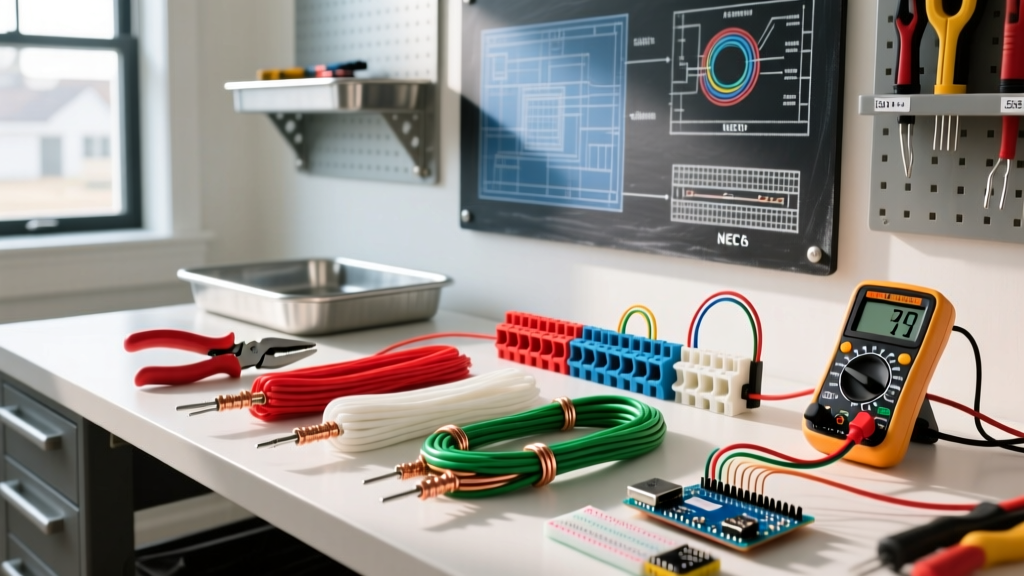
The right wire type is useless if the termination is flawed. Nicked conductors create hot spots that can melt receptacles. Upgrade your toolkit with these industry-standard models:
- Klein Tools 11063W Katapult® Wire Stripper: ($38) This tool strips 14 and 12 AWG solid wire with a single squeeze without scoring the copper. It is vastly superior to traditional hinge-style strippers for high-volume rough-ins.
- Ideal Industries Reflex Wire Strippers: ($45) Features a self-adjusting mechanism that handles both solid and stranded wire from 10 to 24 AWG, making it perfect for panel terminations.
- Wiha 32090 Insulated Torque Screwdriver: ($65) The 2026 NEC and UL standards heavily emphasize proper termination torque. Over-tightening lug screws on breakers can strip the aluminum bus bar or crush stranded wire, leading to arcing.
2026 NEC Code Updates Impacting Wire Selection
As local jurisdictions continue to adopt the latest NEC cycles, electricians must be aware of expanded AFCI (Arc-Fault Circuit Interrupter) and GFCI requirements. Nearly all 120V, 15A and 20A residential circuits now require combination-type AFCI protection. This means that when selecting your electrical wiring types for a house, you must ensure your cable routing avoids parallel runs with data or HVAC control cables to prevent the high-frequency noise that causes nuisance AFCI tripping.
For authoritative guidance on the latest adoption maps and code interpretations, consult the International Association of Electrical Inspectors (IAEI). Furthermore, always verify the specific ampacity tables provided by manufacturers like Southwire to ensure your voltage drop calculations remain under the recommended 3% threshold for branch circuits on long runs exceeding 80 feet.