
The High-Stakes World of Pool Electrical Installations
When it comes to residential and commercial electrical work, few environments are as unforgiving as the area immediately surrounding a swimming pool. Water and electricity are a lethal combination, which is why the National Electrical Code (NEC) dedicates an entire section—Article 680—to swimming pools, fountains, and similar installations. If you are planning a new pool build, a major renovation, or upgrading an existing pool house, understanding the precise materials and tools required is not just a matter of best practices; it is a matter of life and death.
This comprehensive material and tool guide for electrical wiring for pool setups cuts through the guesswork. We will detail the exact wire types, conduit specifications, GFCI protection devices, and specialized hand tools you need to execute a code-compliant, safe, and long-lasting installation in 2026 and beyond.
Critical Wire Types and Gauges for Pool Circuits
The NEC strictly prohibits the use of aluminum wire for pool-related branch circuits and feeders due to its higher susceptibility to corrosion and thermal expansion in wet, chemical-heavy environments. You must use copper conductors. Furthermore, the insulation rating must be rated for wet locations.
THHN/THWN-2 vs. UF-B Cable
For the vast majority of pool wiring runs, individual THHN/THWN-2 copper conductors pulled through a conduit are the industry standard. The dual rating ensures the wire can handle both the heat of the conduit and the moisture of underground or wet-location runs. While Underground Feeder (UF-B) cable is permitted for direct burial in some specific residential applications, it is highly discouraged for primary pool equipment feeds due to the difficulty of replacing it if it fails and its vulnerability to physical damage during landscaping.
| Equipment Type | Typical Amperage | Min. Wire Gauge (Copper) | Max Run Distance (Before 3% Voltage Drop) |
|---|---|---|---|
| Standard Pool Pump (1.5 - 2 HP) | 15A - 20A | #12 AWG | 55 feet |
| Heat Pump / Large Pump (3 - 5 HP) | 30A - 40A | #8 AWG | 95 feet |
| Pool House Subpanel Feed | 50A - 60A | #6 AWG | 110 feet |
| Pool Lighting Circuit (LED) | 15A | #12 AWG | 55 feet |
Pro Tip: Always calculate voltage drop based on the actual one-way length of the wire run. If your pool pump is 120 feet from the main panel, you must upsize your #12 AWG wire to #10 or even #8 AWG to prevent motor burnout caused by undervoltage.
Conduit and Fittings: Keeping Moisture Out
Because individual THHN/THWN-2 wires require a raceway, selecting the right conduit is paramount. PVC is the material of choice because it will not corrode when exposed to chlorine splash, salt water, or acidic soil.
- Schedule 40 PVC: Approved for underground burial and above-ground use where it is not subject to physical damage. Use 1-inch or 1-1/4-inch minimum to allow for future wire pulls and heat dissipation.
- Schedule 80 PVC: Required by the NEC for any above-ground conduit runs that are exposed to physical damage (e.g., within 8 feet of the ground near walkways, or where landscaping equipment might strike it).
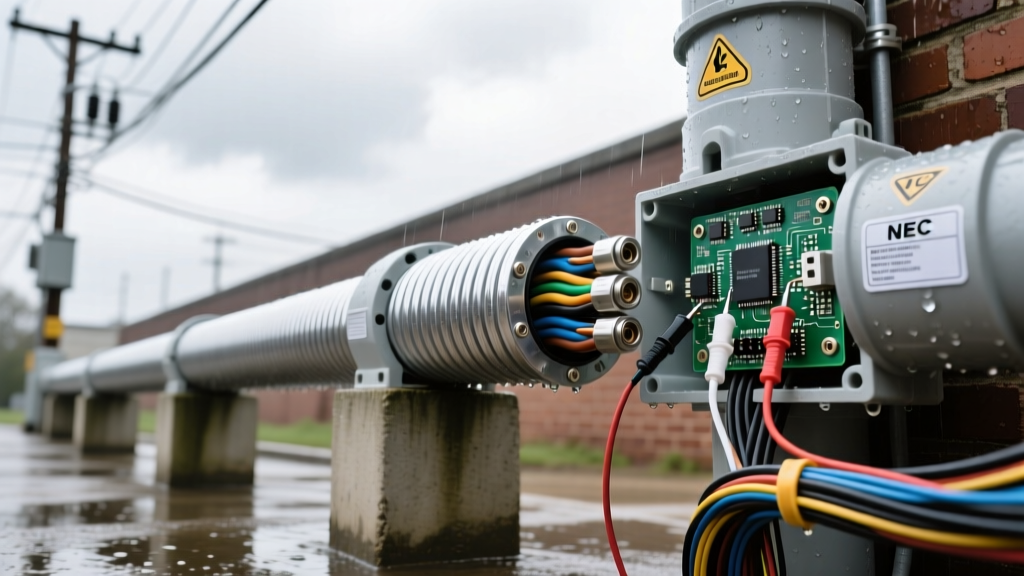
- Liquidtight Flexible Metal Conduit (LFMC): Essential for the final connection to the pool pump motor. Motors vibrate, and rigid PVC will eventually crack. LFMC provides a watertight, flexible seal. Ensure you use plastic-coated LFMC, as bare metal will rust rapidly in a pool environment.
GFCI Protection and Weatherproof Enclosures
Ground Fault Circuit Interrupter (GFCI) protection is non-negotiable for all pool-related receptacles, lighting, and specific equipment. The 2023 and upcoming 2026 NEC cycles have expanded GFCI requirements to cover virtually all 120V and 240V outlets within 20 feet of the pool's inside wall.
Breaker Selection
Do not rely on GFCI receptacles for primary pool equipment protection; use GFCI circuit breakers in the main panel or subpanel. For a 240V pool pump, you need a 2-pole GFCI breaker. Reliable models include the Siemens Q250GF (50-Amp) or the Eaton CHFGF230 (30-Amp). These breakers feature a built-in pigtail that must be connected directly to the panel's neutral bar, not the equipment ground bar.
While-in-Use Covers
Any receptacle installed near the pool must be housed in a weatherproof enclosure that remains sealed even when a cord is plugged in. The TayMac MX8500 Extra-Duty While-in-Use cover is a top-tier choice, offering deep internal clearance for bulky GFCI receptacles and a polycarbonate shield that resists UV degradation and chlorine exposure.
Bonding vs. Grounding: The Most Misunderstood Step
Many DIYers and even some general contractors confuse grounding and bonding. According to the NFPA 70 (National Electrical Code), grounding provides a path for fault current to trip the breaker. Bonding, however, connects all conductive metal parts together to eliminate voltage gradients (differences in electrical potential) between objects a person might touch simultaneously.
NEC Article 680.26 Equipotential Bonding Grid: All metallic parts of the pool structure, underwater lighting shells, metal fittings within 5 feet of the pool, and electrical equipment associated with the pool water circulation system must be bonded together using a solid copper conductor not smaller than #8 AWG.
Materials for the Bonding Grid
- #8 AWG Solid Bare Copper Wire: This is the universal standard for the bonding grid. It must be solid, not stranded, and must be buried a minimum of 4 to 6 inches deep in the soil around the pool perimeter.
- Split Bolt Connectors: Use bronze or copper split bolts (e.g., Burndy SB series) to tap into the bonding grid without cutting the continuous #8 wire. Tape these connections with moisture-sealing mastic tape.
- Direct Burial Lugs: For connecting the bonding wire to the pool pump motor or heater, use potting-compound-filled lugs or brass direct-burial lugs to prevent galvanic corrosion.
Essential Tools for the Pool Wiring Job
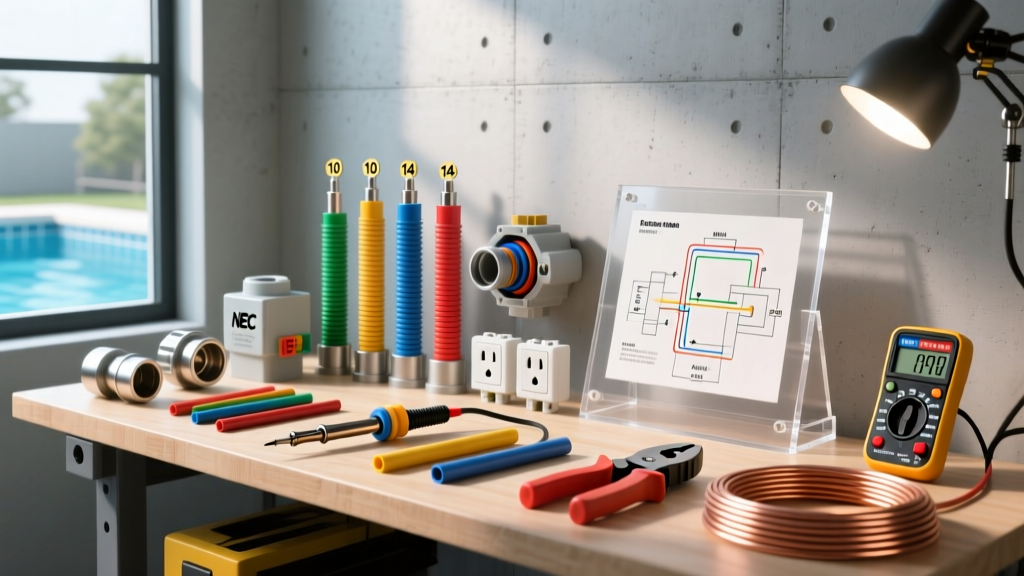
Standard electrical tools will get you started, but pool installations require specialized equipment to ensure watertight seals and precise terminations.
- Torque Screwdriver (e.g., CDI 401SM): Modern GFCI breakers and pool equipment lugs specify exact torque settings (often between 20 and 45 in-lbs). Under-torqued connections cause arcing and fires; over-torqued connections strip threads and crack lug housings. A calibrated torque screwdriver is mandatory for 2026 code compliance.
- Wire Strippers for Solid Copper (Klein Tools 11063W): When stripping #8 AWG solid copper bonding wire, standard pliers can nick the conductor, creating a weak point that will snap when pulled through soil. Precision wire strippers ensure a clean cut.
- True RMS Multimeter with Non-Contact Voltage (Fluke 117): Essential for verifying zero energy states before working on existing pool panels and for troubleshooting stray voltage issues in the water.
- PVC Solvent Weld and Primer (Oatey Medium Clear): Pool conduits must be watertight. Use a heavy-duty primer and solvent cement, ensuring you apply a bead of silicone sealant around the conduit hubs where they enter junction boxes to prevent water intrusion.
- Fish Tapes and Conduit Lubricant (Polywater J): Pulling three or four #8 AWG wires through 100 feet of 1-inch PVC with multiple sweeps requires high-quality lubricant to prevent insulation tearing.
2026 Material Cost Breakdown
Budgeting for a pool electrical run requires factoring in the volatile copper market. Below is an estimated material cost breakdown for a standard 240V, 50-Amp pool house subpanel feed and pump circuit located 80 feet from the main home panel.
| Material Category | Specific Item | Estimated 2026 Cost |
|---|---|---|
| Conductors | 250 ft of #6 AWG THHN/THWN-2 (Black, Red, White, Green) | $380 - $450 |
| Conduit & Fittings | 100 ft 1-1/4' Sch 40 PVC, sweeps, and LB bodies | $120 - $160 |
| Protection | 50A 2-Pole GFCI Breaker & 100A Outdoor Subpanel | $280 - $350 |
| Bonding Grid | 150 ft #8 AWG Solid Bare Copper + Bronze Split Bolts | $110 - $140 |
| Enclosures | 2x Extra-Duty While-in-Use Covers & Weatherproof Boxes | $60 - $85 |
| Total Materials | Excludes labor, trenching, and permits | $950 - $1,185 |
Safety, Permits, and Final Inspections
According to the Electrical Safety Foundation International (ESFI), water and electricity hazards remain a leading cause of residential electrocution. Because of this, no pool wiring project should bypass local municipal permitting.
Before backfilling any trenches or pouring concrete decks, you must call for an underground rough-in inspection. The inspector will verify your conduit depth (typically 18 inches for PVC), your warning tape placement (12 inches above the conduit), and your equipotential bonding grid layout. Once the equipment is set and terminated, a final inspection will test the GFCI trip times and verify the torque marks on your breaker lugs.
Final Thoughts on Pool Wiring
Electrical wiring for pool environments leaves zero margin for error. By investing in premium THHN/THWN-2 copper wire, Schedule 80 PVC in vulnerable areas, and precision torque tools, you ensure that your backyard oasis remains a safe, enjoyable retreat for decades. Always consult with a licensed master electrician to review your load calculations and final terminations, ensuring your project meets both the letter and the spirit of the National Electrical Code.