
Navigating the Patchwork of Long Island Electrical Codes
When planning a residential or commercial project, understanding the specific requirements for electrical wiring Long Island municipalities enforce is critical for passing inspections and ensuring safety. Long Island is not a monolith; it is a complex regulatory environment where the New York State Uniform Fire Prevention and Building Code intersects with county-level amendments, village-specific building departments, and stringent utility mandates from PSEG Long Island.
As of 2026, New York State enforces the 2020 National Electrical Code (NEC) with specific state-level amendments outlined in Part 1220 of Title 19 NYCRR. However, the real challenge for electricians and DIYers lies in the local enforcement nuances between Nassau County, Suffolk County, and the dozens of incorporated villages that maintain their own inspection agencies.
The Foundation: NYS Electrical Code vs. the NEC
New York State adopts the NEC on a delayed cycle and layers state-specific amendments on top of it. For any electrical wiring Long Island project, you must adhere to the NYS amendments, which often exceed baseline NEC requirements in the name of fire safety and energy efficiency.
Key NYS Amendments Impacting Long Island Projects
- AFCI Expansion: NYS requires Combination-Type Arc-Fault Circuit Interrupters (AFCIs) for virtually all 120-volt, 15-amp and 20-amp branch circuits in dwelling units. This includes kitchens and laundry rooms, which the base NEC historically treated with different GFCI/AFCI rules.
- Smoke and CO Detector Hardwiring: Any renovation requiring a permit that touches the electrical system in a specific area often triggers a mandate to upgrade the entire dwelling's smoke and carbon monoxide detection to hardwired, interconnected systems with battery backups.
- Outdoor Disconnects: Following the 2020 NEC adoption, new one- and two-family dwellings require an exterior emergency disconnect. This is heavily enforced by local Long Island inspectors to aid first responders.
County vs. Village: The Permitting Matrix
One of the most common mistakes out-of-town contractors make when handling electrical wiring Long Island projects is assuming a single county permit covers the entire jurisdiction. Long Island features 64 incorporated villages, many of which have entirely independent building and electrical inspection departments.
| Jurisdiction | Governing Body | Typical Permit Fee (200A Upgrade) | Inspection Lead Time |
|---|---|---|---|
| Nassau County (Unincorporated) | Dept. of Consumer Affairs | $150 - $250 | 3-5 Business Days |
| Suffolk County (Unincorporated) | Dept. of Labor, Licensing & Consumer Affairs | $100 - $200 | 5-7 Business Days |
| Incorporated Villages (e.g., Garden City, Rockville Centre) | Village Building Dept. | $250 - $500+ | 1-3 Business Days (Local) |
Always verify the exact municipal boundaries before pulling wire. A house on one side of a street may fall under Suffolk County jurisdiction, while the house directly across the street falls under a village building department with its own specific fee schedule and approved materials list. For official county-level licensing and permitting details, you can consult the Suffolk County Department of Labor, Licensing and Consumer Affairs or the equivalent Nassau County office.
PSEG Long Island: Utility Interconnection & Service Standards
Passing the municipal electrical inspection is only half the battle. To get the meter set and power turned on, your installation must meet the exacting standards of PSEG Long Island. The utility maintains strict specifications for service entrances, metering equipment, and underground laterals.
Service Entrance and Meter Socket Specifications
For new construction or heavy-up upgrades (moving from 100A to 200A), PSEG Long Island requires specific meter socket configurations.
- Amperage Rating: 200-amp continuous rated, ringless or ring-type depending on the specific municipality's utility agreement, though ring-type (e.g., Milbank 3328 series or General Electric T208R) is the standard for most residential overhead and underground services.
- Jaw Configuration: Must feature bypass jaws. PSEG requires a test bypass block or lever-operated bypass for all 200A residential services to allow meter swaps without dropping the home's load.
- Service Mast: For overhead drops, the service mast must be minimum 2-inch rigid galvanized steel or intermediate metal conduit (IMC). PVC masts are generally prohibited for overhead service drops on Long Island due to high wind and ice loading concerns.
Underground Service Laterals
If you are trenching for an underground service lateral from the PSEG transformer to the home, the utility mandates minimum 3-inch Schedule 40 PVC conduit for standard 200A residential services, sweeping with long-radius bends (minimum 36-inch radius). The customer is responsible for trenching to a depth of 30 to 36 inches, backfilling with screened sand, and installing a continuous polyethylene pull tape with a minimum tensile strength of 2,500 lbs.
"Always contact PSEG Long Island's service planning department at least 60 days before your anticipated power-on date. Transformer upgrades or new pad-mounted transformer installations in dense Long Island neighborhoods can face significant supply chain and scheduling delays."
Critical Code Upgrades for Older Long Island Homes
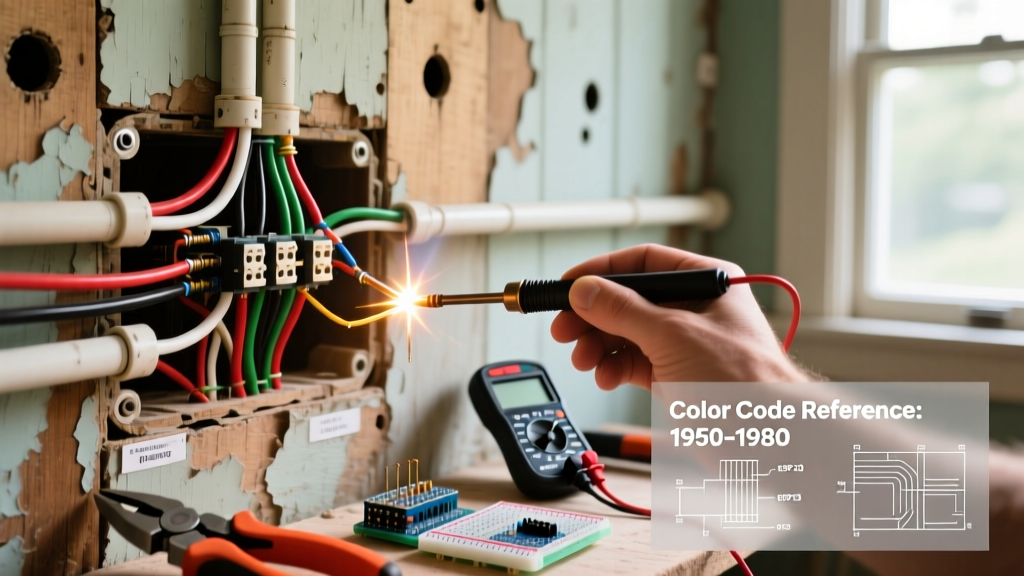
A massive portion of Long Island's housing stock was built in the post-WWII boom, particularly the famous Levittown developments in Nassau County and the sprawling ranches of Suffolk County. When performing electrical wiring Long Island renovations on these mid-century homes, contractors frequently encounter legacy systems that violate modern codes and pose severe fire hazards.
Identifying and Remediating Legacy Wiring
- Cloth-Covered NM Cable: Homes built between 1930 and 1950 often feature cloth-insulated wiring. The cloth becomes brittle, exposing ungrounded conductors. NYS code requires complete remediation; you cannot simply splice new THHN into degraded cloth wiring inside a junction box.
- 60-Ampere Services: Original Levittown homes were built with 60A fuse panels. Upgrading to a modern 200A circuit breaker panel (like a Square D Homeline or QO series) requires pulling new 2/0 AWG copper or 4/0 AWG aluminum service entrance conductors from the weatherhead to the panel.
- Ungrounded Receptacles: Two-prong ungrounded outlets are common. While the NEC allows replacing them with GFCI-protected receptacles marked "No Equipment Ground," many Long Island home inspectors and local village codes mandate pulling new 12/2 NM-B with a ground wire during any substantial gut-rehab.
2026 Cost Expectations for Long Island Electrical Work
The cost of electrical work on Long Island is notably higher than the national average due to prevailing wage requirements in certain commercial sectors, high local insurance rates, and the cost of living. Below is a realistic breakdown of what homeowners and general contractors should budget for common code-compliant electrical projects in the Nassau/Suffolk market.
| Project Scope | Materials & Wire Specs | Estimated Cost Range (2026) |
|---|---|---|
| 200A Heavy-Up (Panel & Service) | 42-circuit panel, 2/0 Cu SER cable, new ground rods | $4,200 - $6,500 |
| Whole-House AFCI/GFCI Retrofit | 20-30 Combination AFCI breakers, GFCI receptacles | $1,800 - $3,200 |
| EV Charger (Level 2) Installation | 60A breaker, 6/3 NM-B or THHN in 1" EMT, 50A receptacle | $900 - $2,100 |
| Standby Generator Interlock & Inlet | 30A/50A inlet box, mechanical interlock kit, 10/3 or 6/3 SOOW | $650 - $1,400 |
Final Thoughts on Compliance and Safety
Executing a successful project requires more than just knowing how to strip wire and terminate a lug. Mastering the codes governing electrical wiring Long Island jurisdictions enforce means understanding the interplay between the NYS Uniform Code, local village amendments, and PSEG Long Island's utility requirements. Always verify the latest amendments via the NYS Department of State Building Codes division before finalizing your material list, and ensure your PSEG service entrance equipment matches the utility's current approved manufacturer list. Cutting corners on code compliance in this highly regulated market will inevitably result in failed inspections, delayed power-ons, and costly rework.