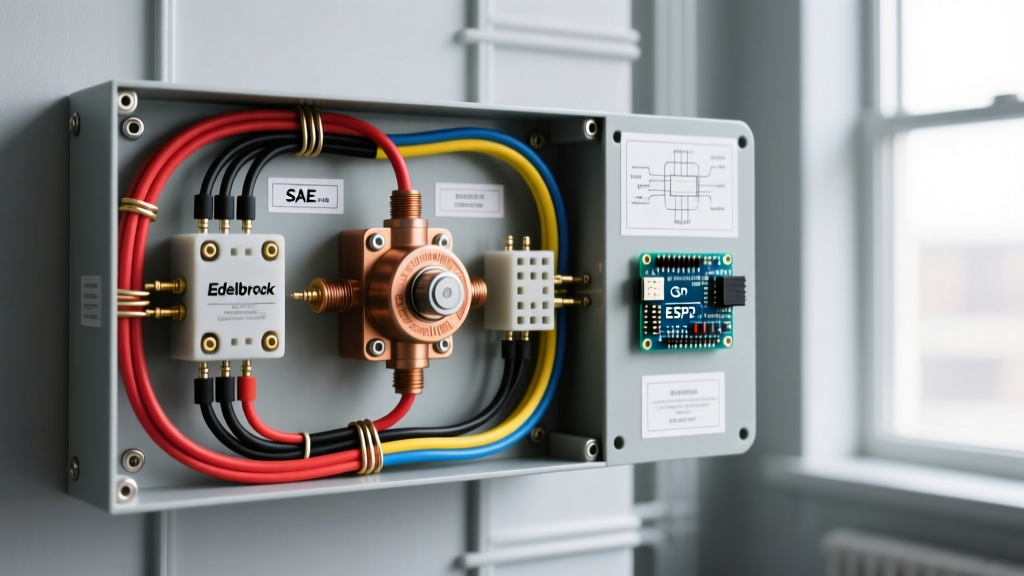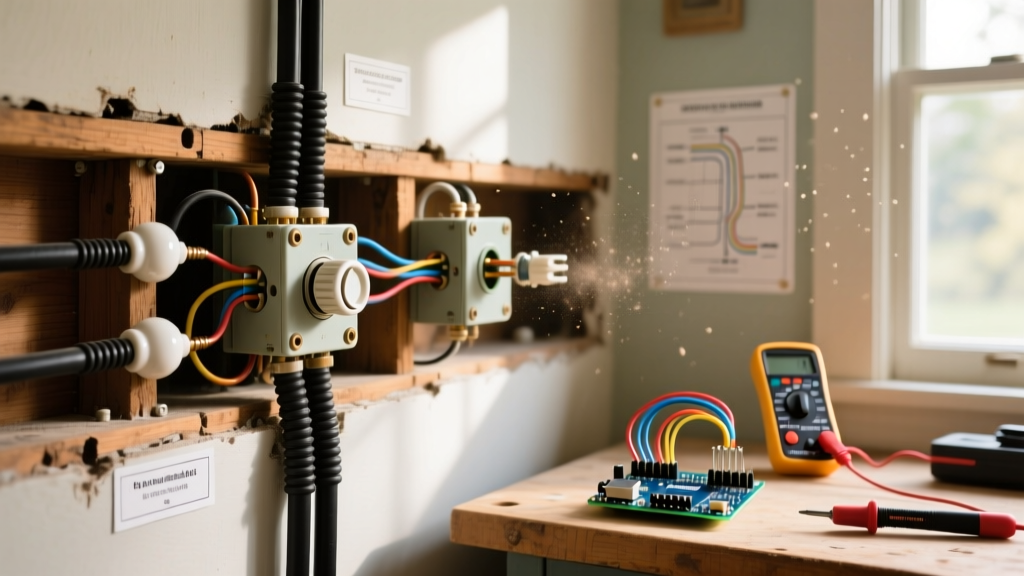

Understanding Electrical Knob and Tube Wiring in Modern Homes
If you own a home built between the 1880s and the late 1940s, there is a high probability that electrical knob and tube wiring is still hiding behind your plaster walls. Originally designed for the low power demands of early incandescent lighting and a few radios, this legacy wiring system is fundamentally incompatible with the 2026 modern home, which routinely draws heavy loads from HVAC systems, EV chargers, and high-wattage kitchen appliances.
As a homeowner or DIY enthusiast, understanding the anatomy, risks, and abatement strategies for K&T wiring is critical. While the National Electrical Code (NEC) does not explicitly mandate the retroactive removal of all undisturbed legacy wiring, local Authorities Having Jurisdiction (AHJs) and modern home insurance carriers have taken a much stricter stance. According to the Electrical Safety Foundation International (ESFI), outdated wiring systems are a leading contributor to electrical fires in older residential structures.
The Original Anatomy of a K&T System
Unlike modern Non-Metallic Sheathed Cable (NM-B or Romex), which bundles hot, neutral, and ground wires inside a protective PVC jacket, electrical knob and tube wiring relies on separated, single-conductor wires suspended in open air.
- Porcelain Knobs: Used to support and anchor the wires along wooden framing, keeping them at least 1 inch away from combustible surfaces.
- Porcelain Tubes: Inserted through drilled holes in wooden joists and studs to prevent the wire insulation from rubbing against the wood and wearing away.
- Cambric Insulation: A rubberized cloth wrapping that protected the copper conductor. Over 80+ years, this material dries out, becomes brittle, and flakes off when disturbed.
- Soldered Splices: Connections were twisted, dipped in molten solder, and wrapped in friction tape—entirely without the use of modern junction boxes.
Why 2026 Home Inspectors and Insurers Flag K&T Systems
The primary danger of electrical knob and tube wiring is not necessarily the original installation—which was actually highly robust and over-engineered for its time—but rather how it has aged and been modified over the last century.
Insurance Market Reality (2026): Major carriers, including State Farm and Allstate, frequently refuse to underwrite new homeowner policies on properties with active K&T wiring. If a policy is issued, it often comes with a strict 60-day escrow holdback requiring a licensed electrician to certify complete abatement and replacement.
The Grounding Deficit
K&T systems only feature a hot and a neutral wire; there is no equipment grounding conductor. In an era of sensitive electronics and GFCI/AFCI requirements, the lack of a ground path poses a severe shock hazard. Plugging a 3-prong appliance into an ungrounded K&T outlet via a "cheater plug" is a severe code violation and a life-safety risk.
Common Failure Modes and Edge Cases
When inspecting your attic or crawlspace, look out for these specific, high-risk failure modes that frequently cause electrical fires:
- The "Frankenstein" Splice: Unlicensed handymen often strip back the brittle cambric insulation and twist modern 12 AWG copper wire directly onto the K&T wire, wrapping it in black electrical tape inside a wall cavity. This creates a high-resistance connection that arcs and generates intense heat.
- Thermal Envelopment: Homeowners upgrading attic insulation frequently blow cellulose or fiberglass directly over K&T wires. The National Fire Protection Association (NFPA 70 / NEC) strictly prohibits thermal insulation from contacting or enveloping open wiring systems, as it traps heat and accelerates insulation degradation.
- Overfusing: Original K&T circuits were designed for 10-amp or 15-amp loads. Frustrated by blown fuses, previous owners often upgraded to 20-amp or 30-amp fuses without upgrading the wire gauge, allowing the 14 AWG K&T wire to overheat and melt inside the walls.
- Pest Damage: Squirrels and rodents frequently chew on the cloth-wrapped wires in attics, exposing bare, energized copper directly to dry wooden framing.
2026 Replacement Cost Matrix
Rewiring a home with active electrical knob and tube wiring is an invasive process. It requires fishing new wires through finished walls, repairing drywall, and typically upgrading the main service panel. Below is a realistic cost matrix based on 2026 national averages for licensed electrical contractors.
| Home Size | Accessibility & Scope | Estimated Cost (2026) | Typical Timeline |
|---|---|---|---|
| 1,200 sq ft (Single Story) | Open attic/crawlspace; minimal drywall cutting; 100A panel retention. | $8,500 - $13,000 | 4 - 6 Days |
| 2,000 sq ft (Two Story) | Finished walls; requires extensive fishing, plaster repair, and 200A panel upgrade. | $16,000 - $26,000 | 8 - 12 Days |
| 3,000+ sq ft (Historic) | Lathe and plaster walls; custom trim removal; smart home integration prep. | $28,000 - $45,000+ | 3 - 5 Weeks |
Note: Upgrading an old 60-amp fuse box to a modern 200-amp breaker panel (such as a Square D QO or Siemens load center) typically adds $2,500 to $4,500 to the total project cost, depending on utility drop requirements.
Step-by-Step Remediation Strategy for Homeowners
If you suspect your home contains K&T wiring, follow this systematic approach to ensure safety and code compliance.
Step 1: Non-Destructive Borescope Inspection
Before tearing into walls, use a tool like the Klein Tools 56300 Borescope or a Ridgid SeeSnake to inspect behind outlet boxes and light fixtures. Look for the distinct white porcelain knobs or the cloth-wrapped wires entering the back of the electrical boxes.
Step 2: Isolate and Abandon Dead Circuits
In many homes, K&T wiring has been partially replaced over the decades. You may find active Romex in the kitchen but abandoned K&T in the bedrooms. Dead K&T wiring can legally remain in the walls provided it is completely disconnected from the panel. Have an electrician verify that no voltage is present, then cap the abandoned wires inside accessible junction boxes.
Step 3: Plan the Rewire Pathways
For active circuits, plan your wire runs. In single-story homes with accessible attics, electricians can drop new 12/2 or 14/2 NM-B (Southwire or Cerro wire) down through the top plates of the walls. For multi-story homes, abandoned chimney chases, dumbwaiter shafts, or interior closet corners are often used as "chase walls" to route new cables from the basement to the attic without destroying historic plaster.
Step 4: Upgrade Protection Devices
Once the home is rewired with modern grounded cable, the NEC requires AFCI (Arc-Fault Circuit Interrupter) protection for all living areas and bedrooms, and GFCI protection for kitchens, bathrooms, and exteriors. Ensure your new panel is equipped with combination-type AFCI breakers to provide the highest level of fire protection.
Frequently Asked Questions
Does electrical knob and tube wiring contain asbestos?
The wiring itself typically does not contain asbestos; the insulation is usually rubber-impregnated cotton or cambric. However, the junction boxes, old fuse panel flash guards, or the cloth ductwork wrapped around the HVAC systems in the same era of homes frequently contain asbestos. Always hire a certified asbestos abatement professional to test suspect materials before opening walls or disturbing attic insulation.
Can I repair K&T wiring myself as a DIYer?
While local laws vary, splicing or extending existing K&T wiring is highly discouraged and illegal in most jurisdictions. The U.S. Consumer Product Safety Commission (CPSC) warns against altering legacy systems. If a K&T circuit is damaged, the only code-compliant and insurable solution is to replace the entire circuit run back to the panel with modern NM-B cable.
Will my home value drop if K&T wiring is discovered?
It will not necessarily drop the appraised value, but it will severely impact the marketability of the home. Most buyers utilizing FHA or conventional mortgages will face lender roadblocks if the home insurance cannot be bound due to active K&T wiring. Proactively replacing the wiring and obtaining a final AHJ inspection certificate is one of the highest-ROI investments you can make when preparing a historic home for sale.