
Navigating the 2026 Electrical Wiring Cost Landscape
Accurate budget estimation is the dividing line between a profitable electrical project and a financial drain. As copper commodity prices continue their volatile trajectory into 2026, understanding the true material and labor costs associated with the various types of wiring in electrical systems is no longer optional—it is a critical survival skill for contractors, remodelers, and informed homeowners. Whether you are wiring a new 2,500-square-foot residential build or retrofitting a commercial retail space, the cable you select dictates not just your material invoice, but your labor hours, conduit requirements, and long-term maintenance liabilities.
2026 Market Alert: Global copper supply chain constraints have pushed the baseline cost of 12 AWG solid copper up by roughly 14% since 2024. When estimating projects, always apply a 10-15% material contingency buffer to account for mid-project price surges from major distributors like Southwire and Cerro Wire.
Comprehensive Breakdown of Wiring Types and Costs
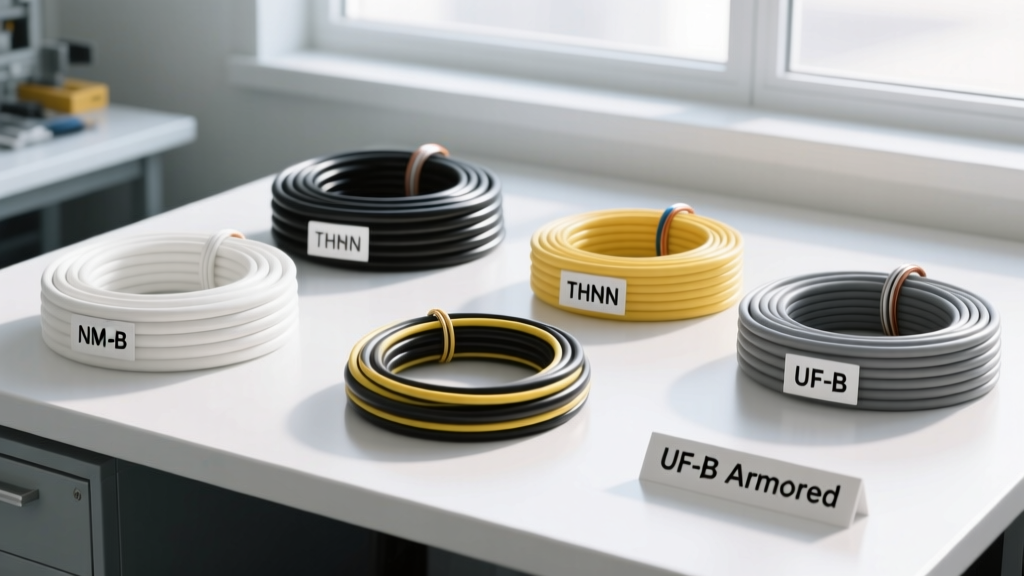
To build a precise estimate, we must dissect the four primary categories of branch circuit and feeder wiring used in modern construction, analyzing their material costs, labor multipliers, and specific failure modes.
1. Non-Metallic Sheathed Cable (NM-B / Romex)
Commonly referred to by the trademarked name Romex, NM-B cable remains the undisputed standard for interior, dry-location residential wiring. It consists of two or more insulated conductors wrapped in a moisture-resistant, flame-retardant PVC jacket.
- Material Cost (2026): $0.85 to $1.15 per linear foot for 12/2 AWG (20-Amp rated).
- Labor Profile: Low. The SIMpull jacket technology used by Southwire reduces friction, allowing electricians to pull wire through studs and bored joists rapidly.
- Edge Cases & Failure Modes: NM-B is strictly prohibited in wet locations and cannot be left exposed in commercial drop ceilings. A common failure mode occurs when installers staple the cable too tightly, crushing the PVC jacket and compromising the inner THHN insulation, leading to arc faults years later.
- Code Reference: Governed by NEC Article 334, which mandates specific support intervals (every 4.5 feet) and protection from physical damage.
2. Thermoplastic Wire in Conduit (THHN/THWN-2)
For commercial builds, industrial facilities, and high-end residential exposed runs, individual THHN/THWN-2 conductors pulled through Electrical Metallic Tubing (EMT) or PVC conduit are mandatory. This method separates the conductors from their physical protection, offering immense flexibility for future circuit upgrades.
- Material Cost (2026): $0.35 to $0.50 per foot per conductor (12 AWG). However, you must factor in EMT conduit ($2.10 to $3.50 per 10-foot stick) and compression fittings.
- Labor Profile: High. Bending EMT, threading PVC, and pulling individual wires through junction boxes multiplies labor time by 2.5x compared to NM-B. Expect to pay licensed electricians $95 to $135 per hour for this specialized work.
- Expert Insight: When pulling THHN through long conduit runs with multiple bends, use specialized wire pulling lubricant. Dry pulls can strip the nylon outer jacket of the THHN, exposing the PVC layer to degradation and violating OSHA electrical safety standards for commercial integrity.
3. Underground Feeder (UF-B)
UF-B cable features individually insulated conductors embedded in a solid, rugged PVC matrix designed for direct burial. It is the go-to solution for outdoor lighting, detached garages, and well pumps.
- Material Cost (2026): $1.20 to $1.65 per linear foot for 12/2 AWG.
- Labor Profile: Moderate to High. While the wire itself is easy to handle, the trenching labor is brutal. Hand-digging or renting a Ditch Witch trencher adds $4 to $12 per foot in labor and equipment costs.
- Voltage Drop Warning: For runs exceeding 80 feet to a detached structure, 12 AWG UF-B will suffer from voltage drop. You must upsize to 10 AWG or 8 AWG to maintain the NEC-recommended 3% maximum voltage drop for branch circuits, which increases material costs by 40% to 70%.
4. Metal-Clad (MC) and Armored Cable (AC)
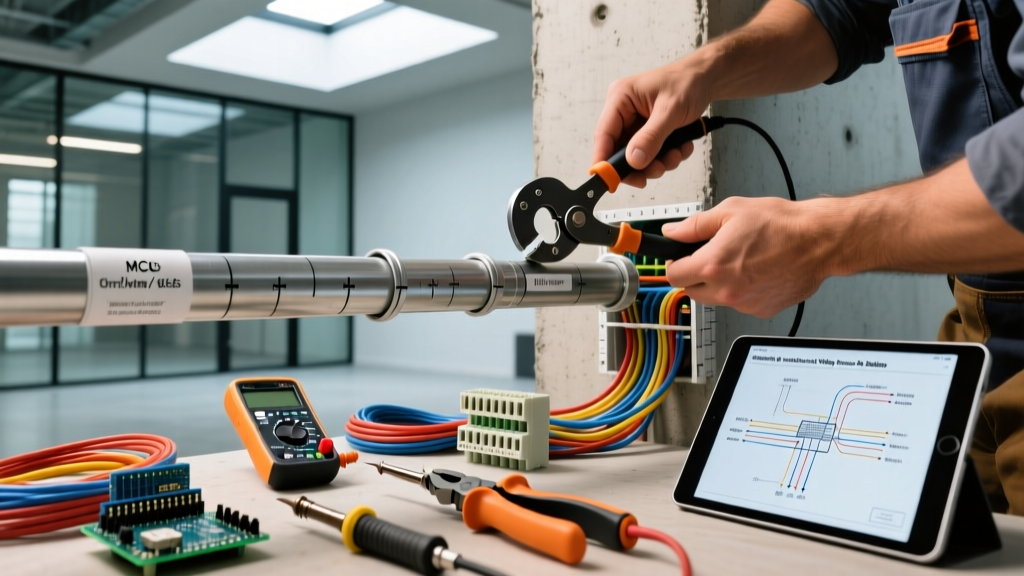
MC cable wraps THHN conductors in an interlocking aluminum or steel armor. It provides the rapid installation speed of NM-B with the physical crush resistance required in commercial retail spaces, hospitals, and multi-family residential corridors.
- Material Cost (2026): $1.40 to $1.95 per linear foot for 12/2 MC.
- Labor Profile: Moderate. Cutting MC cable requires specialized snap-off cutters to avoid scoring the internal conductors. Fitting the armor into anti-short bushings and specific MC-rated connectors takes longer than standard NM-B staples.
- Grounding Nuance: Modern MC cable (often labeled as MCI-A) includes an equipment grounding conductor that makes continuous contact with the armor. Older AC cable relies on the armor itself for grounding, which is highly susceptible to high-impedance faults if the interlocking joints loosen over time due to building vibration.
2026 Cost Estimation Matrix
The following table provides a baseline estimation for a standard 20-Amp, 120-Volt branch circuit installation in a typical suburban market. Labor rates are averaged at $110/hour.
| Wiring Type | Material Cost (per ft) | Conduit/Fittings | Labor Cost (per ft) | Total Est. (per ft) | Primary Application |
|---|---|---|---|---|---|
| 12/2 NM-B (Romex) | $0.95 | None (Staples) | $2.50 | $3.45 | Interior Residential Walls |
| 12 AWG THHN in EMT | $1.25 (3 wires) | $1.80 | $6.50 | $9.55 | Commercial / Exposed Runs |
| 12/2 UF-B (Direct Burial) | $1.40 | Warning Tape | $8.00 (inc. trench) | $9.40 | Outdoor / Detached Structures |
| 12/2 MC (Metal Clad) | $1.65 | MC Connectors | $4.20 | $5.85 | Commercial Drop Ceilings |
Hidden Variables That Inflate Wiring Budgets
Novice estimators often calculate the linear footage of wire and multiply it by the per-foot cost, only to watch their profit margins evaporate. True cost estimation requires factoring in the peripheral systems that support the wiring.
- Panel Capacity Upgrades: Adding new circuits requires breaker space. If your existing 100-amp or 150-amp panel is maxed out, upgrading to a 200-amp Siemens or Eaton load center will add $2,200 to $3,500 to the project, including utility coordination and heavy-gauge SER feeder cable.
- Drywall Destruction and Repair: Retrofitting NM-B into finished walls requires cutting access holes every 4 to 6 feet. Budget $3.50 to $5.00 per square foot for professional drywall patching, taping, mudding, and painting to restore the space to pre-wire conditions.
- Permitting and Inspections: Municipalities charge based on project valuation or circuit count. Expect to pay $150 to $450 for electrical permits. Failing an inspection due to an overfilled junction box (violating NEC box fill calculations) will cost you a half-day of labor to rework and a $75 re-inspection fee.
- Copper Theft Security: On new construction sites, exposed UF-B and spools of THHN are prime targets for theft. Factor in $300 to $500 for temporary site security cameras or locked job-site storage containers to protect your material investment.
Material Science: Why Copper Quality Matters
Not all copper is created equal. When purchasing wire, verify that it is manufactured from 99.9% pure, oxygen-free copper. According to the Copper Development Association, inferior copper alloys with higher impurities exhibit increased electrical resistance. Over a 50-foot run, this micro-resistance translates to excess heat generation, premature insulation degradation, and nuisance tripping of AFCI/GFCI breakers. Always look for the UL (Underwriters Laboratories) listing mark printed directly on the cable jacket every 24 inches; if the printing rubs off easily, the jacket compound is substandard and prone to UV and chemical breakdown.
Final Estimation Strategy
When bidding a project, never rely on a single distributor's quote. Pull real-time pricing from at least three local electrical supply houses (e.g., CED, City Electric Supply, or Graybar) and compare them against bulk direct-from-manufacturer pallets if your volume exceeds 2,500 feet. By mastering the material nuances, labor multipliers, and hidden costs associated with the different types of wiring in electrical systems, you transition from guessing to precision engineering—ensuring your 2026 projects are built to code, built to last, and built on budget.