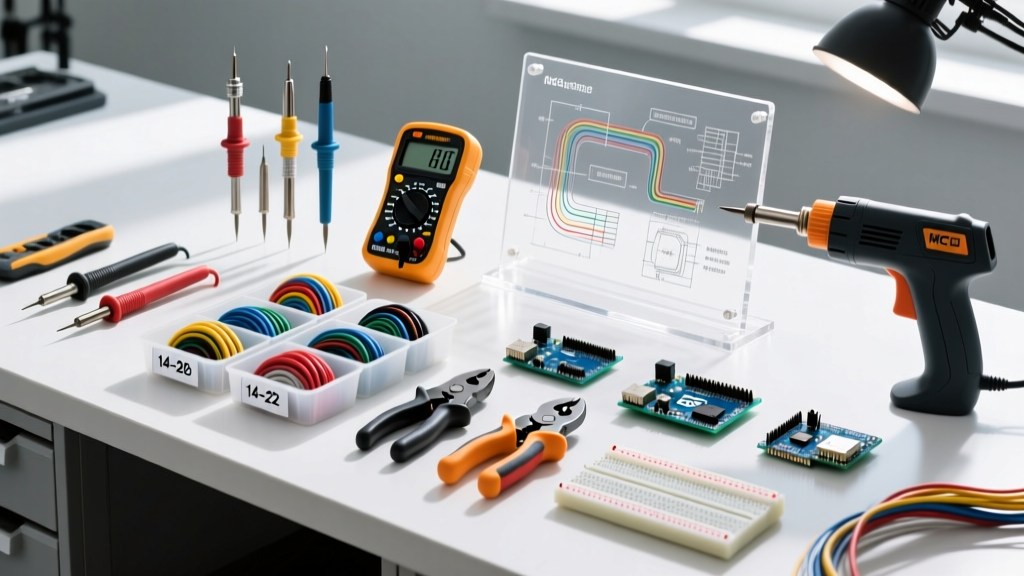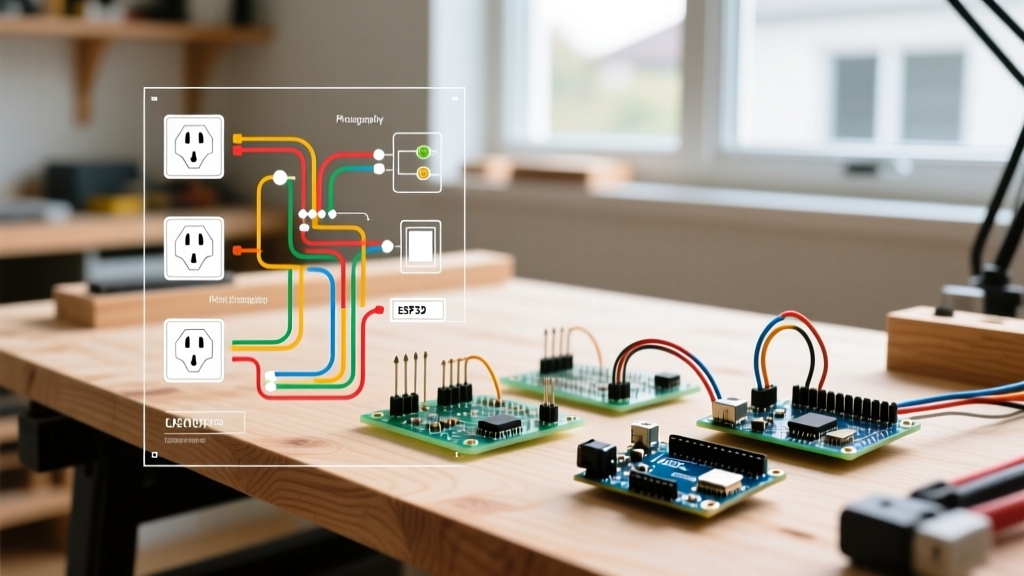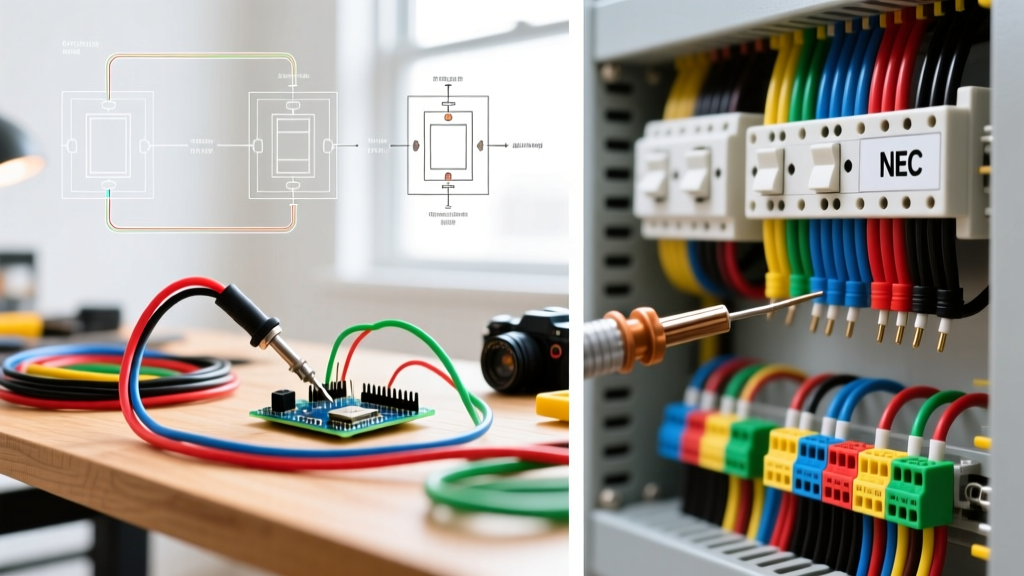

The Critical Divide: Trusting Colors vs. Verifying Function
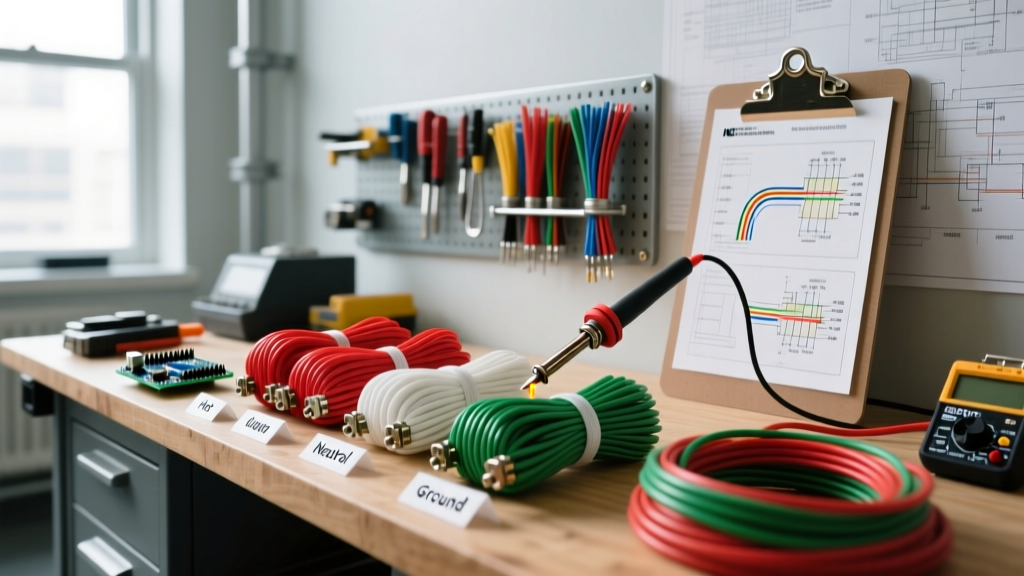
When tackling home electrical projects, the colours of electrical wiring serve as the primary language of the circuit. For the weekend DIYer, a black wire means "hot," a white wire means "neutral," and a bare copper wire means "ground." This basic color-coding is taught in every big-box store wiring clinic. However, professional electricians operate under a vastly different paradigm: never trust the jacket color until the circuit is verified dead and tested.
According to the Electrical Safety Foundation International (ESFI), electrical DIY mistakes result in thousands of emergency room visits and fatal electrocutions annually. The root cause is often a blind reliance on wire color assumptions, especially in homes built before modern code updates. In this 2026 analysis, we break down the National Electrical Code (NEC) standards, expose the most fatal DIY color misconceptions, and reveal how licensed professionals handle non-standard, legacy, and multi-wire circuits.
The NEC Standard: What the Colours of Electrical Wiring Actually Mean
As of 2026, the majority of US jurisdictions have fully adopted and enforced the 2023 NEC. The National Fire Protection Association (NFPA) outlines strict identification rules in NEC Article 200 (Grounded Conductors) and Article 210 (Branch Circuits). Below is the definitive matrix for standard residential Non-Metallic (NM) sheathed cable (commonly known by the brand name Romex).
| Wire Color | NEC Function | Typical Residential Application | AWG Sizes & 2026 Avg Cost/Ft |
|---|---|---|---|
| Black | Ungrounded (Hot) | 120V standard receptacles, lighting circuits, switch legs. | 14 AWG ($0.45/ft), 12 AWG ($0.68/ft) |
| Red | Ungrounded (Hot) | 240V appliances, 3-way switch travelers, MWBC second phase. | 12 AWG ($0.75/ft), 10 AWG ($1.10/ft) |
| Blue / Yellow | Ungrounded (Hot) | Commercial 277V/480V, or residential 4-way switch travelers. | Typically THHN in conduit, not NM-B. |
| White / Gray | Grounded (Neutral) | Return path for 120V circuits. Must be continuous and unswitched. | Standard in all NM-B assemblies. |
| Green / Bare | Equipment Ground | Fault current path to trip the breaker. Never carries normal load. | Bare copper standard in NM-B. |
The DIY Trap: Common Misconceptions and Fatal Errors
Amateur electricians frequently encounter scenarios where the colours of electrical wiring violate the standard matrix. Failing to recognize these exceptions is where DIY projects turn deadly.
Trap 1: The "White Wire as Hot" Switch Loop
Prior to the 2011 NEC update, electricians were allowed to use a 2-wire cable (Black and White) to run a "switch loop" from a ceiling fixture to a wall switch. In this setup, the black wire carried permanent hot down to the switch, and the white wire carried the switched hot back up to the fixture. The old code did not strictly require the white wire to be re-identified with black tape.
The Pro Analysis: A DIYer replacing a smart switch in a pre-2011 home will often assume the white wire is a neutral and connect it to the switch's neutral pigtail. This creates a dead short, resulting in an immediate arc flash and destroyed electronics. Professionals know that in older switch loops, the white wire is a hot leg. Furthermore, NEC 404.2(A) now mandates a neutral wire at nearly all switch boxes to accommodate smart home devices, meaning modern pros pull 14/3 or 12/3 cable, rendering the dangerous 2-wire switch loop obsolete in new construction.
Trap 2: 240V Baseboard Heaters and Water Heaters
Many 240V appliances, such as Cadet baseboard heaters or Rheem electric water heaters, do not require a neutral wire; they only require two hot legs and a ground. To save money, DIYers often run a standard 12/2 or 10/2 NM-B cable (which contains one Black, one White, and one Bare wire) from a double-pole breaker to the appliance.
The Pro Analysis: NEC Article 200.7(C)(2) explicitly states that if a white wire is used as an ungrounded (hot) conductor, it must be permanently re-identified by painting or covering it with black or red tape at every point where the jacket is stripped. DIYers almost universally forget to tape the white wire. When a future technician opens the panel or junction box, they see a white wire and assume it is a neutral, leading to severe shock hazards. A professional will either pull 10/2 and heavily tape the white wire at both ends, or pull 10/3 and cap the unused red/white wire, prioritizing visual safety.
Professional Analysis: Managing Legacy and Multi-Wire Circuits
When professionals open a panel in a home built between 1960 and 1990, they brace for inconsistencies. The colours of electrical wiring in legacy systems require specialized diagnostic approaches.
The Multi-Wire Branch Circuit (MWBC) Hazard
An MWBC uses a 3-wire cable (Black, Red, White) to supply two separate 120V circuits that share a single neutral (White) wire. The black and red wires are connected to opposite phases of the electrical panel, meaning their currents cancel each other out on the shared neutral.
- The DIY Mistake: A homeowner replaces the original 2-pole breaker with two separate single-pole tandem breakers to "free up panel space." If both single-pole breakers are accidentally placed on the same phase leg, the currents no longer cancel out. The shared white neutral wire will carry the combined amperage of both circuits, overheat inside the walls, and cause an electrical fire.
- The Pro Solution: NEC 210.4(B) requires a simultaneous disconnect. Pros use a factory-installed 2-pole breaker or apply a recognized handle-tie (like the Siemens QTHT or Eaton BRHT) to ensure both hot legs are killed at the exact same time, protecting anyone working on the shared neutral.
Testing Legacy Cloth and Faded Wiring
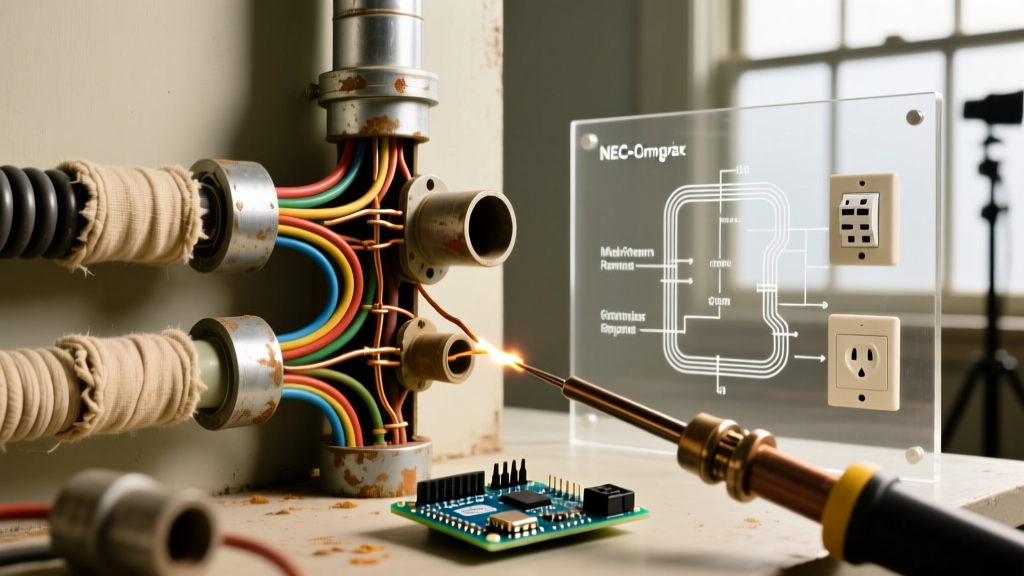
In homes built before 1950, wiring often features rubber or cloth insulation. Over decades of attic heat and basement moisture, the distinct colors fade into a uniform, muddy brown. Furthermore, early wiring did not include a dedicated equipment ground.
Instead of guessing, professionals rely on high-impedance testing tools. While a DIYer might use a $15 neon voltage tester, a pro will use a solenoid-based tester like the Fluke T+PRO (approx. $135) or a non-contact voltage detector with dual-range sensitivity like the Klein Tools NCVT-3 (approx. $35). These tools can detect phantom voltages and confirm if a faded gray wire is actually a degraded hot leg carrying 120V.
International Variations: Why "Colours" Spelling Matters
For readers in Canada, the UK, or Australia, the spelling "colours" reflects distinct regional codes that differ drastically from the US NEC. If you are importing appliances or working on international properties, confusing these standards is catastrophic.
| Region / Code | Live / Hot (Phase 1) | Neutral | Earth / Ground |
|---|---|---|---|
| USA (NEC) | Black | White / Gray | Green / Bare |
| Canada (CEC) | Black (or Red) | White | Green / Bare |
| UK / EU (IEC 60446) | Brown | Blue | Green & Yellow Stripe |
| Australia (AS/NZS 3000) | Brown (or Red in legacy) | Blue (or Black in legacy) | Green & Yellow Stripe |
Expert Warning: Never assume a European appliance wired with Brown (Live) and Blue (Neutral) can be safely hardwired into a US junction box without proper terminal block adaptation. Connecting a UK Blue (Neutral) wire to a US Black (Hot) wire will instantly short the circuit and void all UL/CE safety certifications.
Cost & Risk Analysis: DIY Rewiring vs. Hiring a Professional
Understanding the colours of electrical wiring is only the first step; executing the work safely requires an honest assessment of risk versus reward. According to the U.S. Consumer Product Safety Commission (CPSC), faulty electrical wiring remains a leading cause of residential structural fires.
The Financial Reality in 2026
- Material Costs: A 250-foot spool of Southwire Romex SIMpull 12/2 NM-B costs roughly $170 in 2026. Add $40 for a pack of 50 Ideal Industries wire connectors and $25 for a Klein wire stripper, and a DIYer is looking at ~$235 to rewire a standard 15x15 bedroom.
- Professional Labor: A licensed electrician charges between $95 and $145 per hour depending on the metro area. Rewiring that same bedroom, including drywall cutting, fishing wires, and patching, will cost between $1,200 and $2,500.
When to Call the Professional
While replacing a like-for-like receptacle or swapping a light fixture is well within the DIY realm (provided the breaker is locked out), you must hire a licensed electrician if:
- You open a junction box and find wires that do not match standard NEC colors, and you lack a digital multimeter to trace the circuit topology.
- You discover aluminum branch circuit wiring (common in the late 1960s and 1970s), which requires specialized CO/ALR rated devices or Alumiconn pigtailing.
- You are adding a new 240V circuit to the main service panel. Working inside the main breaker lugs is lethal, as those conductors remain energized even when the main breaker is switched off.
Final Verdict
The colours of electrical wiring are a vital communication system, but they are only as reliable as the installer who pulled them. The DIY mindset relies on the assumption that the previous worker followed the rules. The professional mindset relies on verification, testing, and strict adherence to the current NEC. Before you strip your next wire, treat every conductor as energized, test with a calibrated meter, and respect the hidden complexities behind the insulation.