
The True Cost of Auto Electrical Wiring in 2026
Estimating the cost of auto electrical wiring requires moving beyond generic hourly rates. Whether you are restoring a 1969 Chevrolet Camaro, diagnosing a parasitic draw on a 2022 Ford F-150, or building a custom harness for an EV conversion, the variables are vast. Modern vehicles contain anywhere from 2 to 5 miles of copper wiring, integrating high-speed CAN-bus networks, ADAS sensor arrays, and high-voltage architectures. In 2026, material costs for automotive-grade copper and specialized connectors have stabilized, but specialized labor rates continue to climb.
This guide provides a deep-dive cost estimation matrix, material breakdowns, and expert insights into failure modes to help you budget accurately for your next automotive electrical project.
2026 Auto Electrical Wiring Cost Estimation Matrix
The table below outlines realistic pricing tiers for three common automotive wiring scenarios. These estimates factor in current 2026 material costs and national average labor rates for certified auto electricians.
| Project Type | Vehicle Example | Material Costs | Labor Costs | Estimated Timeframe |
|---|---|---|---|---|
| Full Classic Rewire | 1960s-1980s Muscle/Classic | $450 - $900 | $2,800 - $4,500 | 30 - 50 Hours |
| Partial Harness Repair | 2015+ Daily Driver (e.g., Tail light/ABS pigtail) | $80 - $250 | $350 - $700 | 2 - 5 Hours |
| Custom EV Swap Harness | ICE to EV Conversion | $1,200 - $2,800 | $4,500 - $8,500 | 40 - 70 Hours |
| Parasitic Draw Diagnosis | Any Modern Vehicle | $0 - $50 (Fuses/Relays) | $250 - $600 | 2 - 4 Hours |
Material Costs: Wire Gauges, Insulation, and Connectors
The biggest mistake DIYers make when budgeting for auto electrical wiring is purchasing hardware-store PVC wire. Automotive environments demand specific insulation standards. According to the SAE J1128 standard for Low Tension Primary Cable, automotive wire must withstand extreme under-hood temperatures, chemical exposure, and physical abrasion.
Wire Insulation Types and Pricing (Per Foot)
- TXL (Thin-Wall Cross-Linked): The industry standard for modern harnesses. Rated for 125°C. Costs roughly $0.30 to $0.45 per foot for 14 AWG.
- GXL (General Cross-Linked): Slightly thicker insulation than TXL. Excellent for engine bay routing. Costs $0.35 to $0.55 per foot for 14 AWG.
- SXL (Special Cross-Linked): Thickest insulation, rated up to 150°C. Used near exhaust manifolds and turbochargers. Costs $0.60 to $0.85 per foot for 14 AWG.
- High-Voltage Shielded Cable (EV): Orange-jacketed, mil-spec shielding for 400V-800V systems. Costs $8.00 to $15.00+ per foot depending on gauge (e.g., 2 AWG to 1/0 AWG).
Connector Economics
Connectors dictate the reliability of your harness. Splicing and soldering under the hood is a deprecated practice; modern auto electrical wiring relies on sealed, crimped connections.
- Weather-Pack (Sealed): Ideal for exterior lighting and engine bay sensors. $1.50 - $3.00 per mated pair.
- Deutsch DT Series: The gold standard for motorsports and heavy-duty engine management. $4.50 - $7.50 per mated pair.
- OEM TE Connectivity AMP: Direct replacements for factory ECU and body control modules. $1.00 - $4.00 per mated pair, often requiring proprietary extraction tools.
Labor Rates and Diagnostic Realities
In 2026, the shortage of master-level auto electricians has pushed labor rates higher than standard mechanical repair. While a general mechanic might charge $120/hour, a specialist in auto electrical wiring commands a premium.
- Dealership Electrical Specialists: $165 - $240 per hour.
- Independent Auto Electricians: $130 - $185 per hour.
- Classic Car Restoration Shops: $110 - $150 per hour (often billed in 40-hour weekly blocks for full rewires).
Expert Insight: Never pay a flat rate for a 'diagnostic' without a capped maximum. A complex CAN-bus communication fault or parasitic battery draw should be capped at 3 hours of diagnostic time. If the shop cannot isolate the short or module failure within 3 hours, they are likely guessing and swapping parts at your expense.
Hidden Costs and Edge Cases
When estimating your auto electrical wiring budget, you must account for the 'while you're in there' costs and common failure modes that only reveal themselves once the dash is removed.
1. Melted Bulkhead Connectors
Common in older Jeep, Dodge, and GM trucks, the firewall bulkhead connector carries the entire amperage load for the cabin. Over decades, resistance builds, generating heat that melts the plastic housing. Replacing this requires a specialized bypass harness or a complete terminal repin. Add $250 - $400 to your budget if your vehicle utilizes a legacy bulkhead pass-through.
2. ECU and Module Programming
If your wiring repair involves replacing a fried Body Control Module (BCM) or Powertrain Control Module (PCM) due to a short circuit, the new module must be flashed to your vehicle's VIN. Dealerships charge $150 - $300 just for the software flash, independent of the wiring repair itself.
3. The PVC Fire Hazard
Using standard PVC (Polyvinyl Chloride) wire in an engine bay is a severe safety hazard. PVC insulation begins to soften and melt at 105°C. Under-hood temperatures near exhaust headers routinely exceed 125°C. When PVC melts, it exposes bare copper, leading to dead shorts and vehicle fires. The National Fire Protection Association (NFPA) consistently reports that electrical failures are a leading cause of vehicle fires. Always spend the extra 15% on cross-linked polyethylene (XLPE) wire like TXL or GXL to prevent catastrophic failure.
DIY vs. Professional: Tooling and Tensile Requirements
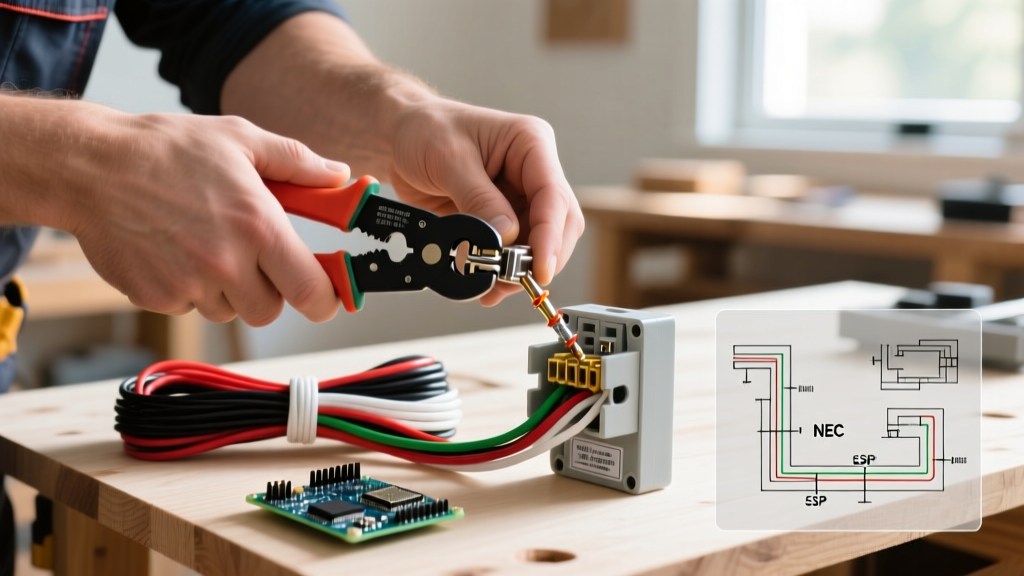
If you choose the DIY route to save on the $130+/hour labor rates, you must invest in proper tooling. The most critical tool in auto electrical wiring is the crimp tool. A proper crimp creates a cold-weld between the copper strands and the terminal barrel, ensuring zero voltage drop and high tensile strength.
The Crimp Tool Investment
- Generic 'Amazon' Ratchet Crimpers ($35 - $60): These often deform the terminal wings and fail to compress the wire core adequately. Under vibration, these crimps loosen, causing arcing and melted connectors.
- OEM-Specific Ratchet Tools (e.g., Molex, Delphi, TE Connectivity) ($350 - $600): These tools feature precise die cavities matched to specific terminal families (like Weather-Pack or Metri-Pack). They include a ratcheting mechanism that will not release until the exact compression force is achieved, guaranteeing a gas-tight, aerospace-grade crimp.
If you are only doing a few repairs, buying a $500 crimp tool doesn't make financial sense. In this case, factor in the cost of buying pre-pigtailed OEM harnesses from the dealer, which cost more in parts but require only basic heat-shrink soldering and adhesive-lined butt connectors for the final splice.
Summary Checklist for Your Wiring Budget
Before authorizing any auto electrical wiring work, ensure your estimate includes the following line items:
- Wire Spec: Explicitly stating SAE J1128 compliant TXL/GXL wire (not PVC).
- Connector Sealing: Inclusion of silicone cavity plugs and secondary locking wedges (TPAs) for all multi-pin connectors.
- Loom and Abrasion Protection: Budgeting for split-loom, Tesa cloth tape (for interior dash harnesses to prevent rattling), and fiberglass sleeving for high-heat zones.
- Circuit Protection: Upgrading legacy glass fuses to modern ATO/ATC blade fuses or MAXI fuses, and installing marine-grade circuit breakers for high-amperage starter and alternator feeds.
By understanding the granular costs of materials, the reality of 2026 diagnostic labor rates, and the severe consequences of cutting corners on wire insulation, you can accurately forecast your project budget and ensure a reliable, fire-safe electrical system.