
The Definitive Material & Tool Guide for 120 Electrical Wiring
When tackling residential or light commercial projects, 120 electrical wiring forms the absolute backbone of the power distribution system. From standard lighting circuits to dedicated kitchen appliance runs, understanding the precise materials and specialized tools required is the difference between a safe, code-compliant installation and a dangerous fire hazard. As we navigate the 2026 landscape of electrical work, copper prices, updated NEC (National Electrical Code) mandates for AFCI/GFCI protection, and strict torque verification requirements have changed how professionals and advanced DIYers approach 120V circuits.
This guide cuts through the fluff, providing exact model numbers, real-world pricing, and deep-dive technical specifications for your next 120V rough-in or trim-out.
Core Materials: Wire, Breakers, and Receptacles
Selecting the correct cable and overcurrent protection is your first critical step. For standard 120V branch circuits, Non-Metallic Sheathed Cable (NM-B), commonly known by the brand name Romex, remains the industry standard for indoor, dry-location framing.
15A vs. 20A Circuit Material Matrix (2026 Pricing)
| Circuit Rating | Wire Gauge (NM-B) | Breaker Type | Receptacle Rating | Est. Cost (250ft Spool) |
|---|---|---|---|---|
| 15 Amp (Lighting/General) | 14/2 AWG w/ Ground | Single-Pole 15A | 15A Duplex | $48 - $55 |
| 20 Amp (Kitchen/Bath/Garage) | 12/2 AWG w/ Ground | Single-Pole 20A | 20A or 15A Duplex | $65 - $78 |
| 20 Amp (Dedicated Appliance) | 12/2 AWG w/ Ground | Single-Pole 20A | 20A Single Receptacle | $65 - $78 |
Wire Selection Deep Dive: Southwire vs. Cerro
For 120 electrical wiring, you will primarily choose between Southwire SIMpull and Cerro Wire. Southwire's SIMpull technology features a proprietary polymer jacket that drastically reduces pulling friction, which is invaluable when fishing wires through existing walls during remodels. In 2026, a 250-foot coil of Southwire 12/2 SIMpull NM-B averages around $72 at major big-box retailers. Always ensure the cable is stamped with 'NM-B 600V' and the manufacturing date to verify code compliance.
Breaker Selection: AFCI and GFCI Mandates
Modern NEC requirements (carried through the 2023 and 2026 code cycles) mandate Arc-Fault Circuit Interrupter (AFCI) protection for almost all 120V, 15A and 20A living space circuits, and Ground-Fault Circuit Interrupter (GFCI) protection for wet locations.
- Square D QO120DFIC: A 20A Dual Function (AFCI/GFCI) breaker. Ideal for kitchens and bathrooms where both protections are required at the panel. Retail: ~$58.
- Eaton BR120AFC: A 20A Combination AFCI breaker for standard living areas. Retail: ~$42.
Pro Tip: Never mix breaker brands with panel manufacturers. A Square D Homeline breaker will physically fit into a Siemens load center, but it will not make proper contact with the bus bar stab, leading to catastrophic arcing and panel failure. Always match the breaker classification to the panel label.
Essential Hand Tools for 120V Rough-In and Trim-Out
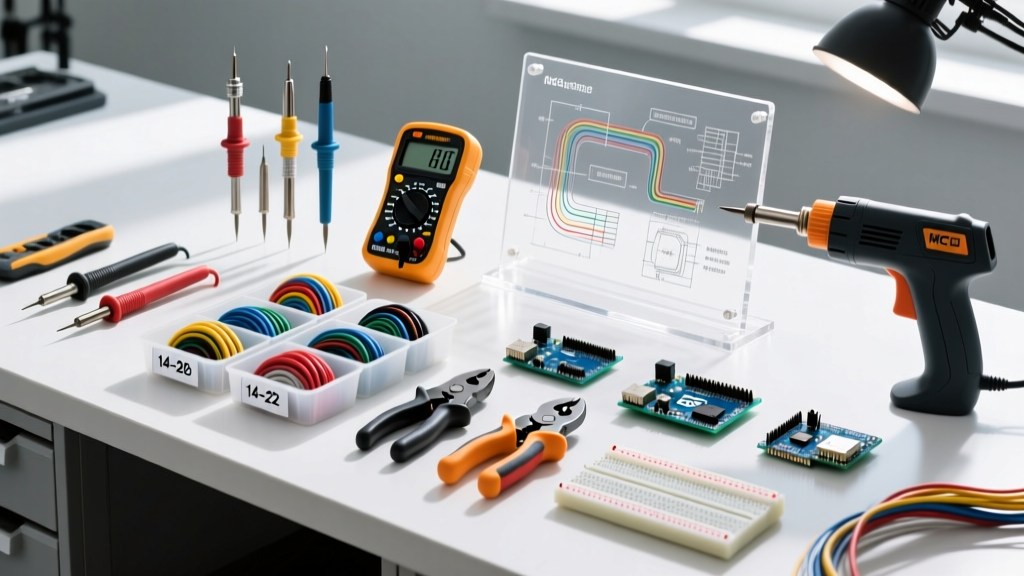
Standard screwdrivers and pliers will not suffice for professional-grade 120 electrical wiring. The following tools are mandatory for efficiency and safety.
Wire Stripping and Preparation
Damaging the copper conductor while stripping the insulation creates a microscopic weak point that can snap under thermal expansion.
- Klein Tools 11063W (10-14 AWG Solid Wire Stripper): Priced at roughly $32, this is the gold standard for NM-B solid copper wire. It cleanly strips the black and white THHN insulation without nicking the copper.
- Milwaukee 48-22-3885 (Wire Stripper): An excellent alternative ($35) featuring a built-in sheathing cutter that scores the outer yellow or white PVC jacket of NM-B cable perfectly, allowing you to zip it open without slicing the inner conductors.
The Non-Negotiable: Torque Screwdrivers
NEC 110.14(D) strictly requires that electrical connections be torqued to the manufacturer's specifications. Under-torqued lugs loosen over time due to thermal cycling (the heating and cooling of the wire as current flows), leading to high-resistance faults and fires. Over-torqued lugs strip the receptacle threads or snap the screw head.
Most standard 15A and 20A duplex receptacles (such as the Leviton T5262) require between 12 to 14 in-lbs of torque. Investing in a calibrated tool like the Wiha 320P Torque Screwdriver (preset or adjustable, ~$85) or the Klein Tools 70005 ensures your terminations pass inspection and remain safe for decades.
Advanced Diagnostic & Safety Gear
Working with 120V circuits demands rigorous adherence to safety protocols outlined by organizations like OSHA Electrical Safety standards. Never rely on a non-contact voltage tester alone to confirm a circuit is dead.
Verification Tools
- Klein Tools NCVT-2: A dual-range non-contact voltage tester ($35). Use this first to identify which breaker controls the circuit and to get an initial 'safe' reading.
- Fluke 117 True-RMS Digital Multimeter: Priced at ~$220, this is the professional's choice. After the NCVT reads zero, you must use a multimeter to test Hot-to-Neutral, Hot-to-Ground, and Neutral-to-Ground to verify absolute zero voltage. The Fluke 117 features VoltAlert, allowing it to double as a secondary non-contact tester.
Common 120V Wiring Failure Modes & Edge Cases
Even with the right materials, poor execution leads to failures. Understanding these edge cases separates novices from experts.
1. The 'Backstabbing' Trap
Many cheap receptacles feature push-in 'backstab' terminals on the rear. While the NEC permits them for 14 AWG solid wire, they rely on a small internal spring clip to hold the wire. Over years of thermal cycling, these springs lose tension, creating high-resistance connections that melt the plastic housing. Always use the side-wiring screw terminals or the screw-clamp plates found on commercial-spec receptacles (like the Leviton ProGrade line).
2. Shared Neutrals (MWBC) on 120V Circuits
Multi-Wire Branch Circuits (MWBC) share a single neutral wire between two 120V hot legs on opposite phases. If an electrician replaces the original 2-pole breaker with two independent single-pole breakers, the shared neutral can carry the sum of both loads instead of the difference, causing the 14 AWG or 12 AWG neutral to overheat and catch fire inside the wall. Modern code requires handle ties or simultaneous trip mechanisms for MWBCs.
3. Aluminum Branch Circuit Pigtailing
In homes built in the late 1960s and 1970s, 120 electrical wiring was sometimes done with solid aluminum wire (marked 'AL'). Aluminum oxidizes rapidly and expands differently than copper, causing receptacles to catch fire. If you are remodeling an older home, do not simply connect copper pigtails with standard wire nuts. You must use the CPSC-recommended COPALUM crimping system or UL-listed AlumiConn lug connectors to safely transition from aluminum branch wiring to copper receptacle pigtails.
Sourcing & Final Inspection Prep
When sourcing materials for 120 electrical wiring in 2026, buy your wire in 250-foot or 500-foot spools rather than pre-cut 50-foot rolls to save up to 18% on copper costs. Ensure your wire staples match the gauge: use 1/2-inch staples for a single 14/2 or 12/2 cable, and stackable staples if running multiple cables through the same stud bay, maintaining the required 1-1/4 inch setback from the stud face to prevent drywall screws from piercing the jacket.
For comprehensive safety guidelines and home inspection checklists, always refer to the NFPA Home Electrical Safety resources before energizing a new panel or circuit.
Frequently Asked Questions
Can I use 12/2 wire on a 15A breaker?
Yes. The NEC allows using a larger wire gauge (lower AWG number) on a smaller breaker. In fact, many professionals use 12/2 exclusively to eliminate voltage drop on long runs and prevent future homeowners from accidentally swapping a 20A breaker onto a 15A wire circuit.
Do I need a permit for adding a 120V receptacle?
In almost all US municipalities, extending a branch circuit or adding a new receptacle requires a minor electrical permit and a final inspection to ensure compliance with local amendments to the NEC.