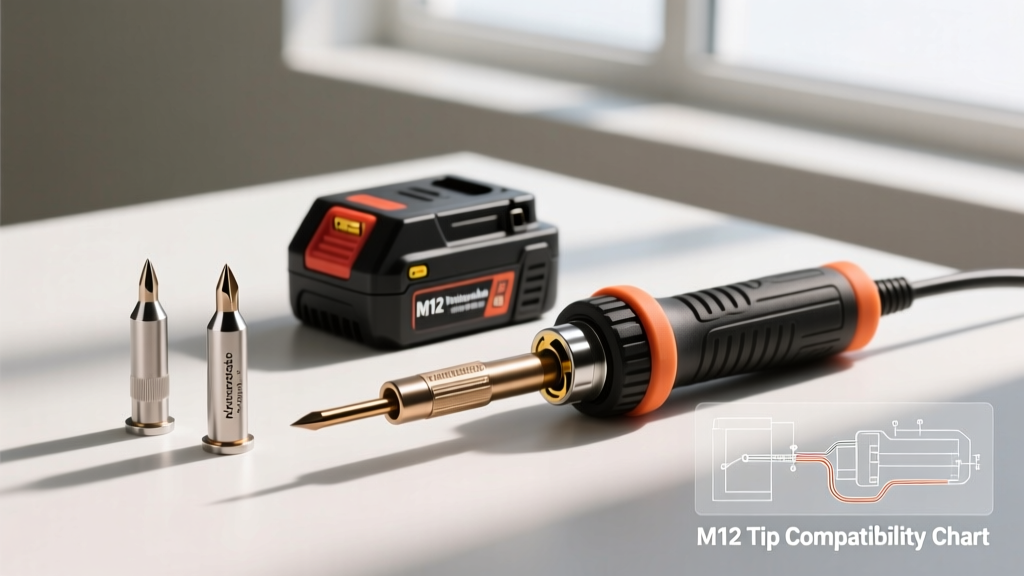

Introduction to the Milwaukee M12 Soldering Ecosystem
Transitioning from a traditional benchtop station to a cordless setup is a major milestone for any DIY electronics enthusiast or field technician. The Milwaukee M12 Soldering Iron (Model 2488-20) has become a staple in the industry since its release, offering butane-free, lithium-ion-powered heating that reaches 750°F (400°C) in under 30 seconds. However, beginners often find themselves confused when it comes time to replace worn components or upgrade their power supply.
Unlike traditional AC-powered stations where the heating element and tip are often separate or easily swapped, cordless tools integrate their components differently. Understanding the specific Milwaukee soldering iron parts—from iron-plated tips to REDLITHIUM batteries—is critical for maintaining optimal thermal recovery and extending the lifespan of your investment. This beginner's guide breaks down the exact SKUs, maintenance protocols, and failure modes you need to know in 2026.
Essential Milwaukee Soldering Iron Parts & Replacements
Before ordering replacements, it is vital to match the correct SKU to your specific needs. Below is a comprehensive matrix of the most common replacement parts and accessories for the Milwaukee 2488-20 M12 Soldering Iron, reflecting current 2026 market pricing.
| Component | Milwaukee SKU | 2026 Est. Price | Primary Use Case & Notes |
|---|---|---|---|
| Standard Chisel Tip | 48-40-4100 | $16.00 | Best for general through-hole components, wire tinning, and basic PCB repair. Features an iron-plated copper core. |
| M12 CP2.0 Battery | 48-11-2420 | $39.00 | Compact 2.0Ah battery. Ideal for tight enclosures and light-duty field work. Provides approx. 45 mins of runtime. |
| M12 XC4.0 Battery | 48-11-2440 | $59.00 | Extended capacity 4.0Ah. Recommended for heavy gauge wire soldering and all-day plumbing/electrical jobs. 90+ mins runtime. |
| M12 Standard Charger | 48-59-2401 | $25.00 | Standard wall charger. Charges a CP2.0 in roughly 40 minutes. Does not include rapid-charge circuitry. |
| Soldering Iron Holster | 49-16-2550 | $22.00 | Heat-resistant silicone and steel holster for safe bench storage and belt clipping. |
The Beginner's Trap: Tip Metallurgy and Maintenance
The most frequently replaced Milwaukee soldering iron part is the tip (SKU 48-40-4100). Beginners often assume that a blackened, non-stick tip is 'dirty' and attempt to clean it with sandpaper, a file, or a wire wheel. This will permanently destroy the tip.
According to IPC soldering standards, modern soldering tips consist of a highly conductive copper core plated with a thin layer of iron to prevent the molten solder from dissolving the copper, and an outer layer of chromium to prevent oxidation on the non-working surfaces. When you file a tip, you expose the raw copper. Once exposed, the molten solder and rosin flux will rapidly eat away the copper core, leading to severe pitting and total thermal failure.
Proper Tip Cleaning Protocol
- Use Brass Wool: Always use a dry brass wool sponge (never steel wool, which can cause micro-scratches and rust). Brass is softer than the iron plating but harder than the oxidized solder crust.
- Damp Cellulose Sponge: If using a wet sponge, ensure it is a high-sulfur-free cellulose sponge dampened with distilled water. Tap water contains minerals that can cause micro-fractures in the hot iron plating due to thermal shock.
- Re-Tinning (Crucial Step): Before turning off the Milwaukee M12 iron, always melt a generous amount of rosin-core solder over the entire working surface of the tip. This 'sacrificial layer' of solder oxidizes while the tool is stored, protecting the underlying iron plating. Wipe it clean only when you power the tool back on.
Battery Selection and BMS Troubleshooting
Because the Milwaukee 2488-20 is cordless, the M12 REDLITHIUM battery is effectively the 'power supply' component of your soldering station. The tool draws significant current (often peaking above 8 amps during initial heat-up) to maintain the ceramic heating element's temperature when touching a cold, large thermal mass like a 10 AWG wire.
Expert Insight: If your soldering iron shuts off prematurely or the LED indicator blinks red, the issue is rarely the iron itself. It is usually the Battery Management System (BMS) inside the M12 battery triggering a thermal or voltage cutoff. Upgrading from a CP2.0 to an XC4.0 battery reduces internal resistance and voltage sag, preventing these mid-solder shutoffs.
For long-term storage, Battery University recommends storing lithium-ion cells at roughly 40% to 50% charge in a cool environment. Leaving a fully depleted M12 battery in a hot truck bed for several months can cause the cell voltage to drop below the BMS recovery threshold, effectively 'bricking' the battery and requiring a warranty replacement.
Troubleshooting Common Part Failures
When your Milwaukee soldering iron fails to perform, use this diagnostic matrix to identify the faulty component before ordering replacements.
- Symptom: Solder balls up and rolls off the tip (Non-wetting).
Faulty Part: Tip (48-40-4100).
Solution: The iron plating has oxidized or worn away. Replace the tip. Do not attempt to file it. - Symptom: Iron powers on, LED is solid, but tip remains cold after 2 minutes.
Faulty Part: Internal Ceramic Heater or Tip Sleeve contact.
Solution: Remove the tip and check the ceramic heating element protruding from the tool body. If it is cracked or blackened with burnt flux, the tool requires depot repair. If the element is intact, ensure the set-screw holding the tip sleeve is tight to ensure proper thermal transfer. - Symptom: Tool turns on for 3 seconds, then shuts off with a flashing red LED.
Faulty Part: M12 Battery BMS or weak battery cell.
Solution: Test with a known-good, fully charged XC4.0 battery. If the issue persists, the internal thermistor in the tool may be damaged.
Where to Source Genuine Parts
When replacing Milwaukee soldering iron parts, always source from authorized distributors or directly via the Milwaukee Tool Support and Parts portal. The market is currently flooded with counterfeit M12 batteries and clone soldering tips. Counterfeit tips often lack the chromium outer layer, leading to rapid oxidation, while counterfeit batteries lack the sophisticated BMS required to prevent thermal runaway during the high-draw heating cycles of a soldering iron.
Frequently Asked Questions (FAQ)
Can I use Hakko or Weller tips on the Milwaukee M12 Soldering Iron?
No. The Milwaukee 2488-20 uses a proprietary tip and sleeve design. While some third-party manufacturers claim cross-compatibility, the internal thermal coupling and set-screw alignment are specific to Milwaukee's 48-40-4100 series. Using off-brand tips can result in poor thermal transfer or damage to the internal ceramic heater.
How often should a beginner replace the 48-40-4100 tip?
With proper maintenance (regular tinning, using brass wool, and avoiding abrasive cleaning), a genuine Milwaukee chisel tip should last a hobbyist 1 to 2 years. Professional field technicians working daily may need to replace them every 3 to 6 months due to the corrosive nature of lead-free fluxes used in modern commercial electronics.
Does Milwaukee make a fine-point conical tip for SMD work?
As of 2026, Milwaukee's primary focus for the M12 iron remains general electrical, automotive, and through-hole plumbing applications. They do not currently offer ultra-fine micro-tips for 0402 SMD (Surface Mount Device) work. For precision SMD soldering, beginners are better served by a dedicated benchtop station with micro-tips, reserving the Milwaukee M12 for field repairs and heavy-gauge wire tinning.