
The Engineering Divide in Auto-Feed Soldering
When evaluating a self feeding soldering gun in 2026, the market is sharply divided between sub-$50 hobbyist kits and $300+ professional production feeders. The core promise of an auto-feeding system is one-handed operation and consistent solder volume delivery, which is critical for meeting modern reliability standards. However, the mechanical execution of this promise varies wildly depending on the price bracket. Whether you are assembling custom mechanical keyboards or running a small-batch PCB manufacturing line, understanding the mechanical and thermal differences between budget and premium tiers is essential to avoid catastrophic joint failures and tool degradation.
Budget Tier Analysis: The $25 to $45 Bracket
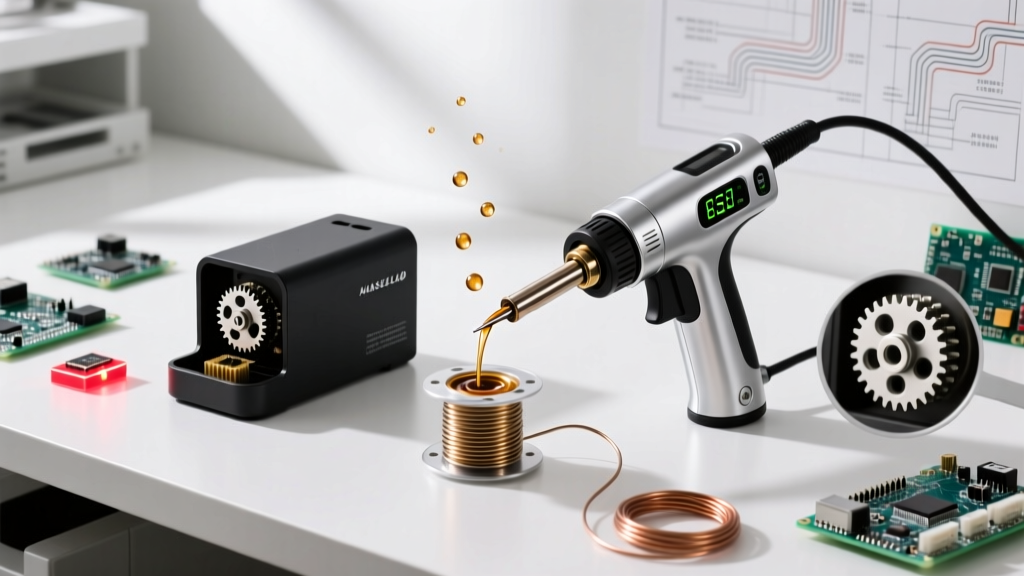
The budget segment is dominated by generic 60W to 80W auto-feed kits (often branded under names like Tabiger, Yihua, or unbranded Amazon imports). These tools integrate a basic DC motor and a friction-roller feed mechanism directly into the iron handle.
Strengths and Limitations
- Cost-Effective Entry: At roughly $30, they offer an accessible introduction to one-handed soldering for simple through-hole components and basic wire tinning.
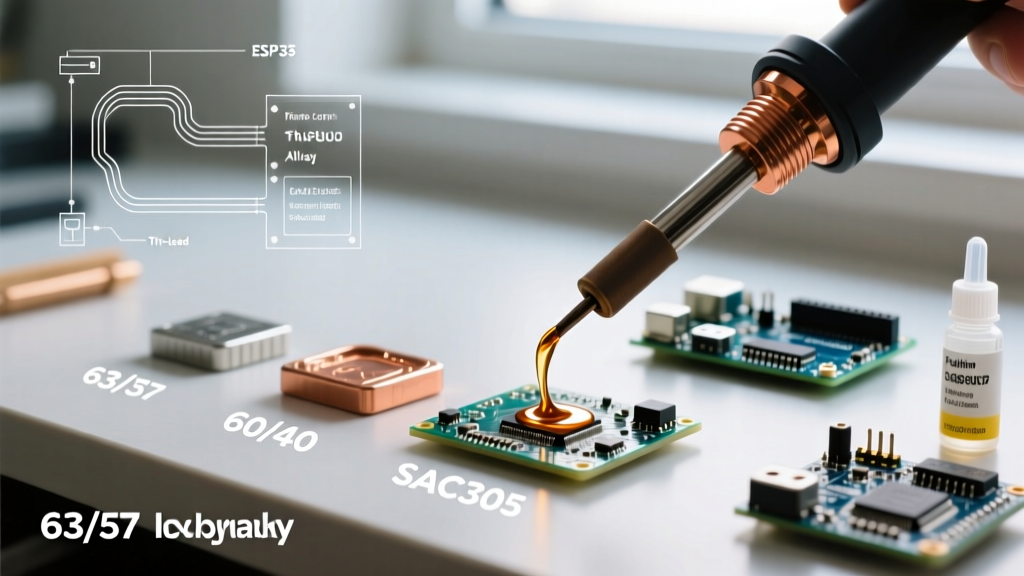
- Friction Roller Slippage: Budget models rely on a simple rubberized roller pressing the solder wire against a metal guide. When using harder lead-free alloys like SAC305, the roller frequently slips, resulting in starved solder joints.
- Thermal Lag: Most budget guns use basic PTC ceramic heaters. When the cold solder wire is rapidly fed into the tip, the thermal mass drops, and recovery times can exceed 4 seconds, leading to cold solder joints.
Premium Tier Analysis: The $250 to $450 Bracket
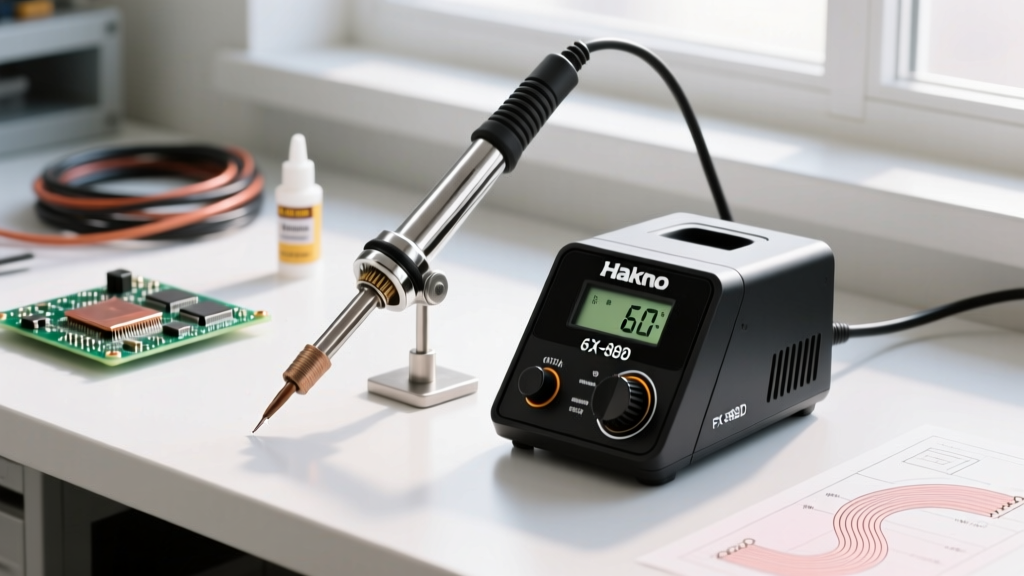
The premium tier features dedicated, modular solder feeders paired with high-end stations, such as the Hakko 374 Solder Feeder (paired with an FX-952 station) or the Quick 376 Automatic Feeder. These are not 'guns' in the traditional all-in-one sense, but rather precision bench-mounted systems with ergonomic handpieces that act as self-feeding guns via a flexible PTFE tube.
Advanced Mechanics and Precision
- Stepper Motor Drive: Premium systems utilize micro-stepping motors that provide exact torque control. This prevents the deformation (flattening) of soft Sn63/Pb37 wire while maintaining enough grip to push rigid SAC305 wire.
- Variable Feed Rates: Users can dial in feed rates from 0.1mm/sec to 27mm/sec, allowing for micro-soldering on 0402 SMD pads or heavy flooding on large ground planes.
- Active Tension Control: High-end feeders include spool tension brakes that prevent wire overrun and tangling when the feed trigger is released.
Head-to-Head Comparison Matrix
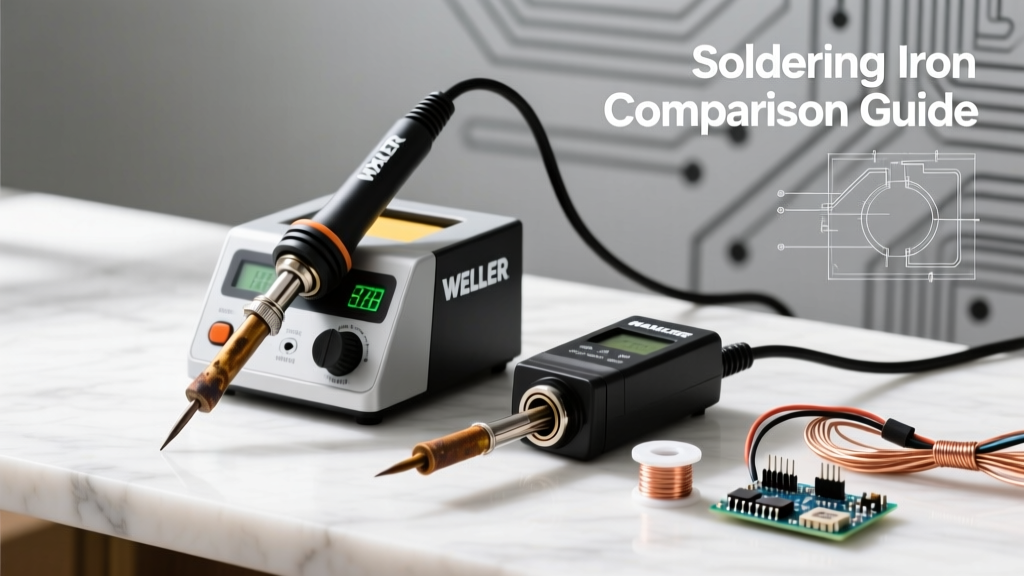
| Feature | Budget (Generic 60W Auto-Feed) | Premium (Hakko 374 / Quick 376) |
|---|---|---|
| Drive Mechanism | Brushed DC Motor + Friction Roller | Precision Stepper Motor + Gear Grip |
| Feed Rate Control | Fixed (approx. 10mm/sec) | Variable (0.1 - 27mm/sec) |
| Guide Tube Material | Standard Silicone / Low-Grade PTFE | High-Purity PTFE / Glass-lined |
| Alloy Compatibility | Sn63/Pb37 (Leaded only) | Sn63/Pb37, SAC305, Sn96 (Lead-free) |
| Typical 2026 Pricing | $25 - $45 | $280 - $420 (Feeder + Station) |
Critical Failure Modes and Troubleshooting
Regardless of the tier, auto-feed systems share specific failure modes that require proactive maintenance. Understanding these edge cases separates novices from seasoned technicians.
1. Flux Creep and Tube Occlusion
The most common cause of auto-feeder failure is 'flux creep.' As the solder wire melts at the tip, vaporized rosin or no-clean flux travels back up the feed tube via capillary action and thermal convection. Over time, this flux solidifies inside the PTFE tube, increasing friction until the wire buckles. Solution: Premium systems use replaceable, high-purity PTFE liners that resist flux adhesion. Budget guns often use silicone tubes that absorb flux, requiring you to cut and replace the tubing monthly. Always retract the wire 10mm when powering down the station to prevent the flux core from baking inside the guide.
2. Wire Buckling and Roller Deformation
If the feed mechanism applies too much lateral pressure, soft leaded wire will flatten. When this flattened section reaches the narrow aperture of the soldering tip, it jams. Premium feeders solve this with adjustable torque limiters and multi-point gear drives that distribute the gripping force evenly around the wire's circumference.
3. Thermal Shock and Wetting Issues
Feeding 1.0mm diameter wire at 20mm/sec into a standard chisel tip will instantly crash the tip temperature below the melting point of the alloy. According to the IPC J-STD-001 standard for soldered electrical assemblies, proper wetting requires the pad, lead, and solder to reach thermal equilibrium simultaneously. If a budget gun lacks the thermal mass to recover quickly, the result is a dull, grainy, and unreliable 'cold' joint. Premium stations utilize composite tip technology (where the heater is embedded directly inside the copper tip) to recover from thermal shock in under 1.5 seconds.
Expert Insight: When transitioning from Sn63/Pb37 to lead-free SAC305 wire in an auto-feeder, you must increase the tip temperature by 30°C to 40°C and reduce the feed rate by 20%. SAC305 has a higher melting point (217°C vs 183°C) and a stiffer mechanical profile, which requires more torque from the feed motor to prevent stalling.
Wire Diameter Tolerances
Not all solder wire is manufactured to exact nominal diameters. A spool labeled 0.8mm may fluctuate between 0.76mm and 0.84mm. Budget friction feeders struggle with these micro-variances, leading to inconsistent extrusion lengths. If you press the trigger for exactly one second, a budget gun might feed 8mm of wire on one stroke and 5mm on the next due to microscopic slippage. Premium stepper-driven feeders measure wire travel via encoder feedback, ensuring that a 1-second trigger pull yields exactly the same volume of solder every time, which is mandatory for automated or semi-automated production environments.
Final Verdict: Which Should You Choose?
The decision ultimately hinges on your production volume and alloy requirements. If you are a hobbyist exclusively working with leaded solder on large through-hole components, wiring harnesses, or RC electronics, a budget self feeding soldering gun provides adequate utility and a fast learning curve without breaking the bank. Just be prepared to replace the feed tubing regularly and manage thermal lag by feeding wire slowly.
However, if you are operating a small manufacturing business, repairing modern multi-layer PCBs, or are required to comply with IPC Class 2 or Class 3 reliability standards, the premium tier is non-negotiable. The precision stepper motors, active tension control, and rapid thermal recovery of systems like the Hakko 374 or Quick 376 eliminate the variables that cause latent field failures. In a professional environment, the $350 investment in a premium feeder pays for itself by eliminating rework, scrap, and the hidden costs of inconsistent solder joints.