
The Evolution of the Cordless Workbench
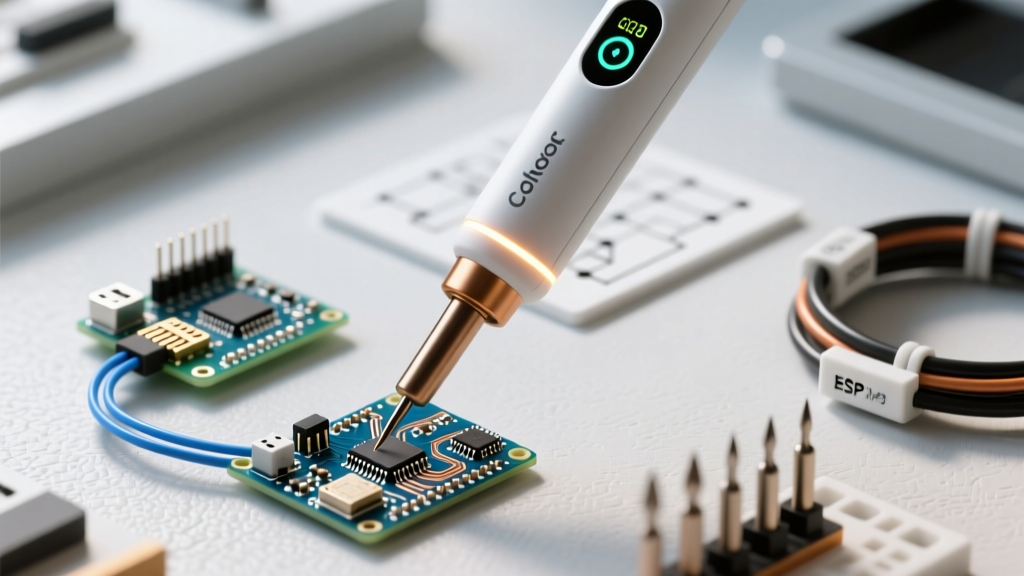
Field electronics repair, remote drone maintenance, and automotive diagnostics demand reliable cordless tools. Historically, a battery soldering station meant a bulky, proprietary 18V brick with abysmal thermal recovery and heavy, unbalanced ergonomics. Today, the landscape has completely shifted. The modern portable soldering ecosystem relies on high-density USB-C Power Delivery (PD) architectures, smart microcontrollers, and interchangeable low-thermal-mass tips.
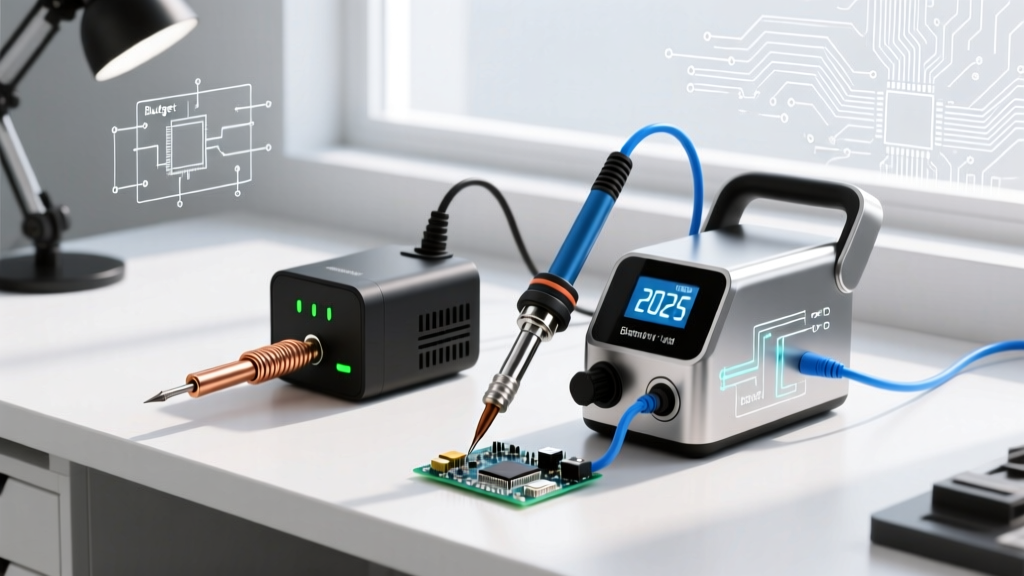
But with options ranging from $50 open-source smart irons to $300 premium field kits, how do you allocate your budget? In this 2026 analysis, we break down the engineering realities, thermal profiles, and hidden costs of budget versus premium battery-powered soldering setups.
Defining the Tiers: What Are You Actually Buying?
When we discuss a battery soldering station in 2026, we are generally referring to a two-part ecosystem: the smart soldering iron and the high-discharge power bank. Unlike traditional AC stations where the transformer handles the heavy lifting, cordless setups require the power bank to sustain high-wattage continuous draws without thermal throttling.
The Budget Tier (Under $100 Total System Cost)
The undisputed king of the budget tier is the Pine64 Pinecil V2. Priced around $28, this RISC-V powered iron supports USB-C PD 3.0 and negotiates up to 65W when paired with a capable power bank. To complete the station, technicians typically pair it with a 65W PD power bank (such as the Baseus 65W 20,000mAh model, roughly $45).
- Pros: Unbeatable price-to-performance ratio; lightweight; open-source IronOS firmware allows deep customization of PID tuning and boost modes.
- Limitations: Uses standard TS-B2 tips which have higher thermal mass. When soldering large ground planes on multi-layer PCBs, the 65W ceiling results in noticeable thermal lag, risking cold joints if dwell time exceeds IPC recommendations.
The Premium Tier ($150 - $300+ Total System Cost)
The premium tier is defined by higher wattage ceilings, advanced telemetry, and superior tip ecosystems. The Miniware TS101 ($100) paired with a high-output power bank like the Anker Prime 27,650mAh 250W ($130) represents the modern gold standard for field engineers. Furthermore, premium setups often incorporate JBC C245-compatible tip adapters, bringing benchtop thermal recovery to the field.
- Pros: Supports up to 100W+ via PD 3.1; Bluetooth Low Energy (BLE) telemetry for logging thermal profiles; active battery management systems (BMS) in premium power banks prevent voltage sag.
- Limitations: High initial investment; premium power banks are heavier and require dedicated cooling considerations.
Head-to-Head Comparison Matrix
| Feature | Budget (Pinecil V2 + 65W Bank) | Premium (TS101 + 250W Bank) | Industrial (Milwaukee M12 Kit) |
|---|---|---|---|
| System Cost (Approx.) | $73 | $230+ | $160 (Bare tool + 12V battery) |
| Max Wattage | 65W | 100W+ (PD 3.1) | 90W (Proprietary 12V) |
| Tip Ecosystem | Standard TS (High thermal mass) | TS / JBC C245 Adapters | Proprietary M12 (Heavy duty) |
| Boot Time | ~3 seconds | ~2 seconds | ~15 seconds |
| Best Use Case | Light SMD, basic wire splicing | Complex PCB rework, field engineering | Automotive, heavy gauge wire, plumbing |
The Engineering Deep Dive: USB-C PD and PPS Negotiation
The secret to a premium battery soldering station's performance lies in Programmable Power Supply (PPS), an extension of the USB-C PD protocol. Standard PD negotiates fixed voltage tiers (e.g., 20V at 3A for 60W). However, a smart iron's internal heater might operate optimally at 18.4V. Without PPS, the iron's internal DC-DC converter must step down the 20V to 18.4V, generating parasitic heat inside the iron's handle and wasting battery capacity.
Premium smart irons utilizing PD 3.1 with PPS can request the exact voltage needed in millivolt increments. According to the USB Implementers Forum (USB-IF), PPS allows for dynamic voltage adjustments that drastically improve end-to-end electrical efficiency. In a field scenario where every milliamp-hour counts, a premium PPS-enabled setup will yield 15% to 20% more soldering time per charge compared to a budget fixed-voltage PD setup.
Battery Degradation: The Hidden Cost of Field Soldering
Thermal Stress Warning: Soldering irons draw continuous, high-amperage loads that generate significant internal heat within lithium-ion cells. Exposing power banks to ambient field heat combined with internal discharge heat accelerates capacity degradation.
A common failure mode in budget battery soldering stations is the rapid degradation of the power bank. Drawing 65W continuously from a compact, budget-tier 20,000mAh bank pushes the internal 18650 or 21700 cells to their thermal limits. As documented by Battery University, operating lithium-ion cells at elevated temperatures (above 40°C / 104°F) while under high discharge stress permanently increases internal resistance and reduces overall cycle life.
The Premium Advantage: High-end power banks (like the Anker Prime series or specialized field batteries from brands like Omnicharge) utilize graphite composite thermal pads and active BMS throttling. They monitor individual cell temperatures and will micro-throttle the output to protect the cells, ensuring your $130 investment survives years of field abuse. Budget banks often lack this granular thermal protection, leading to swollen cells after a year of heavy use.
Meeting IPC Standards in the Field
When performing field rework on mission-critical hardware, your cordless setup must still produce joints that comply with IPC-7711/7721 standards for rework and repair. The primary enemy of compliance in cordless soldering is thermal recovery time.
If you are soldering a 14-gauge wire to a heavy copper pour, a budget 65W iron with a standard TS-B2 tip will experience a massive temperature drop. The iron's PID controller will max out the PWM duty cycle, but the physical thermal mass of the tip cannot transfer heat fast enough. This results in prolonged dwell times, which can delaminate PCB pads or damage heat-sensitive SMD components located millimeters away.
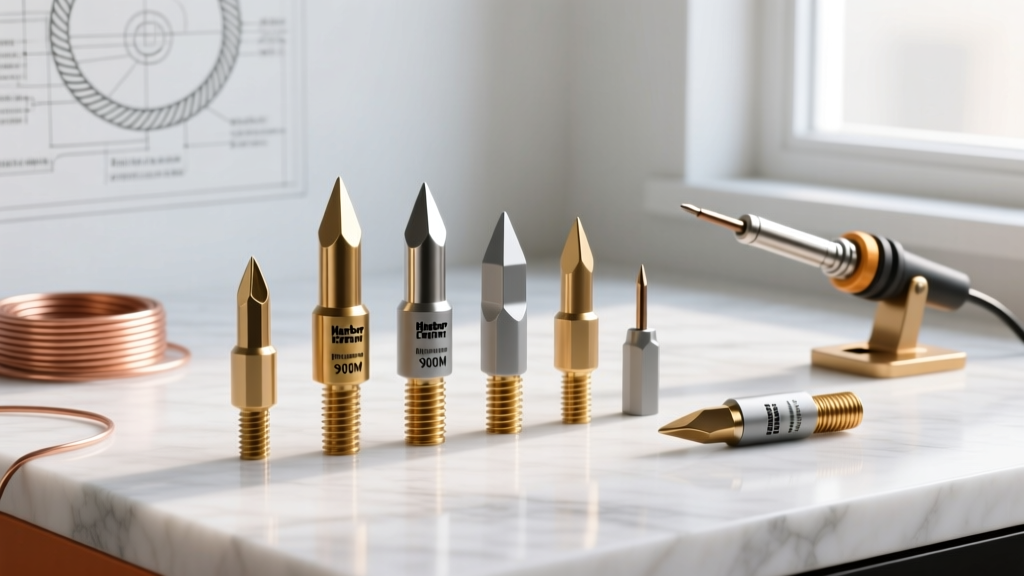
Premium setups mitigate this by utilizing low-thermal-mass, high-surface-area tips (like the JBC C245 clones adapted for the TS101). Because the heater cartridge is integrated directly into the tip's core, thermal recovery happens in milliseconds, allowing the technician to maintain the precise 3-second dwell time required for a flawless, IPC-compliant fillet without overheating the surrounding board.
Verdict: Which Setup Fits Your Workflow?
The choice between a budget and premium battery soldering station ultimately depends on your tolerance for thermal compromise.
Choose the Budget Tier If:
- You primarily work with through-hole components, light-gauge wires (22 AWG and smaller), and basic 2-layer PCBs.
- You are a hobbyist or drone pilot who needs an emergency field repair tool that is lightweight and easily replaceable.
- You are comfortable navigating open-source firmware to manually tune PID settings for specific tip masses.
Invest in the Premium Tier If:
- You perform live field rework on multi-layer motherboards, automotive ECUs, or aerospace telemetry boards where IPC compliance is mandatory.
- You require BLE data logging to document thermal profiles for quality assurance and client reporting.
- You value long-term battery health and require a power bank with an advanced BMS to handle continuous 100W draws safely.
In 2026, the gap between benchtop performance and cordless convenience has effectively closed—but only if you invest in the premium power delivery architecture required to feed the smart iron. A $100 smart iron is only as good as the battery powering it; do not bottleneck your field repairs with an inadequate power source.