
The Shift to Lead-Free: Why Brand Formulation Matters
The transition to lead free soldering is no longer just a regulatory hurdle; it is the baseline standard for modern electronics manufacturing and high-reliability DIY projects. Driven by global RoHS directives and environmental safety standards outlined by the Environmental Protection Agency (EPA), the market has been flooded with various lead-free alloys. However, not all lead-free solder wires are created equal. The difference between a pristine, shiny fillet and a fragile, cold joint often comes down to the specific flux chemistry and alloy purity engineered by the manufacturer.
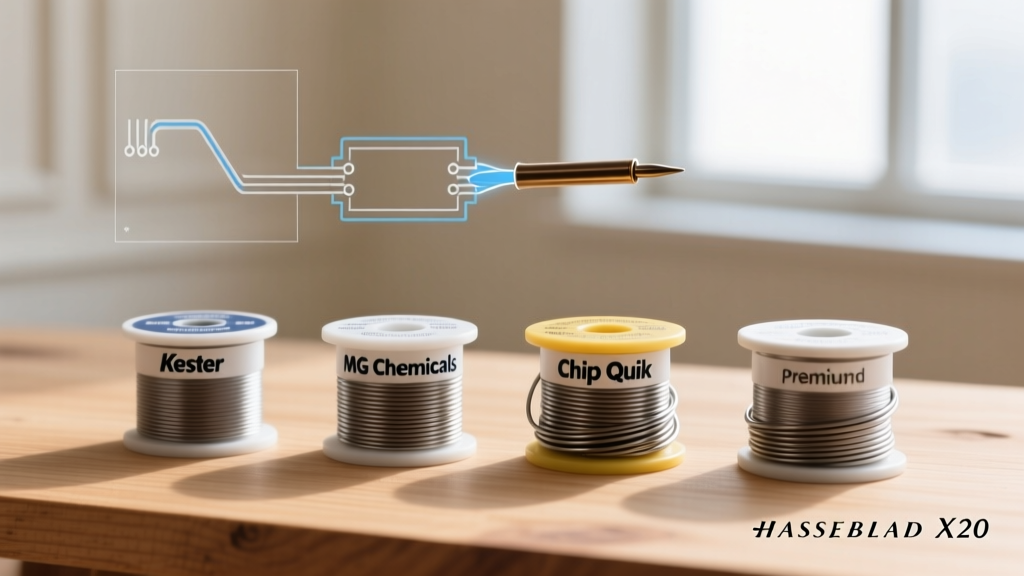
In 2026, the consumables market has matured. We no longer have to deal with the brittle, dull joints that plagued early 2010s lead-free formulations. Today, we are comparing the top four brands dominating the benchtop and rework space: Kester, MG Chemicals, Chip Quik, and Henkel Multicore. Whether you are assembling aerospace-grade drones or repairing consumer PCBs, this guide breaks down exact model numbers, flux classifications, and thermal requirements.
Alloy Showdown: SAC305 vs. SN100C vs. SAC405
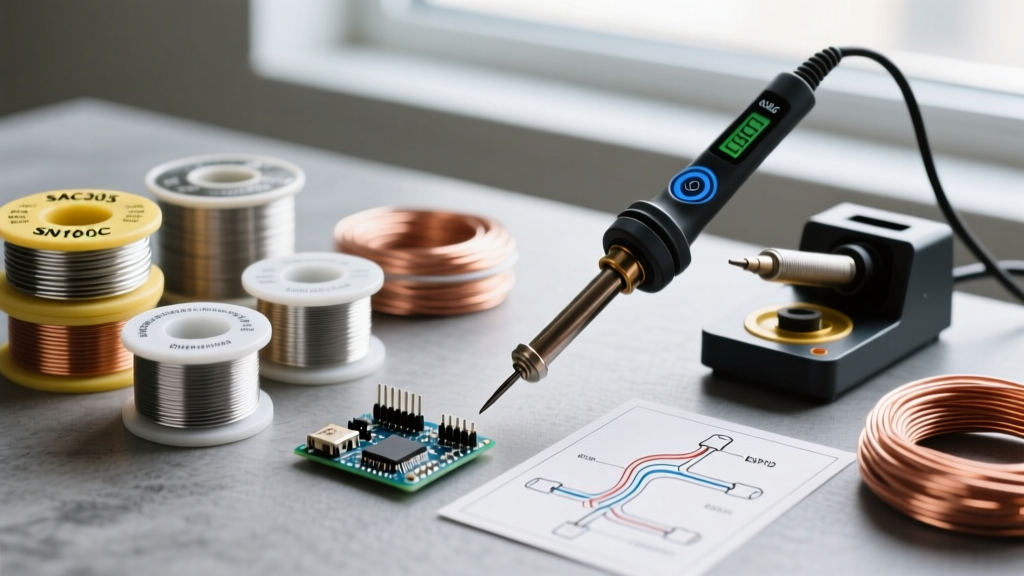
Before diving into brands, you must understand the metallurgy. Lead-free soldering primarily relies on Tin (Sn) as the base metal, alloyed with Silver (Ag), Copper (Cu), and sometimes Nickel (Ni) or Bismuth (Bi). Below is the technical matrix of the most common wire alloys you will encounter.
| Alloy Designation | Composition | Melting Point (Solidus/Liquidus) | Best Application | Approx. Cost (1lb Spool) |
|---|---|---|---|---|
| SAC305 | 96.5% Sn, 3.0% Ag, 0.5% Cu | 217°C / 220°C | General purpose, SMD, through-hole | $40 - $55 |
| SN100C | 99.3% Sn, 0.7% Cu, trace Ni/Ge | 227°C / 227°C (Eutectic) | Wave soldering, high-temp environments | $25 - $35 |
| SAC405 | 95.5% Sn, 4.0% Ag, 0.5% Cu | 217°C / 221°C | High-reliability, automotive, aerospace | $50 - $65 |
Note: SAC305 remains the undisputed king of hand soldering due to its lower melting point and excellent wetting characteristics, provided the flux core is optimized for the higher thermal demands.
Top Lead Free Soldering Brands Head-to-Head
1. Kester (The Industry Standard)
Kester is the benchmark against which all other lead free soldering consumables are measured. For hand soldering, their Kester 275 and 4894 flux formulations paired with SAC305 wire are legendary.
- Flagship Product: Kester 275 SAC305 (0.031" diameter)
- Flux Chemistry: No-Clean, Halogen-Free, ROL0 classified per IPC-J-STD-004B standards.
- Performance: Kester 275 offers exceptional wetting speed. The flux activates precisely at the 217°C melting threshold, preventing the solder from balling up on the iron tip. The residue is truly no-clean, leaving a hard, transparent, and non-conductive shell that will not cause dendritic growth on fine-pitch QFN pads.
- The Catch: It is expensive. A 1lb spool of Kester 275 SAC305 will cost upwards of $55 in 2026. Furthermore, counterfeit Kester wire is rampant on third-party marketplaces; always buy from authorized distributors like Digi-Key or Mouser.
2. MG Chemicals (The Accessible Workhorse)
For university labs, makerspaces, and rapid prototyping, MG Chemicals provides a highly accessible entry point into reliable lead-free assembly.
- Flagship Product: MG Chemicals 4888-227G (SAC305, 0.8mm)
- Flux Chemistry: Rosin-Based (RMA), mildly activated.
- Performance: The 4888 series uses a traditional rosin core that is slightly more forgiving on oxidized pads than no-clean alternatives. It requires a slightly higher iron temperature (around 360°C) to fully activate the rosin and achieve a glossy finish. It leaves a sticky, amber residue that must be cleaned with isopropyl alcohol (IPA) or a dedicated flux remover to prevent long-term corrosion.
- The Catch: The mandatory cleaning step adds time to the assembly process. It is not recommended for high-density BGA or micro-SMD work where flux entrapment is a risk.
3. Chip Quik (The SMD & Repair Specialist)
Chip Quik has carved out a massive niche in the rework and repair community. While famous for their low-temperature desoldering alloys, their standard lead-free offerings are top-tier.
- Flagship Product: Chip Quik SMD291AX (SAC305, 0.5mm)
- Flux Chemistry: No-Clean, high-activity synthetic resin.
- Performance: The SMD291AX is engineered specifically for drag-soldering and fine-pitch rework. The 0.5mm wire diameter melts almost instantly upon contact with a properly preheated board (preheating to 120°C is highly recommended). The flux spatter is minimal, which is critical when working under a microscope near sensitive optical sensors or MEMS microphones.
- The Catch: The high-activity flux can occasionally cause slight charring on the soldering iron tip if left unattended at 380°C for extended periods. Tip tinning is mandatory after every joint.
4. Henkel Multicore (The High-Reliability Choice)
When failure is not an option—such as in medical devices or automotive ECUs—Henkel’s Multicore line is the go-to specification.
- Flagship Product: Multicore 39 (SAC405, 0.022")
- Flux Chemistry: No-Clean, Halogen-Activated (ROL1).
- Performance: Multicore 39 contains trace halogens that aggressively strip heavy oxidation from aged PCB pads, ensuring a metallurgical bond even on difficult surfaces like ENIG or immersion silver finishes. The SAC405 alloy provides superior thermal cycling resistance and drop-shock durability compared to SAC305.
- The Catch: The ROL1 flux classification means the residue, while generally safe, contains halide activators. In high-humidity, high-voltage environments, conformal coating or ultrasonic cleaning is required post-soldering to prevent electrochemical migration.
Critical Failure Modes in Lead Free Soldering
Transitioning from 63/37 leaded solder to lead free soldering introduces specific thermal and metallurgical challenges. Understanding these failure modes will save you from catastrophic board damage.
Expert Warning: The Tip Erosion Crisis
Lead-free solder, particularly SAC alloys, is highly aggressive to the iron (Fe) plating on standard soldering tips. The tin in the alloy literally dissolves the iron plating at temperatures above 350°C. A standard tip that lasts 6 months with leaded solder may pit and hollow out in just 2 weeks with lead-free. Always use tips specifically designated for lead-free work (e.g., Hakko T18 series or Weller RTW tips with advanced multi-layer plating) and never leave the iron idle at 380°C. Use sleep/standby modes aggressively.
1. Copper Dissolution (Pad Lifting)
Because lead-free alloys require higher temperatures (350°C - 380°C) and longer dwell times to achieve proper wetting, the molten solder can dissolve the underlying copper trace. If you hold the iron on a 0.2mm trace for more than 4 seconds, the copper will leach into the solder pool, resulting in a lifted pad. Solution: Use a high-wattage station (minimum 70W, ideally 100W+) with active tip sensing to deliver instantaneous thermal recovery, allowing you to complete the joint in under 2 seconds.
2. Tombstoning and De-wetting
Lead-free solder has a higher surface tension than leaded solder. If the flux activates and burns off before the solder fully melts and flows, the surface tension will pull the component upright (tombstoning) or cause the solder to bead up and refuse to wet the pad (de-wetting). Solution: Apply the solder wire directly to the heated pad/junction, not to the iron tip. Let the thermal mass of the board melt the wire, ensuring the flux is released exactly where it is needed.
3. Micro-Cracking in Thermal Cycling
SAC305 joints are stiffer and more brittle than 63/37 joints. In environments subject to extreme temperature swings or mechanical vibration, SAC305 can develop micro-cracks along the intermetallic compound (IMC) boundary. For high-vibration applications, consider doped alloys like SN100C (which includes Nickel to stabilize the IMC layer) or SAC405.
Flux Chemistry: Navigating IPC Classifications
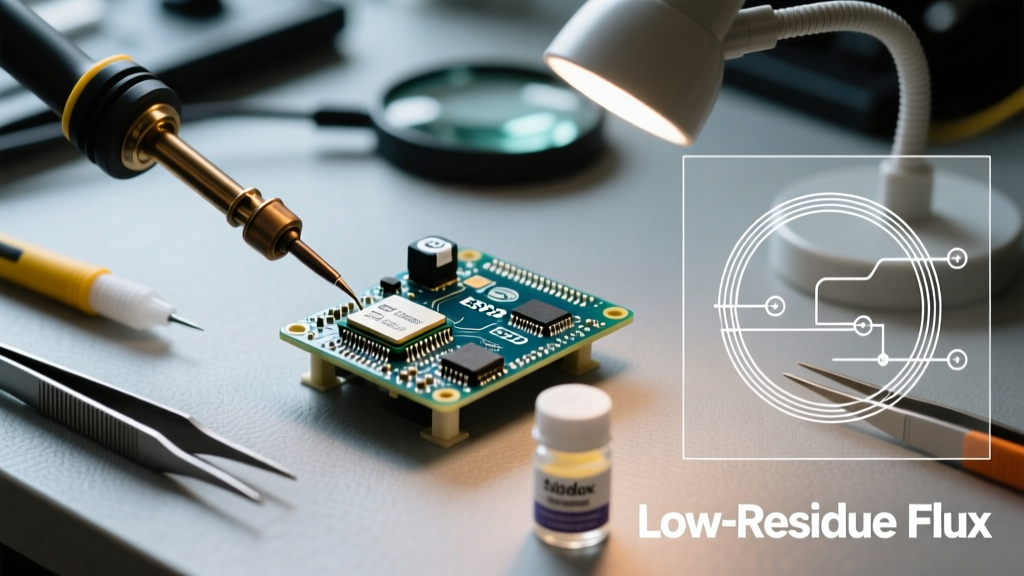
When selecting your wire, the flux core is just as important as the metal. The Occupational Safety and Health Administration (OSHA) and IPC strictly regulate flux emissions and residues. Here is how to decode the IPC-J-STD-004B classifications found on premium solder wire spools:
- RO (Rosin): Natural pine-derived. Excellent shelf life, but leaves a sticky residue requiring IPA cleaning.
- OR (Organic): Water-soluble organic acids. Extremely aggressive, perfect for heavily oxidized through-hole components, but must be washed with DI water post-soldering to prevent rapid corrosion.
- IN (Inorganic): Rarely used in electronics wire; reserved for heavy plumbing and structural soldering.
- RE (Resin): Synthetic rosin. The modern standard for no-clean formulations. Offers the wetting power of rosin without the tacky residue.
The Activity Level (L0, L1, M0, M1, H1) dictates the halide content. L0 (Low, 0% halides) is mandatory for true no-clean, high-impedance RF boards. H1 (High halides) should only be used for difficult-to-solder nickel-plated connectors where post-assembly washing is guaranteed.
Expert Verdict: Which Brand Should You Buy?
Your choice of lead free soldering wire should be dictated by your specific workflow, budget, and cleaning capabilities.
- Choose Kester 275 (SAC305) if you are building commercial products, working on fine-pitch SMDs, and require a true no-clean process. The premium price is justified by the zero-defect wetting performance and pristine residue.
- Choose MG Chemicals 4888 if you are a hobbyist, student, or running a repair shop where you already have an ultrasonic cleaner or IPA wash station set up. It is forgiving, affordable, and widely available.
- Choose Chip Quik SMD291AX if your primary focus is PCB rework, drag-soldering dense SOIC/TQFP chips, and you need minimal flux spatter under magnification.
- Choose Henkel Multicore 39 (SAC405) if you are manufacturing automotive, medical, or aerospace hardware where thermal shock resistance and aggressive wetting on ENIG finishes are non-negotiable.
Mastering lead-free assembly is less about brute-forcing heat and more about understanding the chemical synergy between the alloy and the flux core. By matching the right brand formulation to your specific thermal profile, you will achieve joints that are not only visually inspectable but metallurgically sound for years to come.