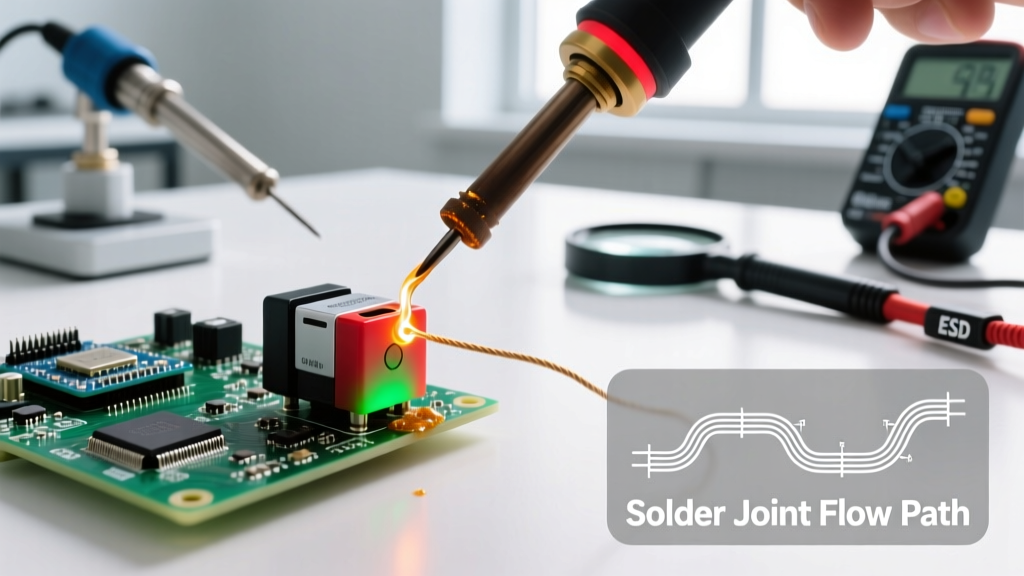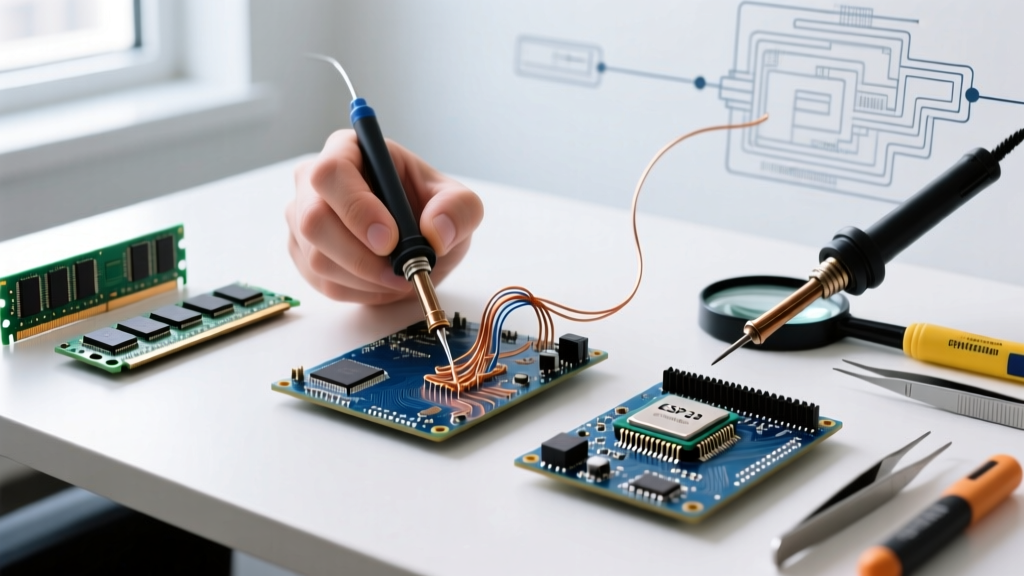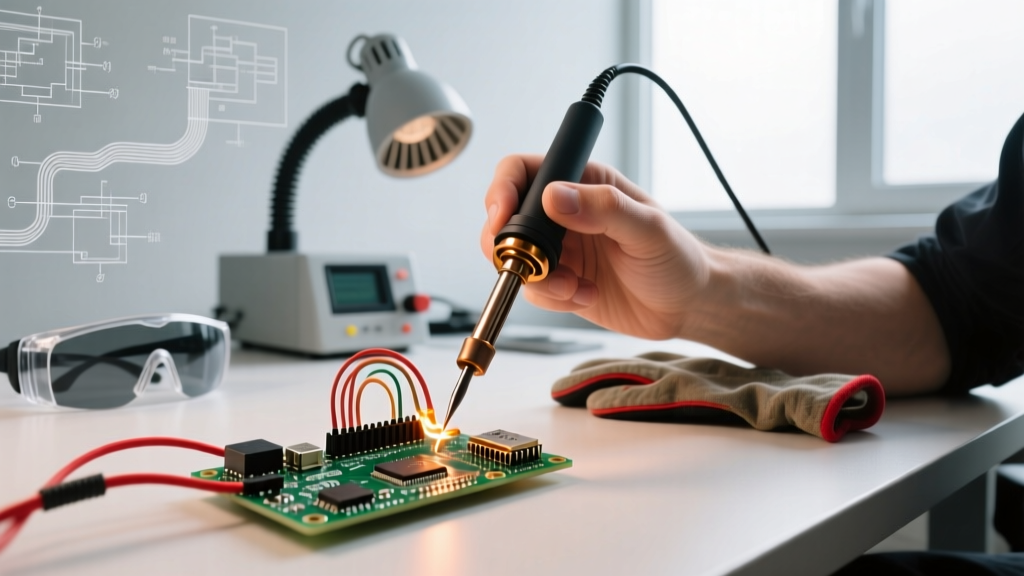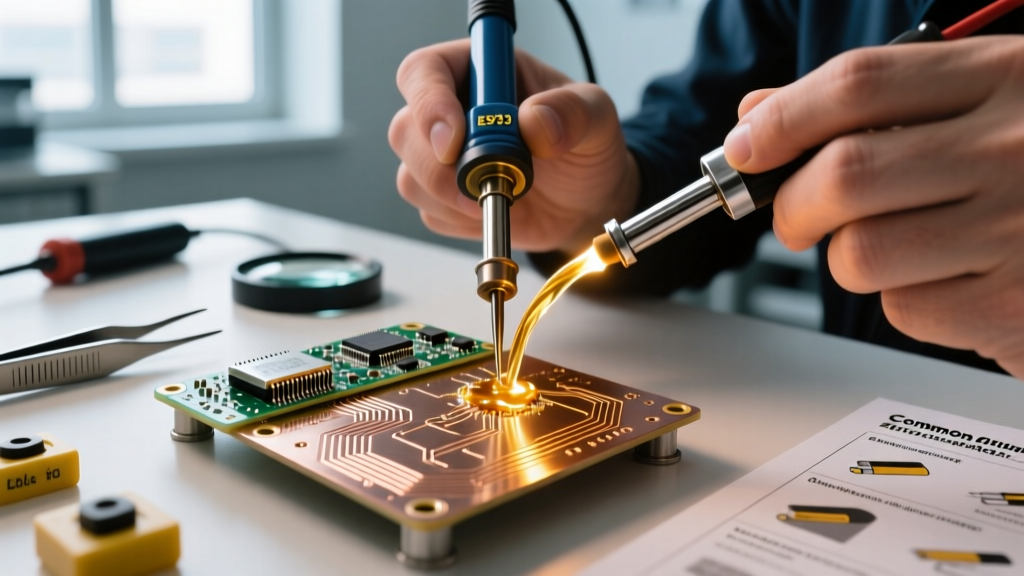

The Core Purpose: What Is Soldering Used For?
At its metallurgical core, soldering is a process used to join two or more metal items by melting and flowing a filler metal (solder) into the joint. Unlike welding, the base metals being joined do not melt. This creates a strong, electrically conductive, and often watertight bond at relatively low temperatures. But beyond the basic definition, what is soldering used for in practical, real-world applications? The answer spans across microscopic semiconductor packaging to heavy-duty residential plumbing.
In 2026, the soldering landscape has evolved significantly. Stricter environmental regulations have accelerated the adoption of advanced lead-free alloys in consumer electronics, while specialized flux chemistries have made high-reliability joints more accessible to DIYers and professionals alike. Below, we break down the primary applications of soldering and provide an expert-level troubleshooting FAQ to help you diagnose and fix common joint failures.
Primary Applications of Soldering
1. Electronics and PCB Assembly
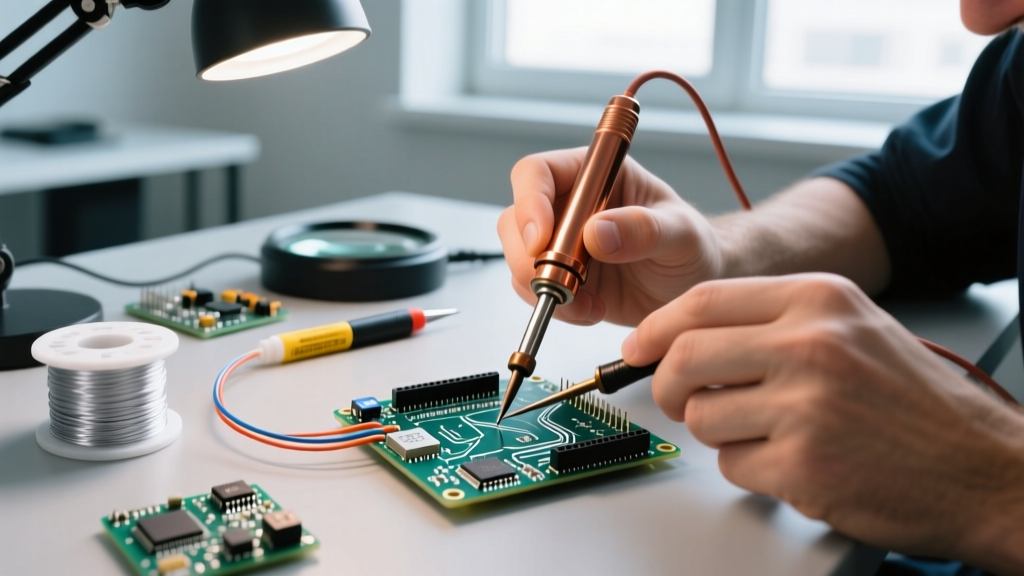
The most common answer to 'what is soldering used for' in the modern era is printed circuit board (PCB) assembly. Solder provides both the mechanical anchor and the electrical pathway for components. Applications include:
- Through-Hole Technology (THT): Used for heavy components like large capacitors, transformers, and connectors that require high mechanical strength.
- Surface Mount Technology (SMT): The standard for modern microelectronics. Solder paste (a suspension of microscopic solder spheres in flux) is applied via stencil, and components are placed and reflowed in an oven.
- Wire Splicing and Harnessing: Joining stranded copper wires for automotive wiring harnesses, robotics, and aerospace applications where crimping might fail under extreme thermal cycling.
For high-reliability aerospace and medical electronics, the NASA Electronic Parts and Packaging (NEPP) program mandates strict workmanship standards (NASA-STD-8739.3) that dictate exact wetting angles and fillet shapes for soldered connections.
2. Plumbing and HVAC Systems
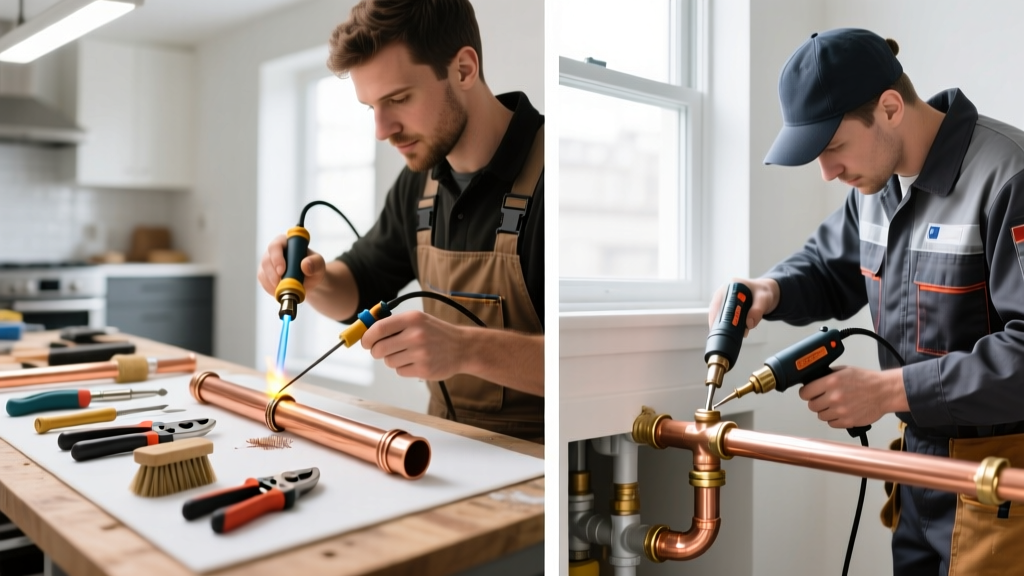
In residential and commercial plumbing, soldering (often called 'sweating') is used to create permanent, leak-proof seals in copper water lines. The process relies entirely on capillary action. According to the Copper Development Association, the optimal clearance between the copper tube and the fitting must be between 0.001 and 0.005 inches to allow the molten solder to be drawn deep into the joint.
For HVAC and refrigeration lines, technicians use silver-bearing phosphorus-copper alloys (like Sil-Fos) which can withstand the high pressures and thermal expansion of refrigerant gases without fracturing.
3. Jewelry and Metalcraft
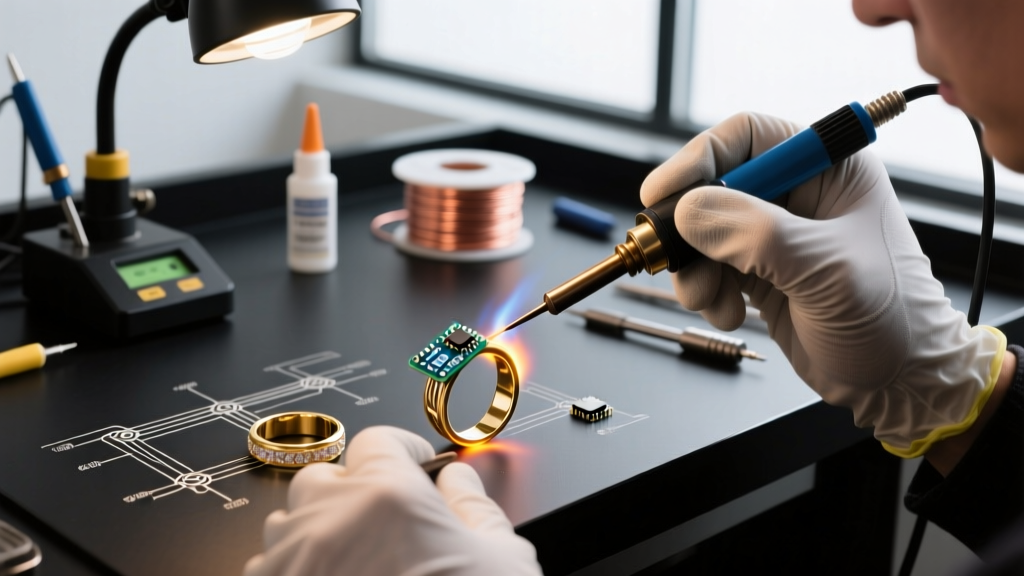
Jewelers use hard soldering (often technically classified as brazing due to the higher temperatures) to join precious metals like sterling silver and gold. Unlike electronics solder, jewelry solder is formulated to match the color and karat of the base metal. It is graded by melting temperature into 'Hard', 'Medium', and 'Easy' to allow for multiple sequential soldering steps without melting previous joints.
4. Stained Glass and Artisan Metalwork
Stained glass artisans use soldering to join pieces of glass wrapped in copper foil. Because glass cannot be alloyed, the solder simply forms a structural bead over the copper tape. A 60/40 (Tin/Lead) alloy is heavily preferred here for its wide 'pasty range' (the temperature gap between solidus and liquidus), which allows the artist to sculpt smooth, rounded beads before the solder freezes.
Soldering Alloys and Applications Matrix
Selecting the correct alloy is the most critical decision in any soldering project. Using the wrong alloy is the root cause of 80% of field failures. Refer to this matrix for standard 2026 material selections:
| Application | Recommended Alloy | Melting Point (Solidus/Liquidus) | Required Flux Type |
|---|---|---|---|
| Commercial PCB (Lead-Free) | SAC305 (Sn96.5/Ag3.0/Cu0.5) | 217°C / 220°C | No-Clean or Water-Soluble |
| Prototype / Hobby PCB | Sn60/Pb40 (Leaded) | 183°C / 190°C | Rosin (RMA) |
| Copper Plumbing (Potable) | 95/5 Tin-Antimony | 227°C / 240°C | Paste (Tinning Flux) |
| HVAC Refrigerant Lines | 15% Silver Phos-Copper | 640°C / 680°C | Self-Fluxing (on Copper-to-Copper) |
| Stained Glass Foil | 60/40 Tin-Lead | 183°C / 190°C | Liquid Zinc Chloride / Oleic Acid |
Troubleshooting FAQ: Solving Common Soldering Failures
Even experienced technicians encounter joint failures. Here is how to troubleshoot the most frequent issues encountered across different soldering disciplines.
Q: Why does my solder ball up and refuse to wet the pad?
Diagnosis: This is a classic symptom of oxidation or insufficient thermal transfer, resulting in a 'cold joint' or complete dewetting. If the solder forms a sphere and rolls off the copper pad, the pad is oxidized, or the flux has been burned off before the solder could flow.
Solution: 1. Stop applying heat immediately to prevent lifting the PCB pad. 2. Clean the iron tip using a brass wire sponge (e.g., Hakko 599B), never a wet sponge, which causes thermal shock and micro-cracking in the tip's iron plating. 3. Apply a high-quality tacky flux (like Amtech NC-559-V2-TF or ChipQuik SMD291AX) directly to the joint. 4. Retin your iron tip and reapply heat, allowing the flux to activate and strip the oxides before introducing fresh solder wire.
Q: What is soldering used for when a joint keeps cracking under vibration?
Diagnosis: Standard tin-lead or SAC alloys have relatively low tensile and shear strength. If a soldered wire splice in an automotive or drone application is failing under mechanical vibration, the solder is experiencing fatigue cracking.
Solution: Solder should never be relied upon as the primary mechanical strain relief. You must incorporate physical strain relief, such as heat shrink tubing with an inner adhesive lining, or cable ties. If the joint itself must absorb vibration, consider switching to a high-tensile alloy like Sn96.5/Ag3.5 (which lacks copper, reducing intermetallic brittleness) or use mechanical crimping combined with a light solder seal.
Q: Can I use plumbing solder on a drone flight controller?
Diagnosis: This is a catastrophic error. Plumbing solder utilizes an acid core flux (typically zinc chloride or ammonium chloride) designed to aggressively eat through heavy oxidation on thick copper pipes.
Solution: Never use acid core flux on electronics. The acid residue is highly conductive and corrosive; it will cause galvanic corrosion of the PCB traces and create parasitic short circuits within hours. Always use Rosin (RMA) or No-Clean flux formulations specifically engineered for electronic assembly, which become inert and non-conductive after cooling.
Advanced Failure Modes and Edge Cases
Tombstoning in SMD Assembly
When reflowing small passive components (like 0402 or 0201 resistors), you may encounter 'tombstoning,' where the component stands up on one end. This occurs due to unequal wetting forces. If one pad heats up faster than the other, the solder paste on the hotter pad melts first, and the surface tension pulls the component upright. To fix this, ensure your thermal profile has a prolonged 'soak' zone (typically 150°C to 180°C for 60-90 seconds) to equalize the temperature across the entire PCB before the liquidus point is reached.
Copper Dissolution (Leaching)
When using lead-free solders (like SAC305) at high temperatures (over 350°C at the tip), the tin in the solder aggressively dissolves the copper from the PCB pad or the iron tip itself. This is known as copper leaching. It results in pitted, cratered pads and rapid degradation of your soldering iron tips. To mitigate this in 2026, use specialized long-life tips with thicker iron plating, and lower your iron temperature to 320°C-330°C, compensating with a larger tip geometry (like a bevel or hoof tip) to increase thermal mass transfer rather than relying on extreme heat.
Expert Insight: According to IPC standards, the acceptability of a solder joint is not just about electrical continuity. A proper fillet must exhibit a smooth, concave transition with a distinct wetting angle of less than 90 degrees. Dull, grainy finishes in lead-free alloys are normal and do not necessarily indicate a cold joint, unlike in leaded solders where a shiny finish is mandatory.
Final Thoughts on Soldering Applications
Understanding what soldering is used for requires looking beyond the soldering iron and examining the metallurgy, the flux chemistry, and the mechanical environment of the final product. Whether you are sweating a 3/4-inch copper water line with a 95/5 alloy or drag-soldering a 0.5mm pitch QFP microchip with no-clean flux, the principles of capillary action, thermal mass, and oxide removal remain universal. Equip yourself with the correct alloy, respect the flux, and always design for mechanical strain relief to ensure your joints outlast the devices they connect.