
Understanding the Types of Soldering for Material Compatibility
Choosing the correct joining method is the difference between a lifelong mechanical bond and a catastrophic field failure. When engineers and DIYers evaluate the types of soldering available, they often focus solely on the tool—a soldering iron or a torch. However, true expertise lies in matching the thermal process, the filler alloy, and the flux chemistry to the specific metallurgical properties of the base material.
As of 2026, advancements in lead-free mandates and low-temperature bismuth alloys have fundamentally shifted how we approach material compatibility. This guide breaks down the primary types of soldering—soft, hard (silver brazing), and specialty aluminum processes—and maps them to their ideal base materials, complete with exact alloy specifications, current market pricing, and critical failure modes.
1. Soft Soldering (Below 450°C / 842°F)
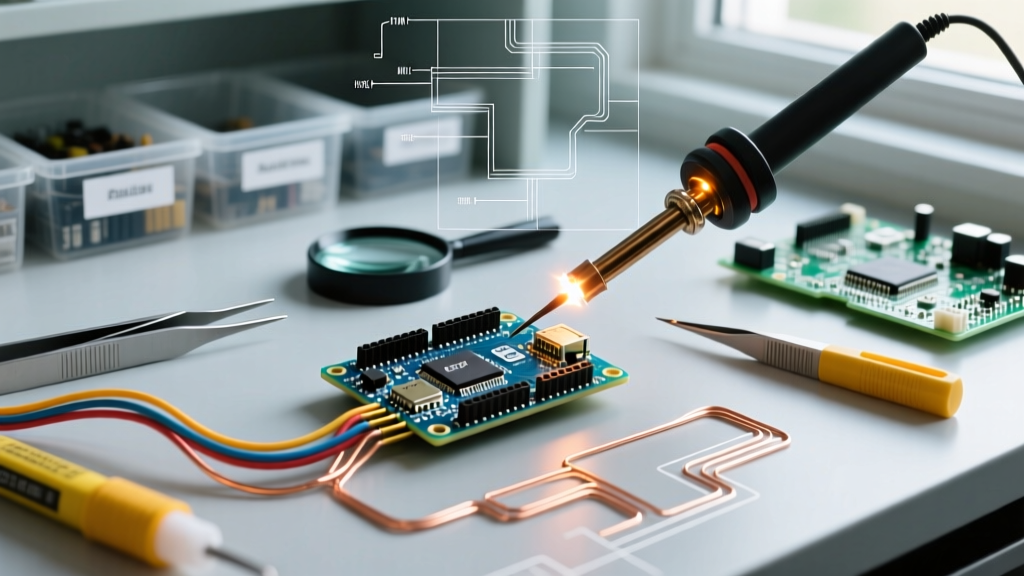
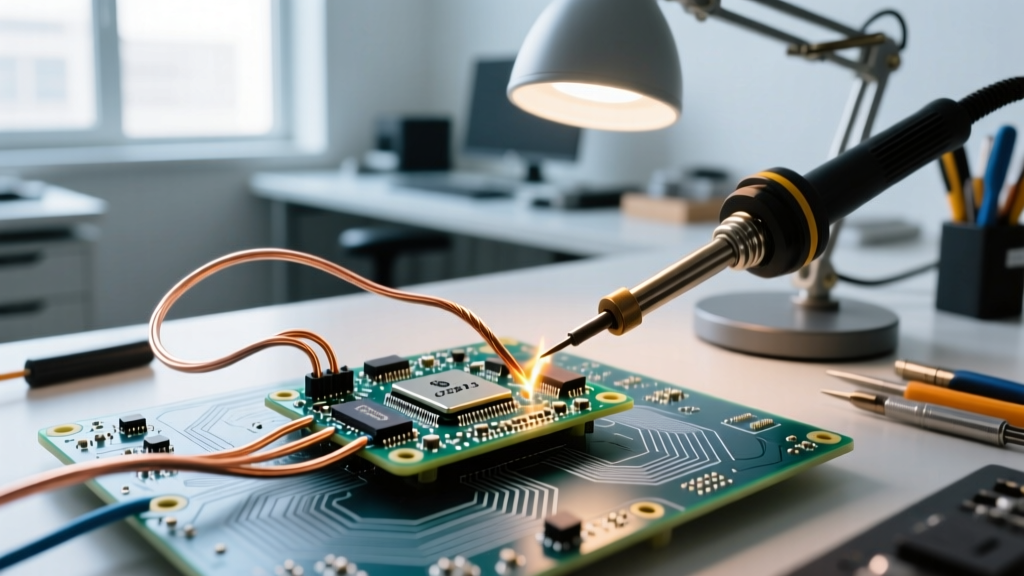
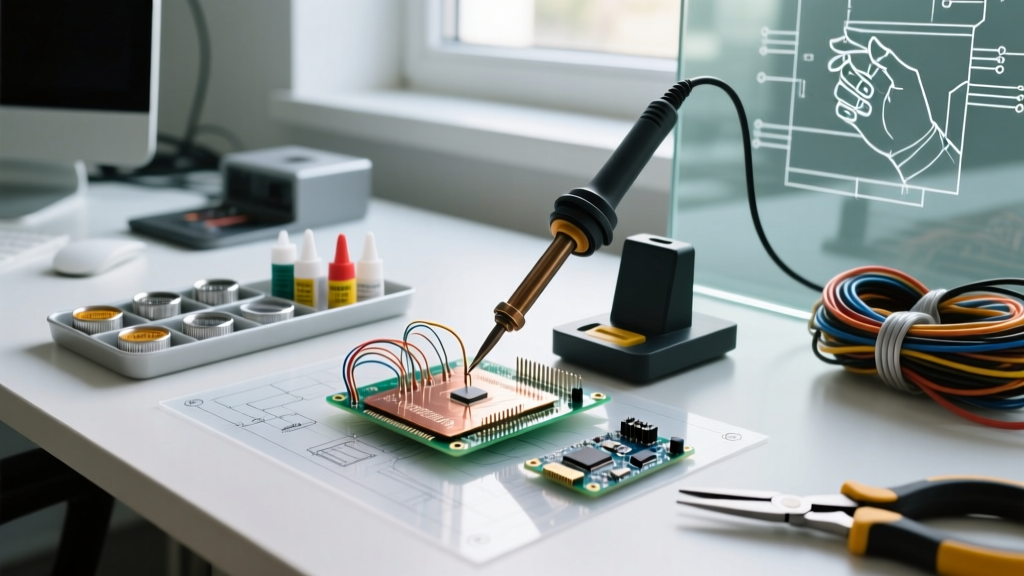
Soft soldering relies on capillary action and metallurgical wetting at relatively low temperatures. It is the standard for electronics, light plumbing, and automotive wiring. The base materials must possess high thermal conductivity and resist oxidation long enough for the flux to clean the surface.
Compatible Base Materials
- Copper & Brass: Excellent wetting characteristics. Ideal for PCB traces and plumbing.
- Tin-Plated & Silver-Plated Metals: The plating acts as a sacrificial layer that easily alloys with the solder.
- FR-4 & Polyimide PCBs: Standard electronics substrates.
Recommended Alloys & 2026 Pricing
- Sn63/Pb37 (Eutectic): Melts at a precise 183°C (361°F). Remains the gold standard for aerospace and hobbyist electronics due to its lack of a plastic state. Cost: $25–$35 per lb.
- SAC305 (Sn96.5/Ag3.0/Cu0.5): The industry-standard lead-free alloy for commercial electronics. Melts between 217°C–220°C. Requires higher iron tip temperatures (350°C+). Cost: $45–$60 per lb.
- Sn42/Bi57/Ag1 (Low-Temp Lead-Free): Melts at just 138°C. Perfect for heat-sensitive components and step-soldering, but brittle under mechanical shear stress. Cost: $70–$90 per lb.
Expert Troubleshooting: If you are soft-soldering heavy brass terminals (like 10 AWG battery lugs) with a standard 40W iron, you will experience 'cold joints.' The brass acts as a massive heat sink. Upgrade to an 80W+ station with active tip sensing, such as the Hakko FX-951 ($350) or Weller WE1010NA ($115), to maintain thermal equilibrium during wetting.
2. Hard Soldering & Silver Brazing (450°C – 800°C)
Often referred to interchangeably in the trades, hard soldering and silver brazing operate above the 450°C threshold defined by the American Welding Society (AWS). This process is required when joining ferrous metals, high-stress structural components, or heavy-gauge refrigeration lines where soft solder would melt or creep under load.
Compatible Base Materials
- Stainless Steel & Carbon Steel: Soft solder will not wet steel; silver brazing is mandatory.
- Carbide to Steel (Tooling): Joining tungsten carbide cutting tips to steel shanks.
- Heavy Copper & Cupronickel: High-pressure HVAC and refrigeration lines.
Alloys, Fluxes, and Edge Cases
For steel and stainless steel, you must use a cadmium-free silver-bearing alloy. The Harris Safety-Silv 45% (45% Silver, 30% Copper, 25% Zinc) is the premier choice, offering excellent flow and a tensile strength exceeding 70,000 PSI. Expect to pay around $180–$220 for a 1-ounce tube, reflecting the 2026 precious metals market.
Critical Flux Requirement: You must use a white borax-based flux (e.g., Harris White Flux) applied before the metal reaches oxidizing temperatures. If the steel turns black (forming heavy iron oxide scale) before the flux melts at ~593°C, the braze will fail to wet. Quenching or wire-brushing the hot scale is required to restart.
3. Specialty Aluminum Soldering
Aluminum is notoriously hostile to traditional soldering. Its surface instantly forms a microscopically thin, incredibly hard layer of aluminum oxide (Al2O3) that melts at over 2,000°C—far above the melting point of the base aluminum (660°C). Standard rosin or water-soluble fluxes cannot dissolve this oxide layer.
Compatible Base Materials
- 1100, 3003, and 5052 Aluminum Alloys: Excellent compatibility with specialty zinc-aluminum solders.
- 6061 Aluminum: Poor compatibility. The high magnesium and silicon content disrupts wetting. TIG welding is strongly preferred over soldering for 6061.
The Mechanical Abrasion Technique
To solder aluminum, you must use a Zinc-Aluminum eutectic alloy (such as Alumaloy, roughly $30 for a 12-rod kit). These alloys melt around 380°C (716°F) and require no chemical flux. Instead, you use a stainless steel wire brush through the molten puddle of solder while it sits on the heated aluminum base. The liquid solder excludes oxygen, and the mechanical brushing physically shatters the oxide layer beneath the puddle, allowing the zinc to alloy directly with the raw aluminum.
Failure Mode Warning: Soldering aluminum directly to copper creates a severe galvanic corrosion cell. In the presence of any ambient moisture, the aluminum will rapidly act as a sacrificial anode and disintegrate. Always use a dielectric isolation barrier or a specialized bimetallic lug when transitioning between these metals.
4. Reflow and Wave Soldering (High-Volume PCB)
When scaling from prototyping to manufacturing, the types of soldering shift from manual hand-soldering to automated thermal profiling. According to the IPC J-STD-001 standard, automated processes require strict adherence to thermal mass calculations to prevent component damage.
Reflow Soldering (SMT Components)
Uses solder paste (e.g., Kester EP256 SAC305, ~$45 per 500g jar) applied via stencil. The PCB passes through a multi-zone convection oven. The critical metric is the Time Above Liquidus (TAL). For SAC305, the TAL must be strictly maintained between 45 and 90 seconds. Exceeding 90 seconds depletes the copper pads on the FR-4 board, leading to brittle intermetallic compounds (IMCs).
Wave Soldering (Through-Hole Components)
The board passes over a standing wave of molten solder. Failure Mode: 'Shadowing' occurs when tall surface-mount components block the wave from reaching smaller downstream components. Proper PCB layout requires orienting small components parallel to the wave flow and placing them ahead of large ICs.
Material Compatibility Matrix
Use this quick-reference table to match your base material to the correct soldering type, alloy, and flux chemistry.
| Base Material | Recommended Soldering Type | Optimal Alloy (2026 Std) | Required Flux Chemistry | Typical Temp Range |
|---|---|---|---|---|
| Copper (Electronics) | Soft (Hand/Reflow) | SAC305 or Sn63/Pb37 | Rosin (RMA) or No-Clean | 220°C – 350°C |
| Copper (Plumbing) | Soft (Torch) | Sn95/Sb5 or Sn50/Pb50 | Water-Soluble (OA Acid) | 250°C – 300°C |
| Stainless Steel | Hard (Silver Brazing) | Safety-Silv 45% (Ag/Cu/Zn) | White Borax / Fluoride | 650°C – 760°C |
| Carbon Steel | Hard (Silver Brazing) | Safety-Silv 30% or 45% | Black or White Borax Flux | 650°C – 750°C |
| Aluminum (3003/5052) | Specialty Low-Temp | Zinc-Aluminum Eutectic | None (Mechanical Abrasion) | 380°C – 400°C |
| Tungsten Carbide | Hard (Silver Brazing) | Tri-Flo (Ag/Cu/Zn/Ni) | High-Temp Borax Paste | 680°C – 720°C |
Flux Chemistry: The Unsung Hero of Compatibility
No discussion on the types of soldering is complete without addressing flux. Flux is not merely a cleaning agent; it is a chemical oxygen barrier. Using the wrong flux will ruin both the joint and the base material.
- Rosin (RMA - Rosin Mildly Activated): The standard for electronics. It is non-corrosive at room temperature. Safe to leave on PCBs, though no-clean variants (e.g., MG Chemicals 8341) are preferred in 2026 for high-impedance circuits to prevent dendritic growth under humidity.
- Water-Soluble (Organic Acid - OA): Mandatory for copper plumbing and heavy sheet metal. It contains aggressive organic acids that must be washed off with hot water post-soldering. Leaving OA flux on a copper pipe will result in pinhole leaks via acid corrosion within 12 to 18 months, as noted by the Copper Development Association.
- Inorganic Acid (Zinc Chloride/Muriatic): Used for galvanized steel and extreme oxidation. Highly corrosive. Never use on electronics or enclosed plumbing systems where fumes and residue cannot be thoroughly neutralized and flushed.
Final Verdict: Match the Process to the Physics
Selecting from the various types of soldering is ultimately an exercise in applied physics and chemistry. Soft soldering excels in electrical conductivity and low-thermal-stress environments, provided you manage the heat sink effect of heavy copper. Hard soldering provides the sheer mechanical strength required for structural steel and high-pressure HVAC, but demands strict flux management to prevent oxidation scaling. Specialty aluminum soldering bypasses chemistry entirely in favor of mechanical oxide disruption.
By aligning your base material with the correct thermal tier, alloy composition, and flux chemistry, you eliminate the most common failure modes—cold joints, galvanic corrosion, and brittle intermetallics—ensuring your assemblies survive long past their intended lifecycle.