
The Soldering Flame Protector Decision Framework
When working with open-flame torches in confined spaces—whether sweating copper pipes in a residential wall cavity or brazing HVAC linesets near wooden joists—the margin for error is measured in millimeters and milliseconds. As of 2026, the industry-wide shift toward lead-free solders and higher-silver brazing alloys demands prolonged, higher-temperature heat input, drastically increasing the risk of structural fires. Choosing the correct soldering flame protector is no longer just about laying down a generic mat; it requires a calculated decision framework based on thermal dynamics, spatial geometry, and material science.
This guide provides a comprehensive decision matrix to help electricians, plumbers, and HVAC technicians select the exact flame guard, heat shield, or fireproof blanket required for specific high-risk environments. We will dismantle common industry myths, expose critical failure modes, and align your gear with OSHA hot work safety standards and NFPA fire prevention guidelines.
Phase 1: The Thermal Threat Matrix
Before selecting a protector, you must quantify the thermal threat. Different fuel gases produce vastly different flame temperatures and radiant heat profiles. A protector rated for electronics bench work will catastrophically fail under plumbing torch conditions.
- Propane (C3H8): Burns at approximately 3,600°F (1,982°C) in air. Standard for residential copper sweating.
- MAP-Pro (Propylene): Burns at roughly 3,730°F (2,054°C). The modern standard for lead-free solder and light brazing. High radiant heat output.
- Oxy-Acetylene: Reaches up to 5,720°F (3,160°C). Used for heavy silver brazing and steel. Generates extreme, localized thermal shock.
Expert Insight: The primary danger is rarely the direct flame hitting a combustible surface; it is the radiant heat and convective drafting that superheats surrounding materials past their autoignition temperatures over a 5-to-10-minute soldering session.
Phase 2: Categorizing Soldering Flame Protectors
The market is saturated with mislabeled products. To make an informed purchase, we categorize protectors into three distinct functional tiers.
1. Rigid Metal Heat Shields (Flame Guards)
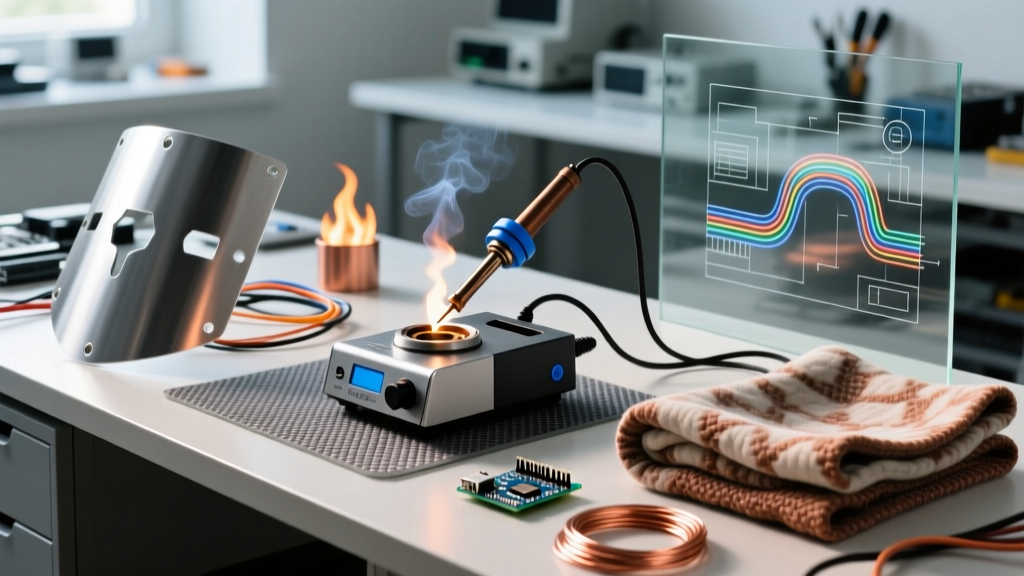
Typically constructed from 22-gauge galvanized steel or aluminum, these rigid shields are designed to reflect and block direct flame impingement. Popular models include the Saf-T-Shield and generic magnetic HVAC guards.
- Best For: Flat, vertical surfaces like drywall or siding where a physical air gap can be maintained.
- Cost Range: $15 - $35.
- Critical Limitation: Thermal Bridging. Metal is highly conductive. If a steel shield rests directly against a wooden stud, the heat will transfer through the metal and char the wood. You must maintain a 0.5-inch air gap or use a shield with integrated ceramic standoffs.
2. Flexible Fiberglass and Vermiculite Mats
Woven fiberglass mats, often treated with vermiculite or graphite coatings, can withstand continuous temperatures up to 2,000°F (1,093°C) and direct flame impingement up to 3,000°F. They are flexible, allowing them to be wrapped around pipes or stuffed into joist bays.
- Best For: Wrapping adjacent PVC pipes, draping over floor joists, or creating a 'tent' over the work area.
- Cost Range: $25 - $60 depending on size and weave density.
- Critical Limitation: Fiberglass shards can cause severe skin irritation. Always handle with heavy leather work gloves.
3. Silicone-Coated 'Soldering Mats' (The Danger Zone)
Many mats marketed online as 'fireproof soldering mats' are actually fiberglass cores coated in silicone rubber. While excellent for catching hot solder drips on a workbench, silicone degrades and ignites at temperatures exceeding 500°F to 900°F.
- Best For: Benchtop electronics, protecting finished countertops from solder drips.
- Cost Range: $15 - $30.
- Critical Limitation: Never use silicone-coated mats for open-torch plumbing or HVAC work. A stray MAP-Pro flame lick will melt the silicone, releasing toxic fumes and potentially igniting the underlying substrate.
Comparative Decision Matrix
Use this table to cross-reference your specific job site conditions with the appropriate protector class.
| Protector Type | Max Continuous Temp | Direct Flame Tolerance | Ideal Application | Weight / Rigidity |
|---|---|---|---|---|
| Rigid Steel Shield | 2,500°F+ | Excellent (Reflects) | Flat walls, siding, electrical boxes | Heavy / Rigid |
| Vermiculite Fiberglass | 2,000°F | Very Good | Joist wrapping, PVC protection | Medium / Flexible |
| Ceramic Fiber Blanket | 2,300°F+ | Exceptional | Enclosed wall cavities, HVAC brazing | Light / Highly Flexible |
| Silicone-Coated Mat | 500°F - 900°F | Poor (Melts/Ignites) | Benchtop electronics, drip catching | Heavy / Flexible |
| Intumescent Putty | N/A (Expands) | Good (Chemical barrier) | Pipe penetrations, tight gaps | Heavy / Moldable |
Phase 3: Real-World Failure Modes & Edge Cases
Even with the right equipment, improper deployment leads to catastrophic failures. Here are the most common edge cases encountered by master tradesmen in the field.
The 'Convection Chimney' Effect
When soldering a vertical copper riser inside a wall cavity, heat naturally rises. If you place a flame protector only below the joint, the convective heat column will travel upward, superheating the top plate or igniting insulation in the attic space. Solution: Always deploy a secondary ceramic blanket or vermiculite mat above the solder joint to act as a thermal cap.
The PVC Proximity Melt
PVC pipes do not need to catch fire to cause a disaster; they only need to reach their glass transition temperature (approx. 176°F / 80°C) to warp and lose pressure integrity. If you are sweating a copper tee within 6 inches of a PVC drain line, a rigid metal shield is insufficient because it will radiate the absorbed heat. Solution: Wrap the PVC pipe in a wet, pure-cotton rag (a classic plumbing trick), then cover it with a dry vermiculite fiberglass mat. The latent heat of vaporization in the wet rag will hold the PVC surface temperature at exactly 212°F until the water boils off, buying you ample time to complete the joint.
Magnetic Shield Grounding Hazards
For electricians and HVAC techs working near live panels, magnetic heat shields are a massive convenience. However, dropping a magnetized steel shield near exposed busbars or ungrounded terminals can result in a dead short or arc flash. Solution: Use non-magnetic aluminum or brass-alloy shields when working within 3 feet of energized electrical components.
Step-by-Step Site Assessment Protocol
Before striking the torch, run through this 4-point assessment framework:
- Map the 35-Foot Radius: Per NFPA 51B guidelines for hot work, identify all combustibles within 35 feet. If they cannot be moved, they must be shielded.
- Identify the Substrate: Are you protecting wood (chars at ~400°F), drywall (paper facing ignites easily), or PVC (warps at ~176°F)?
- Calculate the Air Gap: Ensure your rigid shields have standoffs or are held away from the substrate by at least 0.5 inches to prevent conductive thermal bridging.
- Deploy the Watch: If the geometry prevents a complete visual of the backside of the work area, a dedicated fire watch with an extinguisher is legally and practically mandatory.
Frequently Asked Questions (FAQ)
Can I use a welding blanket for soldering flame protection?
Yes, but with caveats. Traditional carbon-fiber or leather welding blankets are excellent for blocking heavy sparks and slag from stick welding, but they are often too bulky and rigid for the tight, precise spaces required in plumbing or HVAC soldering. Furthermore, some cheap fiberglass welding blankets shed heavily and can contaminate the solder joint flux. Opt for tightly woven, vermiculite-coated blankets specifically rated for plumbing torch work.
Is water-soaked cardboard a viable flame protector?
While historically used by old-school plumbers in a pinch, water-soaked cardboard is highly discouraged in modern practice. As the cardboard dries out from the ambient heat of the torch, it becomes a combustible fuel source itself. Additionally, the dripping water can contaminate your flux, leading to porous, leak-prone solder joints. Stick to engineered ceramic or fiberglass barriers.
How do I clean flux residue off my rigid metal heat shield?
Flux (especially aggressive acid fluxes used for drainage or specialized electrical lugs) will corrode steel shields if left untreated. Wipe the shield down with a 50/50 solution of white vinegar and water to neutralize the alkaline/acidic salts, then dry immediately and apply a light coat of WD-40 or mineral oil to prevent flash rusting before storing it in your truck.
Final Verdict: Build Your Arsenal
There is no single 'universal' soldering flame protector. The professional standard for 2026 requires a modular approach. Your rig should contain at least one rigid aluminum shield with magnetic standoffs for flat, open-wall plumbing work, a vermiculite-coated fiberglass mat for wrapping joists and adjacent piping, and a high-temp ceramic blanket for enclosing tight HVAC brazing zones. By matching the protector's thermal threshold and physical geometry to the specific threat matrix of the job site, you eliminate the risk of structural fire and ensure a clean, code-compliant installation.