
The Hidden Cost of Inaccurate Electronics Imagery
In the highly specialized world of B2B electronics marketing, technical documentation, and DIY knowledge hubs, visual trust is everything. When an electrical engineer, PCBA procurement manager, or serious hobbyist lands on your website to evaluate a $400 Hakko FX-951 soldering station or read a guide on SMD rework, a generic, technically flawed soldering stock photo immediately destroys your credibility. Technical audiences possess a trained eye; they can spot a staged, inaccurate stock image from a mile away, and the resulting 'uncanny valley' effect signals that your brand does not truly understand the industry.
As we navigate the 2026 landscape of technical content marketing, the demand for authentic, IPC-compliant visual assets has never been higher. This guide breaks down the fatal flaws found in 90% of generic stock imagery, the economics of sourcing accurate visuals, and the technical specifications required to evaluate or commission authentic electronics photography.
The 4 Fatal Flaws in Generic Soldering Stock Photos
Most commercial stock photo agencies rely on lifestyle photographers who treat circuit boards as mere props. This results in imagery that is not just technically incorrect, but often depicts dangerous or destructive practices. Before licensing any image, audit it for these four critical failures:
1. Thermal Mass and Tip Geometry Mismatch
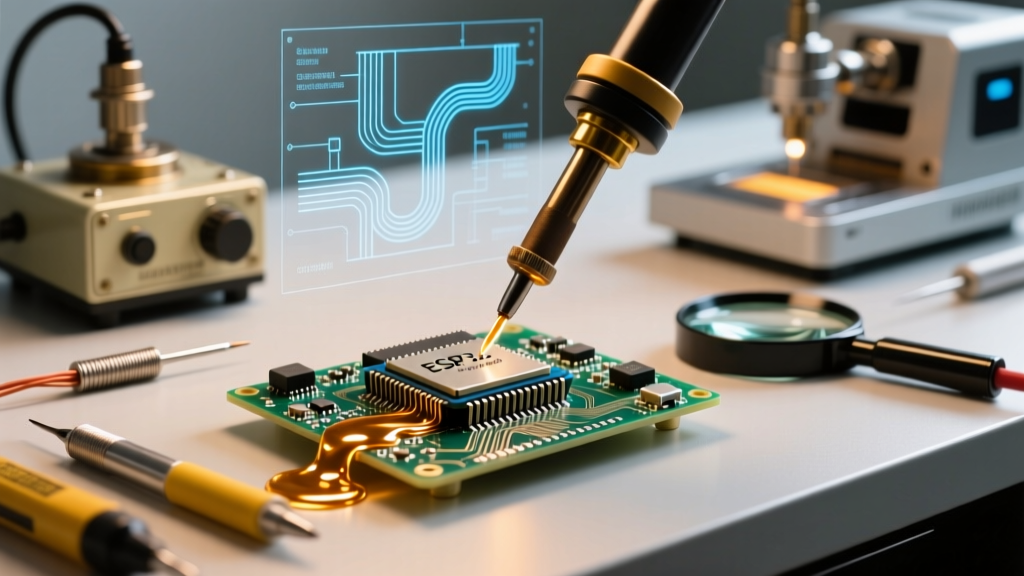
The most common tell-tale sign of a fake setup is the use of a massive 3/16-inch chisel tip to solder an 0805 or 0402 surface-mount component. In real-world precision electronics, micro-soldering requires specialized micro-pencil or conical tips (such as the Hakko T18-IL or Weller RT3). Applying a high-thermal-mass chisel tip to a tiny SMD pad will instantly lift the trace or melt the component housing. If the stock photo shows a giant iron tip dwarfing a microchip, discard it immediately.
2. The 'Cold Joint' and IPC Violations
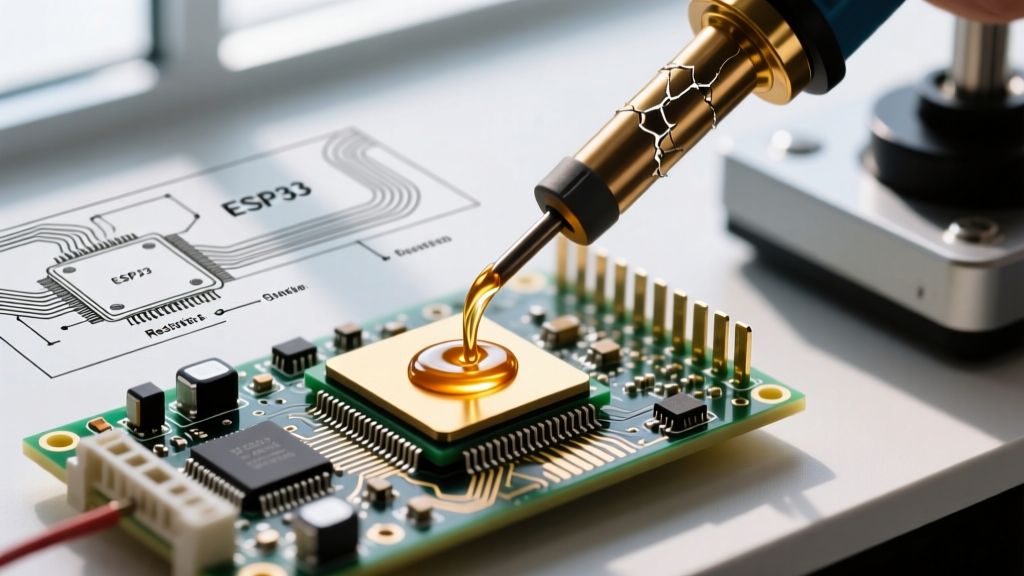
Photographers often stage a joint using a quick dab of dull, gray, or excessively bloated solder to make it 'visible' on camera. However, under IPC standards (specifically IPC-A-610 for Acceptability of Electronic Assemblies), a合格 (acceptable) through-hole or SMD joint must exhibit a smooth, shiny, concave fillet with good wetting. Dull, grainy, or convex spherical blobs indicate cold joints, excess flux residue, or insufficient heating—failures that would result in an immediate reject on a Class 3 aerospace or medical PCBA line.
3. Safety and Ventilation Ignorance
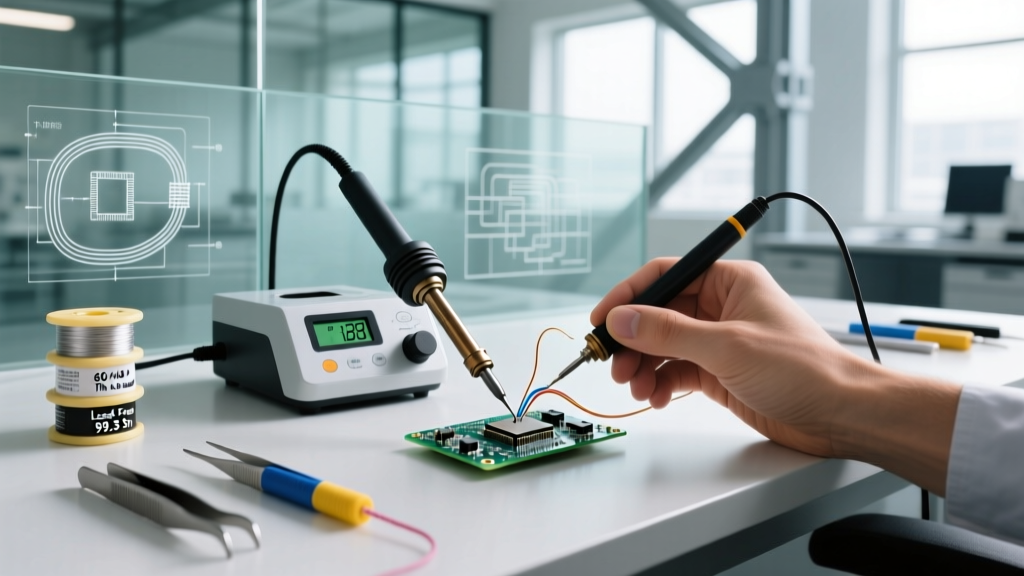
Soldering with rosin-core flux generates hazardous airborne particulates and volatile organic compounds (VOCs). According to Cornell University Environmental Health and Safety guidelines, local exhaust ventilation is strictly required when soldering. Yet, the vast majority of stock photos depict engineers or students hunched directly over a smoking PCB with zero fume extraction. In 2026, showcasing an image without a localized fume extractor (like a BOFA AD350 or a Hakko FA-400) not only looks unprofessional but promotes unsafe laboratory practices.
4. The 'Dagger Grip' and Wire Feeding Errors
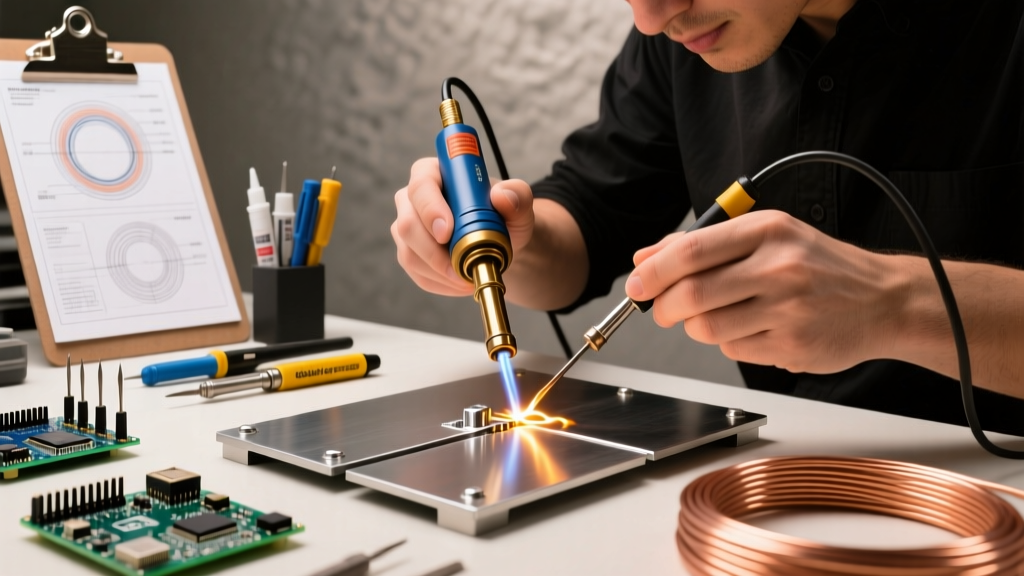
Lifestyle models frequently hold the soldering iron like a dagger or a pencil from the wrong angle, while feeding the solder wire inches away from the melt zone. Proper ergonomics dictate a relaxed pen grip on the iron, with the solder wire fed directly into the intersection of the heated pad and the component lead, not just melted onto the iron tip and 'carried' to the joint (which causes flux burnout and poor wetting).
Sourcing Economics: Stock Platforms vs. Custom Industrial Photography
When building a buyer's guide, an e-commerce category page, or a technical manual, you must weigh the cost of licensing against the risk of brand damage. Below is a comparative breakdown of sourcing strategies available to technical marketers today.
| Sourcing Method | Average Cost (2026) | Technical Accuracy | Best Use Case |
|---|---|---|---|
| Microstock (Shutterstock, Adobe) | $10 - $45 / image | Very Low (High risk of IPC violations) | Generic blog headers, non-technical lifestyle articles |
| Premium Editorial (Getty, Alamy) | $150 - $450 / image | Moderate (Real environments, but unpredictable details) | News articles, industry trend reports, press releases |
| Custom Commission (Industrial Photographer) | $1,200 - $3,500 / day rate | Perfect (Guaranteed IPC & Safety compliance) | Hero banners, product manuals, high-end B2B landing pages |
| In-House Macro Setup (DIY) | $800 - $2,500 (One-time gear cost) | Perfect (Total control over components and lighting) | High-volume tutorial sites, daily social media content |
Evaluating Technical Accuracy: The IPC Visual Checklist
If you are an art director, photo editor, or technical writer tasked with selecting a soldering stock photo from a premium library, use this IPC-derived checklist to vet the image before publication. An acceptable image must pass the following visual criteria:
- Fillet Geometry: The solder must flow smoothly into the pad and lead, forming a concave 'volcano' shape, not a convex ball.
- Wetting Angle: The solder should appear to merge with the copper pad (wetting angle less than 90 degrees), indicating proper metallurgical bonding.
- Flux Residue Realism: If using no-clean flux, a slight, clear amber residue is realistic. If using water-soluble or traditional rosin, the board should either show realistic cleaning or authentic, non-distracting residue.
- Component Integrity: Ensure the plastic housing of the IC or resistor shown in the photo does not exhibit heat warping, discoloration, or melted edges.
- ESD Precautions: For high-end B2B imagery, the presence of an ESD wrist strap or a dissipative green/blue mat adds a layer of subconscious trust for engineering buyers.
The 2026 Shift: Why B2B Brands are Commissioning Macro PCB Photography
Because finding a technically flawless soldering stock photo is akin to finding a needle in a haystack, leading electronics manufacturers and technical hubs are shifting toward custom macro photography. However, photographing PCBs requires highly specialized optical gear that standard commercial photographers rarely possess.
Overcoming the Depth of Field Challenge
When shooting an 0603 capacitor or a QFP microcontroller at a 1:1 magnification ratio, the depth of field shrinks to less than a millimeter. Even stopped down to f/11, only a fraction of the solder joint will be in focus. Professional industrial photographers solve this using Focus Stacking. They capture 30 to 50 images, shifting the focal plane by microns using a precision macro rail (like the Cognisys StackShot), and merge them in software like Helicon Focus. If a stock photo of a macro PCB joint looks perfectly sharp from the tip of the iron to the base of the capacitor, it is likely a high-end custom composite or an AI-generated image (which often introduces hallucinations into the circuit traces).
Lighting and Glare Management
PCB finishes like ENIG (Electroless Nickel Immersion Gold) and HASL (Hot Air Solder Leveling) are highly reflective. A direct flash will blow out the highlights and obscure the solder fillet's geometry. Authentic technical photography requires cross-polarization or large, diffused overhead softboxes (such as a Godox SL60W with a 120cm octabox) to wrap light evenly around the microscopic contours of the solder joint.
Pro Tip for Content Teams: If you must use AI image generators for blog thumbnails in 2026, never use them for close-up soldering tutorials. Current AI models still struggle with the exact physics of solder wetting, often generating 'impossible' metallic blobs that violate basic fluid dynamics and IPC standards. Stick to verified photography for instructional content.
Final Verdict: Protecting Your Brand's Engineering Credibility
A soldering stock photo is never just a placeholder; it is a visual handshake with your audience. For general lifestyle pieces about the 'rise of hardware startups,' a slightly imperfect stock image may suffice. But for buyer guides comparing Weller and Hakko stations, tutorials on drag-soldering QFP chips, or B2B PCBA service pages, technical accuracy is non-negotiable. By auditing your image library against IPC standards, prioritizing proper safety gear in the frame, and investing in custom macro photography where it counts, you signal to engineers and technicians that your brand speaks their language fluently.