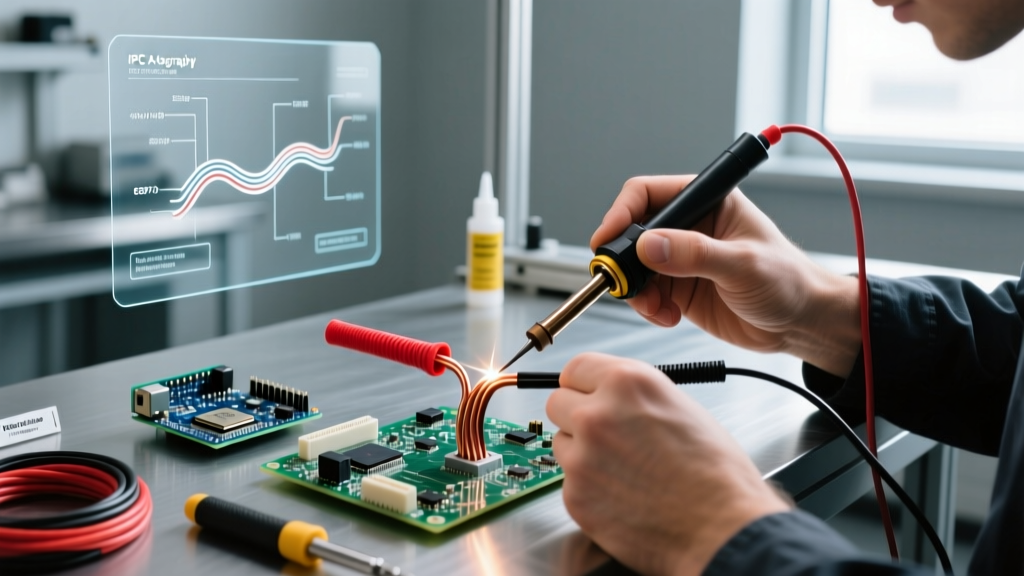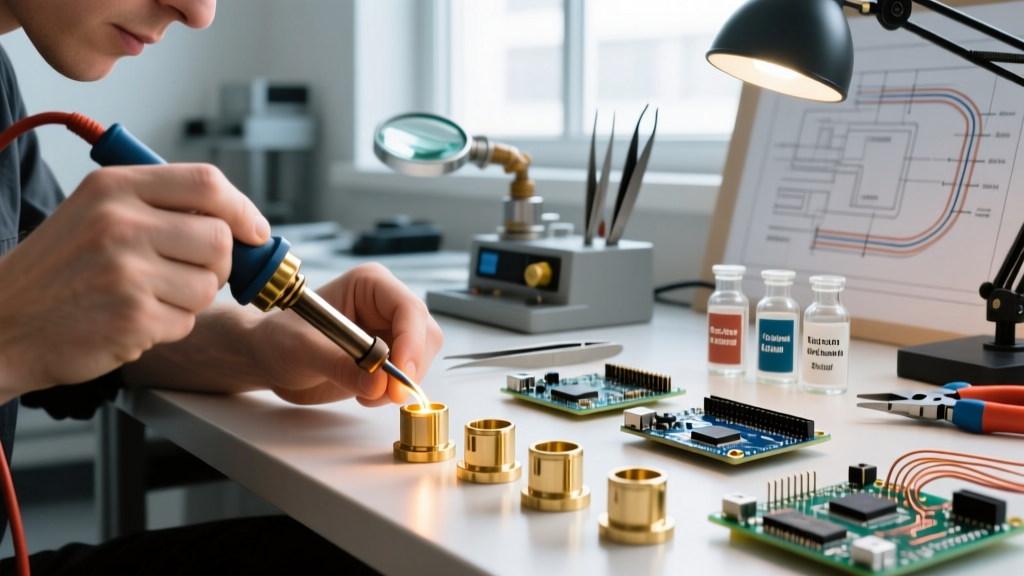

The Metallurgical Challenge of Brass
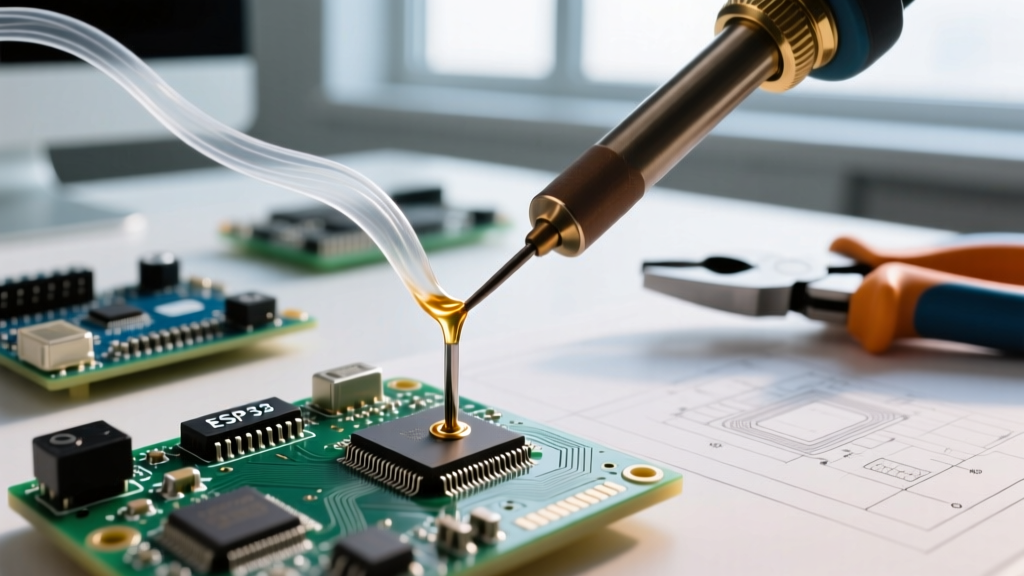
Soldering to brass is widely considered one of the most frustrating tasks in both precision electronics and heavy-duty HVAC fabrication. Unlike pure copper, which wets beautifully with standard rosin fluxes, brass is an alloy of copper and zinc. The zinc content, which typically ranges from 5% to 45% depending on the specific brass alloy, is the primary culprit behind soldering failures. When heated, zinc oxidizes rapidly, forming a microscopic, impenetrable layer of zinc oxide that prevents molten solder from wetting the base metal.
To understand how professionals overcome this, we convened a panel of three industry experts: Marcus Thorne, a master HVAC and refrigeration technician; Elena Rostova, a precision luthier and custom hardware fabricator; and Dr. Aris Vance, a metallurgist specializing in non-ferrous joining processes. Their combined insights reveal that successful brass soldering relies on a precise triad of chemical preparation, thermal mass management, and alloy selection.
'The biggest mistake novices make is treating brass like copper. If you apply a standard 40-watt iron and mild rosin flux to a brass fitting, you will just push a ball of molten solder around an oxidized zinc shell. You must chemically strip that oxide layer at the exact moment the solder reaches its liquidus temperature.' - Dr. Aris Vance, Metallurgist
Understanding Brass Alloys: C260 vs. C360
Before selecting your flux and heat source, you must identify the brass alloy you are working with. According to standard metallurgical classifications, the two most common variants present entirely different soldering profiles:
- C260 (Cartridge Brass): Contains roughly 70% copper and 30% zinc. It is highly ductile, commonly used in electrical terminals, ammunition casings, and decorative hardware. It is moderately difficult to solder due to the 30% zinc content.
- C360 (Free-Machining Brass): Contains added lead (up to 3%) to improve machinability. The lead severely disrupts solder wetting and can cause porous, brittle joints if standard tin-lead or SAC alloys are used without aggressive fluxing.
Expert Panel: Flux Selection Matrix
Flux is the single most critical variable when soldering to brass. Mild organic acids (like those in standard electronics rosin) are entirely insufficient for breaking down zinc oxide. Our experts unanimously recommend aggressive inorganic acids for structural work, and specialized organic blends for delicate electronics.
| Flux Category | Active Chemistry | Temp Range | Best Application | Post-Solder Cleanup |
|---|---|---|---|---|
| Zinc Chloride (Liquid) | ZnCl2 / Hydrochloric | 180°C - 350°C | Heavy electrical, HVAC, structural | Mandatory hot water rinse |
| Phosphoric Acid Paste | H3PO4 | 200°C - 400°C | Plumbing, thick brass fittings | Water and baking soda neutralizer |
| Heavy-Duty Rosin (RMA) | Activated Rosin / Mild Amine | 180°C - 250°C | PCB brass shields, delicate luthier work | Isopropyl alcohol (99%) |
| Fluoride-Based (Paste) | Potassium Fluoroborate | 550°C - 800°C | Torch brazing, high-temp silver solder | Mechanical wire brush / Pickle |
'For guitar hardware and delicate brass electrical shields, I cannot use zinc chloride without risking long-term corrosion. I rely on a heavily activated RMA (Rosin Mildly Activated) flux, combined with a localized pre-tinning step using a high-wattage iron.' - Elena Rostova, Hardware Fabricator
Solder Alloy Selection for Brass
The choice of solder alloy dictates the required heat input and the mechanical strength of the joint. Our experts recommend the following alloys based on the application:
1. Electronics and Light Fabrication (SAC305 & Sn63/Pb37)
For PCB brass shields or small electrical terminals, SAC305 (96.5% Tin, 3.0% Silver, 0.5% Copper) is the modern lead-free standard. However, SAC alloys have a higher melting point (approx. 217°C) and poor wetting characteristics on brass compared to traditional Sn63/Pb37 (183°C eutectic). If using SAC305 on brass, you must increase your iron temperature to 350°C and use an activated flux to compensate for the sluggish wetting.
2. Structural and HVAC Joints (Silver-Bearing Alloys)
For refrigeration lines, structural brackets, or high-vibration environments, standard tin-lead is too weak. Marcus Thorne recommends BAg-5 (45% Silver, 30% Copper, 25% Zinc). This alloy melts at roughly 700°C (1292°F) and requires torch heating rather than an iron. The high silver content provides excellent capillary action and shear strength, but it mandates the use of a fluoride-based paste flux to handle the extreme temperatures.
Thermal Management: Irons vs. Torches
Brass is an exceptional thermal conductor. If your heat source cannot deliver thermal energy faster than the brass can dissipate it, the solder will freeze before wetting, resulting in a classic 'cold lap' joint.
- For Small/Medium Parts (Under 14 AWG wire or thin sheet): Use a high-wattage soldering station. The Hakko FX-951 equipped with a T12-D52 heavy chisel tip (set to 380°C) provides the necessary thermal mass. Avoid conical tips; they lack the surface area required to transfer heat into the brass quickly.
- For Large Fittings and Pipes: Soldering irons are useless here. You must use a torch. The Smith Little Torch with a #5 tip or a Bernzomatic TS8000 (using MAP-Pro gas) allows you to sweep the flame evenly around the fitting, bringing the entire mass up to temperature simultaneously before applying the solder.
The Master Protocol: Step-by-Step Execution
To achieve a flawless, mirror-finish solder joint on brass, follow this exact sequence validated by our expert panel:
- Mechanical Abrasion: Use 3M Scotch-Brite or 400-grit wet/dry sandpaper to physically remove the macro-oxide layer. Do this immediately before soldering.
- Chemical Pickling (Optional but Recommended): For heavily oxidized C360 brass, dip the part in a 10% dilute sulfuric acid solution for 60 seconds, then rinse with distilled water. This dissolves embedded zinc oxides that sanding misses.
- Flux Application: Apply your chosen flux generously. If using liquid zinc chloride, apply it to both the brass and the wire/terminal being joined.
- Pre-Heating: Apply heat to the brass, not the solder. Wait until the flux bubbles and turns slightly amber (indicating it has reached its active chemical state).
- Solder Introduction: Touch the solder to the brass, not the iron tip. If the brass is hot enough and the flux is active, the solder will instantly flash and wick into the joint via capillary action.
- Controlled Cooling: Remove the heat and hold the joint perfectly still for 5 to 10 seconds. Disturbing a cooling brass joint will fracture the crystalline structure, causing a microscopic grain boundary failure.
Troubleshooting Edge Cases and Safety
Zinc Burn and Porosity
If you apply too much heat with a torch, you risk vaporizing the zinc within the brass alloy. Zinc vaporizes at 907°C (1665°F). When this happens, the brass turns into a porous, copper-rich sponge, and the joint will be structurally compromised. If you see white smoke billowing from the base metal (not the flux), you are burning zinc. Stop immediately. Inhalation of zinc oxide fumes can cause metal fume fever, a severe flu-like condition documented by the National Institute for Occupational Safety and Health (NIOSH). Always use localized exhaust ventilation when torch-soldering brass.
Solder Balling and Rejection
If the solder beads up and rolls off the brass like water on a hot skillet, you have a flux failure or insufficient heat. Do not add more solder. Remove the heat, let the part cool, re-abrade the surface with a wire brush, apply fresh zinc chloride flux, and restart the heating process.
Corrosion Creep
According to IPC workmanship standards, leaving aggressive inorganic fluxes (like zinc chloride or phosphoric acid) on a joint will lead to catastrophic galvanic corrosion within weeks. You must neutralize and scrub the joint with hot water and a stiff nylon brush immediately after the solder solidifies. For electronics, follow up with an ultrasonic bath in a saponifier solution.
Final Verdict
Soldering to brass is not a matter of brute force; it is a test of chemical and thermal precision. By matching the correct aggressive flux to your specific brass alloy, utilizing high-thermal-mass tools, and strictly controlling your temperature to avoid zinc vaporization, you can achieve joints that are both electrically flawless and mechanically indestructible.