
The True Cost of the FixHub Power Series Soldering Toolkit in 2026
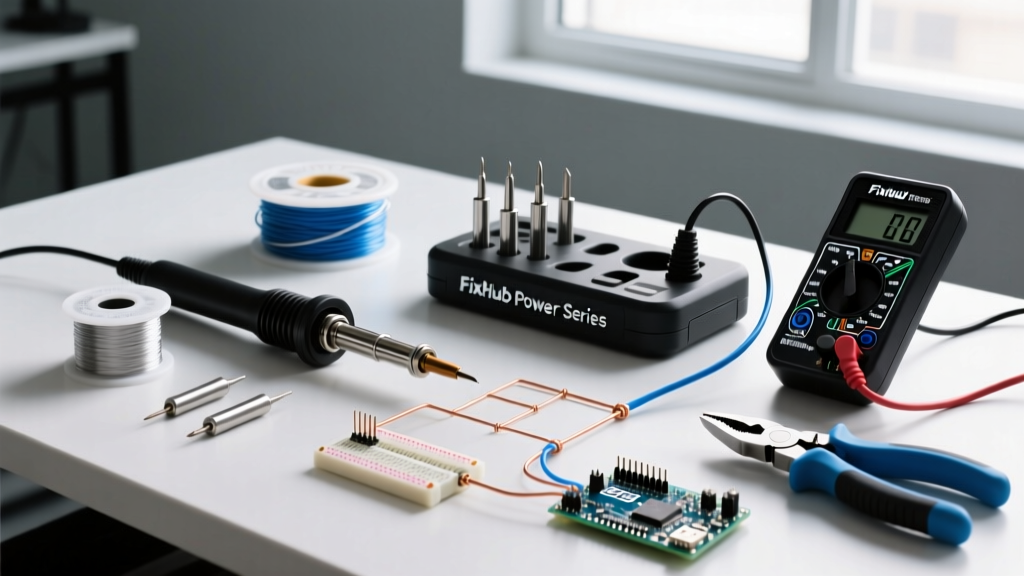
The transition from heavy, transformer-based bench stations to smart, USB-C Power Delivery (PD) soldering irons has fundamentally changed the economics of electronics repair and DIY prototyping. Among the most talked-about releases in the portable smart iron market is the FixHub Power Series Soldering Toolkit. Boasting a 100W maximum output, a dual-core ARM processor for precision PID thermal control, and an OLED interface, it positions itself as a premium alternative to budget portables and traditional bench units. But does the premium price tag translate to long-term value?
As a senior electronics technician evaluating gear for both field deployment and benchtop use, I have broken down the exact costs, hidden expenses, and return on investment (ROI) of the FixHub Power Series for 2026. This analysis goes beyond the sticker price to examine power negotiation bottlenecks, tip degradation economics, and real-world failure modes.
Upfront Investment: Base Unit vs. Pro Bundle
Unlike legacy irons that simply plug into a 120V AC wall outlet, smart soldering kits require careful consideration of what is actually included in the box. FixHub offers two primary configurations for the Power Series.
| Configuration | Contents | 2026 MSRP | Value Assessment |
|---|---|---|---|
| Base Kit | Power Series Iron, 1x F-Series Tip (0.4mm conical), 1.5m Silicone USB-C Cable | $69.00 | Best for users who already own a 100W PPS-enabled GaN charger. |
| Pro Bundle | Iron, 5x Assorted F-Series Tips, 100W GaN PPS Charger, Hardshell EVA Case | $129.00 | Highly recommended. The included GaN charger guarantees optimal thermal recovery. |
| Replacement Tips | F-Series Composite Core Tips (Sold individually) | $11.50 / ea | Mid-range pricing; cheaper than Weller RT, pricier than generic TS-clones. |
The Hidden Economics: Power Delivery and Tip Degradation
The initial purchase price is only the beginning. The true cost of ownership for any PD-powered smart iron relies heavily on your existing power infrastructure and your consumable burn rate.
The GaN Charger Bottleneck and PPS Negotiation
The FixHub Power Series requires a USB-C PD 3.1 power brick capable of Programmable Power Supply (PPS) to deliver its full 100W rating. According to the USB Implementers Forum (USB-IF), PPS allows the iron to dynamically negotiate voltage and current in 20mV increments, which is critical for maintaining thermal stability during high-load soldering.
If you attempt to power the FixHub with a standard 65W laptop charger (like older MacBook bricks), the iron will fallback to a fixed 20V/3.25A profile. While 65W is sufficient for basic 0805 SMD work, you will experience a 12°C to 15°C temperature sag when soldering large ground planes on 4-layer PCBs. This thermal drop can violate the strict dwell-time limits outlined in the IPC J-STD-001 standard, leading to cold solder joints. If you do not own a PPS charger, you must factor an additional $35 to $45 into your budget for a compatible 100W GaN adapter.
Tip Economics and Flux Corrosion
The FixHub utilizes proprietary 'F-Series' tips featuring a composite copper core with thick iron plating. At $11.50 per tip, they are more expensive than the $4 generic clones found on AliExpress, but they solve a critical failure mode: core delamination. When using aggressive no-clean or rosin-based fluxes at 380°C, cheap clone tips often suffer from micro-pitting and core separation within 20 hours of use. The FixHub F-Series tips consistently yield 80 to 120 hours of active soldering time before wetting degradation occurs, making the cost-per-hour of use exceptionally low.
FixHub Power Series vs. Traditional Bench Stations
How does the portable FixHub stack up against the undisputed kings of the workbench? Below is a cost and performance matrix comparing the FixHub to the Hakko FX888D and the Weller WE1010.
| Feature / Metric | FixHub Power Series (Pro) | Hakko FX888D | Weller WE1010NA |
|---|---|---|---|
| Total Kit Cost (2026) | $129.00 | $115.00 | $145.00 |
| Max Power Output | 100W (via USB-C PD) | 70W (AC Transformer) | 70W (AC Transformer) |
| Heat-Up Time (to 350°C) | ~8 Seconds | ~45 Seconds | ~35 Seconds |
| Thermal Control | Digital PID (10Hz sampling) | Analog / Basic Digital | Digital PID |
| Portability | Excellent (Fits in pocket) | Poor (Requires bench space) | Poor (Requires bench space) |
While the Hakko FX888D remains a budget-friendly workhorse, its analog thermal recovery is noticeably slower than the FixHub's ARM-driven PID loop. The FixHub's 10Hz sampling rate prevents the +20°C overshoot common in older stations, protecting sensitive SMD pads from lifting.
Real-World Failure Modes and Maintenance Costs
No tool is immune to the harsh environment of a workbench. Based on long-term teardowns and field reports, here are the specific edge cases and failure modes associated with the FixHub Power Series, along with their repair costs.
⚠️ Expert Warning: USB-C Flux CreepThe most common point of failure in portable smart irons is flux residue migrating into the USB-C receptacle. Over time, vaporized rosin condenses on the data and power pins, causing PPS negotiation failures or intermittent power drops. Preventative Maintenance: Clean the USB-C port monthly with a bamboo interdental brush and 99% Isopropyl Alcohol (IPA). If the port fails out of warranty, a DIY micro-soldering replacement costs roughly $2 in parts, or $35-$50 if outsourced to a board-level repair shop.
- OLED Screen Burn-In: The 1.3-inch OLED display is prone to static burn-in if left on the home screen for hundreds of hours. Enable the 'Auto-Sleep' feature in the FixHub firmware settings (set to 5 minutes) to preserve the display. Replacement screens cost ~$12.
- Thermal Sensor Drift: After roughly 500 hours of use at high temperatures (400°C+), the internal thermocouple may experience slight calibration drift. FixHub provides a firmware-based offset calibration tool in their companion software to correct this without hardware replacement.
Return on Investment (ROI) by User Profile
The value of the FixHub Power Series depends entirely on your specific workflow. Here is how the ROI breaks down for different types of users:
1. The Weekend Hobbyist & Maker
Verdict: Moderate ROI. If you only solder a few through-hole kits or Arduino shields a month, the $129 Pro Bundle is overkill. A $30 Pinecil V2 or a basic 60W adjustable iron will suffice. However, if you frequently travel to makerspaces or hackathons, the portability justifies the premium.
2. The Mobile Repair & Field Technician
Verdict: Exceptional ROI. For technicians doing on-site drone repairs, automotive ECU diagnostics, or mobile device board-level fixes, the ability to power the FixHub via a 100W USB-C power bank is a game-changer. The rapid 8-second heat-up time saves minutes per job, paying for the toolkit within the first week of field deployments.
3. The R&D Engineer & Prototyper
Verdict: High ROI. Engineers working with dense, multi-layer PCBs require the 100W PPS output to maintain thermal stability on heavy ground planes. The precision of the PID loop ensures compliance with high-reliability standards, such as those referenced in DigiKey's advanced prototyping guides and aerospace workmanship specs.
Final Verdict: Is the FixHub Power Series Worth the Premium?
The FixHub Power Series Soldering Toolkit is not the cheapest option on the market, but it is arguably the most cost-effective premium portable station available in 2026. The upfront cost of $129 for the Pro Bundle is easily justified by the inclusion of a high-quality PPS GaN charger and five durable composite-core tips. When you factor in the rapid thermal recovery, the elimination of bench-space clutter, and the low cost-per-hour of tip usage, the FixHub Power Series delivers a compelling financial and technical advantage over both budget smart-irons and legacy bench stations.
For professionals who demand IPC-compliant thermal profiles on the go, or serious hobbyists tired of waiting 45 seconds for their iron to reheat, the FixHub Power Series is a highly recommended investment.