
The Hidden Science of Soldering Stick Alloys
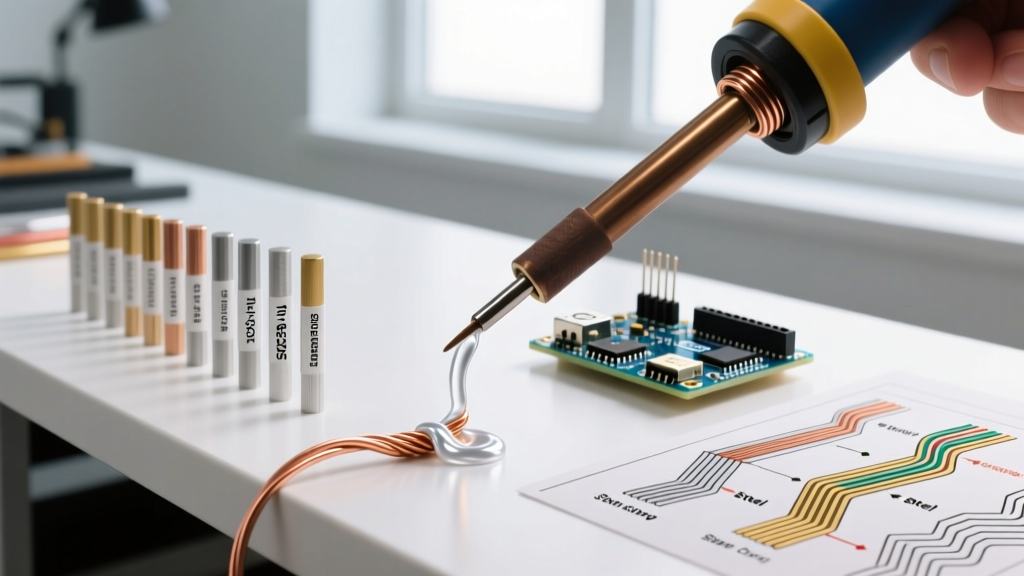
When professionals and advanced DIYers refer to a soldering stick, they are talking about the consumable alloy rod or wire used to join base metals—not the heated iron itself. Selecting the correct soldering stick is not a one-size-fits-all endeavor; it is a strict exercise in metallurgical compatibility. Using the wrong alloy on a specific base metal results in catastrophic joint failure, intermetallic embrittlement, or galvanic corrosion over time.
Whether you are assembling high-density PCBs, sweating copper plumbing lines, or repairing stainless steel HVAC components, the interaction between your soldering stick and the base metal dictates the structural and electrical integrity of the joint. This guide breaks down the exact material compatibilities, flux requirements, and thermal profiles needed to master alloy selection in 2026.
The Core Matrix: Soldering Stick Alloys vs. Base Metals
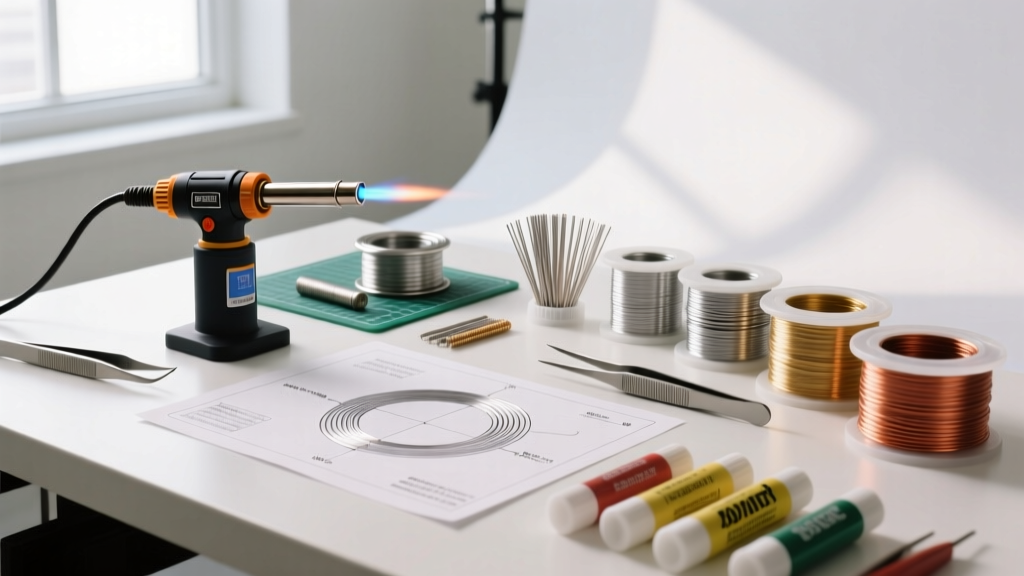
Below is the definitive compatibility matrix for the most common soldering stick alloys and their ideal base metal pairings. Keep this chart handy when planning multi-material projects.
| Base Metal | Recommended Soldering Stick Alloy | Required Flux Type | Melting Point Range | Joint Characteristics |
|---|---|---|---|---|
| Copper (Electronics) | Sn63/Pb37 or SAC305 | Rosin (RMA/RA) or No-Clean | 183°C - 220°C | Excellent wetting, high electrical conductivity |
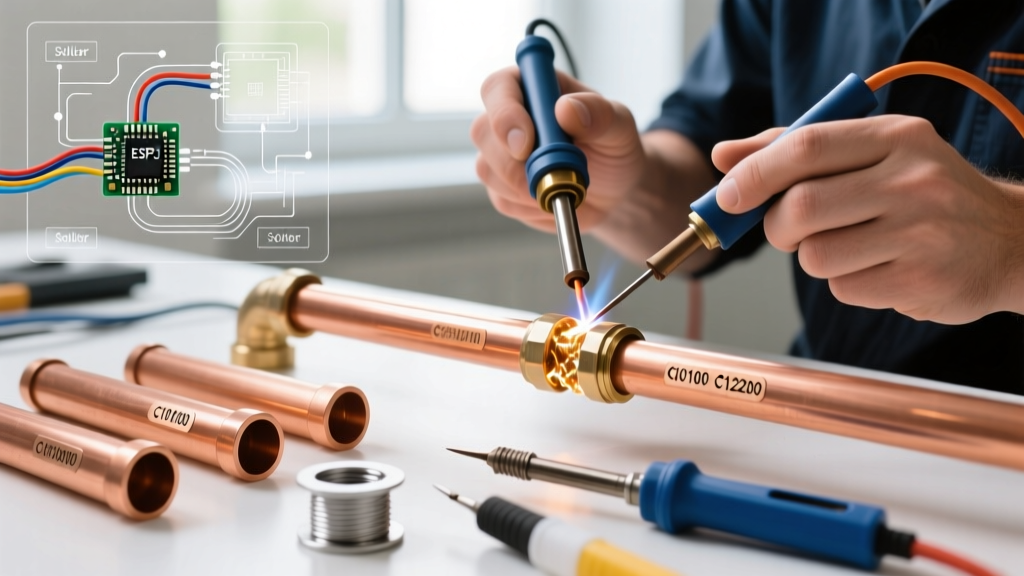
| Copper (Plumbing) | 95/5 Tin-Antimony | Water-Soluble / Tinning | 227°C - 250°C | High shear strength, potable water safe |
| Brass | 95/5 Tin-Antimony or 50/50 Sn/Pb | Acid Core or Paste Flux | 227°C - 250°C | Requires careful heat control to avoid dezincification |
| Stainless Steel | Silver-Bearing (e.g., 95/5 Sn/Ag) | Orthophosphoric Acid | 221°C - 230°C | Corrosion-resistant, requires aggressive flux |
| Aluminum | Zinc-Aluminum or 70/30 Sn/Zn | Specialized Zinc-Based | 199°C - 380°C | Highly reactive, prone to galvanic issues |
Deep Dive: Electronics and PCB Soldering Sticks
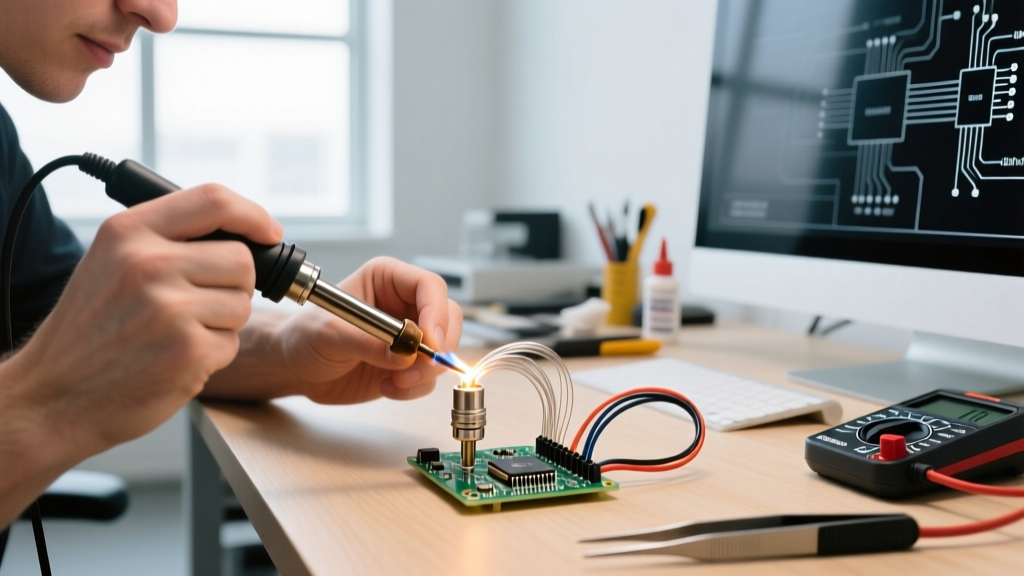
In the realm of printed circuit boards, the base metal is almost exclusively copper (often with an OSP, ENIG, or HASL finish). The choice of soldering stick here revolves around the eutectic properties of the alloy and the thermal limits of your components.
Sn63/Pb37: The Eutectic Gold Standard
For non-RoHS compliant, hobbyist, or aerospace applications, the Kester 245 (Sn63/Pb37) soldering stick remains unmatched. Because it is a true eutectic alloy, it transitions from solid to liquid at a single, precise temperature: 183°C (361°F). There is no plastic (pasty) phase. This eliminates the risk of disturbing the joint during cooling, which is the primary cause of cold solder joints in hand-soldering. Expect to pay around $42 to $48 per 1lb spool in the current market.
SAC305: The Lead-Free Workhorse
For commercial manufacturing and RoHS-compliant repairs, SAC305 (96.5% Tin, 3.0% Silver, 0.5% Copper) is the industry standard. The Kester 275 stick is a premier choice here. However, SAC305 is not eutectic; it has a melting range of 217°C to 220°C. This requires a higher iron temperature (typically 350°C at the tip) and results in a duller, grainier joint appearance compared to leaded solder. Furthermore, the higher tin content and silver accelerate the dissolution of iron-plated soldering tips, meaning you will replace your tips 30% to 40% faster than when using Sn63/Pb37. Pricing sits higher, averaging $55 to $65 per 1lb spool.
Heavy-Duty Plumbing and HVAC Soldering Sticks
When moving from microelectronics to macro-plumbing, the mechanical stresses (water hammer, thermal expansion, vibration) demand entirely different soldering stick alloys. The Copper Development Association strictly outlines the capillary mechanics required for these joints, emphasizing that the alloy must flow into a radial clearance of 0.002 to 0.005 inches.
95/5 Tin-Antimony vs. Outdated Leaded Sticks
For potable water lines, 50/50 Tin-Lead sticks are strictly prohibited under the Safe Drinking Water Act. The modern standard is the 95/5 Tin-Antimony stick, such as Oatey Safe Flo. Antimony acts as a hardening agent, increasing the tensile strength of the joint to withstand pressures exceeding 1,000 PSI in residential systems. A standard 1/2 lb stick costs roughly $12 to $15. It requires a standard water-soluble tinning flux to break down copper oxidation before the torch brings the fitting to the alloy's 250°C flow point.
Silver-Bearing Sticks for HVAC and Refrigeration
When joining copper to brass or steel in high-vibration HVAC linesets, standard tin-antimony sticks will eventually fatigue and crack. Here, you need a silver-bearing soldering stick like the Harris Stay-Brite #8 (95% Tin, 5% Silver). The silver dramatically increases the capillary draw and joint shear strength. Stay-Brite melts at roughly 221°C (430°F) and is typically sold in 1/2 lb kits with its proprietary Stay-Clean liquid flux for about $28 to $35.
The Nightmare Metals: Aluminum and Stainless Steel
Certain base metals actively fight the soldering process by forming impenetrable oxide layers the moment they are exposed to air or heat.
Expert Warning: Never attempt to solder stainless steel or aluminum using standard electronics rosin flux or plumbing tinning flux. The joint will fail immediately under minimal mechanical stress due to non-wetting.
Conquering Stainless Steel
Stainless steel owes its corrosion resistance to a microscopic layer of chromium oxide. To solder it, you must use a highly aggressive orthophosphoric acid flux (such as Superior No. 71) paired with a silver-bearing soldering stick. The acid etches away the chromium layer just long enough for the tin-silver alloy to form an intermetallic bond. Post-soldering, the joint must be neutralized with a baking soda solution, or the residual acid will eat through the base metal within weeks.
The Aluminum Challenge
Aluminum forms an aluminum oxide layer that melts at over 2,000°C, far above the melting point of any soft solder. To use a soldering stick on aluminum, you must employ a specialized zinc-based flux and a high-tin/zinc alloy stick. The flux chemically displaces the oxide, while the zinc in the solder alloys with the aluminum substrate. According to guidelines from the American Welding Society, aluminum soldering is highly susceptible to galvanic corrosion if exposed to moisture, making it unsuitable for outdoor or submerged applications without heavy dielectric sealing.
Flux Pairing: The Unsung Hero of Material Compatibility
A soldering stick is effectively useless without the correct chemical flux. The flux does not clean dirt; it chemically reduces metal oxides at high temperatures, allowing the molten alloy to 'wet' the base metal.
- Rosin (RMA/RA): Mandatory for electronics. RA (Rosin Activated) contains mild acids that clean copper pads but leave a non-conductive, non-corrosive residue.
- Water-Soluble / Tinning Paste: Used for copper plumbing. Highly active at high torch temperatures but must be flushed with water to prevent pinhole leaks caused by acid corrosion.
- Acid Core / Zinc Chloride: Used for sheet metal and structural steel. Highly corrosive. Never use acid core soldering sticks on electronics or plumbing.
Real-World Failure Modes and How to Avoid Them
Even with the correct soldering stick, improper technique leads to distinct metallurgical failures. Recognize these edge cases to troubleshoot your joints:
- Dewetting: The solder balls up and pulls away from the base metal, leaving a thin, discontinuous film. Cause: Insufficient flux, or the base metal was not heated to the alloy's liquidus temperature before the stick was applied.
- Intergranular Penetration (Stress Corrosion Cracking): Common when using leaded soldering sticks on brass under mechanical tension. The lead penetrates the brass grain boundaries, causing the fitting to snap cleanly under pressure. Solution: Always use lead-free 95/5 sticks on load-bearing brass fittings.
- Intermetallic Layer Fracture: In electronics, holding the iron on a SAC305 joint for more than 4 seconds causes the Cu6Sn5 intermetallic layer to grow too thick, making the joint brittle. Solution: Limit dwell time to 2-3 seconds and use adequate thermal mass on your iron tip.
Expert Sourcing and Market Realities
When purchasing soldering sticks, avoid unbranded, ultra-cheap imports found on massive e-commerce marketplaces. These often contain undocumented impurities (like excess bismuth or cadmium) that drastically alter melting points and toxicity profiles. Stick to verified manufacturers like Kester, Oatey, Harris, and Superior Flux. As global tin supply chains continue to fluctuate through 2026, expect a 5-8% premium on high-purity SAC305 and Sn63/Pb37 alloys compared to historical baselines. Always verify the alloy composition stamp on the packaging against the IPC J-STD-006 standard for electronic solders to ensure you are getting the exact metallurgical blend your project demands.