
The True Cost of Ownership: Soldering Pot CapEx vs. OpEx
When scaling up wire harness production, pre-tinning component leads, or desoldering multi-pin DIP switches, the transition from a handheld soldering iron to a dedicated soldering pot (often called a dip pot or solder bath) is a common operational leap. However, the financial justification for this equipment extends far beyond the initial purchase price. In 2026, with fluctuating raw metal markets and stricter IPC compliance requirements, understanding the total cost of ownership (TCO) is critical for electronics manufacturers and serious DIY labs.
This cost analysis breaks down the capital expenditure (CapEx), the hidden operational expenditure (OpEx) of solder dross, labor ROI, and maintenance realities of running a soldering pot in a modern electronics environment.
Capital Expenditure: Equipment Tiers and Upfront Pricing
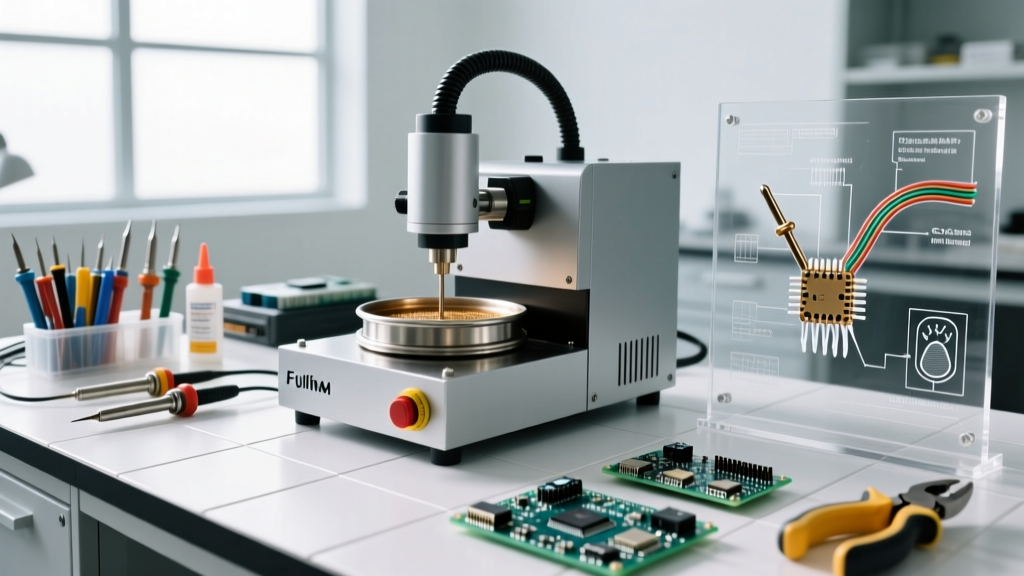
The market for soldering pots is strictly segmented by thermal stability, capacity, and feedback-loop accuracy. Cheap analog pots rely on bimetallic strip thermostats, which can overshoot target temperatures by up to 40°C, risking thermal damage to wire insulation and accelerating crucible erosion. Digital PID-controlled units are the industry standard for compliance with IPC J-STD-001 and IPC-A-620 wire tinning requirements.
| Equipment Tier | Representative Model | Capacity / Wattage | Temp Stability | Est. 2026 Price |
|---|---|---|---|---|
| Entry-Level / Hobbyist | Generic 300W Analog Pot | 300g / 300W | ± 25°C (Overshoot risk) | $45 - $65 |
| Professional / Lab | Hakko FX-303 | 300g / 300W Ceramic | ± 2°C (Digital PID) | $160 - $185 |
| Industrial / Heavy Duty | Weller SP1000 | 10kg / 1000W | ± 3°C (Heavy PID) | $850 - $950 |
For most small-to-medium enterprises (SMEs) and advanced prototyping labs, the Hakko FX-303 remains the goldilocks investment. Its ceramic heater ensures rapid melt times (under 8 minutes for Sn63/Pb37), and its digital lockout prevents operators from accidentally exceeding the thermal limits of PTFE or PVC wire insulation.
The Hidden Margin Killer: Solder Dross and Alloy Consumption
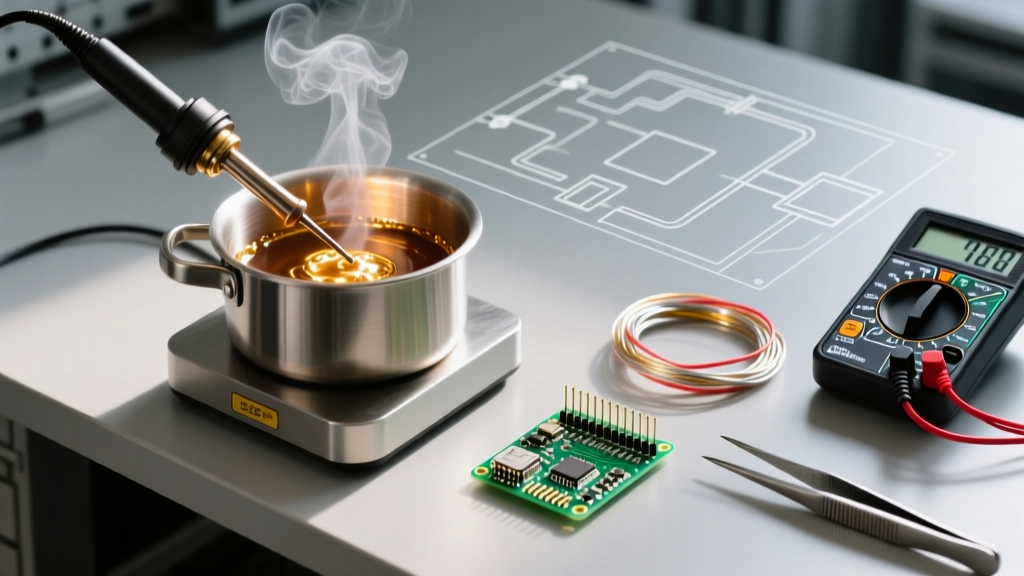
The most misunderstood cost in dip soldering is dross—the oxidized layer of solder that forms on the surface of the molten bath. When you skim a soldering pot, you are not just removing oxidation; you are removing trapped, usable solder alloy. According to metallurgical data from Kester solder alloy resources, an unmaintained static solder bath can lose 10% to 15% of its total volume to dross generation per 8-hour shift.
Alloy Cost Comparison (2026 Market Rates)
- Sn63/Pb37 (Leaded): ~$35 - $42 per lb. Melts at 183°C. Lower dross generation due to lower operating temperatures.
- SAC305 (Lead-Free): ~$55 - $68 per lb. Melts at 217°C (typically run at 260°C - 270°C). High tin content and higher operating temperatures drastically accelerate oxidation.
The Dross Math: If you run a 3kg SAC305 pot at 270°C for an 8-hour shift without dross-reduction powder or nitrogen blanketing, you can easily generate 300g of dross. At $60/lb, skimming that dross throws away roughly $40 per shift in trapped usable solder. Over a 250-day working year, that is $10,000 in alloy literally swept into the trash bin.
Cost Mitigation Strategy: To protect your OpEx, invest in dross-reduction powders (which chemically separate the trapped tin from the oxidized slag) or implement a localized nitrogen (N2) blanketing system over the pot. While an N2 generator requires a $2,000+ CapEx injection, it reduces dross generation by up to 85%, paying for itself within 6 months in high-volume SAC305 environments.
Labor ROI: Hand Soldering vs. Dip Tinning
Where the soldering pot truly shines is in labor arbitrage. If your facility manually strips and tins 14 AWG to 22 AWG wires for harness assemblies, the time-savings of a dip pot are immediate and measurable.
Time Study: Tinning 1,000 Wires (22 AWG, 5mm Strip Length)
- Hand Soldering (Iron & Solder Wire): Requires applying flux, feeding solder, and ensuring 360-degree wetting. Average time: 6.5 seconds per wire. Total labor time: 1.8 hours.
- Soldering Pot (Dip Tinning): Requires dipping in liquid flux, a 1.5-second dip in the molten bath, and a quick tap to remove excess. Average time: 2.2 seconds per wire. Total labor time: 0.6 hours.
By utilizing a soldering pot, you reduce direct labor time by roughly 66% for wire tinning operations. Furthermore, dip tinning guarantees uniform 360-degree wetting and eliminates the cold solder joints or 'icicles' commonly caused by inconsistent hand soldering techniques, thereby reducing QA rejection rates and rework costs.
Crucible Erosion and Maintenance Failures
A frequently overlooked line item in the TCO of a soldering pot is crucible degradation. The molten solder alloy—particularly lead-free variants like SAC305—actively dissolves the iron and steel components it comes into contact with, a phenomenon known as leaching or crucible erosion.
Leaded vs. Lead-Free Crucible Lifespan
If you are running a standard Sn63/Pb37 alloy, a cast iron or steel crucible in a machine like the Hakko FX-303 can last for years with minimal wall thinning. However, if you transition to SAC305, the higher tin content acts as a solvent to the iron crucible. The erosion rate of SAC305 is approximately 3 to 5 times faster than that of leaded solder.
- Standard Iron Crucible (SAC305): May develop pinhole leaks or wall failures within 4 to 8 months of continuous daily use.
- Ceramic-Coated / Titanium Crucible: Resists leaching almost entirely but costs 2x to 3x more upfront.
For the Hakko FX-303, a standard replacement crucible (Model B3030) costs around $45. If you are running lead-free solder, budget for two crucible replacements per year, adding $90 to your annual maintenance OpEx. Always inspect the crucible walls with a caliper during quarterly maintenance to prevent catastrophic molten solder spills onto your workbench.
Energy Consumption and Thermal Profiles
Modern soldering pots are surprisingly energy-efficient due to improved PID algorithms and ceramic insulation. A 300W pot like the Hakko FX-303 will draw its full 300W only during the initial 8-minute heat-up phase. Once stabilized at 260°C, the PID controller pulses the heater, drawing an average of just 40W to 60W to maintain thermal equilibrium. At an average industrial electricity rate of $0.15 per kWh, running a professional dip pot for an 8-hour shift costs less than $0.10 in electricity. Energy costs are effectively negligible compared to alloy and labor costs.
Final Verdict: When Does a Soldering Pot Pay for Itself?
The ROI of a soldering pot is entirely dependent on your production volume and the specific tasks at hand.
- Buy a Soldering Pot If: You are tinning more than 50 wires per day, pre-tinning large batches of through-hole component leads, or regularly desoldering multi-pin connectors (like DB9 or SCART connectors) where a solder bath allows you to melt all pins simultaneously.
- Stick to Hand Soldering If: Your work is primarily low-volume, mixed SMD/THT prototyping, or you are working with highly heat-sensitive components that cannot withstand the thermal shock of a 260°C liquid bath.
For high-volume wire processing and component tinning, the $160-$185 investment in a professional PID-controlled soldering pot will typically pay for itself in labor savings within the first two weeks of operation.
Frequently Asked Questions (FAQ)
Can I use the same soldering pot for both leaded and lead-free solder?
No. Cross-contamination is a severe violation of IPC standards. Even a 1% lead contamination in a lead-free bath can cause brittle joints and fail RoHS compliance audits. Dedicate one pot to Sn63/Pb37 and a separate pot to SAC305.
How often should I skim the dross?
Skim the pot only when the dross layer becomes thick enough to interfere with the dip (usually every 2-4 hours). Skimming too frequently exposes fresh liquid solder to oxygen, which actually accelerates the total rate of dross generation. Use a dross-reduction powder before skimming to reclaim trapped tin.
What flux should I use for dip tinning?
Use a mildly activated rosin flux (RMA) or a specialized water-soluble liquid flux designed for dip tinning. Never use highly corrosive acid fluxes (like plumbing paste), as they will rapidly corrode the metal crucible and leave conductive, corrosive residues on your wire harnesses.