
The Metallurgy of Hot Iron Soldering: Beyond Copper and PCBs
When most DIYers and electronics hobbyists think of hot iron soldering, they picture joining copper wires or attaching components to a fiberglass PCB. However, as projects expand into jewelry making, custom enclosures, automotive repairs, and plumbing, the fundamental question shifts: What other metals can I actually solder with a standard hot iron?
The answer relies entirely on metallurgy, specifically the formation of an Intermetallic Compound (IMC) layer and the ability of your flux to remove metal oxides. As of 2026, with the widespread adoption of advanced lead-free alloys and specialized organic acid fluxes, the boundaries of hot iron soldering have expanded—but strict physical limits remain. This guide breaks down exactly which metals are compatible, which require extreme measures, and which will permanently ruin your soldering iron tip.
The Science of Wetting and Intermetallic Compounds
For a solder joint to be structurally and electrically sound, the molten solder must 'wet' the base metal. This is not merely a mechanical bond like glue; it is a metallurgical reaction. The tin (Sn) in the solder alloy reacts with the base metal to form a microscopic IMC layer.
Expert Insight: According to the IPC J-STD-001 standard for soldered electrical assemblies, a proper IMC layer (such as Cu6Sn5 on copper) should be between 1 to 3 micrometers thick. Too thin, and the joint is brittle; too thick, and it indicates excessive heat exposure, leading to micro-cracking under thermal cycling.
If a metal forms an oxide layer that melts at a higher temperature than the base metal itself (like aluminum), or if it contains high carbon content that prevents tin diffusion (like cast iron), standard hot iron soldering will fail catastrophically.
Tier 1: Excellent Compatibility (The Easy Metals)
These metals readily form IMC layers with tin-based solders and only require mild fluxes. They are the primary targets for 90% of hot iron soldering applications.
1. Copper (C11000 / Oxygen-Free)
Copper is the gold standard for soldering. Tin diffuses into copper rapidly at temperatures above 220°C. For electronics, a standard 60W iron with a chisel tip and Kester 186 Mildly Activated (RMA) Rosin flux is all you need. For heavy-gauge copper plumbing or busbars, you must upgrade to a high-thermal-mass iron (like the 70W Hakko FX-951 or 100W Weller W1000) to prevent thermal sinking, where the massive copper workpiece draws heat away from the joint faster than the iron can replenish it.
2. Brass (C26000) and Bronze
Brass is an alloy of copper and zinc. While it solders beautifully, the zinc content introduces a complication: zinc oxide forms rapidly when heated. You must use a slightly more aggressive flux, such as a water-soluble organic acid (OA) flux, to dissolve the zinc oxide before the solder flows. Warning: Excessive heat on brass will cause 'dezincification,' weakening the structural integrity of the part.
3. Silver and Gold
Precious metals wet exceptionally well. However, gold dissolves into tin-based solder at an alarming rate (a process called gold embrittlement). When hot iron soldering to gold-plated contacts, use a high-tin solder (like Sn96.5/Ag3.0/Cu0.5 SAC305) and remove the iron immediately once wetting occurs to prevent the gold layer from completely leaching into the solder pool.
Tier 2: Moderate Compatibility (The Flux Barrier)
These metals can be soldered with a hot iron, but they require aggressive chemical fluxes and meticulous surface preparation. They are generally not recommended for high-reliability electronics.
1. Stainless Steel (304 and 316 Grades)
Stainless steel owes its corrosion resistance to a microscopic, invisible layer of chromium oxide. Standard rosin fluxes are entirely useless against chromium oxide. To hot iron solder stainless steel, you must use a highly corrosive Zinc Chloride or Ammonium Chloride-based inorganic acid flux (often sold as 'stainless steel soldering fluid').
- Preparation: Mechanically abrade the surface with 220-grit sandpaper immediately before applying flux.
- Solder Alloy: Use a high-tin alloy like Sn95/Sb5 (Tin/Antimony) which has a higher melting point (235°C) and better shear strength.
- Post-Soldering: You must neutralize and wash the joint with a baking soda/water solution, followed by isopropyl alcohol. Residual zinc chloride will corrode the steel and destroy nearby electronics within weeks.
2. Zinc and Galvanized Steel
Galvanized steel is just mild steel coated in zinc. Zinc solders easily, but its melting point is 419°C. If your hot iron is set too high (above 400°C), you will melt the base zinc coating right off the steel, resulting in a weak, sludgy joint. Keep iron temperatures strictly around 300°C to 320°C and use a mild acid flux.
Tier 3: Incompatible with Standard Hot Irons
Do not attempt to hot iron solder these metals. You will waste solder, ruin your iron tips, and achieve zero structural adhesion.
1. Aluminum and its Alloys
Aluminum instantly forms a layer of aluminum oxide (Al2O3) when exposed to air. While aluminum melts at roughly 660°C, aluminum oxide melts at 2,072°C. A standard hot iron cannot penetrate this oxide layer, and the solder will simply ball up and roll off. While specialized ultrasonic soldering irons exist that use acoustic cavitation to shatter the oxide layer, traditional hot iron soldering of aluminum is metallurgically impossible.
2. Cast Iron and High-Carbon Steel
The high carbon content and graphite flakes in cast iron prevent the formation of a continuous tin IMC layer. The solder may appear to stick mechanically if the surface is rough enough, but it will fail under any mechanical stress or thermal expansion. These materials require brazing (using brass filler at 800°C+) or welding.
Material Compatibility Matrix
Use this quick-reference chart to plan your material pairings and tool setup.
| Base Metal | Compatibility | Required Flux Chemistry | Recommended Solder Alloy | Min. Iron Wattage |
|---|---|---|---|---|
| Copper (C11000) | Excellent | Rosin (RMA) / No-Clean | Sn63/Pb37 or SAC305 | 40W - 60W |
| Brass (C26000) | Very Good | Mild Organic Acid (OA) | SAC305 or Sn60/Pb40 | 60W - 70W |
| Silver / Gold | Excellent | Rosin (RMA) | SAC305 (Avoid high-Pb) | 40W |
| Stainless Steel | Difficult | Zinc Chloride / Inorganic Acid | Sn95/Sb5 or Sn96/Ag4 | 70W - 100W |
| Galvanized Steel | Moderate | Mild Acid / Tallow-based | Sn60/Pb40 | 60W (Strict temp control) |
| Aluminum | Impossible | N/A (Requires Ultrasonic) | N/A | N/A |
| Cast Iron | Impossible | N/A (Requires Brazing) | N/A | N/A |
Flux Chemistry: The Unsung Hero of Compatibility
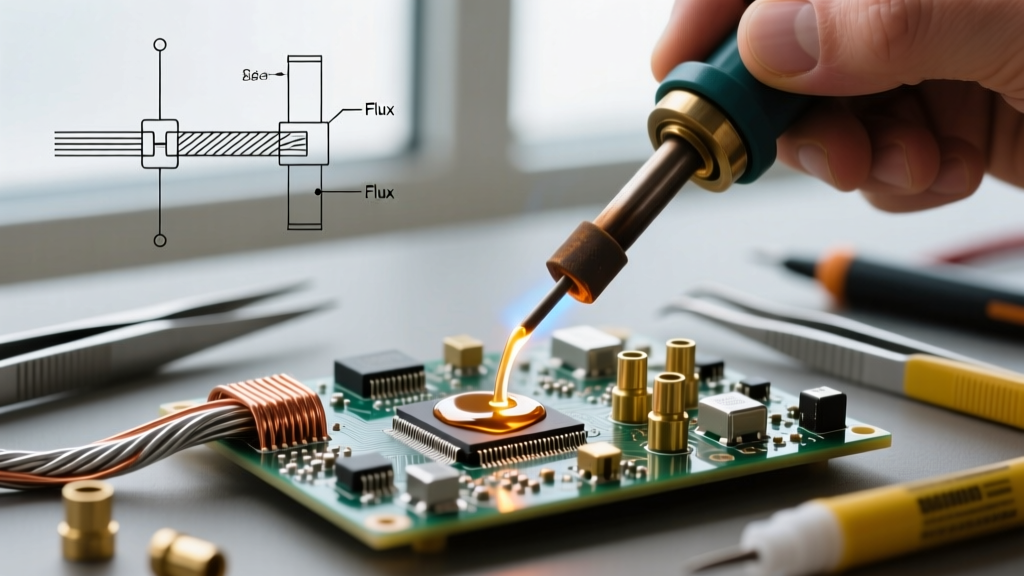
According to the Copper Development Association, the primary cause of solder joint failure in plumbing and heavy electrical work is not the heat source, but improper flux selection and application. Understanding flux chemistry is mandatory for expanding your material compatibility.
Rosin-Based Fluxes (RMA and RA)
Derived from pine tree sap, rosin is mildly acidic when heated but inert when cool. It is the undisputed king for copper, silver, and PCB work. It will not work on stainless steel or heavily oxidized brass. Kester 186 remains the industry benchmark for RMA liquid flux.
Organic Acid (OA) / Water-Soluble Fluxes
These contain organic acids like stearic or lactic acid. They are far more aggressive than rosin and are necessary for brass, bronze, and lightly oxidized nickel. They must be cleaned with deionized water post-soldering to prevent long-term dendritic growth in high-humidity environments.
Inorganic Acid (IA) Fluxes
Containing zinc chloride or ammonium chloride, these are the 'heavy artillery' of soldering. As noted by Kester's technical flux guidelines, IA fluxes are required for stainless steel and nickel alloys. They are highly corrosive and strictly forbidden in enclosed electronics assemblies, as the off-gassing will corrode microchips and trace routes.
Real-World Failure Modes and Edge Cases
Even when working with Tier 1 compatible metals, hot iron soldering can fail due to thermal dynamics.
The Thermal Sinking Trap
When soldering a 14 AWG copper wire to a massive copper ground plane or a heavy brass lug, the workpiece acts as a heatsink. If you use a standard 40W pencil iron, the tip temperature will plummet from 350°C to 180°C the moment it touches the metal. The flux will activate, but the solder will not reach its liquidus temperature, resulting in a 'cold joint'—a dull, grainy, and mechanically weak connection. Solution: Always use an iron with active thermal feedback (like the Hakko FX-951 or JBC CD-2BQE) that can dump 100+ watts into the tip instantly to maintain the setpoint.
Flux Burn-Off
If you leave a hot iron on a joint for more than 5 to 8 seconds, the flux will completely boil off and carbonize. Once the flux is gone, the base metal instantly re-oxidizes in the ambient air, and the solder will dewet (pull back into a ball). If a joint isn't flowing within 4 seconds, remove the iron, clean the tip, add fresh flux, and try again with a higher wattage tool or a pre-heating hotplate.
Final Verdict: Know Your Metallurgical Limits
Hot iron soldering is a highly versatile joining method, provided you respect the chemical and thermal properties of your base metals. Stick to copper, brass, and precious metals for reliable, high-strength joints using standard rosin fluxes. If you must join stainless steel, upgrade to inorganic acid fluxes and commit to rigorous post-solder cleaning. Finally, accept that aluminum and cast iron require entirely different joining technologies. By matching your solder alloy, flux chemistry, and iron wattage to the specific metal at hand, you will achieve professional-grade joints every time.