
The Hidden Dangers of Soldering Nickel
Soldering nickel presents a unique set of metallurgical and thermal challenges that catch many DIY electronics builders off guard. Unlike copper or brass, nickel exhibits high thermal conductivity and forms a rapid, stubborn oxide layer when heated. While pure nickel strips (0.15mm to 0.2mm) are the industry standard for building 18650 and 21700 lithium-ion battery packs, the process of soldering nickel directly to battery terminals introduces severe safety risks. If thermal limits are exceeded, or if aggressive chemical fluxes are mishandled, the results can range from chronic respiratory issues to catastrophic battery thermal runaway.
This comprehensive safety guide breaks down the exact protocols, equipment specifications, and chemical handling procedures required for soldering nickel safely and effectively in 2026.
Thermal Runaway: The Battery Pack Threat
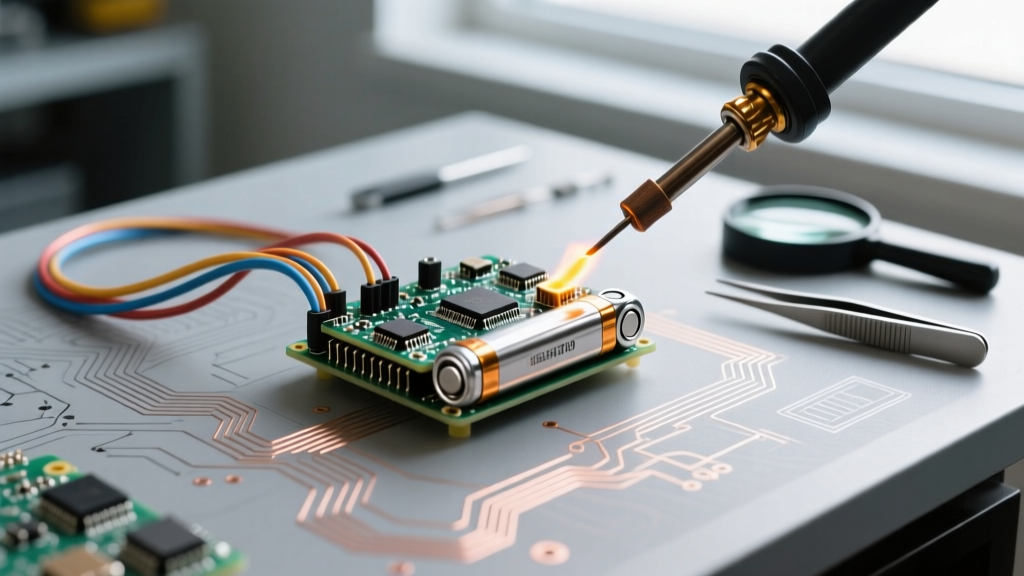
The most critical safety concern when soldering nickel strips to lithium-ion cells is thermal runaway. According to UL Battery Thermal Runaway Guidelines, the internal separator of a standard Li-ion cell begins to degrade and melt at approximately 130°C to 150°C. Once the separator fails, the anode and cathode short-circuit, leading to venting, fire, or explosion.
Heat Transfer Metrics and Time Limits
To achieve proper wetting on nickel, your soldering iron tip must be set between 350°C and 400°C. This creates a massive thermal delta between the iron and the battery's 130°C failure threshold. The nickel strip acts as a heat sink, but the battery's steel casing rapidly transfers that heat to the internal jellyroll.
The 3-Second Rule: Never hold a 350°C+ iron on a battery terminal for more than 3 continuous seconds. If the solder does not flow within this window, remove the iron, allow the cell to cool for 60 seconds, and reassess your flux and tip geometry.
To mitigate heat transfer, always use physical heat sinks. Aluminum alligator clips or specialized copper thermal tape applied to the base of the nickel strip (between the solder joint and the battery casing) will absorb excess thermal energy before it reaches the cell's internal chemistry.
Flux Selection and Respiratory Safety
Standard rosin-based (RMA) fluxes are almost entirely ineffective for soldering pure nickel due to the metal's aggressive oxidation rate. This leads many hobbyists to dangerously misuse plumbing fluxes (zinc chloride or phosphoric acid) designed for copper pipes. Heating these acid fluxes releases highly toxic, corrosive fumes that can cause severe respiratory damage and leave behind residues that will eventually eat through the nickel strip, causing high-resistance joints and fire hazards.
Flux Comparison Matrix for Nickel
| Flux Type | Activation Temp | Nickel Wetting | Corrosivity | Fume Toxicity | Safety Verdict |
|---|---|---|---|---|---|
| Rosin (RMA) | 180°C - 250°C | Poor | Non-Corrosive | Low (Irritant) | Safe, but ineffective on pure Ni |
| No-Clean (Synthetic) | 200°C - 280°C | Fair | Very Low | Low | Good for Ni-plated steel |
| Mild Acid (Organic) | 250°C - 320°C | Good | Moderate | Moderate | Requires post-solder neutralization |
| Phosphoric / Zinc Chloride | 300°C - 400°C | Excellent | Extreme | High (Toxic) | DANGER: Avoid for battery packs |
For safe soldering of nickel, use a high-activity, water-soluble organic acid (OA) flux specifically formulated for electronics, such as Kester 186 or MG Chemicals 8341. Always consult the OSHA Hazard Communication Standard and review the Safety Data Sheet (SDS) for any flux before heating it.
Fume Extraction Requirements
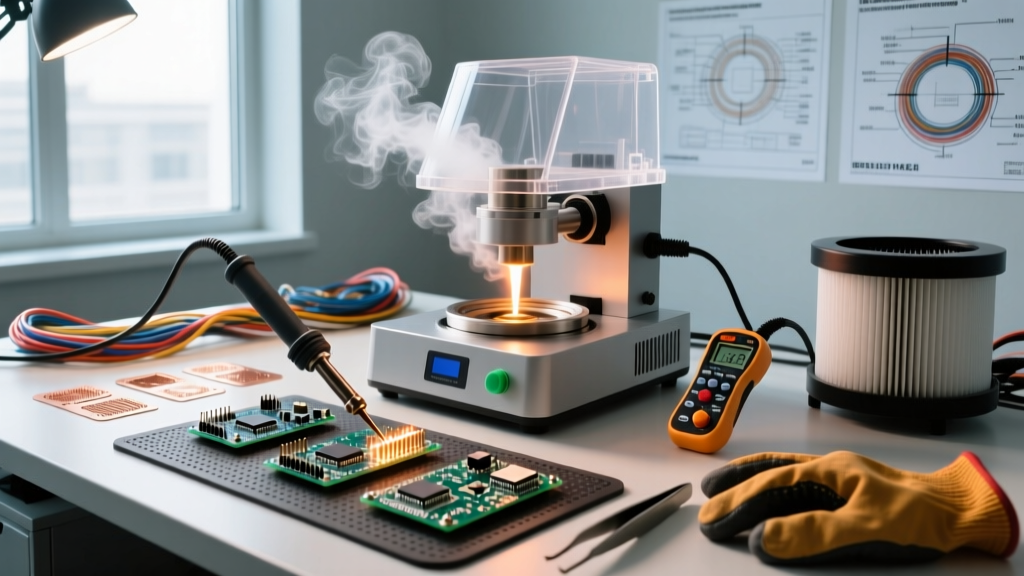
Soldering nickel with OA flux generates volatile organic compounds (VOCs) and fine particulate matter. A standard desk fan is entirely insufficient and merely blows toxic colophony or acid vapors across your face. You must use a localized fume extractor equipped with a HEPA filter (for particulates) and an activated carbon layer (for VOCs and acid gases), positioned no more than 6 inches from the solder joint.
Equipment Setup: Irons, Tips, and PPE
Because of the strict 3-second time limit, your soldering station must possess high thermal recovery. Low-wattage irons (30W-40W) will experience severe tip temperature drop when touching the nickel strip, forcing you to dwell longer on the battery to melt the solder—a recipe for thermal runaway.
Recommended Station Specifications
- Wattage: Minimum 65W (70W+ preferred). Models like the Hakko FX-951 (~$230) or Weller WE1010NA (~$115) provide the necessary thermal mass and rapid sensor feedback.
- Tip Geometry: Avoid conical tips. Use a wide chisel tip (e.g., Hakko T18-D32 or Weller ETA) to maximize surface area contact with the 0.15mm nickel strip, ensuring instant heat transfer.
- Solder Alloy: Leaded Sn63/Pb37 (18-gauge) is highly recommended over lead-free SAC305 for battery packs. Sn63 melts at 183°C (compared to SAC305 at 217°C), drastically reducing the required iron temperature and dwell time.
Personal Protective Equipment (PPE)
Adhering to IPC J-STD-001 Soldering Requirements for safety and workmanship, operators must utilize specific PPE when handling nickel and aggressive fluxes:
- Respiratory: If a dedicated fume extractor is unavailable, a half-mask respirator with P100 particulate filters and organic vapor/acid gas cartridges is mandatory.
- Hand Protection: Kevlar or Nomex finger cots to protect against 350°C splashes of molten solder and accidental tip contact. Avoid latex gloves, which will melt onto the skin.
- Eye Protection: ANSI Z87.1 rated safety glasses with side shields to block flux spatter, which is particularly acidic when soldering nickel.
Step-by-Step Safe Soldering Procedure
- Surface Preparation: Pure nickel oxidizes rapidly. Lightly scuff the soldering area on the nickel strip with 400-grit sandpaper, then wipe with 99% isopropyl alcohol (IPA) to remove oils and dust.
- Pre-Tinning the Strip: Never attempt to solder the nickel strip directly to the battery in one step. Apply a small drop of OA flux to the scuffed nickel strip. Pre-tin the strip with a generous bead of Sn63 solder while it is off the battery cell.
- Heat Sink Application: Place an aluminum alligator clip or copper thermal tape on the nickel strip, directly between the pre-tinned joint and the battery casing.
- The Solder Joint: Apply a microscopic amount of fresh flux to the battery terminal. Place the pre-tinned nickel strip flat against the terminal. Press the 350°C chisel tip firmly onto the nickel strip. Count to 3. The pre-tinned solder should reflow and bond to the terminal instantly. Remove the iron.
- Inspection: A proper nickel solder joint will appear shiny and slightly concave. If it looks dull, gray, or bulbous, you have a cold joint caused by insufficient heat transfer or oxidized flux. Do not reheat immediately; allow the cell to cool.
Post-Soldering Cleanup and Neutralization
If you utilized an organic acid (OA) or mild acid flux to achieve wetting on the nickel, the residual flux is hygroscopic and corrosive. Left untreated, it will pull moisture from the air and corrode the nickel strip, leading to high electrical resistance and localized heating during high-discharge battery use.
Neutralization Protocol:
- Mix a neutralizing solution of 1 tablespoon of baking soda (sodium bicarbonate) per 1 cup of distilled water.
- Using an acid-resistant brush (such as a fiberglass scratch pen or stiff nylon brush), scrub the soldered nickel joints with the solution. You will see mild effervescence as the acid is neutralized.
- Rinse thoroughly with distilled water, followed by a final rinse with 99% IPA to displace the water and accelerate drying.
- Inspect under a magnifying lamp to ensure no white, crusty residue remains in the crevices between the nickel strip and the battery casing.
FAQ: Troubleshooting Nickel Soldering Safety
Why does my solder ball up and roll off the pure nickel strip?
Pure nickel (99.9% Ni) is highly resistant to solder wetting compared to nickel-plated steel. If solder balls up, your surface is oxidized, or your flux is too weak. Scuff the metal immediately before soldering, use a high-activity OA flux, and ensure your iron tip is clean and properly tinned to maximize thermal transfer.
Is it safer to spot weld nickel instead of soldering?
Yes. For high-current 18650 and 21700 battery packs, pulse spot welding is the industry standard because it creates a molecular bond in milliseconds without transferring significant heat to the battery cell. Soldering should only be used for low-current applications, prototyping, or when welding equipment is entirely unavailable, provided strict thermal limits are respected.
Can I use plumbing flux (Oatey/Tectite) on battery terminals?
Absolutely not. Plumbing fluxes contain heavy concentrations of zinc chloride and hydrochloric/phosphoric acids. When heated to 350°C, they release highly toxic chlorine and acid gases. Furthermore, the residue is impossible to fully clean from the microscopic gaps around a battery terminal, guaranteeing severe galvanic corrosion and eventual pack failure.