
The Evolution of Portable Soldering: Gas Reservoirs vs. USB-C PD
For decades, the portable soldering fuel tank iron was the undisputed king of field repairs, off-grid electronics work, and automotive splicing. Tools featuring a built-in butane or propane reservoir offered unmatched autonomy long before high-density lithium-ion batteries became mainstream. However, the 2026 landscape of portable soldering has shifted dramatically with the advent of USB-C Power Delivery (PD) smart irons.
As a technician or DIYer, deciding between a traditional gas-powered iron and a modern electric alternative requires a nuanced understanding of thermodynamics, environmental constraints, and maintenance overhead. This decision framework will dissect the mechanics, failure modes, and practical applications of the soldering fuel tank system to help you choose the right tool for your specific workflow.
The Anatomy of a Soldering Fuel Tank System
To make an informed purchasing decision, you must first understand how these tools generate and regulate heat. A typical soldering fuel tank iron operates on one of two principles:
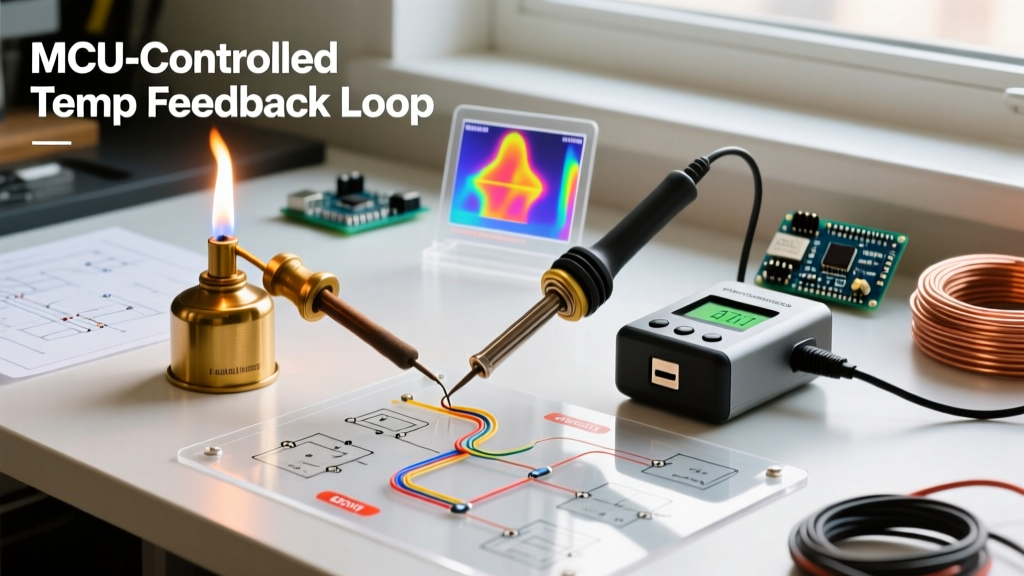
- Direct Flame (Torch Style): Models like the Master Appliance Polyflame utilize a micro-torch flame that directly impinges on a copper tip or provides a localized heat source for shrink tubing and heavy-gauge wire.
- Catalytic Heating (Flameless): Legacy models like the Weller Portasol use a platinum-coated catalytic mesh. Butane vapor passes through the mesh, oxidizing without an open flame to safely heat the tip to roughly 400°C (750°F), making it safer for enclosed spaces.
The fuel itself is almost universally isobutane or a butane/propane mix. According to the National Center for Biotechnology Information (PubChem), butane has a boiling point of -1°C (30.2°F). This chemical property is the single most critical factor in the decision framework, as it dictates the tool's performance in cold environments.
Decision Matrix: When to Choose a Soldering Fuel Tank Iron
Use the following comparison matrix to determine which technology aligns with your operational requirements.
| Operational Parameter | Soldering Fuel Tank (Butane) | USB-C PD Electric (e.g., Pinecil V2, Sequre T65) |
|---|---|---|
| Runtime & Autonomy | Indefinite (with spare fuel canisters); 45-90 mins per fill. | Limited by power bank capacity (e.g., 60W draw drains a 100Wh bank in ~90 mins). |
| Cold Weather Performance | Poor. Vapor pressure drops below freezing, causing flameouts. | Excellent. Internal PID controllers compensate for ambient thermal loss. |
| Thermal Recovery | Moderate. Relies on user-adjusted gas flow; prone to overshooting. | Exceptional. Smart chips adjust power delivery in milliseconds. |
| Maintenance Overhead | High. Requires jet cleaning, O-ring replacement, and fuel bleeding. | Low. Occasional tip tinning and firmware updates. |
| IPC Compliance | Difficult. Hard to maintain strict thermal profiles required by IPC J-STD-001. | High. Precise temperature logging and strict tolerance adherence. |
Deep Dive: Soldering Fuel Tank Mechanics and Maintenance
If your workflow demands a gas-powered iron—such as working in remote agricultural settings, performing automotive harness repairs where power banks are impractical, or working in explosive environments where electrical arcing is a hazard—you must commit to rigorous maintenance. The soldering fuel tank is not a 'fill and forget' system.
1. The Purity Imperative
The most common cause of failure in gas irons is the clogging of the brass jet orifice. This is caused by olefins and heavy hydrocarbons present in cheap, unrefined butane. You must exclusively use 5x to 11x refined isobutane. The refining process strips out these impurities, ensuring a clean vaporization cycle. Using standard lighter fluid will destroy a $60 catalytic iron in a matter of weeks.
2. Bleeding the Tank (Preventing Vapor Lock)
Before every refill, the internal tank must be bled. As you use the iron, air enters the reservoir. If you attempt to inject liquid butane into a pressurized air pocket, the air compresses, preventing a full fill and causing 'vapor lock' during operation. Procedure: Turn the gas dial to off. Use a small flathead screwdriver to depress the fill valve in a well-ventilated area until the hissing stops completely. Only then should you invert the fuel canister and press firmly for 10 seconds.
3. O-Ring Degradation
The fill valve and flow control stem rely on elastomeric O-rings. Standard Buna-N rubber swells and degrades when exposed to concentrated hydrocarbon vapors over time. When sourcing replacement parts or evaluating a build, look for irons that utilize Viton (FKM) O-rings, which offer superior chemical resistance to butane and propane.
Edge Cases & Environmental Failure Modes
A robust decision framework must account for edge cases. Where do soldering fuel tank irons fail catastrophically?
The Altitude and Temperature Trap: Butane relies on ambient heat to vaporize from a liquid to a gas inside the tank. At elevations above 6,000 feet, or in ambient temperatures below 40°F (4°C), the vapor pressure inside the tank plummets. The iron will sputter, fail to ignite, or produce a flame too weak to melt 63/37 Sn/Pb solder. Electric irons suffer no such thermodynamic penalty.
Furthermore, piezoelectric igniters—the click-start mechanism found on most modern torch-style irons—are highly susceptible to moisture and physical shock. In high-humidity environments, the ceramic insulator can track current, resulting in a weak spark that fails to bridge the gas gap. Field technicians often carry a secondary ferrocerium rod or flint striker as a failsafe.
The 2026 Market Shift: Are Gas Irons Obsolete?
To be direct: for 90% of electronics hobbyists, drone repair technicians, and IT network splicers, the soldering fuel tank iron has been superseded by USB-C PD technology.
Consider the economics and performance of the current market:
- Pinecil V2 (~$26): Powered by a RISC-V chip, it boots to 300°C in 6 seconds and can be powered by any standard laptop charger or USB-C power bank.
- Sequre T65 (~$60): Features a built-in battery and USB-C charging, eliminating the need to carry volatile, pressurized gas canisters on airplanes or in confined vehicle cabins.
Conversely, a high-quality butane iron like the Master Appliance Polyflame costs around $55, requires constant fuel purchases, and demands manual temperature regulation by adjusting the gas flow lever. When soldering sensitive surface-mount components (SMD) or multi-layer PCBs, the lack of active PID temperature control in a gas iron risks thermal pad delamination and trace lifting.
Final Verdict & Buying Recommendations
Your purchasing decision should be dictated by your environment and the nature of your connections.
Buy a Soldering Fuel Tank Iron If:
- You perform heavy-gauge automotive or marine wire splicing (where heat shrink and large solder sleeves require broad, aggressive heat).
- You work in remote, off-grid locations (e.g., agricultural solar repair, wilderness telemetry) where recharging a 100Wh lithium power bank is impossible, but carrying a lightweight canister of butane is feasible.
- You operate in classified hazardous locations where intrinsically safe, non-electrical tools are mandated by site safety officers.
Buy a USB-C PD Electric Iron If:
- You work on modern PCBs, SMD components, or consumer electronics where strict adherence to IPC thermal profiles is required.
- You travel frequently by air (TSA regulations heavily restrict pressurized fuel canisters and catalytic lighters).
- You work in cold climates or high-altitude environments where butane vaporization is unreliable.
Ultimately, the soldering fuel tank iron remains a vital, specialized tool in the technician's arsenal. It is no longer the default choice for portable soldering, but for heavy-duty, off-grid thermal work, a well-maintained gas iron remains entirely unrivaled.