
The Hidden Dangers of Thermal Polymer Degradation
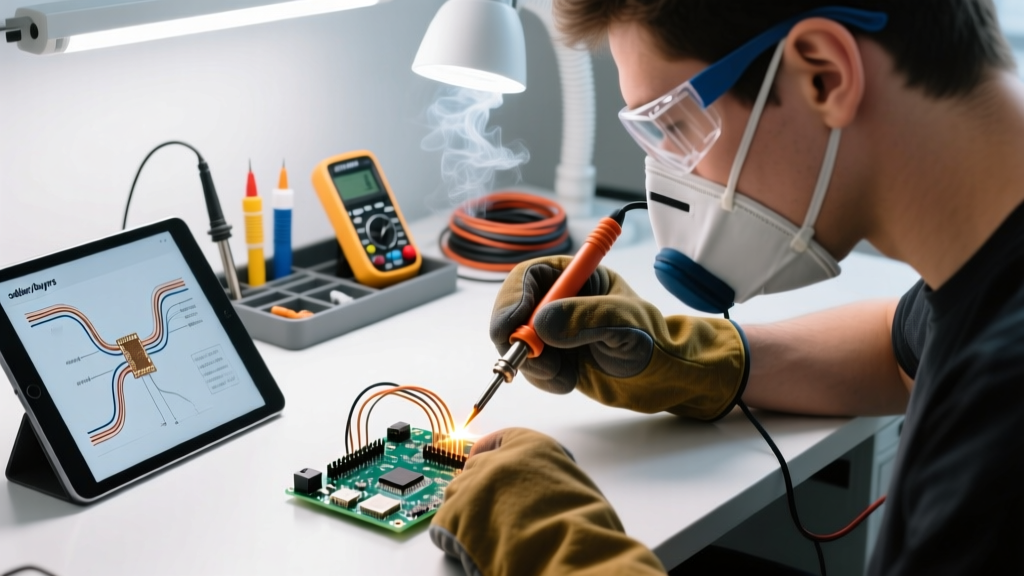
When DIY electronics builders and repair technicians talk about soldering for plastic, they are rarely referring to joining polymers with metallic solder. Instead, this term encompasses using a soldering iron to melt, weld, repair, or embed hardware (like brass heat-set inserts) into thermoplastic enclosures and 3D-printed parts. While highly effective, applying a 300°C metal tip to synthetic polymers triggers thermal degradation, releasing volatile organic compounds (VOCs) and ultrafine particles (UFPs) into your breathing zone.
Unlike rosin flux fumes, which are primarily respiratory irritants, melting plastics can release severe toxins. According to the National Institute for Occupational Safety and Health (NIOSH), chronic exposure to styrene—a gas released when overheating ABS plastic—can cause central nervous system depression, mucous membrane irritation, and is classified as a suspected human carcinogen. Understanding the exact chemical breakdown of your workspace materials is the first pillar of safety.
Polymer Off-Gassing Matrix
| Polymer Type | Common DIY Use | Safe Iron Temp Range | Toxic Off-Gassing Risk & Byproducts |
|---|---|---|---|
| ABS | Drone frames, retro enclosures | 260°C - 280°C | High: Styrene, Carbon Monoxide, Hydrogen Cyanide |
| PLA | Prototyping, custom brackets | 180°C - 210°C | Medium: Lactide, Ultrafine Particulates (UFPs) |
| PETG | Mechanical housings, gears | 230°C - 250°C | Low/Medium: Acetaldehyde (irritant) |
| PVC | Wire insulation, plumbing | NEVER APPLY HEAT | Extreme: Hydrogen Chloride (forms Hydrochloric Acid in lungs) |
| Polycarbonate | High-impact shields, lenses | 280°C - 310°C | Medium: Bisphenol A (BPA), Phenol |
Essential Fume Extraction and Respiratory Safety
The Environmental Protection Agency (EPA) notes that indoor VOC concentrations can be up to ten times higher than outdoors, largely due to localized heating and chemical processes. When soldering for plastic, a standard desk fan is not just inadequate; it is dangerous, as it simply disperses toxic styrene or lactide vapors across your workspace.
⚠️ Safety Callout: Never use a soldering iron on PVC or unknown recycled plastics. If the plastic emits a sharp, bleach-like or acidic odor, unplug the iron immediately, ventilate the room, and discard the material. Hydrogen chloride gas reacts with the moisture in your eyes and lungs to form hydrochloric acid.
Building a 2026-Compliant Extraction Setup
To properly filter polymer off-gassing, you need a two-stage filtration system. HEPA filters capture UFPs, while activated carbon captures VOC gases.
- Source Capture Extractors: For heavy ABS welding or enclosure repair, invest in a BOFA Print PRO 3 or a Sentry Air Systems unit equipped with a multi-stage HEPA/Carbon bed. These units pull fumes at the source before they reach your breathing zone.
- Budget DIY Extraction: The Hakko FA-400 ($65-$85) uses a thin carbon mat that saturates within hours of plastic melting. If using this, you must supplement it with personal protective equipment (PPE).
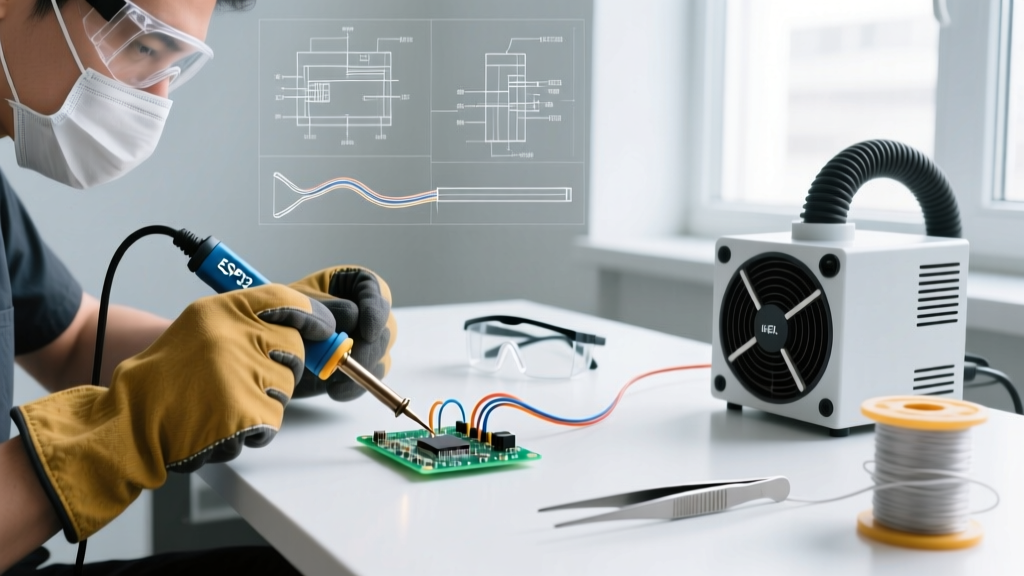
- Respiratory PPE: For enclosed spaces, wear a 3M Half Facepiece Reusable Respirator (Model 6200) fitted with 3M 6006 Multi-Gas/Organic Vapor cartridges ($30/pair) and P100 particulate pre-filters. This specific combination neutralizes styrene and captures sub-micron plastic particulates.
Temperature Control: Preventing Thermal Runaway
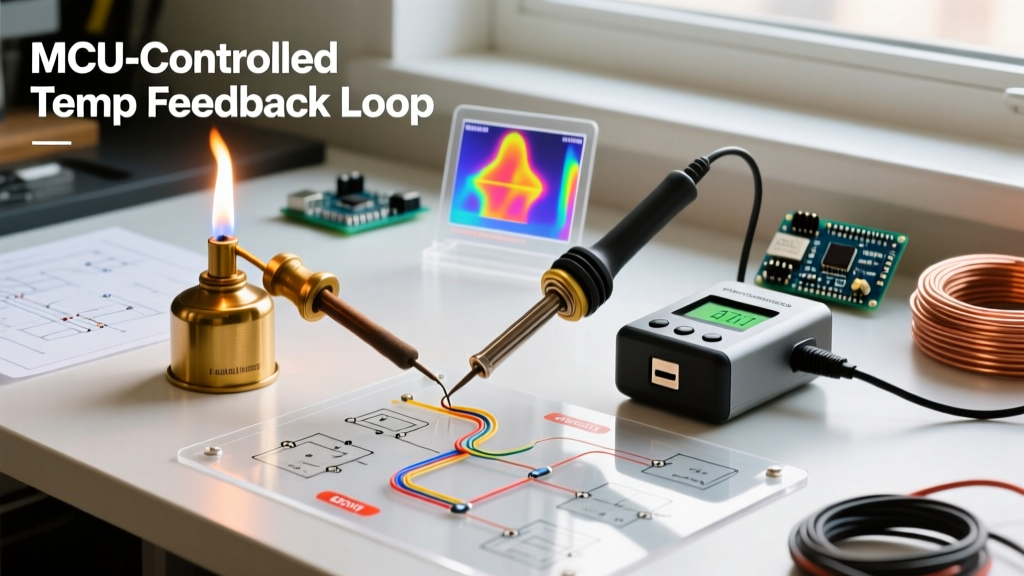
The most common safety failure when soldering for plastic is thermal overshoot. Cheap, dial-adjusted irons often overshoot their target temperature by 50°C to 80°C during recovery cycles. If you set a dial to 240°C for PETG, the tip might momentarily spike to 310°C, instantly vaporizing the polymer and creating a plume of toxic smoke.
In 2026, PID-controlled smart irons have made precise thermal management highly accessible. Using a station like the Weller WE1010NA ($120) or the Pine64 Pinecil V3 ($45) ensures the tip temperature stays within a ±2°C margin of your set point. This keeps the plastic in a viscous, molten state rather than pushing it into thermal decomposition.
Step-by-Step Safe Heat-Set Insert Embedding
Embedding brass heat-set inserts into 3D-printed plastics is the most common application of a soldering iron on polymers. Doing this safely requires precise timing and temperature control to avoid pushing toxic fumes into the air or melting the surrounding structural layers.
- Preparation: Select the correct insert (e.g., McMaster-Carr 91772A151 for M3 threads). Ensure the printed hole is designed with a 0.2mm interference fit.
- Dial in the PID: Set your PID-controlled iron to 280°C for ABS or 240°C for PLA. Allow the tip to stabilize for 60 seconds.
- Alignment: Place the brass insert over the hole. Hold the iron perpendicular to the insert.
- Controlled Dwell Time: Apply gentle downward pressure. The insert should sink into the plastic in 2 to 3 seconds. Do not force it; let the thermal transfer do the work.
- Immediate Retraction: The moment the insert is flush, lift the iron straight up. Leaving the iron in contact for more than 4 seconds will cause the surrounding plastic to boil, releasing VOCs and weakening the structural integrity of the print.
- Cooling: Allow the part to air-cool for 15 seconds before threading a bolt, ensuring the polymer re-crystallizes around the brass knurling.
Fire Hazards and Solvent Safety
Thermoplastics are essentially solid hydrocarbons. When welding ABS or repairing a cracked polycarbonate drone chassis, you are working with highly flammable materials. Furthermore, many makers use chemical solvents alongside thermal tools.
- The Acetone Danger: Makers frequently use acetone to smooth ABS prints. Acetone has a flash point of -20°C (-4°F). Never use a soldering iron in an enclosed chamber or on a workbench where acetone vapors are pooling. An errant spark from an iron's heating element relay can ignite the vapor.
- Workspace Matting: Always perform plastic welding on a high-temperature silicone mat (rated to 500°C) or an aluminum welding block. Plastic slag will permanently bond to wooden workbenches and can melt through standard ESD mats, creating a secondary fire and toxic smoke hazard.
- Tip Cleaning: When melting plastic, polymer residue will carbonize on your soldering tip, destroying its thermal conductivity. Never scrape a hot tip with a steel file. Use a damp cellulose sponge or brass wire wool, and re-tin the tip with a small amount of 63/37 leaded or SAC305 lead-free solder to protect the iron plating from corrosive plastic byproducts.
FAQ: Quick Safety Troubleshooting
Q: Can I use a heat gun instead of a soldering iron for plastic welding?
A: Heat guns (like the Hakko 878D) are safer regarding direct contact burns, but they blow molten plastic micro-droplets and VOCs directly into the ambient room air. A soldering iron with a localized fume extractor nozzle is generally safer for respiratory health.
Q: What if I accidentally melt PVC wire insulation with my iron?
A: Immediately evacuate the room, open all windows, and run exhaust fans. PVC releases hydrogen chloride gas, which is highly corrosive. Do not return to the workspace until the air has completely cycled out, and clean your iron tip outside, as the acidic residue will pit the iron's plating.