
The "Soldering Board" Ambiguity: Defining Your Project Phase
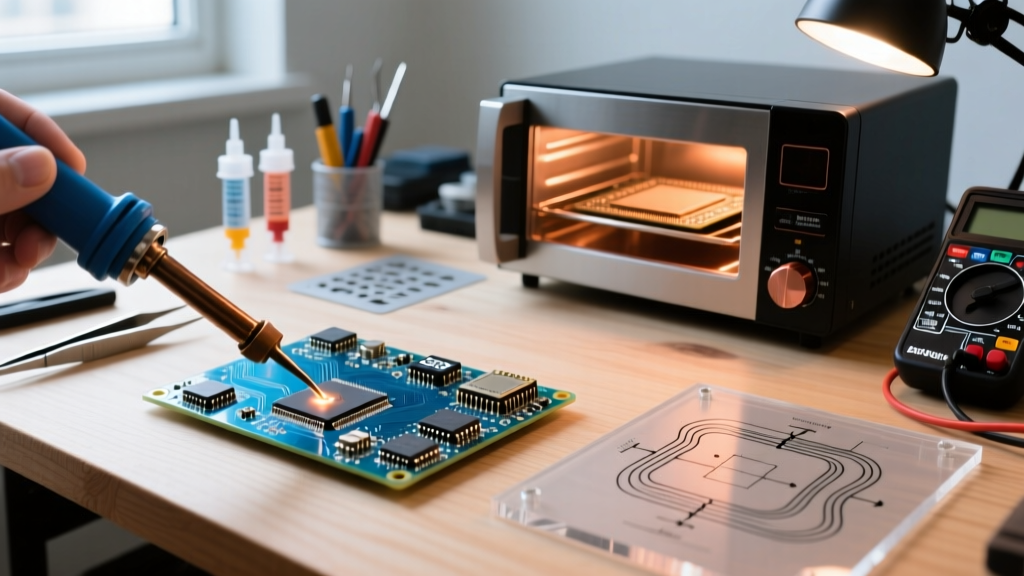
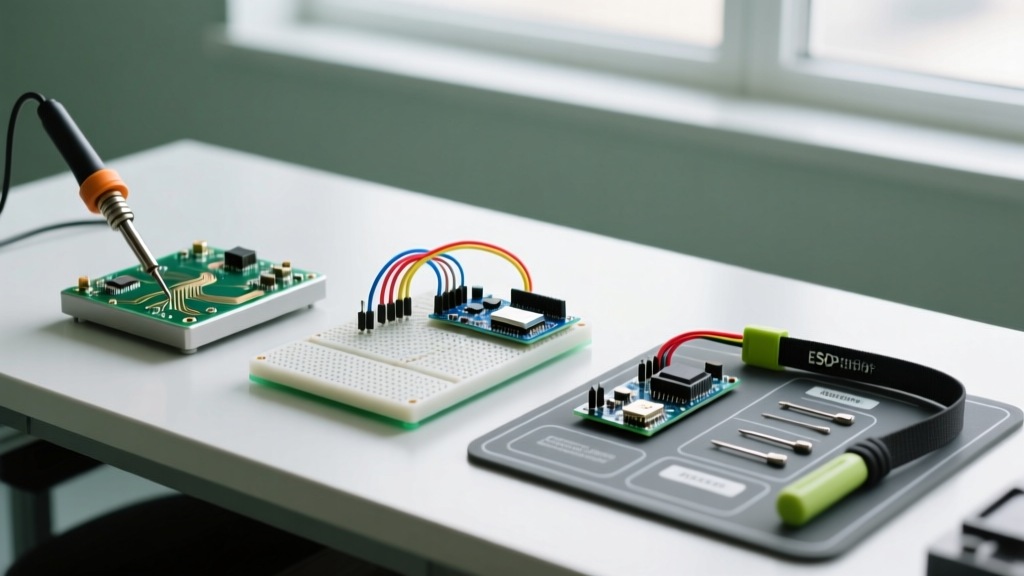
When engineers, makers, and students search for a soldering board, they are often met with a confusing array of products that share the same name but serve entirely different purposes. A "soldering board" can refer to a disposable practice kit for beginners, a copper-clad perfboard for circuit prototyping, or an ESD-safe silicone workstation mat for professional assembly. Selecting the wrong type leads to frustrating pad lift-offs, ruined components, or electrostatic damage to sensitive ICs.
This decision framework cuts through the ambiguity. By mapping your current project phase—Skill Acquisition, Circuit Prototyping, or Production Workstation—to the correct board category, you can optimize your budget and thermal management strategy. Below, we break down the exact material specifications, product models, and failure modes associated with each category.
Phase 1: Skill Acquisition (Practice Soldering Boards)
If your primary goal is building muscle memory for through-hole soldering, you need a practice soldering board. These are typically single-sided, phenolic or low-grade FR-4 boards pre-drilled with PTH (Plated Through-Hole) vias and often include a basic component kit (LEDs, resistors, buzzers).
Top Product Recommendations
- Elenco AK-700 Soldering Practice Kit ($12 - $15): The industry standard for vocational training. It includes a high-quality phenolic board with clear silkscreen markings and a robust component assortment. The pads are generously sized (1.5mm diameter) to forgive beginner iron placement errors.
- MakerFocus DIY FM Radio Kit ($18 - $22): A step up from basic LED blinkers. This board requires tuning and troubleshooting, forcing the user to practice desoldering and rework—a critical skill often ignored in basic kits.
Expert Warning: Practice boards often use cheap phenolic substrates with a low Glass Transition Temperature (Tg). If your soldering iron dwell time exceeds 3 to 4 seconds per joint, the copper pads will delaminate and lift off the board permanently. Always use a temperature-controlled iron set to 320°C (608°F) for these specific boards.
Phase 2: Circuit Prototyping (Perfboards and Stripboards)
Once you have mastered the soldering iron, the "soldering board" transitions into a prototyping medium. Here, the substrate material dictates the success of your custom circuit. You must choose between Phenolic (paper-resin) and FR-4 (fiberglass-epoxy) based on your thermal and mechanical requirements.
Material Comparison Matrix
| Specification | Phenolic (e.g., Vector 8012) | FR-4 (e.g., Busboard BPS100) |
|---|---|---|
| Substrate Base | Paper infused with phenolic resin | Woven fiberglass with epoxy resin |
| Max Operating Temp | ~130°C (Tg) | ~135°C to 170°C+ (Tg) |
| Machinability | Excellent; cuts easily with shears | Poor; requires carbide bits or scoring |
| Plating Standard | Usually bare copper or cheap HASL | ENIG (Electroless Nickel Immersion Gold) |
| Best Use Case | Low-temp, simple audio/analog circuits | High-reliability, SMD/PTH mixed, RF circuits |
| Average Cost | $8 - $12 per standard sheet | $20 - $30 for a multi-pack |
For 90% of modern DIY and engineering prototypes, FR-4 with ENIG plating is the mandatory choice. ENIG provides a perfectly flat, oxidation-resistant gold surface that makes soldering fine-pitch SMD components alongside through-hole parts significantly easier. As noted in SparkFun's comprehensive soldering tutorials, a flat pad surface is critical for achieving proper surface tension and wetting when dragging a solder iron across SOIC or QFP chips.
Phase 3: Production and Workstation (ESD Mats and PCB Holders)
In a professional or high-volume enthusiast context, the term "soldering board" frequently refers to the physical workstation surface or the mechanical fixture holding the PCB. Soldering directly on a wooden desk or ungrounded plastic surface invites catastrophic electrostatic discharge (ESD) events and thermal damage to the desk itself.
Workstation Essentials
- ESD-Safe Silicone Soldering Mats: The Hakko CH-50 ($45) or generic 500°C-resistant silicone mats provide a thermal barrier and an embedded steel core to prevent warping. Crucially, they must be grounded via a 1MΩ resistor wire to safely dissipate static charges from your body and tools.
- PCB Holding Fixtures: The PanaVise 201 PCB Holder ($28) is an essential "third hand." It uses wide, low-thermal-mass aluminum jaws to grip the board edges without transferring heat away from your solder joints, which can cause cold solder joints if the board acts as an unintended heatsink.
The 2026 Soldering Board Decision Matrix
Use this framework to instantly identify the correct purchase based on your current bottleneck.
| Your Current Bottleneck | Recommended Board Type | Specific Product Target |
|---|---|---|
| I keep burning my fingers and making messy blob joints. | Practice Soldering Board (Phenolic) | Elenco AK-700 Training Kit |
| My custom circuit works on a breadboard but fails when soldered. | Prototyping Board (FR-4 ENIG) | Busboard Prototype Systems BPS100 |
| I am damaging sensitive MOSFETs and microcontrollers during assembly. | ESD Workstation Mat & Grounding | Hakko ESD Mat + 1MΩ Wrist Strap |
| My board shifts while soldering, causing bridged pins on SMD ICs. | Thermal PCB Holder Fixture | PanaVise 201 or Stickvise PCB Vise |
Critical Failure Modes and Thermal Management
Regardless of the soldering board type you select, understanding failure modes governed by industry standards like IPC-A-610 (Acceptability of Electronic Assemblies) is vital for long-term reliability.
1. The Phenolic Delamination Trap
When using budget phenolic prototyping boards, the resin binder breaks down rapidly above 260°C. If you are using a high-thermal-mass component (like a large electrolytic capacitor or a TO-220 voltage regulator) and your iron is set to 380°C, the localized heat will cause the copper pad to separate from the paper substrate. Solution: Use a chisel tip (e.g., Hakko T18-D12) to maximize surface area contact, allowing you to lower the iron temperature to 310°C while maintaining rapid heat transfer.
2. ENIG Black Pad Syndrome
While FR-4 ENIG boards are superior, they are susceptible to "Black Pad Syndrome" if exposed to excessive flux acidity or repeated rework cycles. The gold dissolves into the solder, leaving a brittle nickel-phosphorus layer that fractures under mechanical stress. Solution: Use a mild No-Clean flux (like Amtech NC-559-V2-TF) and avoid reheating ENIG pads more than twice. For further insights on flux chemistry and wetting behaviors, the Adafruit Guide to Excellent Soldering provides excellent visual references for proper fillet formation.
3. Thermal Relief Starvation
When designing or modifying a custom soldering board, routing a ground pin directly into a massive copper ground plane without thermal relief spokes will result in a cold solder joint. The ground plane acts as an infinite heatsink, pulling thermal energy away from the iron tip faster than it can melt the solder. Always ensure prototype boards utilize 4-spoke thermal reliefs for PTH vias connected to large pours.
Final Expert Verdict
There is no single "best" soldering board; there is only the right tool for your current phase of development. Beginners should invest $15 in an Elenco practice kit to master dwell times without the anxiety of ruining expensive components. Intermediate makers must abandon cheap phenolic perfboards and standardize on FR-4 ENIG prototyping boards to support modern mixed-technology (SMD/PTH) circuits. Finally, professionals must view their ESD workstation mat and PCB vise as the foundational "soldering board" that protects both the assembly and the environment. Align your purchase with this framework, and your soldering reliability will immediately reflect professional IPC Class 2 standards.