
The Role of Soldera Alloys in High-Reliability Manufacturing
In the demanding landscape of 2026 industrial electronics manufacturing, the choice of solder alloy dictates the lifecycle, thermal resilience, and mechanical reliability of the final product. Soldera, a specialized manufacturer of high-purity soldering alloys and flux-cored wires, has become a staple in IPC-A-610 Class 3 production environments. Unlike consumer-grade soldering consumables, Soldera's industrial product line is engineered for stringent applications ranging from automotive Battery Management Systems (BMS) to aerospace avionics. This guide provides a deep-dive technical comparison of Soldera's core alloy offerings, flux chemistries, and application-specific best practices for engineering and procurement teams.
Metallurgical Profile: Soldera Product Line Matrix
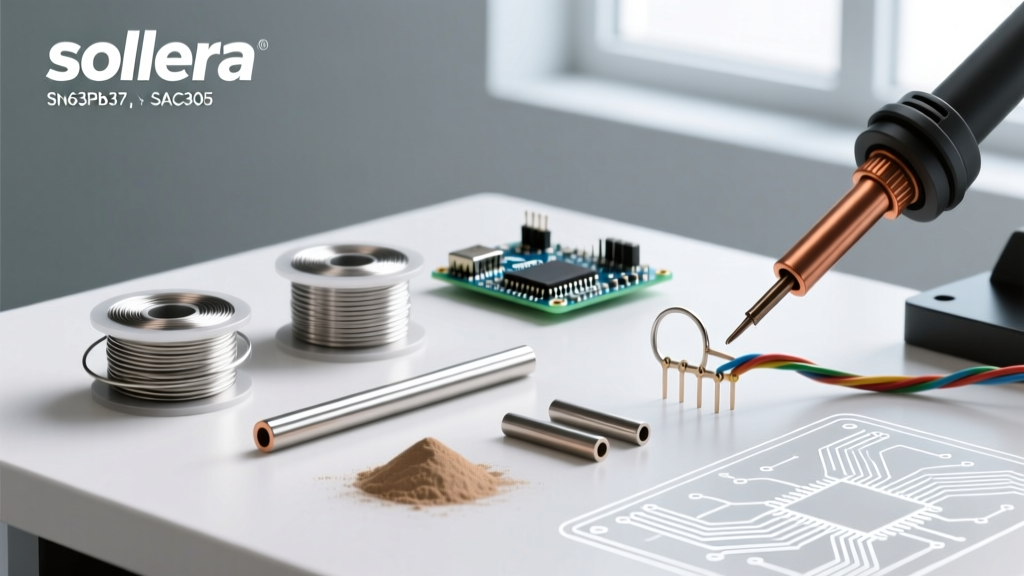
Selecting the correct Soldera alloy requires balancing melting point, tensile strength, and wetting characteristics against the operational environment of the PCB assembly. Below is a comprehensive matrix of Soldera's primary industrial wire alloys, updated with 2026 market pricing and metallurgical data.
| Soldera SKU / Alloy | Composition | Solidus / Liquidus (°C) | Tensile Strength (MPa) | Typical 500g Spool Cost (2026) | Primary Industry Use |
|---|---|---|---|---|---|
| Soldera-SAC305-NC | Sn96.5 / Ag3.0 / Cu0.5 | 217 / 220 | 45 - 50 | $52.00 | Commercial / Industrial Lead-Free |
| Soldera-6337-WS | Sn63 / Pb37 (Eutectic) | 183 / 183 | 42 - 46 | $28.50 | Aerospace / Defense (MIL-SPEC) |
| Soldera-SnSb5-HT | Sn95 / Sb5 | 232 / 240 | 40 - 44 | $65.00 | High-Temp Step Soldering |
| Soldera-SnAg4-Cu | Sn95.5 / Ag4.0 / Cu0.5 | 217 / 225 | 48 - 55 | $58.00 | Automotive Under-Hood Electronics |
Flux Core Chemistry: ROL0 vs. ORH1 in Soldera Wire
The alloy is only half of the soldering equation; the flux core determines wetting speed and post-assembly reliability. Soldera offers its wire alloys in two primary flux classifications according to IPC Standards J-STD-004B:
- ROL0 (No-Clean, Low Activity): Standard in Soldera's SAC305 and SnAgCu lines. Contains 2.2% to 3.3% rosin-based flux. It leaves a benign, non-conductive residue that does not require cleaning, making it ideal for high-volume SMT and manual rework where washing is cost-prohibitive. However, ROL0 struggles with heavily oxidized ENIG (Electroless Nickel Immersion Gold) pads.
- ORH1 (Water-Soluble, High Activity): Found in Soldera's Sn63Pb37 and specialized high-reliability lines. This organic acid flux provides aggressive wetting, easily breaking through thick oxide layers on legacy components or large thermal ground planes. Assemblies must be cleaned using heated DI water (60°C) within 4 hours of soldering to prevent dendritic growth and electrochemical migration (ECM).
Industry-Specific Application Profiles
Automotive EV Battery Management Systems (BMS)
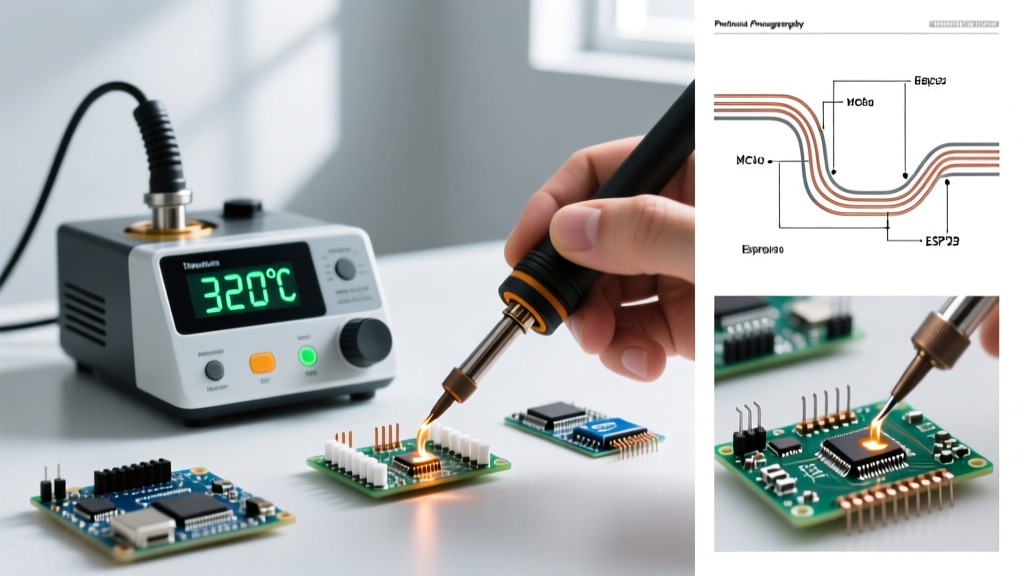
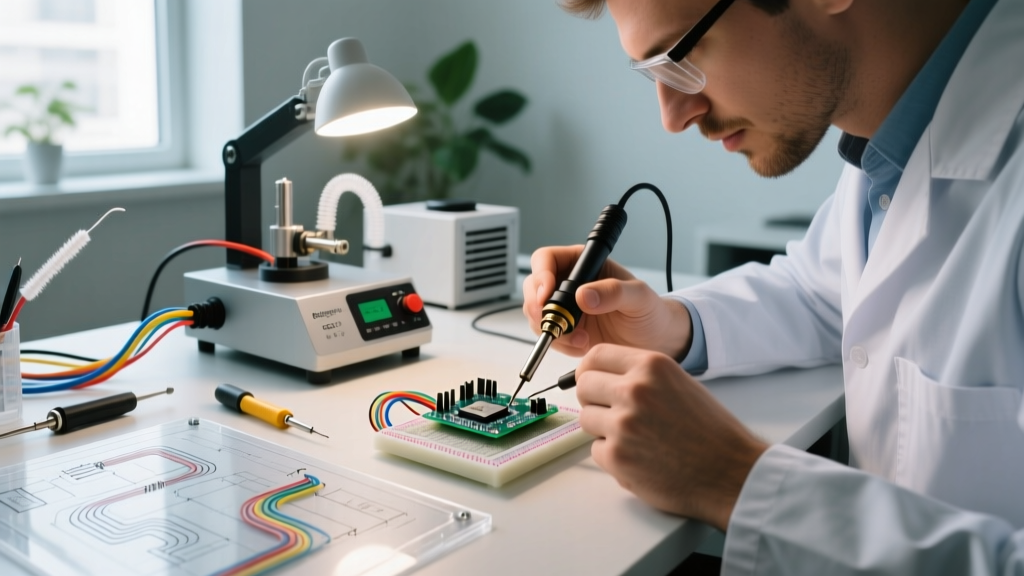
Modern EV battery packs subject BMS PCBs to extreme thermal cycling (-40°C to +125°C) and constant high-frequency vibration. For these applications, Soldera-SnAg4-Cu is the preferred choice over standard SAC305. The additional 1% silver content refines the grain structure of the solder joint, significantly improving fatigue resistance during thermal expansion mismatches between the FR4 substrate and large copper pours. When hand-soldering Soldera SnAg4 on large BMS connector pins, technicians must use a high-thermal-mass hoof tip (e.g., Weller RT4 or Hakko T18-C4) set to 360°C, allowing a 3.5-second dwell time to ensure complete through-hole barrel fill without scorching the flux core.
Aerospace and Defense Avionics
In aerospace, tin whisker growth on lead-free solders can cause catastrophic short circuits in low-voltage avionics. According to guidelines published by the NASA Electronic Parts and Packaging (NEPP) Program, mitigating tin whiskers often requires the reintroduction of lead. Soldera-6337-WS (Sn63Pb37) remains the gold standard for MIL-PRF-38534 and MIL-STD-883 compliant assemblies. The eutectic nature of this alloy ensures a sharp phase transition at exactly 183°C, eliminating the plastic (pasty) state that causes cold joints when components are disturbed during cooling. For aerospace rework, Soldera's 3.3% ORH1 flux core is heavily favored to guarantee 100% wetting on gold-plated RF shields, followed by an aggressive saponifier wash.
Soldera Paste vs. Wire for Selective Soldering
While wire is standard for manual assembly and rework, Soldera's Type 4 and Type 5 solder pastes are critical for fine-pitch QFN and BGA components in mixed-technology boards. Type 4 paste (20-38μm powder size) is optimal for 0.4mm pitch CSPs, while Type 5 (15-25μm) is required for 0.3mm pitch micro-BGAs. When pairing Soldera SAC305 Type 4 paste with a selective soldering process for through-hole connectors, engineers must utilize a 'Ramp-to-Spike' reflow profile. This minimizes the time above liquidus (TAL) to 45-60 seconds, reducing the formation of brittle Cu6Sn5 intermetallic compounds (IMC) at the pad interface.
Troubleshooting Soldera Wetting Issues on OSP Finishes
Organic Solderability Preservative (OSP) is a common, cost-effective PCB finish, but it presents unique challenges for lead-free Soldera alloys. If you experience de-wetting or grainy joints when using Soldera-SAC305-NC on OSP, implement the following corrective actions:
- Increase Tip Temperature: OSP requires more thermal energy to break down the organic coating. Raise your station to 350°C - 360°C.
- Optimize Tip Geometry: Switch from a conical tip to a chisel or bevel tip (e.g., 2.4mm chisel) to maximize surface area contact and thermal transfer.
- Pre-Flux the Pad: Apply a minimal amount of external Soldera ROL0 liquid flux to the pad before introducing the wire. This compensates for the flux core burning off before the pad reaches the 217°C liquidus threshold.
- Verify Shelf Life: OSP degrades rapidly. Ensure PCBs have not exceeded their 6-month shelf life or been exposed to multiple reflow cycles prior to hand soldering.
Expert Insight: Never use a wire brush or abrasive pad to clean oxidized OSP or ENIG pads before using Soldera alloys. Abrasives destroy the thin surface finish, exposing raw copper which immediately oxidizes and creates an unsolderable barrier. Always rely on chemical flux activation.
Procurement, Storage, and Shelf-Life Management
To maintain the chemical integrity of Soldera's flux cores, strict environmental controls are required. Soldera water-soluble (ORH1) wire has a strict 12-month shelf life when stored at 20°C and 40% Relative Humidity (RH). Exposure to temperatures exceeding 30°C or humidity above 65% for more than 48 hours can cause the flux core to crystallize or absorb ambient moisture, leading to violent spattering (solder balling) during the soldering process. Procurement teams should mandate that Soldera alloys are shipped in nitrogen-purged, vacuum-sealed foil bags with desiccant packs, and inventory must be managed on a strict First-In-First-Out (FIFO) basis.
For further technical data on solder joint reliability and thermal fatigue testing, engineering teams should consult the latest research and whitepapers provided by the Surface Mount Technology Association (SMTA), which frequently publishes empirical data on SAC305 and SnSb5 alloy performance in extreme environments.