
The "Sautering" Myth: Linguistic Ghost vs. Metallurgical Science
If you have ever found yourself typing "sautering vs soldering" into a search engine, you are not alone. The term "sautering" is one of the most common phonetic misspellings in the electrical and plumbing trades. In North American English, the letter "l" in solder is largely silent, leading to the pronunciation "sah-der." When novices attempt to write the word phonetically, "sautering" is the frequent result. For the record, Merriam-Webster confirms the only correct spelling is soldering, derived from the Old French soudure.
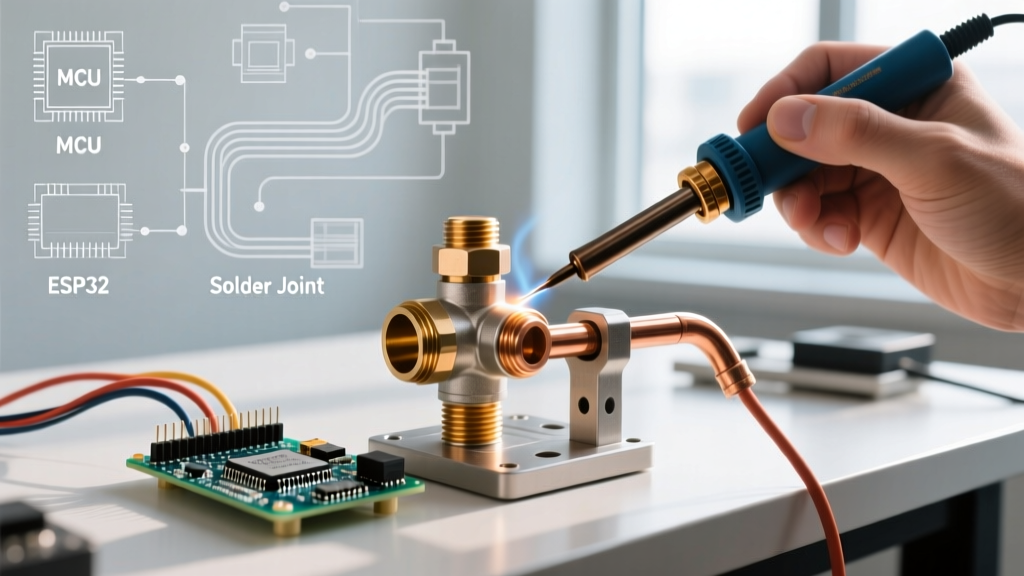
However, dismissing this search query as a mere typo misses a massive opportunity for technical clarity. When DIYers and junior technicians search for "sautering," they are usually trying to distinguish between the delicate electronics work they see on YouTube and the heavy-duty pipe joining they see on job sites. To provide genuine information gain, we must pivot from the spelling myth to the actual metallurgical spectrum: True Soldering vs. Sweating (Plumbing) vs. Brazing.
The 450°C Threshold: Defining the Thermal Joining Spectrum
The American Welding Society (AWS) draws a hard, uncompromising line in the sand at 450°C (842°F). This temperature is the universal demarcation point between soldering and brazing. Understanding this threshold is critical for selecting the right filler metal, flux, and heat source for your 2026 projects.
The AWS Rule of Thumb: If the filler metal melts below 450°C, you are soldering. If it melts above 450°C, you are brazing. The base metals, however, are never melted in either process.
1. True Soldering (Electronics & Precision PCB Work)
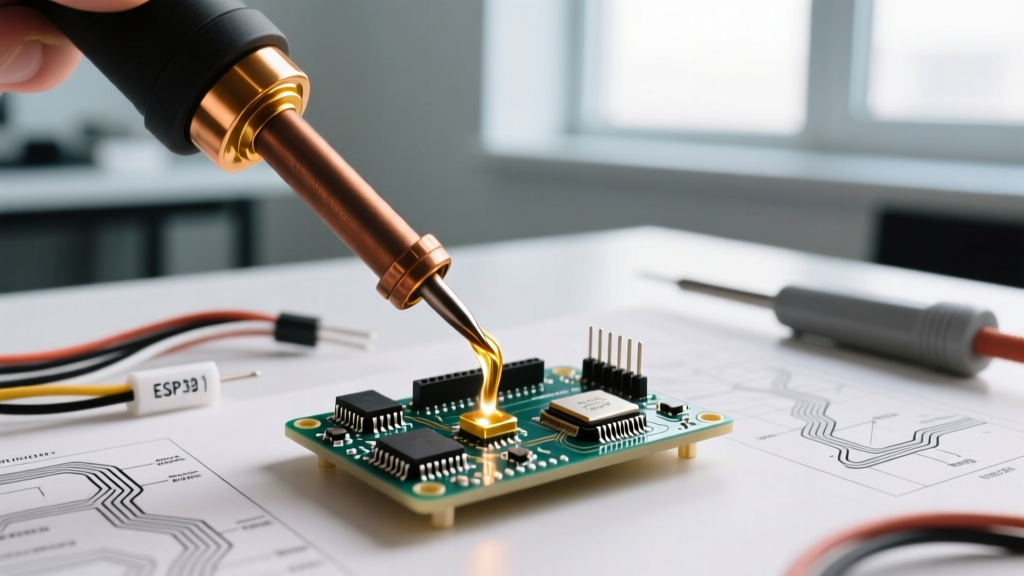
Electronics soldering operates at the lowest end of the thermal spectrum, typically between 183°C and 250°C. The goal is to create an intermetallic compound (IMC) layer—specifically Cu6Sn5—between the copper pad and the tin-based alloy. This IMC layer is what provides electrical conductivity and mechanical shear strength.
- Leaded Standard: Sn63/Pb37 (63% Tin, 37% Lead). This is a eutectic alloy, meaning it melts and freezes at a single, exact temperature: 183°C (361°F). It remains the gold standard for aerospace and medical prototyping due to its zero-plastic-state transition.
- Lead-Free Standard (RoHS): SAC305 (96.5% Sn, 3.0% Ag, 0.5% Cu). Melts at 217°C (423°F). Requires higher iron tip temperatures (typically 350°C at the tip) to achieve proper wetting.
- Flux Chemistry: Mildly Activated Rosin (RMA) or Water-Soluble (OA). Kester 186 remains the industry benchmark for RMA flux, effectively stripping copper oxides without leaving highly corrosive residues.
2. "Sweating" (Plumbing & Copper Pipe Joining)
When plumbers join copper pipes, they are technically still soldering, but the industry refers to the process as sweating. The term comes from the way the fluxed pipe "sweats" molten solder into the joint via capillary action. Sweating operates at higher temperatures than PCB work, usually requiring the joint to reach 230°C to 260°C.
- Filler Metals: 95/5 Tin-Antimony (melts ~250°C) for potable water lines, or Silver-bearing lead-free alloys. Never use acid-core plumbing solder on electronics; the zinc chloride flux will destroy copper traces in hours.
- Flux Chemistry: Petroleum-based pastes like Oatey No. 95 Tinning Flux, which contains powdered solder to help bridge larger capillary gaps in 3/4" or 1" copper fittings.
3. Brazing (HVAC, Structural, & High-Pressure)
Once you cross the 450°C threshold, you are brazing. Brazing is used for HVAC refrigerant lines, structural bicycle frames, and high-pressure steam lines. The capillary action is similar to sweating, but the metallurgical bond is vastly stronger, often exceeding the tensile strength of the base metals themselves.
- Filler Metals: Sil-Fos 15 (15% Silver, Copper, Phosphorus). Melts at roughly 650°C (1200°F). The phosphorus acts as a self-fluxing agent when joining copper-to-copper, eliminating the need for external chemical flux.
- Heat Sources: Oxy-acetylene or high-BTU MAPP gas torches. A standard hardware store propane torch cannot generate the localized BTU output required to braze a 1-1/8" HVAC copper line.
Method Comparison Matrix
| Method | Temperature Range | Standard Filler Metal | Flux Requirement | Primary 2026 Use Case |
|---|---|---|---|---|
| Electronics Soldering | 183°C - 250°C | SAC305 / Sn63/Pb37 | Rosin (RMA) or Water-Soluble | PCB assembly, microcontrollers, wiring |
| Sweating (Plumbing) | 230°C - 280°C | 95/5 Tin-Antimony | Petroleum/Zinc Chloride Paste | Domestic potable water copper lines |
| Brazing | 600°C - 850°C+ | Sil-Fos 15 (Silver-bearing) | None (Cu-Cu) or Borax (Steel) | HVAC/R lines, structural steel, bicycles |
2026 Tooling & Cost Breakdown
Equipping your workbench requires matching the tool to the thermal mass of your target. Here is a realistic look at current market pricing for professional-grade, entry-level setups.
Electronics Soldering Station
For through-hole and basic SMD work, the Hakko FX-888D ($110 - $130) remains a dominant force in 2026. It features digital temperature lockout and rapid thermal recovery. For analog purists who prefer the infinite resolution of a potentiometer, the Weller WES51 ($140 - $160) is a legendary, repairable workhorse. Pro Tip: Always buy genuine Hakko or Weller tips; counterfeit tips from third-party marketplaces lack the internal copper core and iron plating required for proper heat transfer.
Plumbing Sweating Torch
Forget standard yellow propane cylinders. The Bernzomatic TS8000 ($55 - $65) paired with a MAP-Pro cylinder is the minimum viable setup for sweating 3/4" copper pipes. MAP-Pro burns at roughly 3,730°F in air, providing the aggressive, localized heat needed to pull solder through a fitting before the flux burns off.
HVAC Brazing Rig
For brazing, you need an Harris 72-7GP acetylene/air torch outfit ($180 - $220). Acetylene releases its heat much faster than propane, allowing you to reach the 650°C brazing threshold on thick copper refrigerant lines without oxidizing the interior of the pipe.
Critical Failure Modes & Edge Cases
Whether you are soldering a 0402 surface-mount capacitor or sweating a main water line, the physics of wetting and capillary action dictate success or failure. Avoid these common edge cases:
- The "Cold Joint" (Electronics): Caused by insufficient heat transfer to the pad, not just the lead. The solder melts on the iron tip and blobs onto the component, but no IMC layer forms. The joint looks grainy, dull, and will eventually crack under thermal cycling. Fix: Apply the iron to both the pad and the lead simultaneously for 1.5 seconds before feeding the solder.
- Flux Inclusions (Plumbing Sweating): If you overheat a copper fitting, the petroleum flux turns into a hard, black carbon crust. This crust physically blocks the molten 95/5 solder from entering the capillary gap, resulting in a pinhole leak that will burst under 80 PSI municipal water pressure. Fix: Remove the flame the exact second the solder ring appears at the base of the fitting.
- Capillary Starvation (Brazing): When brazing HVAC lines, failing to purge the inside of the copper tube with dry nitrogen results in internal copper oxide scaling (cupric oxide). This scale flakes off during compressor operation and destroys the expansion valve. Fix: Always flow dry nitrogen at 2-3 CFH while brazing.
Frequently Asked Questions
Can I use plumbing solder for electronics?
Absolutely not. Plumbing solder uses an aggressive acid-core flux (usually zinc chloride or hydrochloric acid derivatives) designed to eat through heavy copper oxidation on pipes. If used on a PCB, the acid residue will rapidly corrode the thin copper traces and cause short circuits, even if you attempt to clean it with isopropyl alcohol. Always use rosin-based (RMA) or no-clean flux for electronics.
Is "sautering" ever a valid term in metallurgy?
No. As confirmed by linguistic and metallurgical authorities, "sautering" is strictly a phonetic misspelling. The confusion is compounded by the culinary term "sautéing," which involves frying food quickly in a small amount of fat. In the context of metal joining, the only correct terms are soldering, sweating, and brazing.
Why does my solder ball up and refuse to stick to the wire?
This is a failure of wetting. Solder will not wet a surface that is oxidized or contaminated with oils. If your solder balls up like water on a waxed car hood, the surface is dirty. Mechanically abrade the wire with fine sandpaper, apply a high-quality flux like Kester 186, and try again. The flux must chemically reduce the oxides before the solder can form a metallurgical bond.
Final Verdict
While "sautering vs soldering" is fundamentally a battle of spelling, the underlying intent of the query highlights a critical need for tradespeople and hobbyists to understand the thermal joining spectrum. By respecting the 450°C AWS threshold, selecting the correct flux chemistry, and utilizing properly calibrated 2026 tooling, you ensure structural integrity, electrical conductivity, and long-term reliability in every joint you make.