
Is ProPress Better Than Soldering? The Ultimate Decision Framework
When mechanical contractors, HVAC technicians, and advanced DIYers ask, "Is ProPress better than soldering?" the answer is never a simple yes or no. While electrical soldering focuses on PCBs and microcontrollers, pipe soldering (often called sweating) and mechanical press-fit systems like Viega ProPress dominate the plumbing and hydronic heating sectors. In 2026, with stricter building codes regarding open flames and a growing shortage of skilled tradespeople, the debate between traditional torch soldering and press technology is more relevant than ever.
To determine which method is superior for your specific application, we must move beyond tribal trade loyalties and apply a rigorous decision framework based on capital expenditure (CapEx), operational expenditure (OpEx), metallurgical reliability, and site-specific safety constraints.
The Economics: Upfront Investment vs. Per-Joint Cost
The most immediate friction point in the ProPress vs. soldering debate is the barrier to entry. ProPress requires a significant upfront capital investment, whereas traditional soldering is remarkably cheap to start.
Capital Expenditure (CapEx) Breakdown
- ProPress Tooling: A professional-grade pressing tool, such as the Milwaukee M18 FORCE LOGIC ProPress Kit or the Ridgid RP-350, typically retails between $1,800 and $2,400 in 2026. This includes the battery-powered press tool, charger, and standard jaws for 1/2" to 2" copper.
- Soldering Tooling: A high-quality traditional kit featuring a Bernzomatic TS8000 high-intensity torch, Oatey lead-free solder, flux, and emery cloth costs roughly $85 to $120.
Operational Expenditure (OpEx) per Joint
While the torch wins on upfront costs, the consumable costs flip the script. ProPress fittings contain a pre-lubricated O-ring and a stainless steel grab ring, making them significantly more expensive than standard wrought copper fittings.
| Fitting Type (3/4" Copper Coupling) | Average Material Cost (2026) | Cost Multiplier |
|---|---|---|
| Standard Wrought Copper (Solder) | $0.85 - $1.20 | 1x (Baseline) |
| Viega ProPress Copper Coupling | $3.90 - $5.50 | ~4.5x |
The Break-Even Analysis: If your burdened labor rate is $85/hour, and ProPress saves you 3 minutes per joint compared to cleaning, fluxing, heating, and cooling a soldered joint, you save roughly $4.25 in labor per joint. Because the ProPress fitting costs about $3.50 more than a standard fitting, you net a savings of $0.75 per joint in labor. The true ROI on the $2,000 press tool is realized through volume, speed, and the elimination of fire-watch requirements.
Metallurgy and Failure Modes: Capillary Action vs. Mechanical Compression
To truly answer if ProPress is better than soldering, you must understand how each method achieves a seal and how they fail over a 50-year lifespan.
Traditional Soldering (Sweating)
Soldering relies on capillary action. When fluxed copper is heated to roughly 450°F - 600°F, lead-free solder (typically a 95/5 Tin/Antimony or Tin/Copper alloy, compliant with EPA lead-free plumbing mandates) is drawn into the microscopic gap between the pipe and the fitting. As it cools, it forms an intermetallic metallurgical bond.
- Failure Mode: Solder joints rarely fail mechanically. However, they are susceptible to velocity corrosion (water moving too fast erodes the solder) and pinhole leaks caused by aggressive water chemistry (low pH or high chloramine levels eating through the copper and solder from the inside out).
ProPress (Mechanical Press)
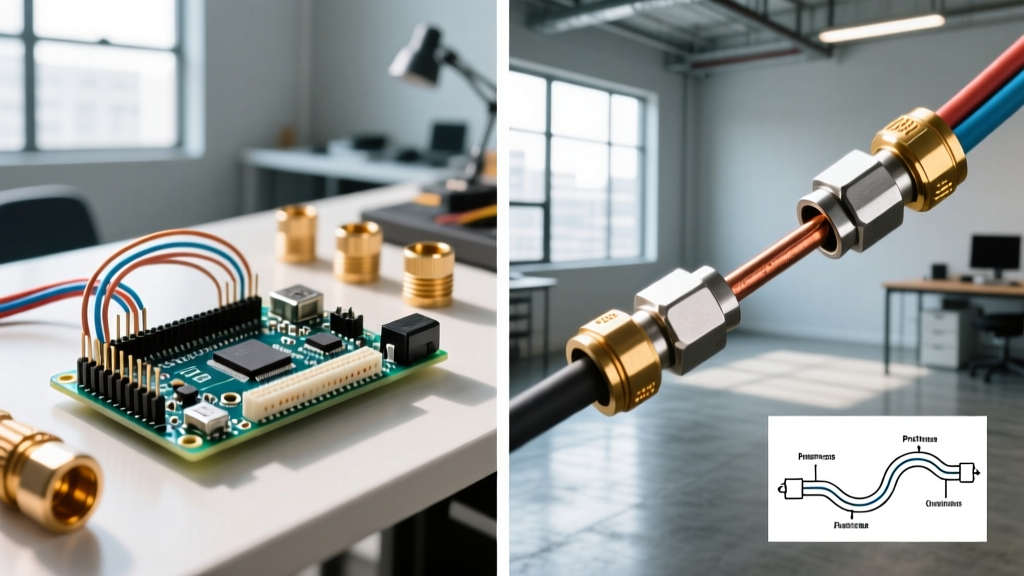
ProPress creates a mechanical seal. The pressing jaw compresses the fitting, driving a stainless steel grab ring into the copper pipe to provide sheer strength, while simultaneously compressing an EPDM (Ethylene Propylene Diene Monomer) O-ring against the pipe to create a watertight seal.
- Failure Mode: The copper and steel will outlast the building, but the O-ring is a polymer. While Viega's press technology is rated for 50+ years, O-rings can degrade if exposed to UV light (sunlight) before being enclosed in walls, or if exposed to ozone, petroleum-based pipe dopes, or extreme heat beyond their 250°F rating.
- Edge Case - Out-of-Round Pipe: Unlike solder, which can fill minor gaps, ProPress requires the pipe to be perfectly round. If you fail to ream and round the cut pipe, the O-ring will not compress evenly, resulting in an immediate, catastrophic leak upon pressurization.
Expert Insight: Always verify the O-ring color for your specific application. Black EPDM is for standard potable water and hydronic heating. Yellow HNBR is strictly for gas applications. Green FKM (Viton) is required for high-temperature solar thermal or compressed air systems where temperatures exceed 250°F.
The 2026 Decision Matrix: When to Use Which Method
Use this framework to select the right joining method based on your specific job site conditions.
Scenario 1: In-Wall Repairs and Tight Joist Bays
Winner: ProPress. In 2026, fire codes and insurance liabilities regarding open flames inside framed walls are incredibly strict. Using a torch inside a wall cavity requires a fire watch, wet rags, and flame-retardant cloths. ProPress eliminates the fire hazard entirely, allowing you to press a fitting in a tight, combustible joist bay in 7 seconds with zero risk of burning the house down.
Scenario 2: Exposed Basement Mains and Commercial Rack
Winner: Soldering. When piping is exposed, aesthetics and long-term material costs matter. ProPress fittings are bulky, and the exposed grab rings can look unprofessional on visible mains. Furthermore, buying 50+ ProPress elbows and tees for a commercial rack will destroy your material budget. Soldering provides a clean, low-profile, and highly cost-effective joint for exposed work.
Scenario 3: Wet Lines and Emergency Leaks
Winner: ProPress. You cannot solder a pipe that has water in it; the water acts as a heat sink, preventing the copper from reaching the 450°F required to melt the solder, resulting in a "cold joint." ProPress, however, does not require a dry pipe. You can shut off the main, cut out the burst section, and press in a repair coupling even if the pipe is weeping or full of residual water.
Scenario 4: High-Heat Steam and Specialized HVAC
Winner: Soldering. While specialized green-ring ProPress fittings exist for higher temperatures, traditional 95/5 solder is the undisputed king for high-heat steam lines and specialized boiler loops where localized temperatures can spike unpredictably. The metallurgical bond of solder will not melt or degrade until it reaches roughly 450°F, far above the boiling point of water or steam.
Final Verdict: Is ProPress Better?
ProPress is better for labor savings, fire safety, and wet-line repairs. It is the undisputed champion of residential remodels, in-wall repairs, and time-sensitive commercial retrofits. However, traditional soldering remains better for material costs, exposed aesthetics, and extreme high-heat applications. The most profitable and skilled contractors in 2026 do not choose one over the other; they carry both a Milwaukee press tool and a TS8000 torch, deploying each exactly where the decision framework dictates.