
The True Price of Precision: CapEx Breakdown
As surface-mount technology shrinks toward 008004 (0.25mm x 0.125mm) components and high-density flex circuits dominate medical and aerospace devices in 2026, traditional contact soldering methods are hitting their physical limits. Enter the micro laser soldering system. Unlike conventional irons or hot air rework stations that apply broad, uncontrolled thermal profiles, laser systems deliver localized, non-contact photon energy directly to the solder joint. However, this precision comes with a formidable capital expenditure (CapEx). Engineering managers must look beyond the brochure price to understand the true financial commitment.
The initial purchase price of a micro laser soldering system is dictated by three primary factors: the laser source type (diode vs. fiber), the beam delivery and shaping optics, and the level of closed-loop thermal feedback. According to industry standards maintained by IPC, achieving Class 3 reliability for aerospace and medical assemblies requires strict thermal profiling, which mandates expensive pyrometer integration.
2026 Market Pricing Tiers
| Tier | Laser Source & Power | Vision & Thermal Control | Estimated CapEx (USD) |
|---|---|---|---|
| Entry-Level | 15W - 30W Diode (808nm/915nm) | Manual alignment, open-loop timer | $28,000 - $45,000 |
| Mid-Range | 50W - 100W Diode (980nm) | HD Camera, basic pyrometer | $65,000 - $115,000 |
| High-End | 100W+ Fiber (1064nm) or Multi-Axis Diode | Automated vision, closed-loop pyrometer, pulse shaping | $160,000 - $280,000+ |
Note: High-end systems from manufacturers like Finetech or Eutectix often require custom tooling and specialized beam-shaping optics (e.g., top-hat or ring-beam profiles), which can add $15,000 to $25,000 to the final invoice.
Operational Expenditure (OpEx): Beyond the Power Bill
The most common miscalculation in laser soldering procurement is underestimating OpEx. While a micro laser soldering system consumes less ambient electricity than a massive reflow oven, its consumable and maintenance costs are highly specific.
Laser Source Degradation and Replacement
Diode lasers, the workhorses of mid-range systems, experience gradual power degradation. A typical 980nm diode module will lose roughly 20% of its output efficiency after 10,000 to 15,000 hours of operation. Replacing a 50W diode stack in 2026 costs between $3,500 and $6,000, plus 4-6 hours of technician recalibration time. Conversely, 1064nm fiber lasers boast lifespans exceeding 50,000 hours with minimal degradation, but their initial replacement cost can exceed $18,000.
Optics Contamination and Flux Splatter
Laser soldering relies on pristine optical paths. During the reflow of QFN or BGA components, flux volatilization creates microscopic splatter that coats the protective quartz window and the F-theta focusing lens. If a no-clean flux (ROL0 or ROL1) is used, the residue polymerizes under stray laser reflections. Cleaning these optics requires specialized, non-abrasive wipes and high-purity isopropyl alcohol. A single micro-scratch on the protective window necessitates a replacement costing $800 to $1,500. Facilities running three shifts should budget $4,000 annually for protective window replacements.
ROI Calculation: When Does the System Pay Off?
Justifying a $120,000 mid-range micro laser soldering system requires a rigorous return on investment (ROI) analysis. The financial gains are not found in raw speed alone, but in scrap reduction, yield improvement, and the elimination of secondary thermal damage.
- Scrap Reduction on High-Value PCBs: In RF and aerospace assemblies, a single lifted pad or thermally damaged adjacent MLCC (Multi-Layer Ceramic Capacitor) can scrap a board worth $2,000+. Laser systems eliminate mechanical stress and restrict the heat-affected zone (HAZ) to under 1.5mm, reducing board-level scrap rates by an average of 4-7%.
- Throughput on Micro-Joints: For high-volume micro-coaxial connectors or 01005 passives, a laser pulse completes reflow in 0.4 to 1.2 seconds. Compare this to a micro-hot-air pencil, which requires 8 to 15 seconds of localized heating, plus cool-down time.
- Labor Reallocation: Closed-loop systems with automated vision allow one operator to manage three machines simultaneously, drastically reducing the cost-per-joint in high-mix, low-volume (HMLV) environments.
Cost Comparison Matrix: Laser vs. Hot Air vs. Micro-Iron
To contextualize the investment, we must compare the micro laser soldering system against traditional precision rework methods. Research highlighted in Laser Focus World consistently demonstrates that while laser CapEx is exponentially higher, the cost-per-defect-free-joint favors lasers in miniaturized applications.
| Metric | Micro Laser (980nm Diode) | Precision Hot Air | Micro-Soldering Iron |
|---|---|---|---|
| Initial Equipment Cost | $65,000 - $115,000 | $3,000 - $8,000 | $800 - $2,500 |
| Joint Cycle Time (0201) | 0.5 - 1.0 seconds | 8.0 - 12.0 seconds | 4.0 - 8.0 seconds |
| Thermal HAZ Radius | < 0.5mm (Highly localized) | 5.0mm - 15.0mm (Broad) | 2.0mm - 5.0mm (Conductive) |
| Risk of Pad Lifting | Near Zero (Non-contact) | Moderate (Airflow displacement) | High (Mechanical drag) |
| Flex PCB Compatibility | Excellent (with 980nm) | Poor (Substrate warping) | Poor (Tearing risk) |
Hidden Costs and Edge-Case Failures
Buyers frequently overlook the ancillary systems required to make a micro laser soldering system function reliably in a production environment. Budgeting for these 'hidden' costs is critical for an accurate 2026 financial model.
- Nitrogen Inerting Systems: To prevent oxidation on fine-pitch pads during the intense, localized heating phase, a localized nitrogen shroud is often required. A high-purity inline nitrogen generator adds $4,500 to $7,000 to the setup, plus ongoing filter maintenance.
- Pulse Shaping Software Licenses: Advanced thermal profiling—essential for preventing 'popcorning' in moisture-sensitive BGA components—often requires proprietary software modules. Some vendors charge $5,000+ for advanced pulse-ramp licensing.
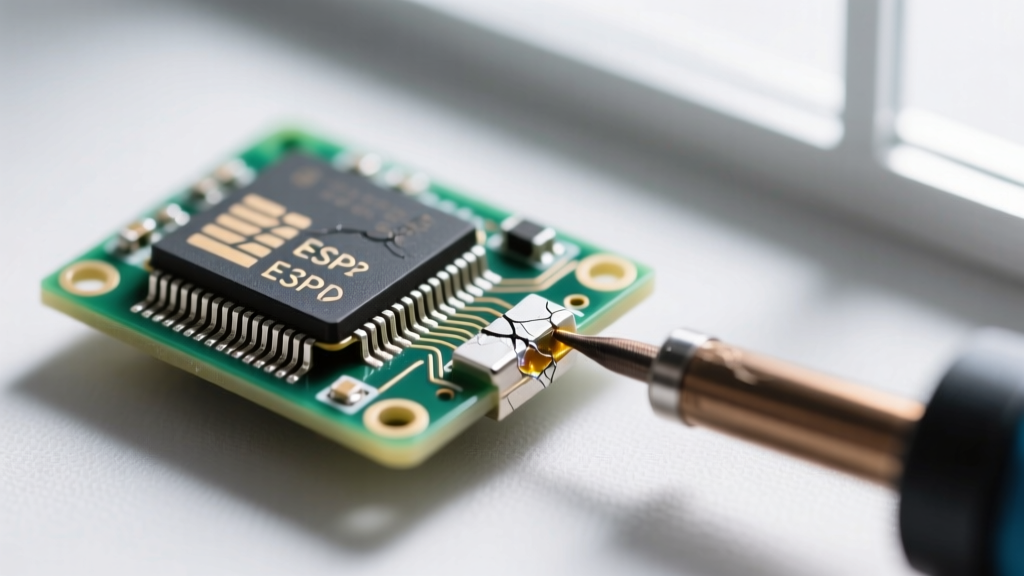
- Edge Case - Polyimide Flex Circuits: If your application involves flexible PCBs, you must specify a 980nm diode laser. Standard 808nm or 1064nm wavelengths are either poorly absorbed by the solder or heavily absorbed by the polyimide substrate, leading to catastrophic delamination and substrate charring. Upgrading to a 980nm source specifically for flex applications can add $12,000 to the base unit cost.
'The most expensive mistake an engineering team can make is buying an open-loop laser system for Class 3 medical assemblies. Without a high-speed pyrometer feeding real-time thermal data back to the laser controller, variations in solder paste volume or pad oxidation will result in cold joints or thermal runaway. The $20,000 premium for closed-loop control pays for itself on the first scrapped $10,000 sensor array.' — Senior Process Engineer, Medical Device Manufacturing
Strategic Buying Advice for 2026
If your facility primarily handles standard FR4 boards with components no smaller than 0402, a high-end JBC or Weller micro-soldering station paired with a precision pre-heater remains the most cost-effective solution. The micro laser soldering system is not a universal replacement for the soldering iron.
However, if your 2026 production roadmap includes flexible wearables, micro-optics, RF shielding cans, or dense 01005/008004 passives adjacent to heat-sensitive components, the laser system transitions from a luxury to a necessity. When drafting your RFP, insist on a Design of Experiments (DoE) validation run using your actual PCBs and specific solder pastes (e.g., SAC305 vs. SnBiAg). Demand that the vendor provide a documented thermal profile proving the system can maintain a ramp-up rate of less than 4°C per second to protect fragile MLCCs from micro-cracking, as verified by optical absorption metrics detailed by Optica. By anchoring your purchasing decision in data-driven thermal validation rather than raw wattage, you ensure your capital investment yields a defect-free, high-yield production line.