
The Metallurgical Reality of Modern Soldering Certification
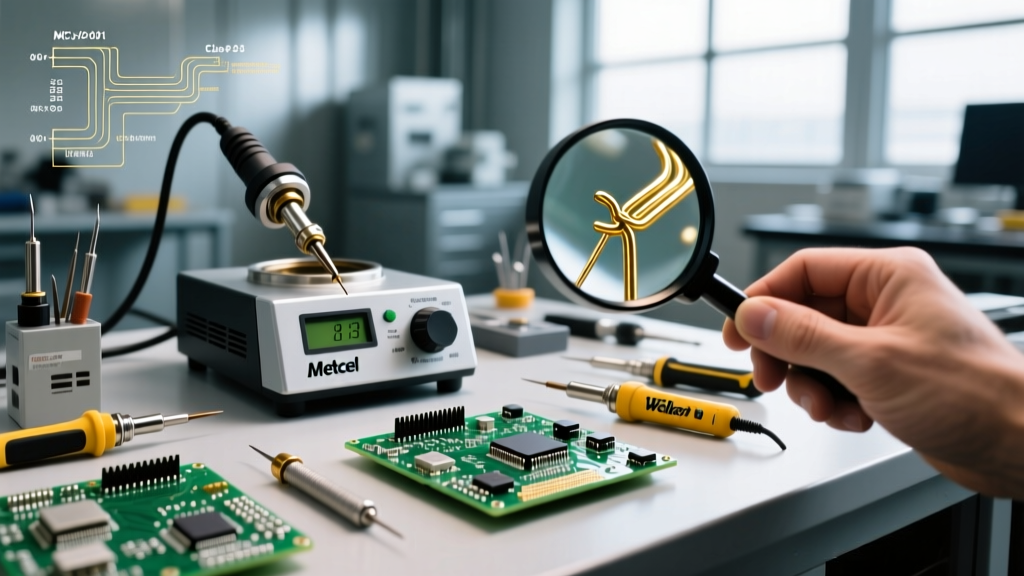
Soldering is fundamentally a metallurgical process, yet many electronics manufacturing facilities treat it as a mere mechanical assembly step. As we navigate the complex landscape of 2026 electronics manufacturing, the proliferation of mixed-alloy assemblies, advanced high-density interconnect (HDI) substrates, and stringent RoHS compliance requirements means that basic soldering skills are no longer sufficient. This is where specialized soldering training and certification becomes a critical investment for engineering managers, QA directors, and independent technicians.
When purchasing a training program or enrolling in a certification course, the primary differentiator between a mediocre workshop and an elite program is how deeply it addresses material compatibility. A technician must understand not just how to melt solder, but how specific flux chemistries interact with specific surface finishes, and how thermal profiles must be adjusted based on the glass transition temperature (Tg) of the PCB substrate. This buyer's guide evaluates how to select the right soldering training and certification path based on your facility's specific material compatibility requirements.
Core Standards: How IPC Certifications Address Material Science
The gold standard for electronics assembly training revolves around the IPC J-STD-001 Requirements for Soldered Electrical and Electronic Assemblies. However, not all Certified IPC Trainers (CITs) teach the material science modules with the same depth. When vetting a training provider, you must ensure their curriculum goes beyond the visual inspection criteria of IPC-A-610 and dives into the metallurgical 'why' behind the standards.
Leaded vs. Lead-Free Alloy Compatibility
A robust certification program will dedicate significant hours to the behavioral differences between traditional eutectic alloys and modern lead-free alternatives. For example, SN63PB37 (Tin/Lead) has a liquidus temperature of 183°C and exhibits excellent wetting characteristics on almost all standard finishes. In contrast, SAC305 (96.5% Sn, 3.0% Ag, 0.5% Cu) has a liquidus of 217°C and requires a peak thermal excursion of up to 245°C.
Elite training programs will test a technician's ability to identify material incompatibility failures, such as:
- Gold Embrittlement: Training modules must cover the dangers of soldering SAC305 directly to thick Electrolytic Nickel Immersion Gold (ENIG) finishes without proper gold removal, leading to brittle Sn-Au intermetallic compounds.
- Grape Joint Defects: A common lead-free failure mode caused by flux exhaustion before the solder reaches its higher liquidus temperature, resulting in uncoalesced solder powder on the joint surface.
- Tin Whisker Mitigation: Advanced courses cover the material science behind pure tin (Matte Sn) finishes and the necessary conformal coatings or alloy doping (like adding trace Bismuth or Lead) required for Class 3 aerospace applications.
Material Compatibility Matrix: Matching Training to Your Shop Floor
Before purchasing a corporate training package, map your facility's primary materials to the required certification modules. Use the matrix below to determine the necessary depth of your soldering training and certification investment.
| Primary Solder Alloy | Compatible PCB Finishes | Thermal Profile Limits | Required Training Module Focus |
|---|---|---|---|
| SN63PB37 (Leaded) | HASL, OSP, Immersion Silver | Peak 210°C - 230°C | Basic wetting, standard flux activation, IPC Class 2 fillet formation. |
| SAC305 (Lead-Free) | ENIG, ENEPIG, Immersion Tin | Peak 235°C - 245°C | Thermal profiling, preventing pad cratering, managing oxidation, no-clean flux residues. |
| SN100C (SnCuNi) | HASL (Lead-Free), OSP | Peak 240°C - 250°C | High-temp substrate survival, extended dwell time management, selective soldering compatibility. |
| Sn42Bi58 (Low-Temp) | ENIG, OSP (Flexible circuits) | Peak 160°C - 180°C | Low-thermal-budget substrates, avoiding bismuth segregation, mechanical shock vulnerability. |
Substrate Thermal Limits and Advanced Rework Training
Material compatibility is not limited to the solder and the component leads; the PCB substrate itself is a critical variable. Standard FR-4 material has a Glass Transition Temperature (Tg) of roughly 130°C to 140°C. High-Tg FR-4 pushes this to 170°C+, while Polyimide (Kapton) flex circuits can withstand temperatures exceeding 250°C for extended periods.
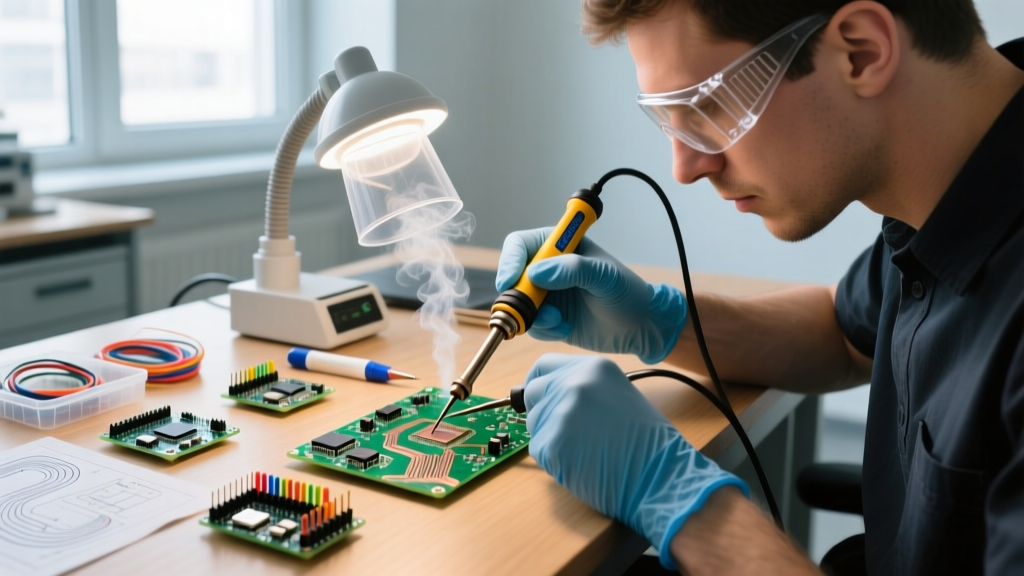
When evaluating rework and repair certifications—specifically the IPC-7711/7721 standard—buyers must verify that the training includes hands-on thermal profiling exercises. A technician repairing a component on a high-mass, multi-layer server board using a standard 40W iron will cause severe thermal shock and potential delamination. Advanced certification courses teach the use of localized pre-heaters, thermocouple monitoring, and hot-air profiling to ensure the substrate's Z-axis expansion does not exceed the ductility limits of the plated through-holes (PTH).
'In high-reliability sectors, a cold joint is rarely the result of a technician's lack of hand-eye coordination; it is almost always a failure to understand the thermal mass of the specific materials being joined.' — Derived from NASA Workmanship Standards and Training methodologies for Class 3 aerospace assemblies.
Flux Chemistry: The Hidden Variable in Certification Exams
A frequently overlooked aspect of material compatibility in soldering training is flux chemistry. The IPC J-STD-001 standard categorizes fluxes into Rosin (RO), Organic (OR), and Inorganic (IN), with varying activity levels (Low, Moderate, High).
Premium certification programs will test a technician's knowledge of flux-substrate compatibility:
- OR (Organic) Fluxes on Silver Finishes: Training must cover how highly active organic acids can aggressively corrode immersion silver finishes if not properly cleaned, leading to electrochemical migration (dendritic growth).
- RO (Rosin) Fluxes in No-Clean Processes: Technicians learn the exact thermal activation windows required to polymerize rosin residues, rendering them inert. Failing to reach the activation temperature leaves active flux that can cause long-term corrosion.
- Flux Compatibility in Mixed Alloys: When reworking a lead-free board with leaded solder (a common repair scenario in non-RoHS restricted markets), specific RMA (Rosin Mildly Activated) fluxes must be selected to bridge the surface tension gap between the two distinct metallurgies.
Cost, Timeframe, and ROI of Material-Focused Certifications
Investing in soldering training and certification is a significant financial decision. As of 2026, here is what engineering managers and independent buyers should expect regarding pricing and time commitments for top-tier, material-science-heavy programs:
- CIS (Certified IPC Specialist) - J-STD-001: Typically a 3 to 4-day intensive course. Costs range from $1,200 to $1,800 per seat. Ensure the syllabus includes at least 4 hours dedicated to metallurgical defect analysis and material wetting dynamics.
- CIT (Certified IPC Trainer): A 5-day train-the-trainer course costing between $2,500 and $3,200. This is essential for facilities that want to bring material compatibility training in-house and tailor it to their specific BOM (Bill of Materials).
- NASA-STD-8739.3 High-Reliability Add-on: For aerospace and medical device manufacturers, adding NASA workmanship standards to your IPC certification will add roughly $800 to $1,200 and 2 extra days of training, focusing heavily on extreme environment material survival and conformal coating compatibility.
Decision Framework: Choosing Your Certification Path
To maximize your ROI, align your training purchase with your end-product's material reality:
For Consumer Electronics (Class 1 & 2)
If your primary materials are standard FR-4, OSP finishes, and SAC305 or SN100C alloys, a standard IPC-A-610 CIS certification is sufficient. Focus your training budget on high-speed throughput and basic visual defect recognition rather than deep metallurgical analysis.
For Automotive and Industrial (Class 2 & 3)
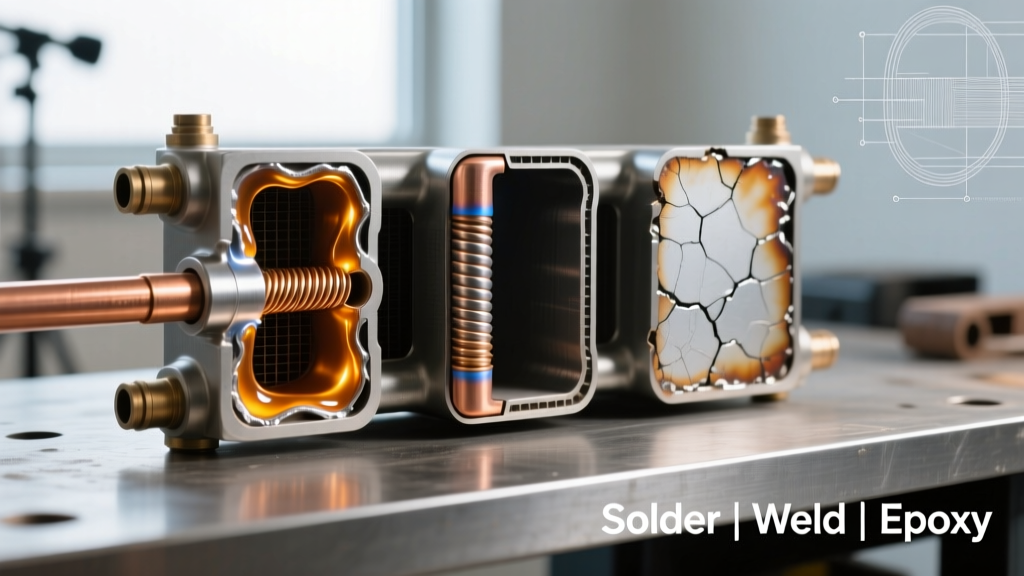
Facilities dealing with thick copper layers, aluminum-backed IMS (Insulated Metal Substrates), and high-vibration environments must invest in IPC J-STD-001 with a focus on thermal management and intermetallic compound (IMC) layer thickness. The training must cover how excessive dwell times create thick, brittle Cu6Sn5 IMC layers that fail under mechanical stress.
For Aerospace, Medical, and Defense (Class 3)
When working with ENEPIG finishes, Polyimide flex circuits, and specialized high-temperature alloys (like Sn95Sb5), standard IPC training is merely the baseline. You must purchase IPC J-STD-001 Space and Military Addendum (NASA-STD-8739.3) training. This ensures technicians understand the strict material traceability, gold removal requirements, and zero-defect wetting criteria demanded by mission-critical applications.
Final Verdict
When sourcing soldering training and certification for your team, do not settle for generic 'how-to-solder' workshops. Demand a curriculum that treats soldering as the complex metallurgical science it is. By selecting a certification provider that heavily emphasizes material compatibility—from substrate Tg limits and flux chemistry to alloy-specific thermal profiling—you transform your assembly line from a source of latent field failures into a pillar of manufacturing excellence.