
The Critical Role of Thermal Masking in Electronics
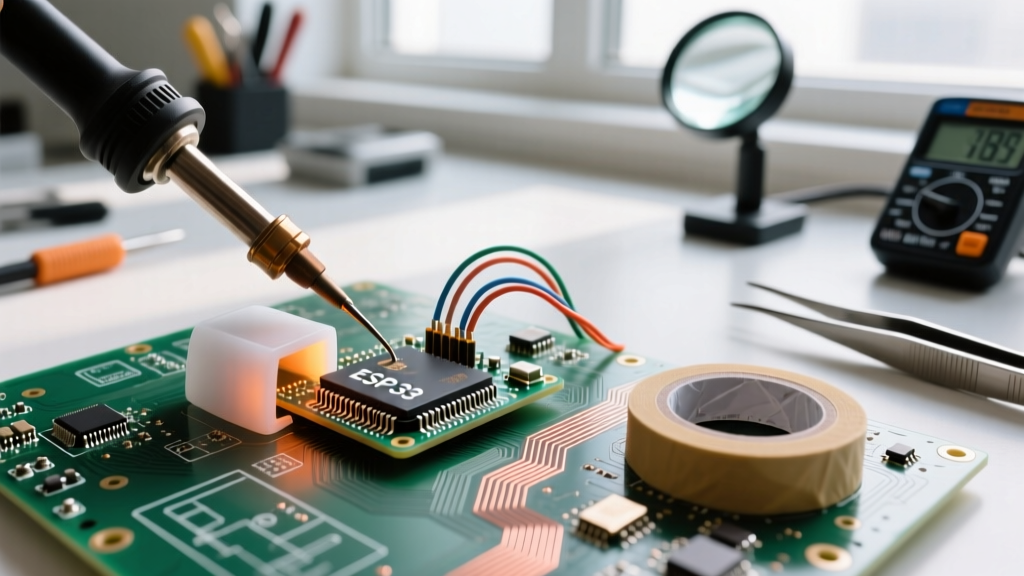
When assembling, reworking, or wave-soldering printed circuit boards (PCBs), thermal management and component protection are paramount. The evolution of tape for soldering is a fascinating journey through materials science, transitioning from hazardous early solutions to the highly engineered polyimide and fluoropolymer films we rely on today. Understanding this history is not just an academic exercise; it directly informs how modern electronics manufacturers select materials to meet stringent IPC standards in 2026. Whether you are masking gold fingers for wave soldering, protecting sensitive SMD components during hot air rework, or creating EMI shields, the right tape dictates the success of your build.
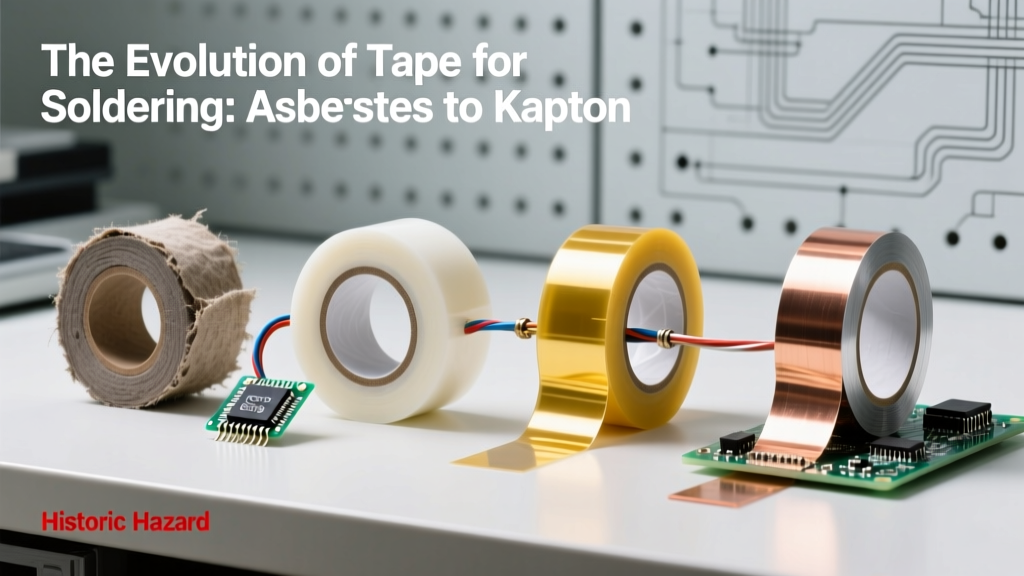
The Dark Ages: Asbestos and Early Fiberglass (1940s–1960s)
In the infancy of commercial electronics and the post-war radio boom, engineers faced a severe problem: how to protect sensitive components and bare substrate areas from the extreme heat of early soldering irons and rudimentary wave soldering machines.
The earliest iterations of high-temperature tape for soldering were rudimentary and, by modern standards, incredibly dangerous. Asbestos paper and woven asbestos tapes were the industry standard due to their natural resistance to heat and electrical conductivity. While effective at withstanding temperatures exceeding 400°C (752°F), the catastrophic health implications of asbestos inhalation were not fully regulated until decades later.
As the health risks became undeniable, the industry pivoted to early fiberglass weaves coated with rudimentary rubber-based adhesives. However, these early adhesives failed under the thermal shock of wave soldering (typically 250°C to 260°C). The adhesive would melt, leaving a carbonized, conductive residue on the PCB that caused micro-shorts and required aggressive, toxic solvents like trichloroethylene to clean.
The Space Age Catalyst: Enter Polyimide (1960s–1980s)
The true revolution in soldering tape occurred in the early 1960s, driven by the aerospace industry's need for materials that could survive the extreme thermal cycling of spaceflight. In 1961, DuPont introduced Kapton, a polyimide film created by the condensation of biphenyl tetracarboxylic dianhydride (BPDA) and phenylenediamine (PMDA).
"The development of polyimide films fundamentally changed electronics manufacturing, allowing engineers to mask PCBs through multiple high-temperature reflow cycles without adhesive degradation or substrate delamination." — DuPont Materials Science Archives
Kapton tape for soldering quickly became the gold standard. It offered a continuous operating temperature of 260°C (500°F) and could withstand intermittent spikes up to 400°C (752°F). More importantly, it was inherently flame retardant and possessed exceptional dielectric strength, preventing accidental solder bridges and short circuits during dense through-hole assembly.
The Adhesive Revolution: Silicone vs. Acrylic Chemistries
A polyimide film is only as effective as the adhesive backing it. The history of soldering tape is equally a history of adhesive chemistry. Modern high-temp tapes generally utilize one of two adhesive systems:
1. Silicone Adhesives (The Rework Standard)
Silicone-based adhesives can withstand temperatures up to 300°C (572°F) for short durations. Their primary advantage in soldering is clean removability. When peeled off a PCB after a reflow oven cycle, silicone leaves virtually zero residue, ensuring compliance with strict IPC-A-610 cleanliness standards. This makes silicone-backed Kapton the undisputed king of temporary masking and hot air rework.
2. Acrylic Adhesives (The Permanent Bond)
Acrylic adhesives offer superior shear strength and UV resistance but typically max out around 150°C to 175°C (302°F to 347°F). Acrylic-backed tapes are rarely used for direct wave-soldering masking but are heavily utilized in flexible printed circuit (FPC) stiffeners and permanent thermal management applications where the tape will remain on the board post-soldering.
Evolution Matrix: Soldering Tape Materials Compared
As electronics miniaturized in the 1990s and 2000s, polyimide was no longer the only player. Engineers developed specialized tapes for specific soldering and shielding scenarios. Below is a comparison of the primary materials used in 2026:
| Material | Max Temp (Continuous) | Primary Use Case in Soldering | Cost per 1/2" x 36yd Roll (Est.) |
|---|---|---|---|
| Polyimide (Kapton) | 260°C (500°F) | Gold finger masking, SMD rework protection, 3D printing bed adhesion. | $25 - $45 (Brand dependent) |
| PTFE (Teflon) | 260°C (500°F) | Heat press sealing, flexible circuit masking, non-stick soldering iron tip cleaners. | $30 - $55 |
| Copper Foil | 150°C (Adhesive limit) | EMI/RFI shielding, grounding planes, custom trace repair during rework. | $15 - $25 |
| Aluminum Foil | 150°C (Adhesive limit) | Thermal heat-sinking, protecting heat-sensitive ICs from localized hot air. | $10 - $20 |
| Fiberglass (Teflon coated) | 260°C (500°F) | Heavy-duty wave soldering pallets, conveyor belt masking. | $40 - $70 |
Failure Modes: When the Wrong Tape Ruins a PCB
Understanding the historical mistakes of the industry helps modern DIYers and engineers avoid catastrophic failures. Using the wrong tape for soldering can result in several specific failure modes:
- Adhesive Outgassing: Cheap, generic 'high temp' tapes often use rubber-based adhesives that vaporize at 200°C. This outgassing settles on component pads, causing solder dewetting (where solder refuses to flow onto the pad) during subsequent reflow cycles.
- Substrate Delamination: If a tape's adhesive bonds too aggressively (common with cheap acrylics), removing it after soldering can literally rip the copper trace or the FR-4 solder mask off the board, destroying the PCB.
- Electrochemical Migration (ECM): Low-quality tapes leave behind ionic residues that, when exposed to humidity and voltage bias, grow dendritic shorts across fine-pitch QFN or BGA pads.
2026 Buyer’s Guide: Sourcing the Right Tape
When sourcing tape for soldering today, the market is flooded with unbranded, counterfeit polyimide tapes that fail well below their advertised 260°C thresholds. For mission-critical aerospace, automotive, or high-end consumer electronics, sourcing from verified manufacturers is non-negotiable. According to the IPC standards for electronic assembly, material traceability is a core requirement for Class 3 products.
Top Tier Recommendations
- 3M 5413 (Polyimide with Silicone Adhesive): The industry benchmark. Features a 1-mil polyimide film and a 1.5-mil silicone adhesive. Ideal for wave soldering masking and high-temp rework. Expect to pay around $40 for a standard roll.
- 3M 423 (Aluminum Foil with Acrylic Adhesive): Excellent for creating temporary thermal heat sinks. When using a hot air station at 350°C to desolder a large ground-plane connector, wrapping adjacent plastic connectors in 3M 423 reflects radiant heat and prevents melting.
- Caplugs / Techni-Pro Generic Equivalents: For hobbyists and non-critical Class 1 consumer electronics, brands like Techni-Pro offer reliable silicone-backed polyimide at roughly $15 per roll. While the film may lack the exact dielectric consistency of DuPont Kapton, the silicone adhesive performs adequately for standard 230°C lead-free reflow profiles.
The Future: Nanomaterials and Active Cooling Tapes
As we look toward the late 2020s, the evolution of soldering tape continues. With the rise of ultra-dense micro-BGA components and heterogeneous 3D IC packaging, traditional masking is being challenged. Emerging electronics manufacturing materials include boron-nitride-infused tapes that not only mask but actively draw heat away from sensitive silicon dies during localized laser soldering. Furthermore, UV-debonding tapes are gaining traction; these hold components securely through the soldering process but release instantly upon exposure to ultraviolet light, eliminating the mechanical stress of peeling.
Conclusion
The transition from hazardous asbestos wraps to precision-engineered, silicone-adhesive polyimide films represents one of the most vital, yet underappreciated, advancements in electronics manufacturing. Selecting the correct tape for soldering is no longer just about covering a gold finger; it is about managing thermal mass, preventing ionic contamination, and ensuring long-term reliability. By understanding the material science and historical context of these films, engineers and hobbyists alike can make informed, precise decisions on the workbench.