
The Intersection of Electronics and Jewelry: Why Gold Chain Soldering Demands Specialized Tools
At ElectricalFlux, our core focus is typically on PCB traces, microcontrollers, and electronic components. However, the fundamental principles of thermal dynamics, metallurgy, and precision micro-soldering apply universally across disciplines. A frequent question from our advanced DIY readers is whether their high-end electronics soldering stations can be repurposed for precious metals—specifically, soldering gold chain for jewelry repair or fabrication.
The short answer from our 2026 expert panel is no. Gold possesses a thermal conductivity of approximately 317 W/m·K. While slightly lower than copper (401 W/m·K), it is exponentially higher than the FR4 fiberglass (0.3 W/m·K) used in electronics. When you touch a standard 60W electronics iron to a 14k gold curb chain, the gold acts as a massive heat sink. The iron's tip temperature plummets below the solder's liquidus point before the joint can reach thermal equilibrium, resulting in a cold, brittle joint or a damaged component.
To properly address the nuances of soldering gold chain, we convened a roundup of insights from master jewelers, metallurgists, and micro-welding technicians. This guide breaks down the exact tools, solder grades, and chemical workflows required for flawless precious metal repairs in 2026.
The Metallurgy of Gold Solder: Hard, Medium, and Easy
Unlike electronics solder (which is typically a tin-lead or tin-silver-copper alloy melting around 360°F to 430°F), gold solder is a complex alloy designed to match the color and karat of the base metal while melting at a slightly lower temperature. According to the Gemological Institute of America (GIA), pure 24k gold is far too soft for chain fabrication; therefore, chains are usually 10k, 14k, or 18k, alloyed with copper, silver, and zinc.
Gold solder is categorized by its melting and flow temperatures. This tiered system is critical when a chain requires multiple soldering steps (e.g., resizing a chain and then attaching a clasp), as you must use progressively lower-temperature solders to prevent remelting previous joints.
| Solder Grade | Melt Point (Approx.) | Flow Point (Approx.) | Primary Use Case |
|---|---|---|---|
| Hard (14k) | 1,450°F (788°C) | 1,500°F (815°C) | Initial chain fabrication, heavy structural links, sizing. |
| Medium (14k) | 1,350°F (732°C) | 1,400°F (760°C) | Secondary repairs, attaching jump rings, clasp assemblies. |
| Easy (14k) | 1,250°F (677°C) | 1,300°F (704°C) | Final touch-ups, delicate link repairs, low-heat scenarios. |
Expert Insight: Modern cadmium-free gold solders have largely replaced traditional cadmium-based alloys due to severe toxicity risks. However, cadmium-free solders (often utilizing indium or tin) have a narrower plastic range (the gap between melting and flowing). This requires much more precise heat control, making the choice of torch or welder paramount.
2026 Buyer's Guide: Torches vs. Pulse Arc Welders
When soldering gold chain, localized heat application is everything. You need high BTU output concentrated on a microscopic surface area. Here is how the top tools compare for the modern bench jeweler and advanced hobbyist.
1. The Industry Standard: Smith Little Torch (Oxy-Acetylene)
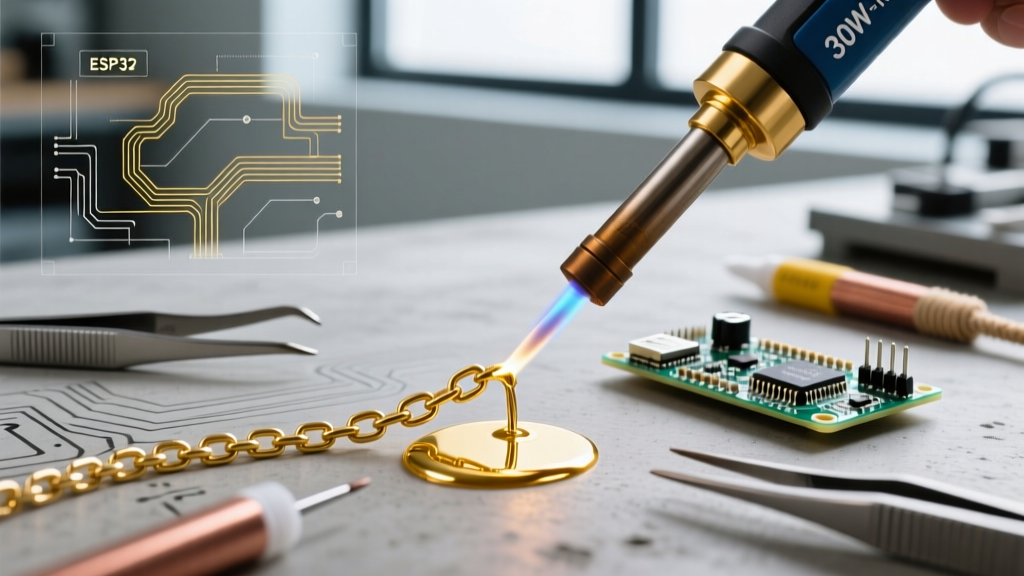
For decades, the Smith Little Torch has been the undisputed champion of chain repair. Running on oxygen and acetylene, it produces a highly concentrated, reducing flame that prevents oxidation while delivering intense, localized heat.
- Best Tip for Chains: The #00 or #1 welding tip. These produce a flame roughly the size of a needle point, perfect for targeting a single 1mm cable chain link without heating the surrounding links.
- Cost: Approximately $250 - $300 for the complete torch setup (excluding gas cylinders and regulators).
- Pros: Unmatched flame control; relatively low entry cost; excellent for soldering.
- Cons: Requires gas cylinder management; steep learning curve to avoid melting thin-walled box chains.
2. The Modern Upgrade: Pulse Arc Welders (e.g., Sunstone Orion 150s)
As of 2026, Pulse Arc Welders have become significantly more accessible. Unlike traditional soldering, these machines use high-voltage, low-current electrical sparks to fuse metal. While they can be used to flow traditional gold solder wire, they are frequently used for 'solderless' chain repairs by fusing the gold links directly or adding gold filler wire.
- Best Application: Repairing hollow chains (like rope or herringbone) where a torch would instantly cause the thin walls to collapse and melt.
- Cost: $4,000 - $6,000 (Professional grade).
- Pros: Zero heat damage to surrounding links; no flux or pickle required; extremely precise.
- Cons: High capital investment; requires a microscope for proper alignment.
3. Why Standard Electronics Soldering Irons Fail
Readers often ask if a high-wattage iron like the Weller WE1010 or a JBC CD-2BE can handle gold chains. While JBC's cartridge-based active tips offer incredible thermal recovery, they still rely on conductive heat transfer. Gold chain links have minimal surface area for the tip to mate with, and the ambient air cools the chain faster than the iron can transfer heat through the tiny contact patch. Furthermore, electronic fluxes (rosin/RMA) are entirely ineffective at the 1,300°F+ temperatures required for gold solder; they will instantly carbonize and ruin the joint.
Flux and Pickle: The Chemical Workflow
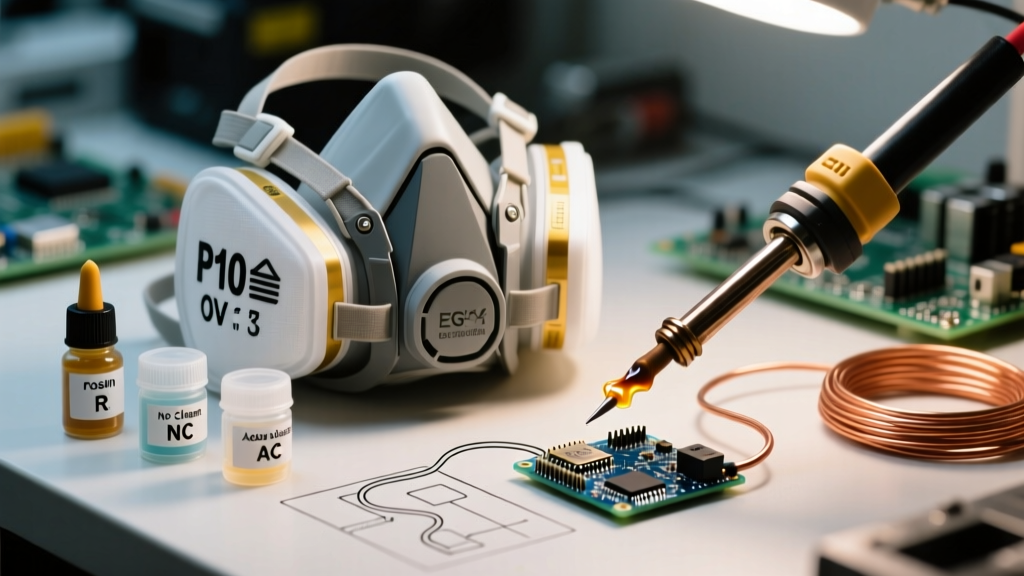
In electronics, flux removes mild oxidation and promotes wetting. In precious metal soldering, flux acts as a high-temperature glassy shield, dissolving heavy metal oxides and indicating when the metal has reached flow temperature. According to technical guidelines from Rio Grande Jewelry Supply, selecting the correct flux is non-negotiable.
Expert Rule of Thumb: Never use electronic paste flux or plumbing flux on gold. The chlorides and fluorides in plumbing flux will permanently etch and ruin precious metal alloys.
- Batterns Self-Pickling Flux: The gold standard for yellow gold chains. It is a liquid flux that bubbles when heated, turning clear and glassy exactly when the metal reaches the flow temperature of Easy/Medium solder.
- Borax Cone & Dish: A traditional, cost-effective alternative. You grind a borax cone with water to create a paste. Excellent for high-heat Hard solder applications.
- Cupric Oxide (Anti-Firescale): 14k and 18k gold contain copper, which forms a dark, stubborn firescale when heated. Dipping the chain in a cupric oxide solution before soldering prevents this scale from forming deep within the alloy.
The Pickle Bath: After soldering, the chain is covered in oxidized flux and firescale. It must be submerged in a heated 'pickle' solution. Sparex #2 (sodium bisulfate) heated to 130°F (54°C) in a dedicated slow cooker is the industry standard. Safety Note: Never use steel tweezers in a pickle bath; the sulfuric acid will react with the steel and plate the gold chain with a layer of pure copper, turning it pink.
Step-by-Step Chain Repair Protocol
Follow this exact workflow to ensure a structurally sound and visually invisible repair on a standard 14k solid cable chain.
- Mechanical Preparation: Use a fine needle file to flatten the mating surfaces of the broken link. Solder requires capillary action; flat, tight seams are mandatory. Clean the chain in an ultrasonic cleaner for 3 minutes to remove skin oils and lotions.
- Flux Application: Paint the specific link with Batterns flux using a fine camel-hair brush. Do not flux the entire chain, as this increases cleanup time and risks accidental solder flow elsewhere.
- Solder Placement: Cut a microscopic chip of 14k Medium solder (roughly 1mm x 1mm). Place it directly on the seam using a flux-dampened tungsten pick.
- Heat Application: Ignite your Smith Little Torch with a #00 tip. Adjust to a soft, bushy reducing flame. Play the flame in a circular motion around the link first to pre-heat it, then focus directly on the solder chip. The moment the flux turns glassy, the solder will 'flash' and be drawn into the seam via capillary action. Total dwell time should be under 4 seconds.
- Quench and Pickle: Let the chain air cool for 10 seconds, then quench in water. Transfer to the heated Sparex #2 pickle bath for 5 minutes until the link is bright and clean.
Troubleshooting Common Failure Modes
Even experienced technicians encounter issues when soldering gold chain. Here is how to diagnose and fix the most common problems.
1. Solder Balls Up and Refuses to Flow
Cause: The joint is dirty, or the flux has burned off before the gold reached the solder's flow temperature. Gold solder relies on pristine metal surfaces for capillary draw.
Fix: Quench the piece, re-file the seam, ultrasonic clean, and start over with fresh flux. Do not attempt to add more flux to a hot, oxidized joint.
2. The Chain Link Melted/Collapsed
Cause: Using a torch tip that is too large (e.g., a #3 tip on a delicate chain) or holding the flame in one spot for too long. As noted by safety and loss-prevention experts at Jewelers Mutual, improper tool handling is the leading cause of bench damage.
Fix: Downsize to a #00 tip. Use a heat-absorbing backing block (like charcoal or a ceramic honeycomb board) to reflect heat back into the joint, reducing the required dwell time.
3. Pitting or Porosity in the Solder Joint
Cause: Overheating the solder, which causes the zinc and tin in the alloy to vaporize, leaving microscopic voids. This is especially common with modern cadmium-free Easy solders.
Fix: Reduce your flame temperature slightly and rely on the flux's visual cues. The moment the solder flashes, pull the flame away immediately.
Final Thoughts for the Precision Hobbyist
Soldering gold chain is a masterclass in thermal management. While the electronics workbench and the jeweler's bench share a reliance on precision, magnification, and steady hands, the metallurgy of precious metals demands entirely different consumables and heat sources. By investing in a micro-torch, understanding the tiered melting points of gold solder, and respecting the chemical workflow of flux and pickle, you can achieve professional-grade, invisible chain repairs that will last a lifetime.