
The 2026 Landscape: USB-C PD vs. Traditional AC Solderers
When shopping for electric solderers in 2026, the most significant market shift is the dominance of USB-C Power Delivery (PD) models. Historically, hobbyists and professionals relied on bulky AC-powered soldering stations. Today, the term 'solderers' encompasses a wide spectrum of tools, from $25 pocket-sized PD irons to $600 smart stations with active cartridge heating. Understanding the difference between these form factors is critical for selecting the right tool for your workbench, whether you are assembling delicate surface-mount device (SMD) PCBs or soldering heavy 10 AWG XT90 battery connectors.
The modern buyer must evaluate solderers not just by peak wattage, but by thermal recovery time, tip mass, and firmware intelligence. In this comprehensive guide, we break down the top electric solderers and stations available today, providing exact specifications, real-world pricing, and failure modes to help you make an informed investment.
Comparing Solderer Categories: Which Form Factor Fits?
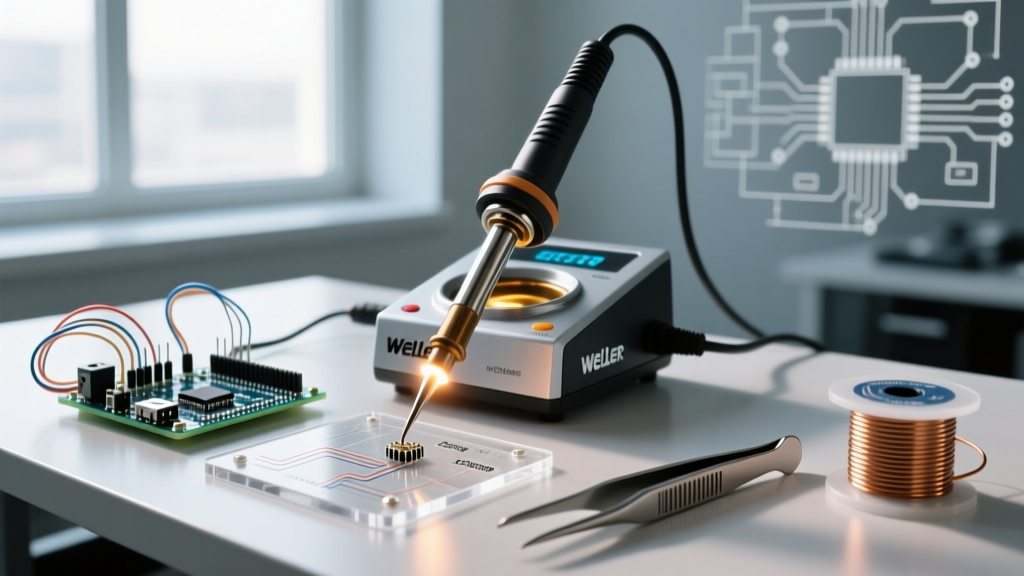
Before diving into specific models, it is essential to understand the three primary categories of electric solderers on the market. Each serves a distinct use case based on power delivery and thermal mass.
| Category | Power Source | Typical Wattage | Best Use Case | Average Price Range |
|---|---|---|---|---|
| Traditional AC Stations | 110V/220V Mains | 60W - 80W | Dedicated workbenches, general through-hole and SMD work | $100 - $150 |
| USB-C PD Solderers | PD3.1 / QC3.0 Adapters | 65W - 100W | Field repairs, travel, drone building, compact desks | $25 - $60 |
| Pro Active-Cartridge Stations | 110V/220V Mains | 130W - 150W | High-volume manufacturing, heavy ground planes, micro-soldering | $450 - $650 |
Top Electric Solderers and Stations Reviewed
1. Best Overall Traditional Station: Hakko FX-888D
Despite the influx of smart solderers, the Hakko FX-888D remains the undisputed workhorse for educational labs and dedicated home workbenches in 2026. Priced consistently around $115, it delivers 70W of power through a ceramic heating element.
- Thermal Recovery: Moderate. It takes roughly 10-15 seconds to recover from a 50°C drop when soldering large ground planes.
- Tip Ecosystem: Uses the widely available T18 series. While T18 tips are affordable ($6-$8 each), they are sleeve-over-heater designs, meaning thermal transfer is slightly less efficient than direct-cartridge systems.
- Failure Modes: The most common issue is the degradation of the ceramic heater core if the iron is dropped, or the seizing of the T18 tip to the heater shaft due to flux creep and oxidation if not maintained with brass wool.
2. Best Portable USB-C Solderer: Pine64 Pinecil V2
The Pinecil V2 has completely disrupted the entry-level and portable solderer market. Powered by a RISC-V processor and available for just $26 (iron only), it leverages USB-C PD3.1 to push up to 65W when paired with a 20V/3.25A power brick. According to the Pine64 Official Pinecil Page, the V2 features Bluetooth Low Energy (BLE) for telemetry and firmware updates via a smartphone app.
- Thermal Recovery: Exceptional for its size. The direct-injection heating element brings the tip to 320°C in under 6 seconds.
- Tip Ecosystem: Compatible with TS100-style tips, which are abundant and cheap.
- Edge Cases: If you attempt to solder massive 8 AWG wires using a standard 65W laptop charger, the Pinecil will hit its current limit and display a 'Thermal Runaway' or 'Low Voltage' warning, dropping the tip temperature. You must use a dedicated 100W+ GaN PD charger for heavy thermal loads.
3. Best Professional Grade: JBC CD-2BQF
For professionals who cannot afford cold solder joints or damaged heat-sensitive ICs, the JBC CD-2BQF is the gold standard. Retailing at approximately $550, this station uses the C245 cartridge system where the heating element is integrated directly into the tip.
- Thermal Recovery: Near-instantaneous. The station detects a temperature drop and delivers 130W to the tip, recovering to 350°C in under 2 seconds.
- Ergonomics: The 'Q' in the model name stands for the quick-change cartridge system, allowing tip swaps in 2 seconds without waiting for cooldown or using tools.
- Sleep Mode: Features an intelligent stand that drops the tip to 180°C when holstered, drastically extending tip life by preventing flux carbonization and oxidation.
Decoding Thermal Mass and Recovery Time
A common mistake beginners make when buying solderers is focusing solely on the wattage rating. Wattage is merely the maximum rate of energy transfer; thermal mass and sensor placement dictate real-world performance.
According to the NASA Workmanship Standards for electronic assemblies, maintaining a precise thermal profile is critical to prevent intermetallic compound (IMC) layer overgrowth, which leads to brittle solder joints. In cheap AC solderers, the temperature sensor is located deep inside the ceramic heater, separated from the actual tip by an air gap and metal sleeve. When the tip touches a cold copper pour, the tip temperature drops instantly, but the sensor doesn't register the drop until seconds later.
Expert Insight: A 65W USB-C Pinecil with a thermally coupled tip will often outperform an 80W traditional AC station when soldering 1206 SMD capacitors to a 4-layer PCB, because the sensor in the Pinecil is located millimeters from the working edge, triggering the PID controller to push maximum current immediately.
Tip Geometries and Alloy Matching
Selecting the right solderer is only half the battle; matching the tip geometry to your solder alloy and component density is where E-E-A-T (Experience, Expertise, Authoritativeness, and Trustworthiness) separates amateurs from pros. The IPC J-STD-001 standard outlines strict requirements for solder fillet shapes, which are heavily influenced by tip selection.
Recommended Tip Profiles
- Chisel (D-Series): The most versatile. The flat edge maximizes surface area contact for rapid heat transfer. Ideal for through-hole components and 0805/0603 SMD pads.
- Conical (B-Series): Often mistakenly bought by beginners for 'precision'. In reality, conical tips have terrible thermal mass at the very point, making them prone to sticking and cold joints. Avoid unless doing extremely fine-pitch micro-soldering.
- Hoof / Mini-Wave (C-Series): Features a concave scoop that holds a small reservoir of molten solder. Perfect for drag-soldering SOIC and QFP integrated circuits.
- Knife (K-Series): Excellent for scraping oxidation off pads and soldering tight corners on QFN packages.
Temperature Profiling by Alloy
Running your solderer too hot destroys the iron plating on the tip; running it too cold causes grainy, disturbed joints.
- Leaded (Sn63/Pb37 or 60/40): Set your solderer to 315°C - 330°C. The eutectic melting point is 183°C, and this 130°C delta provides optimal wetting without burning rosin flux.
- Lead-Free (SAC305 - Sn96.5/Ag3.0/Cu0.5): Requires higher temperatures due to a 217°C melting point. Set your station to 350°C - 370°C. Use a chisel tip with higher thermal mass to compensate for the sluggish wetting action of lead-free alloys.
Critical Maintenance and Failure Modes
Even the most expensive JBC or Hakko solderers will fail prematurely if maintenance protocols are ignored. The most prevalent failure mode in 2026 remains tip oxidation and de-wetting.
When a tip is left at 380°C in the open air, the iron plating reacts with oxygen, forming a black, crusty layer of iron oxide. Solder will not adhere to this layer. To prevent this:
- Never use a wet sponge. The thermal shock of a wet sponge micro-fractures the iron plating over time, exposing the copper core to molten solder, which dissolves the copper and ruins the tip. Always use dry brass wire wool.
- Tinning before shutdown. Always apply a thick blob of cheap, heavily fluxed 60/40 solder to the tip before turning off the solderer. This sacrificial layer oxidizes instead of the tip's working surface.
- Flux Creep. In sleeve-style solderers (like the Hakko FX-888D), vaporized flux can travel up the shaft and carbonize between the heater and the tip. If you cannot pull the tip off by hand when cool, soak the assembly in isopropyl alcohol (IPA) and gently twist with pliers—never force it, or the ceramic heater will snap.
Final Verdict: Choosing Your Solderer
If you are building a professional repair lab or manufacturing line, the JBC CD-2BQF is an unavoidable capital expense that pays for itself in saved components and time. For the traveling technician, drone racer, or space-constrained hobbyist, a Pinecil V2 paired with a 100W GaN charger offers 90% of the performance of a benchtop station at a fraction of the cost. Finally, for schools and traditionalists who want a plug-and-play AC station with zero firmware dependencies, the Hakko FX-888D remains the safest, most proven investment in the electrical DIY space.