
Beyond the Blink: What Can an Arduino Do in 2026?
When beginners ask, 'What can an Arduino do?', the standard answer usually involves blinking an LED or reading a basic temperature sensor. However, as we navigate through 2026, the Arduino ecosystem has evolved far beyond simple classroom exercises. Driven by a massive open-source community and significant hardware upgrades, modern microcontrollers bearing the Arduino name are now powering edge AI, industrial IoT gateways, and complex robotic kinematics.
This community resource roundup curates the most advanced, practical, and inspiring use cases for Arduino hardware today. We will examine the actual hardware limits, explore cutting-edge community projects, and highlight the essential libraries that make these ambitious builds possible. Whether you are upgrading from an Uno R3 or designing a commercial prototype, understanding the true capabilities of these boards is critical for your next design cycle.
Hardware Capabilities: Matching the Board to the Ambition
To answer what an Arduino can do, we must first look at the silicon. The community has largely bifurcated into two camps: those utilizing the accessible 32-bit Renesas-based boards, and those pushing the boundaries with dual-core STM32 architectures. Below is a technical comparison of the most popular boards driving community projects this year.
| Board Model | Core Processor | Clock Speed | Flash / SRAM | Approx. Price (2026) | Best Community Use Case |
|---|---|---|---|---|---|
| Uno R4 Minima | Renesas RA4M1 (Cortex-M4) | 48 MHz | 256 KB / 32 KB | $19.50 | High-speed data logging, basic DSP |
| Uno R4 WiFi | Renesas RA4M1 + ESP32-S3 | 48 MHz + 240 MHz | 256 KB / 32 KB + 8 MB | $27.50 | IoT dashboards, Matter protocol nodes |
| Nano 33 BLE Sense Rev2 | nRF52840 (Cortex-M4F) | 64 MHz | 1 MB / 256 KB | $38.00 | TinyML, Edge AI, wearable sensors |
| Portenta H7 | STM32H747XI (Dual-Core) | 480 MHz (M7) / 240 MHz (M4) | 2 MB / 1 MB | $113.00 | Machine vision, industrial robotics |
According to the official Arduino Documentation, the transition to 32-bit architectures across the mainstream lineup has fundamentally changed the memory constraints that previously bottlenecked community projects. The inclusion of an ESP32-S3 co-processor on the Uno R4 WiFi, for instance, allows the main Renesas chip to handle real-time sensor polling while the ESP32 manages heavy TLS-encrypted MQTT traffic without dropping packets.
Community Resource Roundup: Top Project Domains
1. TinyML and Edge AI (Nano 33 BLE Sense Rev2)
Perhaps the most exciting answer to what an Arduino can do lies in TinyML. The community has heavily adopted the Nano 33 BLE Sense Rev2 for deploying neural networks directly on the microcontroller. By utilizing the onboard MP34DT05 digital microphone and LSM9DS1 9-axis IMU, makers are building predictive maintenance nodes that detect bearing failures in industrial motors by analyzing acoustic anomalies.
The primary resource driving this trend is Edge Impulse, a platform that integrates seamlessly with the Arduino IDE. Community developers are routinely achieving 94%+ accuracy in keyword spotting and gesture recognition models that consume less than 45KB of SRAM and execute inference in under 15 milliseconds. This allows for completely offline, battery-powered AI nodes that operate for months on a single 3.7V LiPo cell.
2. Advanced Robotics with micro-ROS
Historically, Arduinos were relegated to low-level motor control, while a Raspberry Pi handled the heavy computational lifting for robotics. Today, the integration of micro-ROS (Robot Operating System 2) has changed this paradigm. The micro-ROS project allows Arduino boards (specifically the Portenta H7 and Giga R1) to act as native ROS 2 nodes.
By utilizing the Data Distribution Service (DDS) over serial or Wi-Fi, the Arduino handles real-time kinematics, PID control loops, and hardware abstraction layers with microsecond precision, communicating directly with high-level navigation stacks running on a companion Linux machine. This architecture drastically reduces latency in autonomous mobile robots (AMRs) compared to legacy custom-serial protocols.
3. High-Fidelity Audio and DSP
With the 12-bit DAC and advanced DMA (Direct Memory Access) capabilities of the Uno R4 and Portenta series, the community has built impressive audio synthesis and effects pedals. By leveraging libraries that bypass the standard Arduino API to write directly to hardware registers, developers are achieving 44.1kHz, 16-bit audio processing. Projects range from granular synthesizers to real-time FFT (Fast Fourier Transform) spectrum analyzers driving LED matrices.
The 'Do Not Ignore' Edge Cases & Failure Modes
Understanding what an Arduino can do also requires understanding where it fails. The community forums are littered with projects that worked on a breadboard but failed in deployment. Here are the most critical edge cases you must engineer around:
Expert Insight: The I2C Capacitance Trap
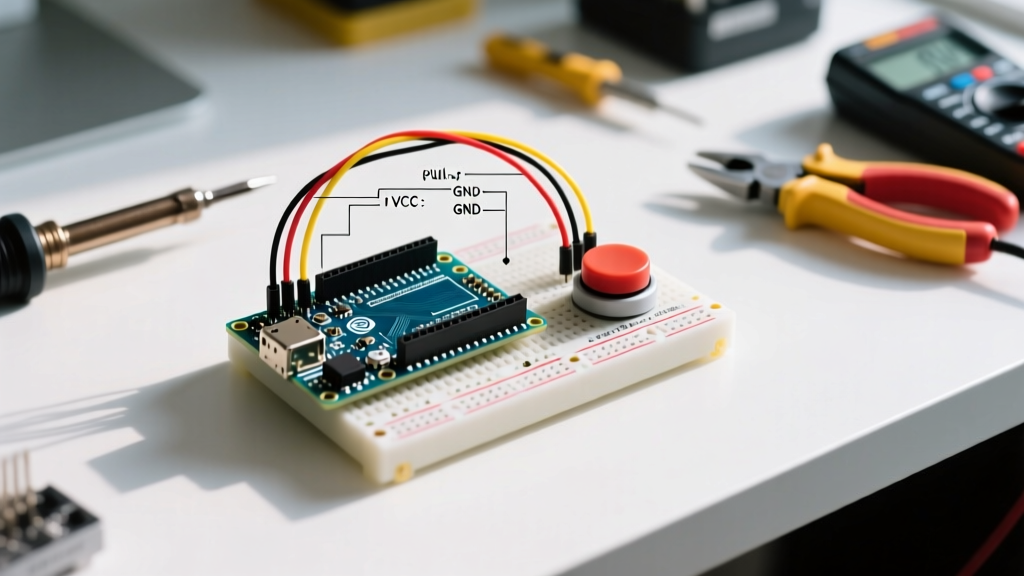
The I2C specification strictly limits bus capacitance to 400pF. When community members daisy-chain multiple sensors (like BME280s and OLEDs) using long, unshielded jumper wires, the parasitic capacitance exceeds this limit, resulting in data corruption and bus lockups. Always calculate your trace and wire capacitance, and drop your pull-up resistors from the standard 4.7kΩ to 2.2kΩ (or even 1kΩ) when operating at 400kHz Fast Mode.
- Heap Fragmentation from the String Class: Dynamically allocating and destroying
Stringobjects in yourloop()will eventually fragment the SRAM heap, leading to hard crashes after hours of operation. The community best practice in 2026 is to use fixed-lengthchararrays or utilizeString::reserve()to pre-allocate memory blocks for JSON parsing. - Power Supply Brownouts: Driving high-current components like 5V relay modules or servo motors directly from the Arduino's onboard 5V pin is a guaranteed way to trigger the polyfuse or cause brownout resets in the microcontroller. Always use external buck converters (like the LM2596) for loads exceeding 400mA.
- EEPROM Wear-Leveling: The internal EEPROM on standard AVR boards is rated for only 100,000 write cycles. Community data-logging projects that write to the same memory address every second will destroy the EEPROM in just over a day. Implement software wear-leveling or switch to external I2C FRAM chips (like the Fujitsu MB85RC256V) which offer 10 trillion write cycles.
Essential Community Libraries Matrix
To execute these advanced projects, you need the right software tools. Below is a curated matrix of the most vital, actively maintained community libraries that expand the functional limits of Arduino hardware.
| Library Name | Primary Function | Key Feature / Optimization | Compatible Architectures |
|---|---|---|---|
| ArduinoJson (v7+) | JSON Serialization | Zero-allocation deserialization using JsonDocument to prevent heap fragmentation. | AVR, SAMD, Mbed, ESP32 |
| FastLED | LED Matrix Control | Hardware-specific SPI/DMA optimizations for driving thousands of WS2812B LEDs at 60fps. | AVR, ARM Cortex-M, ESP |
| Micro-ROS | ROS 2 Integration | DDS middleware for real-time pub/sub communication in robotic systems. | ARM Cortex-M7, M4 |
| Arduino_FreeRTOS | Real-Time OS | Preemptive multitasking, allowing deterministic timing for motor control alongside UI updates. | AVR, ARM Cortex-M |
Final Thoughts on the Ecosystem
So, what can an Arduino do? In the hands of the modern maker community, it is no longer just a learning tool; it is a viable foundation for edge computing, professional IoT deployments, and complex robotic systems. By respecting the hardware limits—managing memory wisely, adhering to electrical specifications, and leveraging optimized open-source libraries—you can push these microcontrollers far beyond their original intended scope. Explore the resources linked above, dive into the forums, and start engineering solutions that bridge the gap between digital logic and the physical world.