
Quick Comparison Matrix: Top Miniature Arduino Boards
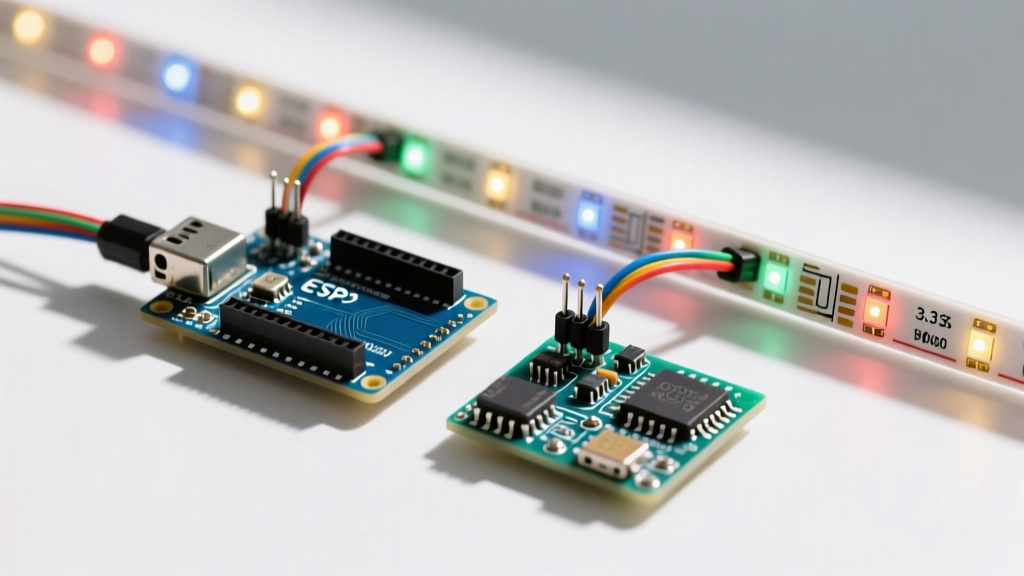
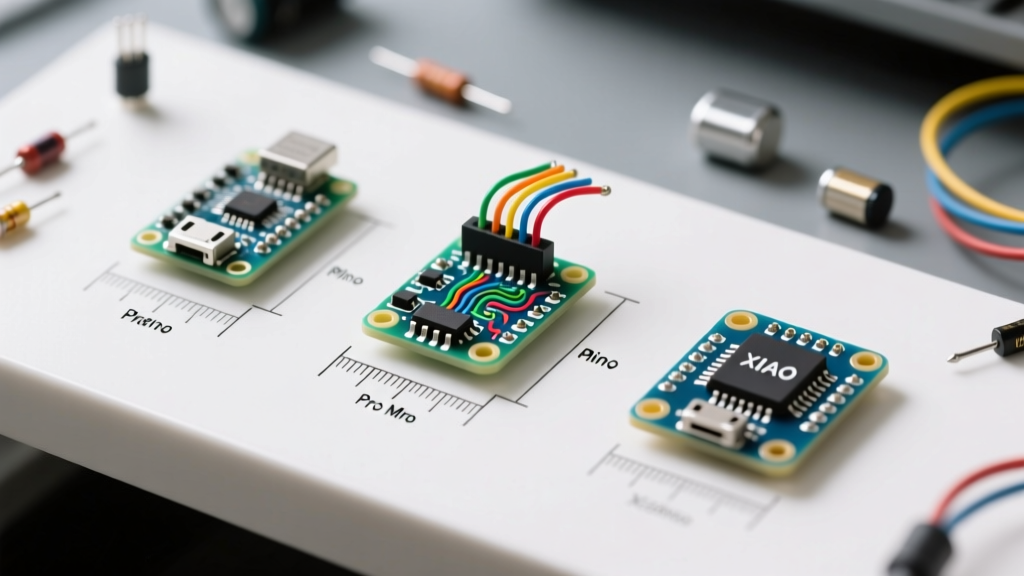
When space is at a premium, selecting the right microcontroller footprint is critical. Below is a 2026 quick-reference matrix comparing the most popular miniature Arduino and Arduino-compatible boards.
| Board Model | MCU Core | Dimensions (mm) | Flash / RAM | Est. Price (2026) | Best Use Case |
|---|---|---|---|---|---|
| Arduino Nano ESP32 | ESP32-S3 | 45 x 18 | 8MB / 512KB | $21.00 | IoT, Wi-Fi/BLE sensors |
| Seeed Studio XIAO RP2040 | Raspberry Pi RP2040 | 21 x 17.5 | 2MB / 264KB | $5.50 | Wearables, tiny robotics |
| Adafruit QT Py RP2040 | Raspberry Pi RP2040 | 22 x 17.5 | 8MB / 264KB | $9.95 | I2C sensor hubs (Stemma QT) |
| SparkFun Pro Micro (5V) | ATmega32U4 | 33 x 18 | 32KB / 2.5KB | $19.95 | Custom HID keyboards/macropads |
Miniature Arduino FAQ: Sizing, Pinouts, and Selection
What is the absolute smallest Arduino-compatible board available?
If you require an official board, the Arduino Nano ESP32 maintains the classic 45 x 18 mm Nano footprint. However, the third-party ecosystem offers vastly smaller alternatives. The Seeed Studio XIAO series measures just 21 x 17.5 mm, making it roughly the size of a postage stamp. For projects requiring extreme miniaturization (like swallowable medical prototypes or micro-drones), the XIAO ESP32C3 or RP2040 variants are the current industry standard for tiny footprints.
How do I solder pin headers to a XIAO or QT Py without melting the plastic?
Miniature boards feature densely packed castellated pads and SMD components perilously close to the header holes. Follow this exact thermal protocol:
- Preparation: Apply a thin layer of no-clean flux (e.g., Amtech NC-559) to the castellated pads.
- Iron Settings: Set your soldering station to 350°C (662°F) if using 63/37 Sn/Pb rosin-core wire (0.5mm diameter). If using SAC305 lead-free, increase to 380°C.
- Technique: Tin one corner pad first to anchor the header. Use a chisel tip (1.6mm or 2.4mm) rather than a conical tip for better thermal transfer.
- Dwell Time: Limit contact to 1.5 seconds per pad. Prolonged heat will delaminate the PCB's internal vias or melt the SMD capacitors adjacent to the pins.
Can I plug a Seeed XIAO or Adafruit QT Py directly into a standard breadboard?
No. Standard solderless breadboards are designed for 30-pin DIP ICs with a 0.6-inch (15.24mm) center gap. The XIAO and Adafruit QT Py feature a 14-pin layout with a much narrower spacing. If you plug them directly across the breadboard's center trench, the pins will short against each other on the same power rail. You must use a dedicated breakout board, a custom PCB, or solder female header extensions to offset the pins to a standard 0.1-inch (2.54mm) grid.
Why does my SparkFun Pro Micro show up as an "Unknown USB Device"?
This is a notorious edge case with the ATmega32U4 native USB bootloader. Unlike the ATmega328P (which uses a separate USB-to-Serial chip like the CH340), the 32U4 handles USB natively. If you upload a sketch that crashes the USB stack or disables interrupts, the board will vanish from your OS device manager.
Pro Tip: The 1200bps Bootloader Trick
To recover a "bricked" Pro Micro, open your serial monitor and connect at exactly 1200 baud. This specific baud rate signals the ATmega32U4 to reset and jump to the bootloader. Because the board lacks a physical reset button, you can also momentarily short the GND and RST pins twice in rapid succession to trigger the bootloader's 8-second upload window.
Form Factor Selection Guide: Matching the Board to the Project
Choosing a miniature Arduino is not just about physical size; it is about matching the I/O topology to your specific application.
- Custom HID Macropads & Keyboards: The SparkFun Pro Micro (or its Elite-C USB-C variant) remains the undisputed king for QMK and VIA firmware. Its native USB HID support and 3.3mm thickness allow it to sit flush beneath a PCB switch plate.
- Wearable Bio-Sensors: The Seeed XIAO nRF52840 Sense is optimal. It includes an onboard IMU, microphone, and Bluetooth Low Energy (BLE) radio, all while featuring an integrated LiPo battery management system (BMS) for direct coin-cell or pouch-cell integration.
- High-Speed Data Logging: The Adafruit QT Py RP2040 excels here. The inclusion of a Stemma QT / Qwiic I2C connector allows you to daisy-chain BME680 or SCD40 sensors without consuming GPIO pins, while the 8MB QSPI flash handles local CSV logging.
IDE Configuration Quick-Start for Tiny Boards
Miniature boards often require specific Board Manager URLs and bootloader selections in the Arduino IDE (v2.3+).
- ESP32 Minis (XIAO/Nano): Add
https://raw.githubusercontent.com/espressif/arduino-esp32/gh-pages/package_esp32_index.jsonto your Additional Boards Manager URLs. Always select the correct partition scheme (e.g., "Huge APP" for OTA updates). - RP2040 Minis: Use the official
Arduino Mbed OS RP2040 Boardscore for stability, or the community-maintainedEarle Philhower's Raspberry Pi Pico/RP2040core for advanced filesystem (LittleFS) support and overclocking capabilities. - ATmega32U4 Clones: Ensure you match the voltage and clock speed. Selecting "5V / 16MHz" on a 3.3V / 8MHz clone will result in serial corruption and failed uploads due to baud rate miscalculation.
Power Consumption Quick Reference (Deep Sleep)
When designing battery-operated miniature wearables, the quiescent current of the onboard voltage regulator often dwarfs the microcontroller's deep sleep current. Here is what to expect in 2026:
- Arduino Nano ESP32: ~10 µA (using specialized deep sleep APIs, bypassing onboard LED leakage).
- Seeed XIAO RP2040: ~500 µA. Warning: The RP2040 chip itself can sleep at ~122 µA, but the XIAO's onboard DC-DC converter and LDO draw significant quiescent current. For ultra-low power, you must cut the trace to the power LED and use an external switching regulator.
- Adafruit QT Py (SAMD21): ~1.5 mA in sleep mode due to the onboard NeoPixel and LDO. Not recommended for coin-cell applications without hardware modification.
Troubleshooting Edge Cases & Failure Modes
Failure Mode 1: Brownout Resets on Miniature Boards
Because miniature boards often rely on USB power or small LiPo cells, voltage drops during high-current spikes (e.g., driving a servo or NeoPixel strip) cause brownout resets. Fix: Solder a 100µF low-ESR ceramic capacitor directly across the 5V and GND header pins to buffer transient current draws.
Failure Mode 2: Antenna Detuning on ESP32 Minis
Boards like the XIAO ESP32C3 feature a stamped metal antenna on the edge of the PCB. If you enclose the board in a metallic housing or place it too close to a ground plane, the antenna impedance shifts, destroying your Wi-Fi range. Fix: Maintain a minimum 5mm keep-out zone around the antenna element and use a plastic (ABS/PETG) enclosure.
Failure Mode 3: USB-C Data Line Reversal
Many cheap, third-party miniature Arduino clones with USB-C ports omit the CC (Configuration Channel) resistors. This means they will only draw power and enumerate as a USB device if the cable is plugged in "right-side up." Fix: Always buy boards with proper 5.1k CC pull-down resistors, or keep a dedicated USB-A to USB-C cable for debugging.