
The Evolution of Arduino Voice Recognition
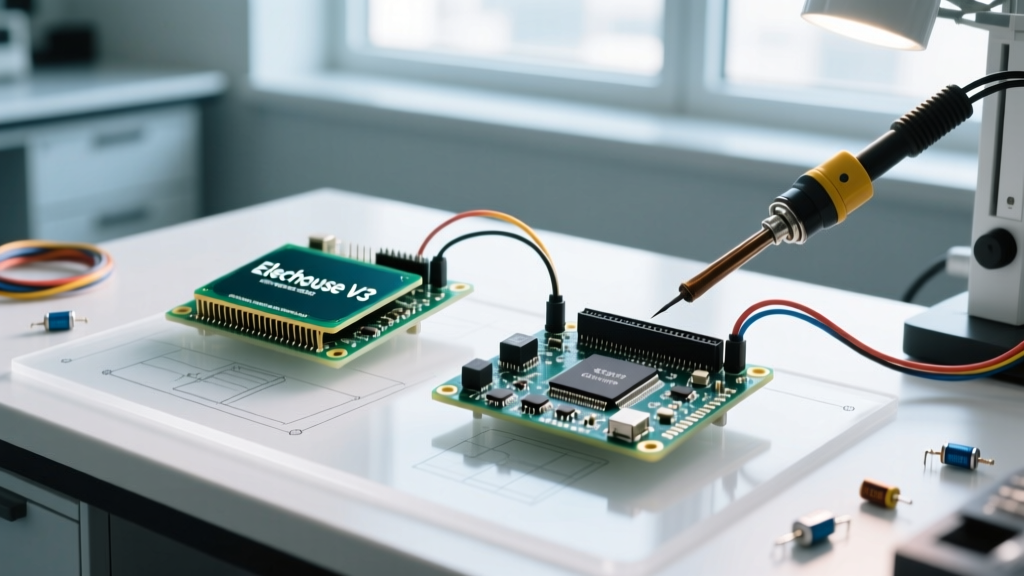
For years, hobbyists and engineers building an arduino voice recognition system relied on the same serial-based, phoneme-matching modules. The Elechouse Voice Recognition Module V3.1 (based on the LD3320 chip) and similar generic UART boards were the undisputed standard. While they allowed for basic offline command detection, they were fundamentally limited by rigid vocabulary constraints, poor noise rejection, and high latency. As we move deeper into 2026, the landscape of embedded machine learning has shifted dramatically. TinyML and Edge AI now allow microcontrollers to run convolutional neural networks (CNNs) directly on the chip, transforming how we approach audio processing.
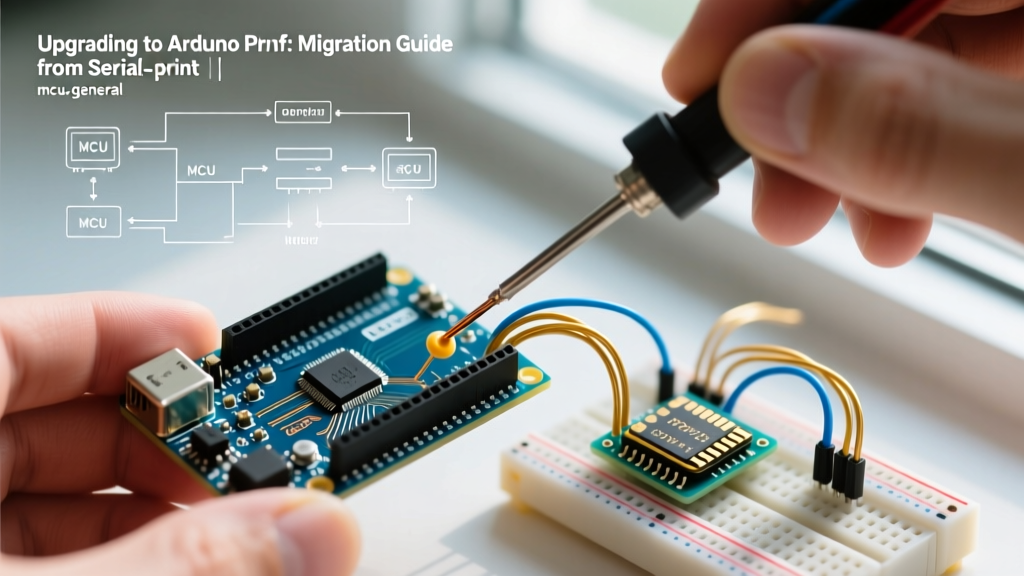
This migration guide is designed for makers, educators, and product developers looking to retire legacy serial voice modules and upgrade to modern, DSP-equipped microcontrollers. By migrating to Edge AI, you eliminate the 80-command limit, reduce inference latency to under 100 milliseconds, and enable custom wake-word detection that actually works in noisy environments.
Why Migrate from Legacy Serial Modules?
Legacy modules operate by sending pre-recorded phoneme strings over UART to a host microcontroller. The host MCU then parses these serial interrupts to trigger a GPIO pin. This architecture introduces several bottlenecks:
- Vocabulary Limits: The LD3320 chip maxes out at roughly 80 user-defined commands, requiring precise, unnatural enunciation.
- No Ambient Noise Rejection: Electret microphones on legacy boards lack digital signal processing (DSP), causing false triggers from background TV noise or HVAC systems.
- High Latency: Serial handshakes and phoneme parsing often result in 400ms to 600ms delays between speaking and actuation.
Modern Edge AI boards utilize MEMS or PDM microphones paired with hardware-accelerated neural network inference, bypassing these limitations entirely.
| Feature | Elechouse V3.1 (Legacy) | Seeed XIAO ESP32S3 Sense | Arduino Nano 33 BLE Sense Rev2 |
|---|---|---|---|
| Core Architecture | 8-bit MCU + LD3320 DSP | Dual-core Xtensa 32-bit LX7 (240MHz) | Arm Cortex-M4F (64MHz) |
| Microphone Type | Analog Electret | PDM MSM261D3526H1CPM | MEMS MP34DT055 |
| Command Limit | ~80 (Phoneme-based) | Unlimited (Neural Net) | Unlimited (Neural Net) |
| Inference Latency | ~450ms | <80ms | ~120ms |
| Approx. Cost (2026) | $42.00 | $22.00 | $38.00 |
Choosing Your Migration Hardware Path
When upgrading your arduino voice recognition pipeline, you must select a board that supports both I2S/PDM audio ingestion and hardware vector extensions for neural math. Here are the two premier migration paths.
Path A: Seeed Studio XIAO ESP32S3 Sense (Best for IoT & Wi-Fi Integration)
The Espressif ESP32-S3 chip is currently the heavyweight champion for edge audio. The XIAO Sense board integrates a built-in PDM microphone and supports 8MB of PSRAM. This massive memory buffer is critical for storing both the audio ring buffer and the TensorFlow Lite for Microcontrollers (TFLite) model weights. Furthermore, the ESP32-S3 includes vector instructions specifically designed to accelerate matrix multiplications, cutting inference times in half compared to older ESP32 variants.
Path B: Arduino Nano 33 BLE Sense Rev2 (Best for Ultra-Low Power & BLE)
If your project is battery-operated and relies on Bluetooth Low Energy (BLE) rather than Wi-Fi, the Nano 33 BLE Sense Rev2 is the optimal upgrade. It features the nRF52840 SoC and an onboard MP34DT055 MEMS microphone. The Cortex-M4F core supports the CMSIS-NN library, which optimizes neural network kernels for ARM processors. While it lacks the raw clock speed of the ESP32-S3, its deep sleep current of ~1.5mA makes it vastly superior for wake-word detection on coin-cell batteries.
Step-by-Step Migration: Porting Logic and I/O
Migrating from a serial-based module to an Edge AI board requires a fundamental shift in how your sketch handles audio and actuation. Follow this framework to port your legacy code.
1. Remove UART Interrupts and Implement I2S Audio Capture
Legacy sketches rely on Serial.available() and hardware interrupts on the RX pin. Delete these entirely. You must now configure the I2S (Inter-IC Sound) peripheral to read raw PCM data directly from the digital microphone.
Configure your I2S sampling rate to 16,000 Hz. This is the industry standard for voice frequencies (which predominantly sit between 300Hz and 3400Hz). Set the bit depth to 16-bit and use a mono channel configuration to conserve SRAM.
2. Train the Keyword Spotting Model via Edge Impulse
Instead of hardcoding phoneme strings, you will train a neural network to recognize your specific commands. Using the Edge Impulse platform, follow these DSP parameters for optimal accuracy:
- Preprocessing: Mel-Frequency Cepstral Coefficients (MFCC).
- Frame Length: 40ms (captures phoneme transitions accurately).
- Frame Stride: 20ms (provides overlapping context).
- Model Architecture: 1D Convolutional Neural Network (CNN) with two Conv1D layers, MaxPooling, and a dense output layer.
Crucial Step: Always include a "Noise" or "Background" class in your training data. Capture 5 minutes of ambient room noise, TV audio, and keyboard typing. This prevents the model from hallucinating commands when the room gets loud.
3. Quantize and Deploy the Model
Microcontrollers lack floating-point units (FPUs) capable of handling 32-bit float math efficiently. You must quantize your TFLite model to int8. This reduces the model size by up to 75% and accelerates inference on the ESP32-S3 and Cortex-M4F without meaningful accuracy loss. Export the model as an Arduino library and integrate it into your sketch.
4. Map GPIO Actuation
Replace your legacy serial parsing logic with threshold-based inference triggers. A standard Edge AI output yields probability scores (0.0 to 1.0) for each class. Set a strict confidence threshold of 0.85 to trigger your relays or MOSFETs, ensuring that low-confidence guesses do not accidentally activate your hardware.
Real-World Failure Modes and Edge Cases
When upgrading arduino voice recognition systems, engineers frequently encounter hardware and DSP edge cases that do not exist in software simulators. Be prepared to troubleshoot the following:
Expert Insight: PDM Microphone Clipping. The MSM261 and MP34DT055 microphones have an Acoustic Overload Point (AOP) of roughly 115dB SPL. If your project operates near loud machinery or speakers, the audio waveform will clip, resulting in flat-topped sine waves that the MFCC algorithm cannot parse. Implement a software Automatic Gain Control (AGC) in your audio pipeline, or physically dampen the microphone port with acoustic mesh.
I2S Clock Jitter and Buffer Underruns
If your inference engine stutters or drops audio frames, you are likely experiencing I2S clock jitter. The ESP32-S3's Wi-Fi radio can introduce electromagnetic interference (EMI) that disrupts the I2S bit-clock line if routed poorly on custom PCBs. Solution: Keep I2S traces under 10cm, use a continuous ground plane beneath the audio traces, and allocate dedicated DMA (Direct Memory Access) buffers of at least 512 bytes to prevent CPU bottlenecking.
Wake-Word Fatigue and False Positives
A common complaint in custom voice setups is the system triggering from similar-sounding words (e.g., "Light" triggering when someone says "Night"). To solve this, implement a two-stage verification pipeline. Stage 1 is a lightweight, low-power KWS (Keyword Spotting) model that runs continuously. Stage 2 is a heavier, more complex speech-to-intent model that only wakes up when Stage 1 detects the wake word, analyzing the subsequent 2 seconds of audio to confirm the actual command.
Power Budget and Memory Analysis
Understanding the resource footprint of your new Edge AI pipeline is critical for enclosure design and battery selection.
| Metric | Legacy Serial Module | ESP32-S3 (Edge AI) | Nano 33 BLE (Edge AI) |
|---|---|---|---|
| Active Inference Current | ~45mA | ~110mA | ~35mA |
| Deep Sleep Current | Not Supported (Idle ~20mA) | ~0.01mA (with ULP co-processor) | ~0.0015mA |
| Model Flash Footprint | N/A (Firmware baked in) | ~180KB (int8 quantized) | ~150KB (CMSIS-NN optimized) |
| SRAM Required (Inference) | ~2KB (Serial buffers) | ~45KB (Tensor Arena) | ~35KB (Tensor Arena) |
Conclusion
Migrating your arduino voice recognition project from legacy UART modules to modern Edge AI microcontrollers is no longer just an experimental luxury; it is a practical necessity for reliable, real-world deployments. By leveraging the DSP capabilities of the ESP32-S3 or the ARM Cortex-M4F architecture of the Nano 33 BLE Sense, you unlock sub-100ms latency, infinite vocabulary expansion, and robust noise rejection. Ditch the serial parsers, embrace MFCC preprocessing, and build voice interfaces that truly understand their environment.