
Why Your Microcontroller Needs an External Arduino RTC
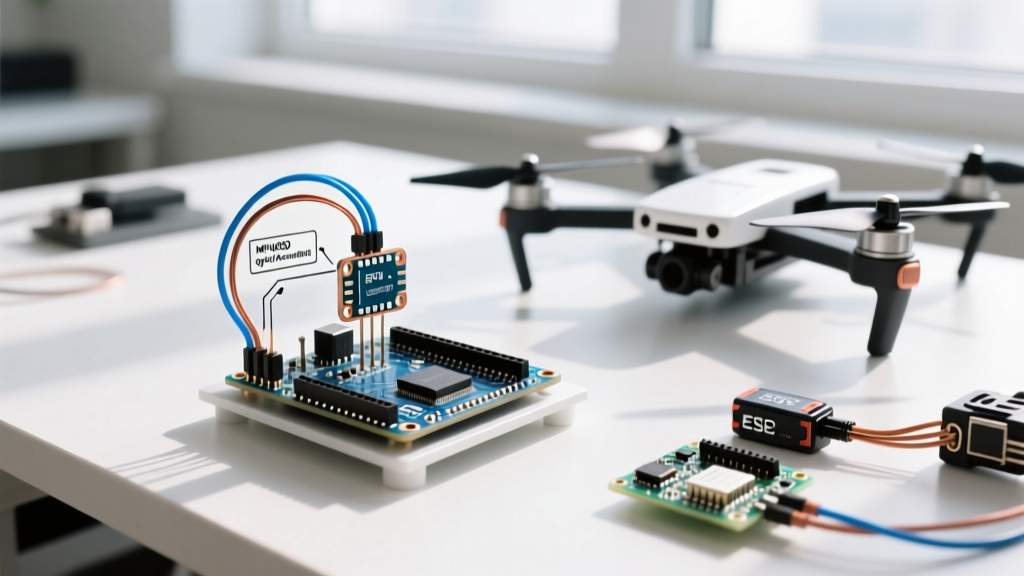
While every modern microcontroller features an internal millisecond counter via millis(), relying on it for long-term timekeeping is a fundamental engineering mistake. Internal oscillators are subject to thermal drift, voltage fluctuations, and reset interruptions. Over a 30-day period, an Arduino Uno's ceramic resonator can drift by several minutes. For data logging, scheduled automation, or timestamping sensor readings, an external Arduino RTC (Real-Time Clock) module is mandatory. This quick reference guide cuts through the noise, providing exact wiring diagrams, module comparisons, and critical safety warnings for the most popular I2C RTC chips on the market.
Module Comparison Matrix: DS1307 vs DS3231 vs PCF8523
Choosing the right chip depends on your environmental constraints and budget. Below is a technical comparison of the three most ubiquitous RTC modules found in maker ecosystems.
| Feature | DS1307 | DS3231 (Standard) | PCF8523 |
|---|---|---|---|
| Accuracy | ±20 ppm (approx. 10 min/month) | ±2 ppm (approx. 1 min/year) | ±20 ppm (w/ offset calibration) |
| Temperature Compensation | None | Yes (Internal TCXO) | Yes (Software Offset) |
| Avg Module Price | $1.50 - $2.50 | $3.00 - $5.00 | $2.50 - $4.00 |
| I2C Address | 0x68 | 0x68 | 0x68 |
| Alarm / Interrupt Pins | 1 (SQW) | 2 (INT/SQW, 32kHz) | 1 (INT1) |
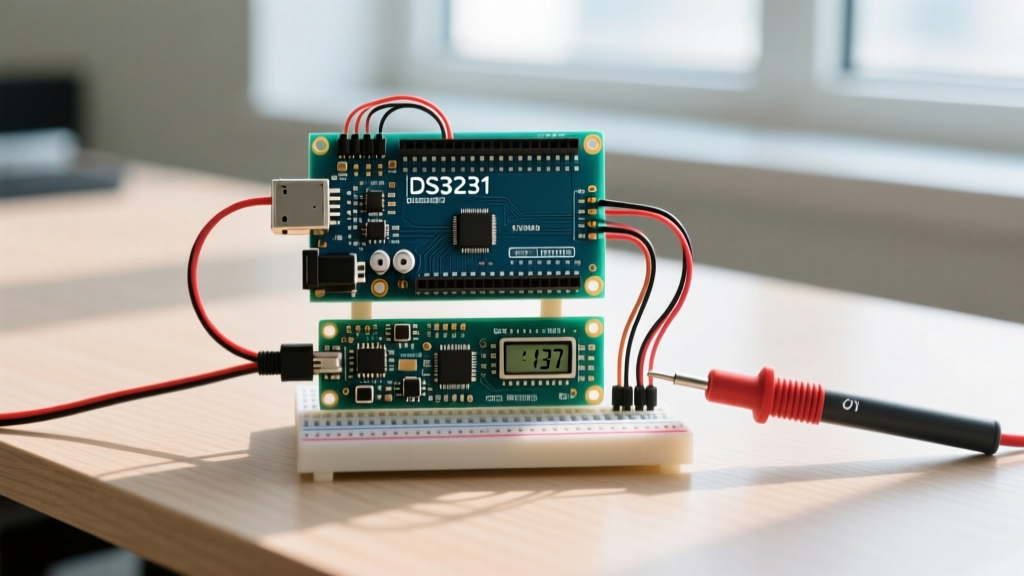
Expert Recommendation: For 95% of projects, the DS3231SN is the undisputed champion. Its integrated temperature-compensated crystal oscillator (TCXO) eliminates the seasonal time drift that plagues the older DS1307. You can verify these specifications in the official Analog Devices DS3231 Datasheet.
Frequently Asked Questions: Wiring & I2C Configuration
What are the correct I2C pins for my specific board?
The I2C bus requires two lines: SDA (data) and SCL (clock). While the Arduino Uno is straightforward, newer or alternative microcontrollers use different GPIO mappings. Always use the default hardware I2C pins for reliable communication:
- Arduino Uno / Nano (ATmega328P): SDA = A4, SCL = A5
- Arduino Mega 2560: SDA = Pin 20, SCL = Pin 21
- ESP32 (Standard DevKit V1): SDA = GPIO 21, SCL = GPIO 22
- ESP32-S3: SDA = GPIO 8, SCL = GPIO 9
- ESP8266 (NodeMCU / Wemos D1 Mini): SDA = D2 (GPIO 4), SCL = D1 (GPIO 5)
- Raspberry Pi Pico (RP2040): SDA = GP4 (Pin 6), SCL = GP5 (Pin 7) [I2C0 Bus]
Do I need external pull-up resistors on the I2C lines?
The I2C protocol uses open-drain outputs, meaning the bus must be pulled HIGH to the logic voltage (usually 3.3V or 5V). Most generic DS3231 ZS-042 modules include 4.7kΩ surface-mount pull-up resistors on the PCB.
When to add external resistors: If you are chaining multiple I2C sensors (e.g., a BME280 and an RTC on the same bus), the parallel resistance of the on-board resistors might drop too low, or the bus capacitance might exceed the 400pF I2C limit. For a 400kHz Fast-mode I2C bus, a 2.2kΩ pull-up to VCC is optimal. Refer to the official Arduino Wire library documentation for deeper bus capacitance calculations.
The CR2032 Battery Hazard: ZS-042 Module Warning
⚠️ CRITICAL SAFETY WARNING: Never insert a standard, non-rechargeable CR2032 battery into a cheap ZS-042 DS3231/DS1307 module without hardware modification. Doing so creates a severe fire and venting hazard.
The ubiquitous blue ZS-042 RTC modules are designed with a crude charging circuit intended for LIR2032 rechargeable lithium-ion coin cells. This circuit typically consists of a 200Ω resistor and a Schottky diode (often a BAT54C or 1N4148) routed from the 5V VCC pin to the battery holder.
If you insert a standard CR2032 (which is primary/non-rechargeable), the module will attempt to force current into it whenever the Arduino is powered. This leads to battery swelling, electrolyte leakage, and in extreme cases, thermal runaway.
How to Safely Modify the ZS-042 Module
- Flip the module over and locate the battery holder on the underside.
- Identify the surface-mount diode located just to the left of the battery holder (often marked with a faint line or part number).
- Using a hot soldering iron or flush cutters, carefully remove or destroy the diode. This breaks the charging path.
- Alternatively, purchase high-quality breakouts like the Adafruit DS3231 Precision RTC Breakout (~$9.95), which safely omits the charging circuit and includes a proper low-dropout diode for battery backup switching.
Code & Library Quick Reference
For C++ Arduino development, the RTClib maintained by Adafruit is the industry standard. It abstracts the BCD (Binary-Coded Decimal) to decimal conversions required by the I2C registers.
Essential Setup Snippet:
#include <Wire.h>
#include <RTClib.h>

RTC_DS3231 rtc;

void setup() {
  Serial.begin(115200);
  if (!rtc.begin()) {
    Serial.println("Couldn't find RTC");
    while (1); // Halt execution
  }

  // Automatically set to compile time if RTC lost power
  if (rtc.lostPower()) {
    rtc.adjust(DateTime(F(__DATE__), F(__TIME__)));
  }
}

void loop() {
  DateTime now = rtc.now();
  Serial.printf("%04d-%02d-%02d %02d:%02d:%02d\n",
    now.year(), now.month(), now.day(),
    now.hour(), now.minute(), now.second());
  delay(1000);
}
Troubleshooting Edge Cases & Failure Modes
The '2165-165-165' Date Error
A common panic point for beginners is seeing the serial monitor output 2165-165-165 165:165:85. This is not a broken chip; it is a software safeguard.
When the DS3231 loses all power (both VCC and VBAT), its internal oscillator stops. Upon power restoration, the chip sets the Oscillator Stop Flag (OSF), which is Bit 7 of the Status Register (Address 0x0F). RTClib detects this flag and intentionally returns garbage data (like the year 2165) to warn you that the time is invalid.
The Fix: You must clear the OSF bit by writing a valid time to the RTC. Calling rtc.adjust() automatically clears this flag in the background. Ensure your backup battery is seated correctly and has a voltage above 2.8V.
Battery Life Calculation & Quiescent Current
How long will a coin cell actually last? The DS3231SN datasheet specifies a typical VBAT current of 0.84µA at 3.3V when the oscillator is running but VCC is disconnected.
A high-quality Energizer CR2032 has a capacity of roughly 240mAh.
Calculation: 240mAh / 0.00084mA = 285,714 hours, or 32.6 years.
However, real-world parasitic drain from the module's voltage regulator (if VCC is left floating instead of grounded when unpowered) and capacitor leakage will reduce this to roughly 5–8 years. Always tie the VCC pin to GND via a 10kΩ resistor if you are powering the module strictly from a battery backup to prevent floating logic states.
ESP32 Deep Sleep Wakeup via RTC Alarm
One of the most powerful features of the DS3231 is its ability to wake an ESP32 from Ultra-Low Power (ULP) deep sleep. By configuring Alarm 1 to trigger at a specific minute, the INT/SQW pin pulls LOW. Connect the INT pin to an RTC-capable GPIO on the ESP32 (e.g., GPIO 4). Use the esp_sleep_enable_ext0_wakeup() function in your code. This allows you to build data loggers that consume less than 15µA on average, waking only once per hour to sample sensors and log to an SD card.