
The Arduino Pokemon Maker Ecosystem: Beyond the Breadboard
The intersection of retro gaming nostalgia and modern microcontroller capabilities has sparked a massive wave of DIY builds. When makers search for 'arduino pokemon' projects, they are typically looking to build one of three things: a functional Wi-Fi-connected Pokédex, a Bluetooth Low Energy (BLE) Pokémon GO auto-catcher clone, or a hardware interface for original Game Boy link cables and cameras. However, the sheer volume of incompatible shields, logic level mismatches, and memory constraints ruins many of these builds before they ever compile.
This comprehensive compatibility guide cuts through the guesswork. We will dissect the exact microcontroller units (MCUs), displays, and peripheral modules required for these specific builds, highlighting the critical failure modes that plague generic tutorials. Whether you are pulling JSON data from the PokéAPI or spoofing Nintendo BLE handshakes, hardware selection is your first and most critical hurdle.
Project 1: The Wi-Fi Pokédex (Display & MCU Compatibility)
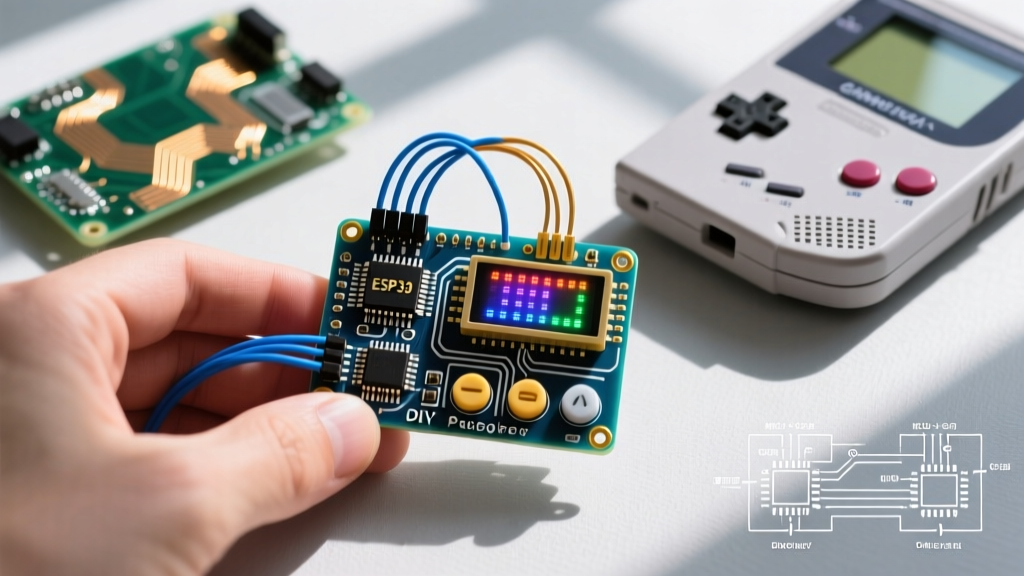
A modern DIY Pokédex requires fetching sprite images and base stats from the PokéAPI v2, parsing heavy JSON payloads, and rendering them to a color TFT display. This is a memory-intensive and SPI-heavy workload.
The ATmega328P Bottleneck
Many beginners attempt to build a Pokédex using the classic Arduino Uno (ATmega328P). This is a critical compatibility error. The ATmega328P features only 2KB of SRAM. When you include the ArduinoJson library required to parse the PokéAPI response, the memory is entirely consumed by the JSON document buffer, leaving zero room for the display framebuffer or HTTP client overhead. You will experience random reboots and incomplete data rendering.
The Compatible Solution: ESP32-WROOM-32
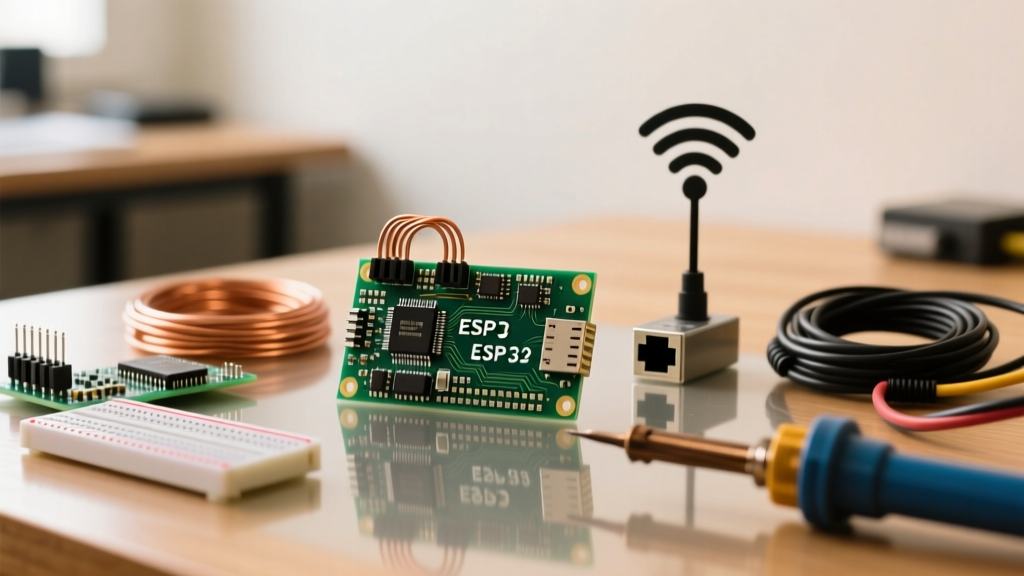
For a functional Pokédex, the ESP32-WROOM-32 (typically $6 to $9 on development boards) is the mandatory baseline. It offers 520KB of SRAM, dual-core processing at 240MHz, and native 802.11 b/g/n Wi-Fi.
- Display Compatibility: Pair the ESP32 with a 2.4-inch or 2.8-inch ILI9341 TFT (320x240 resolution) or an ST7789 (240x240). Both utilize hardware SPI.
- Wiring Warning: The ILI9341 requires 3.3V logic on its SPI and DC/Reset pins. While the ESP32 is natively 3.3V, if you are using a 5V Arduino Mega 2560 for a multi-screen 'Professor Oak' lab setup, you must use a BSS138 bidirectional logic level shifter. Feeding 5V into the ILI9341 logic pins will degrade the silicon and cause screen tearing within weeks.
Project 2: Pokémon GO Plus Auto-Catcher Clones (BLE Compatibility)
Spoofing a Pokémon GO Plus device to automatically spin PokéStops and catch Pokémon requires precise Bluetooth Low Energy (BLE) advertising packets. The Niantic app looks for specific Service UUIDs (e.g., 0000fe6b-0000-1000-8000-00805f9b34fb) and expects a specific handshake timing.
The ESP32 BLE Stack Problem
While the ESP32 has built-in BLE, its default Bluedroid stack is notoriously heavy and often struggles with the strict millisecond timing required for the Nintendo GO Plus handshake. Makers frequently report 'Device disconnected' errors in the Niantic app when using standard ESP32 BLE libraries. If you must use an ESP32, you need to strip the stack down and use the NimBLE-Arduino library to reduce latency and memory overhead.
The Gold Standard: Nordic nRF52840
For 100% compatibility and reliable background auto-catching, you should use a board based on the Nordic nRF52840 chip. The Adafruit Feather nRF52840 (approx. $25) or the official Arduino Nano 33 BLE (approx. $22) are the premier choices. These boards utilize the Nordic SoftDevice S140 stack, which handles the BLE peripheral timing flawlessly at the hardware level, ensuring the Niantic app never drops the connection during the encryption key exchange.
Project 3: Game Boy Link Cable & Camera Interfacing
Interfacing with original DMG (Game Boy) or CGB (Game Boy Color) hardware via the link port requires bit-banging an SPI-like protocol at speeds ranging from 8kHz to 250kHz. The original Game Boy Camera outputs 128x112 pixel images that must be read serially.
Timing Constraints and Interrupt Latency
The Game Boy acts as the master clock provider. Your Arduino must act as a slave, reading bits exactly as the clock pin (Pin 5 on the link port) transitions. Standard 16MHz AVR Arduinos (like the Uno or Nano) can handle this, but if your sketch includes display updates or serial debugging, interrupt latency will cause you to miss bits, resulting in corrupted, static-filled images.
The High-Speed Alternative: Teensy 4.1
For lossless Game Boy Camera dumping or real-time link cable trading bots, the PJRC Teensy 4.1 ($32) is the ultimate compatibility choice. Running at 600MHz with an ARM Cortex-M7 core, the Teensy can dedicate an entire hardware interrupt routine to the Game Boy clock pin with sub-microsecond latency, completely eliminating missed bits. Furthermore, the Teensy 4.1 features a native SDIO SD card slot, allowing you to save dumped Game Boy Camera photos directly to a microSD card without tying up SPI bus bandwidth.
Master Hardware Compatibility Matrix
Use this matrix to select your components before ordering parts. Mixing incompatible logic families is the leading cause of project failure.
| Project Type | Recommended MCU | Incompatible / Risky MCU | Critical Peripheral | Approx. BOM Cost |
|---|---|---|---|---|
| Wi-Fi Pokédex | ESP32-WROOM-32 | Arduino Uno / Nano (SRAM limits) | 2.8' ILI9341 TFT + BSS138 (if 5V) | $14 - $18 |
| GO Plus Auto-Catcher | Adafruit nRF52840 Feather | ESP32 (without NimBLE stack) | LiPo Battery + TP4056 Charger | $30 - $35 |
| Game Boy Camera Dumper | Teensy 4.1 | Arduino Mega (Interrupt latency) | MicroSD Breakout + Logic Shifter | $40 - $45 |
| Interactive Gym Badge | ATtiny85 | ESP32 (Overkill / Power drain) | NeoPixel Ring + Vibration Motor | $8 - $12 |
Critical Edge Case: Power Management for Portable Builds
When transitioning an Arduino Pokemon project from a USB cable to a wearable or portable enclosure (like a 3D-printed Pokéball or Pokedex shell), power management becomes a severe compatibility issue.
The TFT Backlight Brownout
The LED backlight on a standard 2.4-inch ILI9341 display draws between 60mA and 80mA. If you are powering your ESP32 and display from a standard 3.7V LiPo battery through a cheap boost converter, the sudden current spike when the screen turns on will cause a voltage sag. The ESP32's brownout detector (BOD) will trigger at 2.4V, instantly resetting the board.
Expert Fix: Never wire the TFT LED pin directly to the MCU's 3.3V output pin. The onboard AMS1117-3.3 voltage regulator on most cheap ESP32 dev boards maxes out at 50mA to 100mA and will overheat. Instead, use a dedicated P-channel MOSFET (like the SI2301) controlled by a GPIO pin to switch the backlight power directly from the main 3.3V LDO rail.
Deep Sleep for BLE Clones
If building a Pokémon GO auto-catcher, the device must run for 8+ hours on a small 250mAh LiPo cell. You must configure the MCU to enter deep sleep between Bluetooth advertising intervals. The Arduino Nano 33 BLE has a notoriously high quiescent current draw in sleep mode due to onboard sensors and linear regulators. For ultra-low-power wearable clones, designing a custom PCB using a bare nRF52840 module and a switching buck converter (like the TPS62740) is required to achieve sub-10uA sleep currents.
Frequently Asked Questions (FAQ)
Can I use an Arduino Uno to read a Game Boy cartridge?
Yes, but with caveats. Reading the ROM header and save RAM (SRAM) from a Game Boy cartridge requires 16 address lines and 8 data lines. The Arduino Uno only has 14 digital I/O pins. You will need to use multiplexers (like the 74HC595 shift registers or 74HC4051 analog multiplexers) to expand your I/O. Furthermore, the cartridge requires a stable 5V supply capable of delivering 150mA; powering it directly from the Arduino Uno's 5V USB rail often causes voltage drops that corrupt save data during writing.
Why does my Pokédex fail to load sprites from the PokéAPI?
The PokéAPI returns sprite URLs pointing to GitHub-hosted PNG files. The ESP32's HTTPClient defaults to HTTP, but GitHub forces HTTPS redirects. If you do not explicitly configure the ESP32's Wi-Fi client to handle SSL certificates and follow redirects (using setFollowRedirects(HTTPC_FORCE_FOLLOW_REDIRECTS)), the HTTP GET request will fail silently, resulting in a blank screen where the sprite should be.
What is the best logic level shifter for 3.3V Game Boy link cables?
Later Game Boy Advance (GBA) link cables operate at 3.3V logic, unlike the 5V DMG/CGB cables. If you are building a universal link cable adapter, use the TXS0108E 8-channel bidirectional level shifter. It features auto-direction sensing and supports data rates up to 50Mbps, which is more than enough to handle the GBA's maximum link speed of 115.2 kbps without signal degradation.