
The Evolution of the Arduino Data Logger
For over a decade, the quintessential Arduino data logger project has relied on a familiar stack: an Arduino Uno, a DS3231 Real-Time Clock (RTC), and a generic MicroSD card breakout board. While this setup is perfect for weekend science fair projects, it falls apart in professional, industrial, or long-term environmental monitoring deployments. As we move through 2026, the cost of Wi-Fi and cellular IoT hardware has plummeted, making the migration from local physical storage to robust, cloud-connected telemetry not just a luxury, but a standard engineering practice.
This migration guide dissects the hidden failure modes of legacy SD card logging and provides three distinct upgrade paths—ranging high-endurance local FRAM to ESP32 cloud architecture and remote cellular nodes. Whether you are tracking greenhouse soil moisture or monitoring industrial motor vibrations, this guide will help you refactor your hardware and firmware for modern reliability.
The Legacy Trap: Why SD Card Loggers Fail in Production
Before tearing down your breadboard, it is crucial to understand exactly why the classic Uno + SD card architecture is a liability in the field. The issues rarely stem from the Arduino itself, but rather from the physical and electrical realities of the Arduino SD Library and FAT32 file systems.
1. SPI Bus Contention and MISO Floating
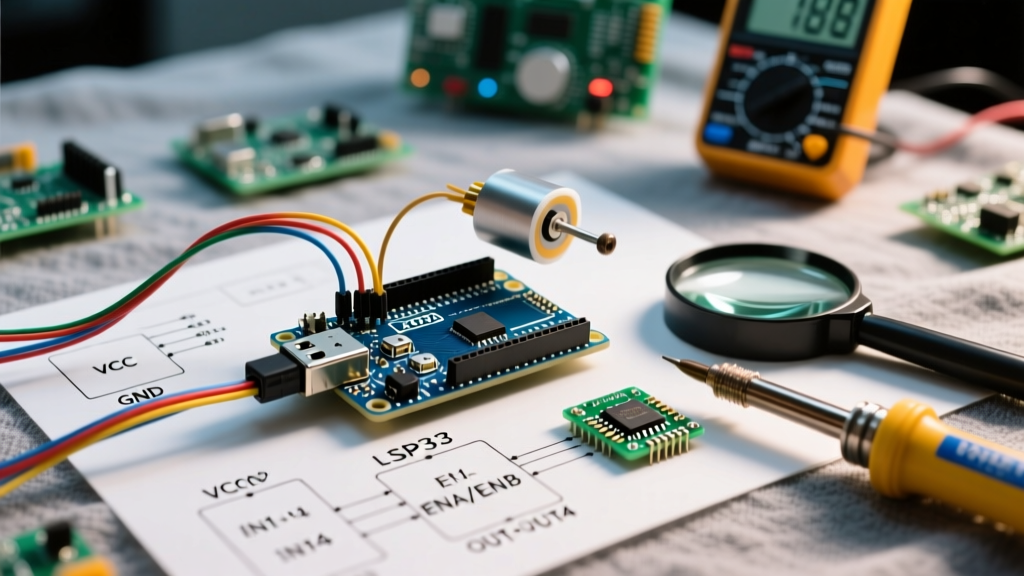
Most cheap MicroSD adapters (like the ubiquitous Catalex modules) use basic resistor dividers or unidirectional level shifters for the 5V-to-3.3V logic translation. When the SD card's Chip Select (CS) pin is HIGH (deselected), the MISO (Master In Slave Out) line is supposed to go into a high-impedance (tri-state) mode. Cheap modules often fail to tri-state properly, causing them to "ghost" onto the SPI bus. If you share that SPI bus with an LCD screen or an SPI sensor, you will experience intermittent data corruption or total bus lockups.
2. The 150mA Brownout Spike
Writing to a MicroSD card requires a sudden current spike of 100mA to 150mA. If you are powering your Arduino data logger via a standard USB cable or a cheap 3.3V linear regulator (like the AMS1117 found on clone boards), this spike causes a voltage brownout. The microcontroller resets mid-write, resulting in a corrupted FAT32 allocation table and a bricked filesystem.
Expert Diagnostic Tip: If your SD card randomly corrupts after weeks of flawless operation, check your power supply's transient response. Upgrading to a switching buck converter (like the Texas Instruments LM2596) capable of delivering 3A with low ESR capacitors will eliminate brownout-induced filesystem corruption.
Migration Path 1: High-Endurance Local Storage (FRAM)
If your application does not require remote telemetry and you simply need to survive harsh environments without physical retrieval, migrating from Flash-based SD cards to Ferroelectric RAM (FRAM) is the ultimate local storage upgrade.
Unlike EEPROM or NAND Flash (used in SD cards), FRAM offers virtually unlimited write endurance (typically 10^12 cycles) and requires zero write-delay time. A popular module for this migration is the Adafruit SPI FRAM Breakout featuring the Fujitsu MB85RS256V chip. It provides 32KB of non-volatile memory, operates natively at 3.3V or 5V, and draws a mere 1.5mA during active writes—completely eliminating the brownout spikes associated with SD cards.
Code Migration Strategy: Replace your SD.open() and file.print() calls with I2C or SPI memory pointer increments. Because FRAM is byte-addressable and doesn't require block erasure, you can treat it like a massive, non-volatile EEPROM array, logging sensor readings directly to sequential memory addresses.
Migration Path 2: The ESP32 Wi-Fi Cloud Leap
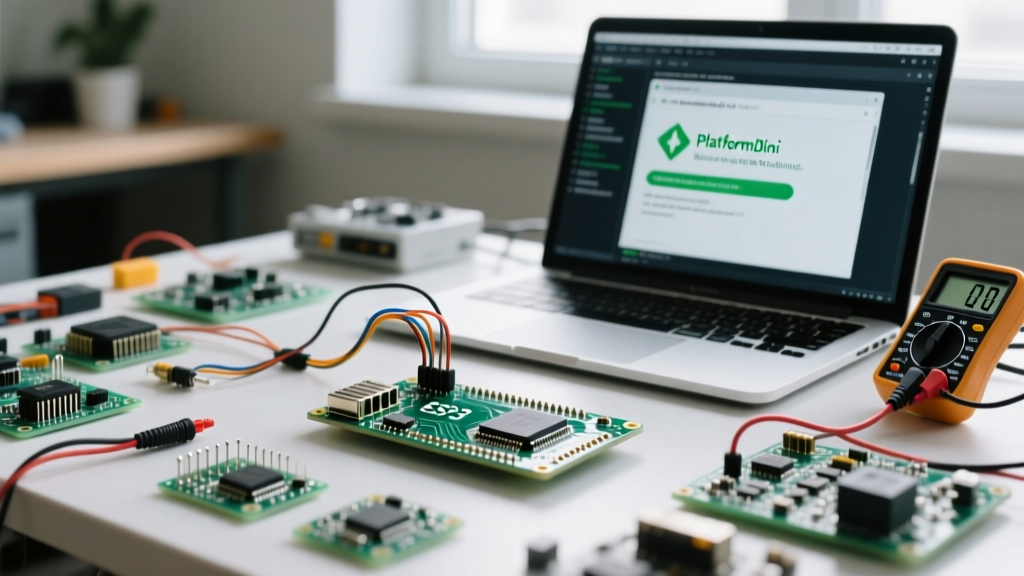
For 90% of makers and engineers in 2026, the logical next step is abandoning the 8-bit AVR architecture entirely and migrating to the ESP32. The ESP32-WROOM-32E module costs roughly $6 to $9, features dual-core processing, and includes native 802.11 b/g/n Wi-Fi and Bluetooth 5.0.
Architecting the Cloud Pipeline
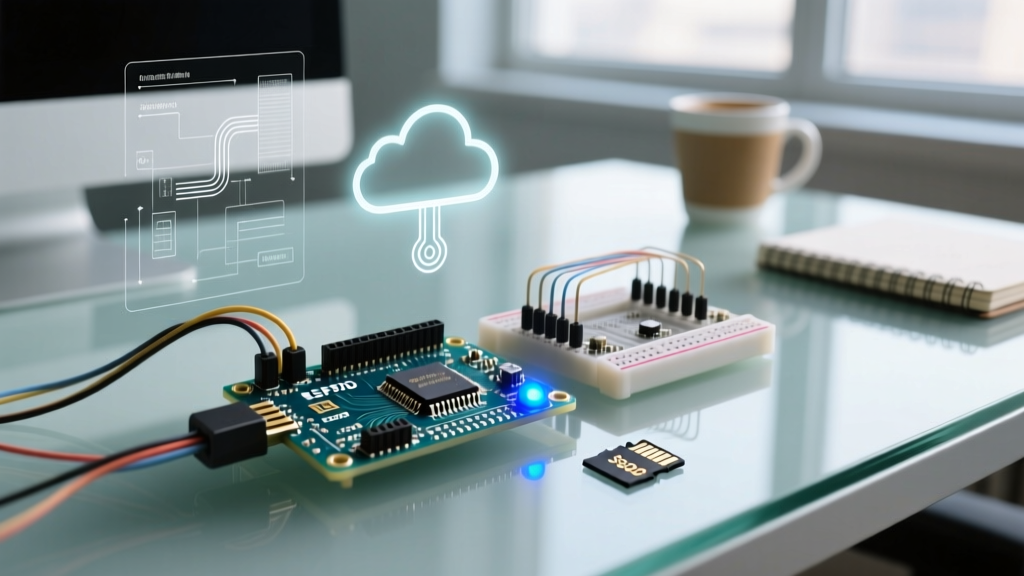
When upgrading your Arduino data logger to the cloud, avoid sending raw CSV strings over HTTP POST requests. Instead, adopt the MQTT protocol combined with a Time-Series Database (TSDB) like InfluxDB or a platform like ThingSpeak.
- Hardware Swap: Replace the Uno with an ESP32 DevKitC-V4. Wire your I2C sensors to GPIO 21 (SDA) and GPIO 22 (SCL).
- Firmware Refactor: Utilize the
PubSubClientlibrary for MQTT. Structure your payloads in JSON or InfluxDB Line Protocol format. - Power Optimization: Utilize the Espressif ESP32 Sleep Modes API to put the chip into deep sleep between readings. An ESP32 in deep sleep draws approximately 10µA, compared to the 45mA active draw of an Arduino Uno.
Handling Wi-Fi Connection Edge Cases
A common failure mode in ESP32 data loggers is the device hanging indefinitely if the Wi-Fi router is rebooted or out of range. You must implement a non-blocking connection timeout and a hardware Watchdog Timer (WDT).
// Pseudo-code for robust Wi-Fi connection
WiFi.begin(ssid, password);
int timeout = 0;
while (WiFi.status() != WL_CONNECTED && timeout < 40) {
    delay(250);
    timeout++;
}
if (WiFi.status() != WL_CONNECTED) {
    ESP.restart(); // Trigger WDT or manual restart to prevent hanging
}
Migration Path 3: Remote Cellular Logging (Off-Grid)
What if your data logger is deployed in a remote agricultural field or a pipeline monitoring station where Wi-Fi is non-existent? Migrating to a Cellular IoT architecture is required. In 2026, legacy 2G/3G modules are largely deprecated; you must use LTE-M or NB-IoT modules.
The Particle Boron (featuring an nRF52840 MCU and a u-blox SARA-R410M-02B cellular module) is a premier choice for this migration. Priced around $75, it includes a robust cloud infrastructure, over-the-air (OTA) firmware updates, and native support for LiPo battery charging. Alternatively, the Adafruit FONA 3G breakout paired with an Arduino Mega remains a viable fallback for regions where LTE-M coverage is still sparse, though it requires careful power management due to 2A GSM transmission spikes.
Architecture Comparison Matrix
Use the table below to select the appropriate migration path based on your specific deployment constraints.
| Architecture | Core Hardware | Est. Cost (2026) | Write Endurance | Sleep Current | Best Application |
|---|---|---|---|---|---|
| Legacy SD | Uno + MicroSD Adapter | $15 - $18 | ~10,000 cycles | ~35mA (Idle) | Short-term classroom demos |
| Local FRAM | Uno/Pro Mini + MB85RS256V | $20 - $25 | 10^12 cycles | ~10µA (MCU dependent) | High-frequency vibration logging |
| Wi-Fi Cloud | ESP32-WROOM-32E | $6 - $10 | N/A (Cloud DB) | ~10µA (Deep Sleep) | Smart home, indoor agriculture |
| Cellular IoT | Particle Boron (LTE-M) | $75 - $85 | N/A (Cloud DB) | ~1.2mA (Idle PSM) | Remote environmental monitoring |
Advanced Troubleshooting: RTC Drift and Timestamp Syncing
When migrating away from local SD cards, you can often eliminate the external DS3231 RTC entirely. If you are using the ESP32 Wi-Fi path or the Particle Boron cellular path, you can fetch the precise Unix epoch timestamp via NTP (Network Time Protocol) or the cellular network's NITZ (Network Identity and Time Zone) service upon boot.
The Edge Case: If your ESP32 data logger wakes from deep sleep every 15 minutes, connecting to Wi-Fi just to get an NTP timestamp wastes battery and time. The Solution: Fetch the NTP timestamp once upon initial boot, calculate the offset, and rely on the ESP32's internal Ultra-Low Power (ULP) co-processor and RTC timer to track time during deep sleep. The internal RTC drifts by roughly 5% depending on temperature, which is perfectly acceptable for 15-minute intervals, saving you the hardware cost and I2C wiring of an external DS3231.
Summary of Best Practices for 2026
Upgrading your Arduino data logger is no longer about simply finding a larger MicroSD card. It is about shifting your paradigm from localized, fragile file storage to resilient, distributed telemetry. By moving to ESP32 MQTT pipelines or FRAM local buffers, you eliminate SPI bus contention, bypass FAT32 corruption, and drastically reduce your deployment's power envelope. Evaluate your environment, choose the right architecture from the matrix above, and refactor your code to embrace modern IoT standards.