
The Evolution of Arduino Motion Tracking in 2026
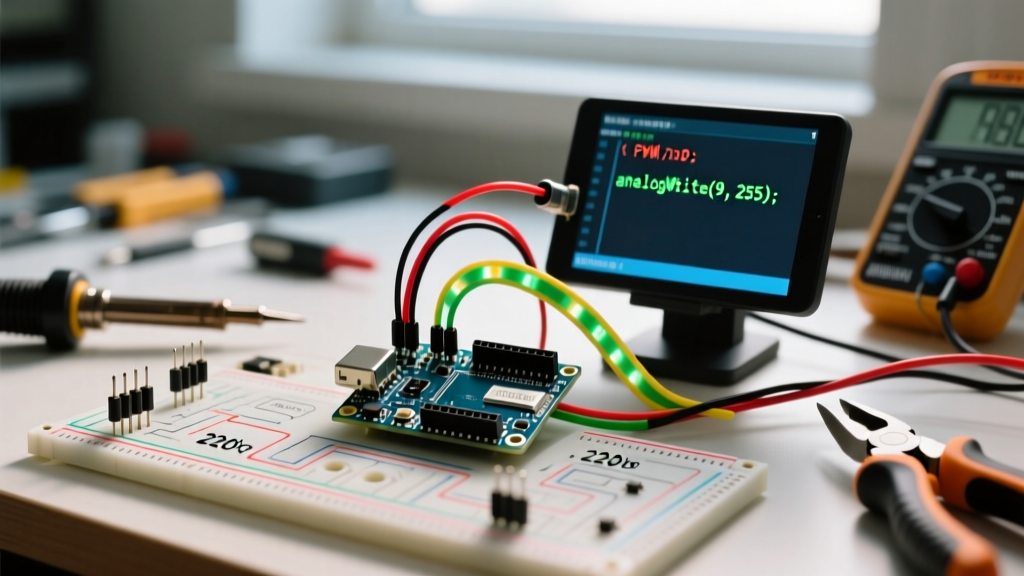
If you are still wiring up an MPU6050 for precision arduino motion tracking, it is time to upgrade. The maker community has largely moved past raw, unfiltered 6-axis accelerometers and gyroscopes. In 2026, the gold standard for hobbyist and prosumer motion capture relies on dedicated sensor-fusion coprocessors, optical flow sensors, and Ultra-Wideband (UWB) spatial anchors. Whether you are building a VR haptic glove, an autonomous warehouse rover, or a stabilized camera gimbal, selecting the right hardware and leveraging community-driven firmware is the difference between a jittery prototype and a production-ready device.
This community resource roundup breaks down the most reliable sensors available today, highlights the best open-source libraries, and details the real-world failure modes that rarely make it into official datasheets.
The Hardware Matrix: IMUs vs. Optical vs. UWB
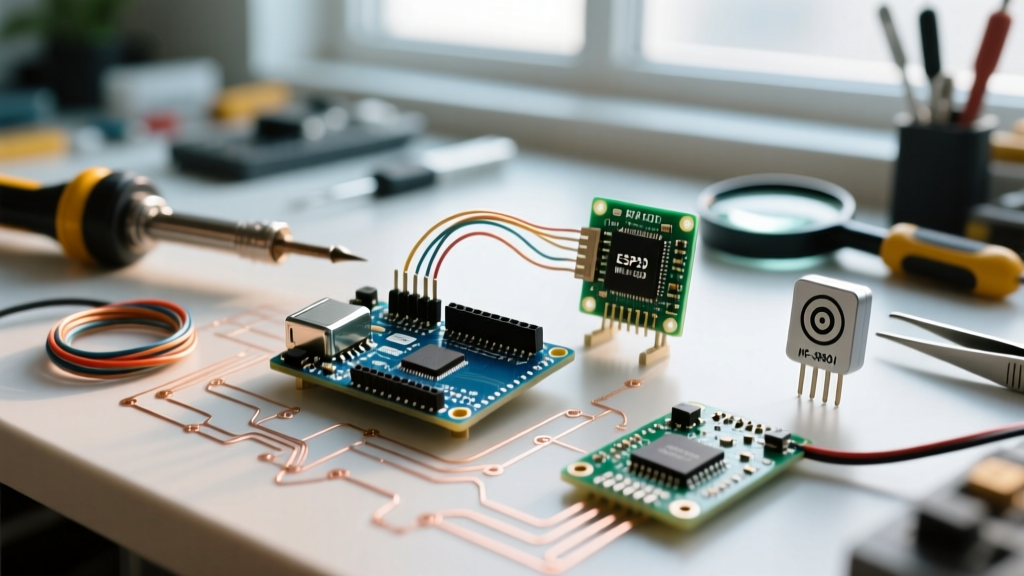
Before writing a single line of C++, you must match your sensor technology to your physical environment. Below is a comparative matrix of the top community-endorsed motion tracking modules available in 2026.
| Sensor Module | Technology | Interface | Avg. Price (2026) | Drift Profile | Best Use Case |
|---|---|---|---|---|---|
| BNO085 / BNO086 | 9-Axis IMU + SH2 Fusion | SPI / I2C | $19.95 - $24.50 | Ultra-Low (Coprocessor) | VR/AR, Wearables, Gimbals |
| ICM-42688-P | 6-Axis High-Perf IMU | SPI / I2C | $14.00 - $18.00 | Low (Requires MCU Fusion) | High-speed drones, robotics |
| PMW3901 | Optical Flow | SPI | $12.50 - $15.00 | Zero (Surface dependent) | Indoor rovers, mouse tracking |
| DW3000 / QM33120 | Ultra-Wideband (UWB) | SPI | $22.00 - $35.00 | N/A (Absolute Position) | Room-scale indoor positioning |
Top Community-Driven Libraries & Firmware
1. BNO086 Sensor Fusion (CEVA SH2 Architecture)
The BNO085 and its newer sibling, the BNO086, remain the undisputed champions of community arduino motion tracking. Unlike raw IMUs that force your microcontroller to run complex Kalman filters, the BNO series uses an internal CEVA DSP to output ready-to-use quaternions. The Adafruit BNO08x library is the community standard, but advanced users in 2026 are increasingly using the native SH2 SHTP protocol over SPI to achieve 400Hz sampling rates without I2C bus bottlenecks.
2. PMW3901 Optical Flow for Dead Reckoning
Originally designed for high-end gaming mice, the PMW3901 tracks X and Y surface deltas with astonishing precision. It is heavily utilized in the Bitcraze Crazyflie drone ecosystem. For Arduino users, the Adafruit PMW3901 breakout paired with the PaulStoffregen-optimized SPI library allows ground-based rovers to track their exact position on a floor without GPS or wheel encoders, completely eliminating wheel-slip errors.
3. UWB Indoor Positioning (DW3000)
For room-scale tracking, UWB measures the Time of Flight (ToF) of radio pulses with centimeter-level accuracy. The community has largely standardized around the Freenove and Makerfabs DW3000 breakout boards. While the official Decawave/Qorvo drivers are dense, the community-maintained dw3000-ng Arduino library provides a simplified API for setting up anchors and tags.
Real-World Failure Modes & Calibration Edge Cases
Datasheets assume perfect conditions. Real-world maker environments are electrically noisy and mechanically flawed. Here is how the community solves the most common motion tracking failures.
The I2C Capacitance Trap
The BNO086 and ICM-42688 support I2C, but high-speed sensor fusion generates massive data packets. If your I2C traces exceed 10cm, or you have multiple devices on the bus, parasitic capacitance will cause packet drops and hard I2C lockups.
- The Fix: Abandon I2C for high-speed tracking. Use SPI with hardware chip-select pins.
- If I2C is mandatory: Drop the bus speed to 100kHz and use 2.2kΩ pull-up resistors to VCC (3.3V) instead of the standard 4.7kΩ to sharpen the signal rise times.
Magnetic Hard and Soft Iron Interference
Any IMU relying on a magnetometer for absolute yaw (heading) will fail if mounted near motors, battery packs, or copper ground planes. Hard iron interference shifts the magnetic origin; soft iron distortion warps the spherical magnetic field into an ellipse.
Expert Tip: Never rely on the default boot-time calibration for wearable projects. Implement a runtime 'figure-8' calibration routine in your sketch that updates the sensor's magnetic offset registers dynamically, and store those offsets in the Arduino's EEPROM or an external I2C FRAM chip so the calibration survives power cycles.
Interrupt Service Routine (ISR) Jitter
Optical flow and high-end IMUs use a hardware interrupt pin (INT) to signal that new data is ready. If your Arduino sketch uses blocking code (like delay() or heavy Serial.print() loops), you will miss interrupts, leading to catastrophic position drift.
- Attach the interrupt using
attachInterrupt(digitalPinToInterrupt(INT_PIN), readSensor, FALLING); - Keep the ISR strictly under 5 microseconds. Only set a
volatile boolean dataReady = true;flag inside the ISR. - Process the heavy SPI data reading and quaternion math in the main
loop()triggered by that flag.
Featured Community Builds of 2026
To inspire your next project, here are two highly replicated community builds that showcase the power of modern motion tracking hardware.
Build A: The Haptic VR Glove
Hardware: Arduino Nano 33 BLE Sense Rev2, BNO086, 5x conductive polymer flex sensors, DRV2605L haptic motor driver.
Concept: The Nano 33 BLE handles the Bluetooth Low Energy (BLE) transmission to a PC, while the BNO086 offloads the 9-axis fusion. The community discovered that mounting the BNO086 on the back of the hand (rather than individual fingers) provides a stable root-node quaternion, which is then mathematically offset by the flex sensor voltages to calculate individual finger curl. Total BOM cost: ~$65.
Build B: Dead-Reckoning Warehouse Rover
Hardware: Teensy 4.1, PMW3901 Optical Flow, BNO086, NEMA 17 steppers.
Concept: GPS is useless indoors, and wheel encoders fail on slippery warehouse floors. This build points the PMW3901 at the floor (exactly 80mm above the surface, as per the optical flow focal length requirements). The Teensy fuses the optical X/Y deltas with the BNO086's yaw data to create a perfectly accurate 2D dead-reckoning map. Total BOM cost: ~$85.
Sourcing & Budgeting Your Build
When sourcing components for arduino motion tracking in 2026, beware of ultra-cheap clones on marketplaces like AliExpress. Counterfeit MPU6050 and BNO055 chips often lack the internal MEMS calibration data stored in the ROM, resulting in unusable noise floors. For mission-critical or highly precise hobby projects, source your sensor breakouts from authorized distributors like DigiKey, Mouser, or direct from established maker brands like Adafruit, SparkFun, and Pololu. Expect to pay a $5 to $10 premium for a breakout board with proper 3.3V LDO regulation and level-shifted SPI/I2C lines, which will save you hours of debugging fried logic pins.
Final Thoughts
The era of writing your own complementary filters from scratch is over. By leveraging dedicated sensor-fusion ICs and optical flow modules, the Arduino community has unlocked commercial-grade motion tracking on a hobbyist budget. Choose the right sensor for your environment, respect the physics of SPI bus routing, and let the onboard coprocessors handle the heavy math.