
The Anatomy of an Arduino Board Type
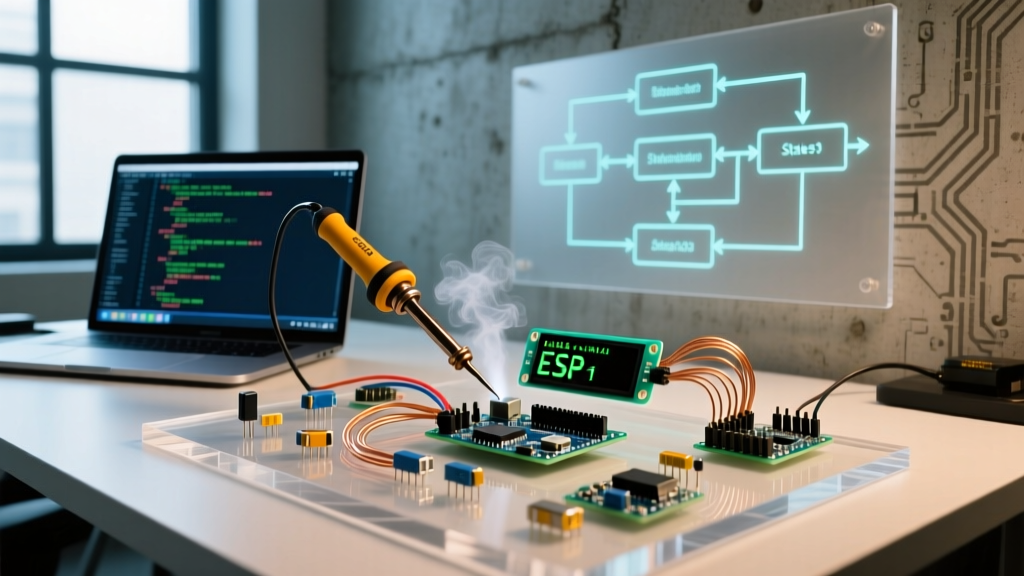
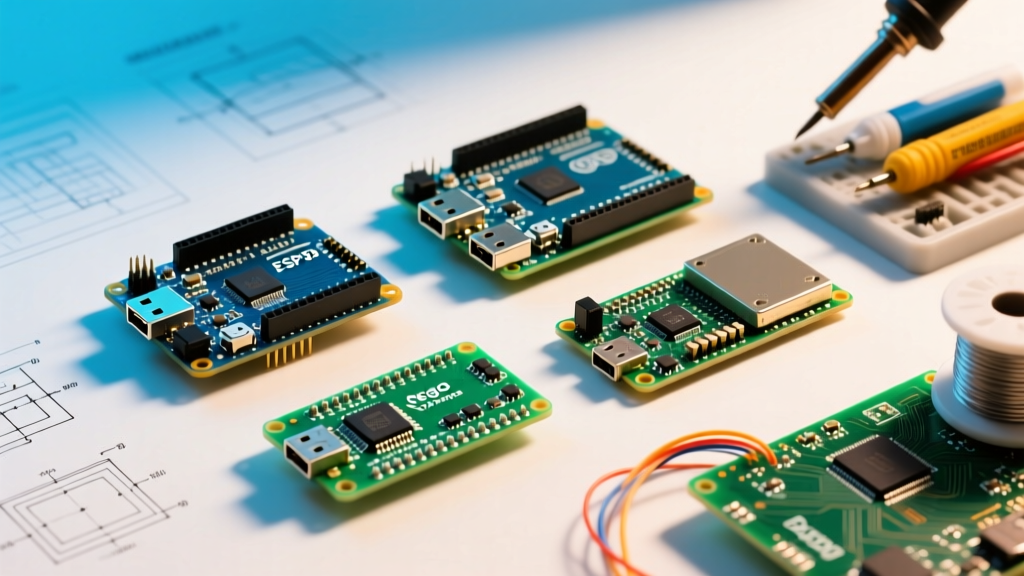
Selecting the correct Arduino board type is no longer just about grabbing the classic Uno and hoping for the best. As of 2026, the Arduino ecosystem has expanded into a highly specialized matrix of microcontrollers, system-on-modules (SoMs), and wireless IoT nodes. An 'Arduino board type' is defined by four core pillars: the underlying silicon architecture (AVR, ARM Cortex, ESP32, or RISC-V), the physical form factor (Uno, Nano, Mega, MKR, or Portenta), the operating logic voltage (5V vs. 3.3V), and the peripheral interface density.
Understanding these pillars is critical. A board designed for rapid breadboard prototyping will fail in a high-vibration industrial environment, and a board optimized for edge AI will drain a coin-cell battery in hours. This guide deconstructs the modern Arduino lineup, providing a concrete framework to match your project's electrical and computational requirements to the exact hardware needed.
The Great Logic Shift: 5V vs. 3.3V
The most common hardware destruction vector for modern makers is ignoring the logic level shift. Historically, the standard Arduino board type operated at 5V logic, driven by the ATmega328P. Today, the industry standard has decisively shifted to 3.3V to accommodate higher clock speeds, advanced ARM cores, and native USB peripherals.
According to the SparkFun Logic Levels Tutorial, feeding a 5V signal into a 3.3V-tolerant GPIO pin without a level shifter will permanently degrade or destroy the silicon. While the newer Uno R4 series maintains 5V tolerance for legacy shield compatibility, boards like the Nano ESP32 and the entire MKR/Portenta families are strictly 3.3V. Always verify the logic level of your sensors—particularly older ultrasonic rangefinders and 5V I2C LCD displays—before wiring them to modern 3.3V architectures.
2026 Arduino Board Type Comparison Matrix
The table below outlines the specifications and current market pricing for the most relevant board families in 2026. Note that prices reflect official MSRP and may fluctuate based on global silicon supply chains.
| Board Model | Core Architecture | Clock Speed | Flash / SRAM | Logic Level | Approx. Price (USD) |
|---|---|---|---|---|---|
| Uno R4 WiFi | Renesas RA4M1 (ARM Cortex-M4) + ESP32-S3 | 48 MHz | 256 KB / 32 KB | 5V (Tolerant) | $27.50 |
| Nano ESP32 | ESP32-S3 (Dual-core Xtensa LX7) | 240 MHz | 8 MB / 512 KB | 3.3V | $21.00 |
| Mega 2560 Rev3 | ATmega2560 (8-bit AVR) | 16 MHz | 256 KB / 8 KB | 5V | $49.00 |
| Portenta H7 | STM32H747XI (Dual-core M7 + M4) | 480 MHz / 240 MHz | 2 MB / 1 MB | 3.3V | $105.00 |
Application-Specific Selection Framework
1. The Prototyping Standard: Uno R4 Series
For general-purpose prototyping, educational environments, and standard shield integration, the Uno R4 Minima and Uno R4 WiFi are the definitive choices. The Renesas RA4M1 processor offers a massive leap in mathematical capability over the legacy AVR, featuring a 14-bit DAC, an OPAMP, and a 12-bit ADC. The WiFi variant includes an ESP32-S3 co-processor specifically dedicated to handling network stacks, freeing the main Cortex-M4 core for real-time control loops. Choose this board type when you need physical compatibility with decades of legacy Uno shields but require modern processing power and native USB-C connectivity.
2. High-Density I/O & Robotics: Mega 2560
Despite its aging 8-bit AVR architecture, the Mega 2560 remains entirely relevant in 2026 for one specific reason: sheer I/O volume. With 54 digital I/O pins (15 PWM capable) and 16 analog inputs, it is the backbone of the DIY CNC and 3D printing community. If you are building a robotic arm requiring 12 separate servo signals, multiple limit switches, and dual extruder thermistors, the Mega 2560 eliminates the need for complex I2C multiplexers. Furthermore, its massive physical footprint provides excellent heat dissipation when paired with high-current motor driver shields like the RAMPS 1.4.
3. IoT & Space-Constrained: Nano ESP32
When physical footprint and wireless connectivity are paramount, the Nano ESP32 is the superior Arduino board type. Built around the ESP32-S3, it supports WiFi 4 and Bluetooth 5 natively, making it ideal for battery-powered sensor nodes, smart home actuators, and wearable tech. The dual-core 240 MHz architecture allows one core to handle deep-sleep power management and sensor polling while the other manages the TLS-encrypted MQTT network stack. Be aware that its strict 3.3V logic requires careful peripheral selection, and its deep-sleep current draw (around 10µA) necessitates proper LiPo battery management circuitry for long-term deployment.
4. Industrial Edge Computing: Portenta H7
The Portenta H7 bridges the gap between hobbyist microcontrollers and industrial PLCs. As detailed in the STMicroelectronics STM32H7 documentation, the dual-core architecture allows developers to run real-time motor control on the Cortex-M4 while executing high-level machine learning inference or computer vision tasks on the Cortex-M7. It features high-density connectors that expose MIPI camera interfaces, SDIO, and even PCIe via carrier boards. This is the board type for commercial product development, predictive maintenance sensors, and edge AI applications where an SBC like a Raspberry Pi would be too fragile or power-hungry.
Power Delivery and Thermal Limits
A frequently overlooked aspect of selecting an Arduino board type is the onboard voltage regulator's thermal envelope. The linear regulators found on legacy boards (and the Mega 2560) must dissipate excess voltage as heat. If you supply 12V to the VIN pin and draw 500mA from the 5V rail, the regulator must dissipate roughly 3.5 Watts of heat. Without a heatsink, the internal thermal shutdown will trigger within minutes, causing erratic brownout resets.
Modern board types like the Uno R4 and Nano ESP32 utilize highly efficient switching buck converters. These can step down higher input voltages (up to 21V on the Uno R4) with minimal thermal loss, allowing you to safely power the board from a 12V or 24V industrial supply while pulling higher currents for external sensors. Always consult the Arduino Hardware Documentation for the specific power tree schematic of your chosen board before designing custom power delivery networks.
Critical Failure Modes to Avoid
Even with the correct board type, specific wiring mistakes will brick your hardware. Keep these edge cases in mind:
- USB Backfeeding via VIN: Supplying power to the VIN pin while simultaneously connected to a USB host can cause current to flow backward through the onboard reverse-polarity protection diode. Over time, this degrades the diode, leading to permanent USB port failure.
- I2C Pull-Up Voltage Mismatches: If you connect a 5V I2C sensor module (which has hardcoded 5V pull-up resistors) to a 3.3V Nano ESP32, the 5V will backfeed into the ESP32's SDA/SCL pins, potentially damaging the SoC. Always use a bidirectional logic level converter for mixed-voltage I2C buses.
- Servo Brownouts: Never power high-torque servos directly from the board's 5V pin. The initial stall current of a standard SG90 servo can exceed 700mA, instantly tripping the USB host's overcurrent protection or dropping the MCU's core voltage low enough to corrupt the EEPROM.
Expert Insight: The 'best' Arduino board type is rarely the most powerful one. It is the one whose logic levels, power envelope, and physical footprint align perfectly with your peripheral ecosystem. Over-specifying your MCU leads to unnecessary BOM costs, complex power management, and steeper debugging curves.
Summary
Navigating the modern Arduino ecosystem requires looking past the brand name and analyzing the silicon. By evaluating your project's I/O density, wireless requirements, logic voltage constraints, and thermal environment, you can confidently select the exact Arduino board type that guarantees reliability and performance. Whether you are flashing a simple LED on an Uno R4 or deploying a fleet of Portenta H7 edge-computing nodes, matching the hardware to the physics of your application is the first step toward a successful build.