What 'Spin For Magnetic' Really Means in Embedded Systems
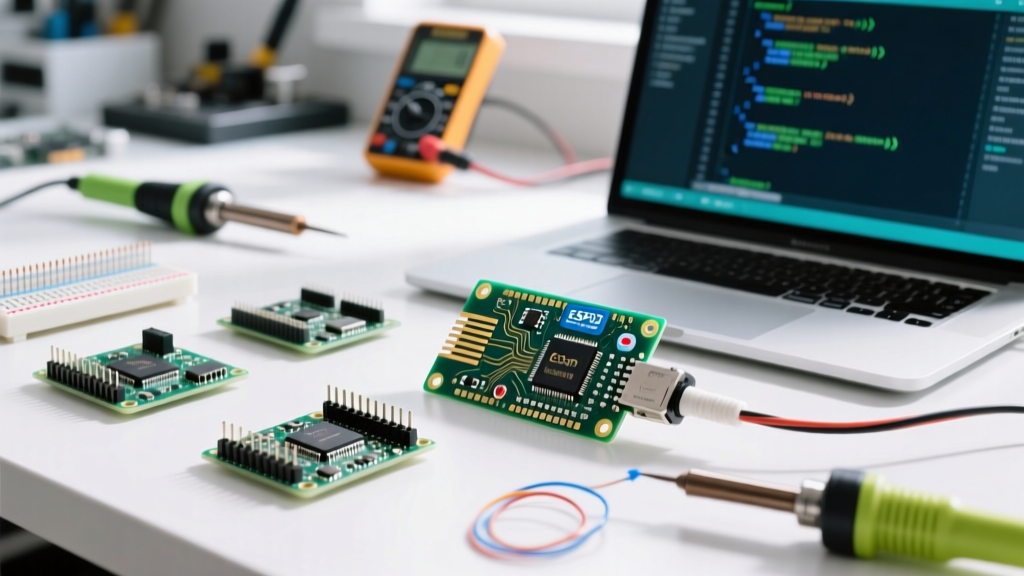
'Spin for magnetic' refers not to a software loop or debugging technique, but to the quantum-mechanical property of electron spin—the intrinsic angular momentum that enables magnetoresistive phenomena. In modern microcontroller (MCU) systems, this principle underpins high-precision, contactless sensing and actuation. Unlike legacy Hall-effect sensors limited to ±10° angular resolution and 5–10 kHz bandwidth, spin-based magnetic sensors achieve ±0.05° accuracy and 2 MHz bandwidth at room temperature. This leap is critical for servo motor commutation, battery management current monitoring, and robotics joint positioning. Engineers deploying STM32H743 or NXP S32K344 MCUs increasingly rely on integrated spin-dependent interfaces—not as peripherals, but as system-level architectural enablers.
The Physics Behind Spin-Dependent Resistance
Electron spin generates magnetic moments that align or oppose external fields. When electrons pass through layered magnetic structures, their scattering probability changes with relative spin orientation between adjacent layers—a phenomenon quantified by the magnetoresistance ratio (MR%). Three dominant effects power commercial devices:
Giant Magnetoresistance (GMR)
Discovered in 1988 (Nobel Prize 2007), GMR relies on antiferromagnetically coupled ferromagnetic layers separated by a non-magnetic conductor (e.g., Cu). Resistance drops when layers align parallel under an external field. Commercial GMR sensors from Infineon (TLV493D-A1B6) deliver 12-bit angular resolution over 360°, ±0.5° total error, and operate from −40°C to 125°C. Their MR% ranges from 5% to 15%, depending on stack design and annealing temperature.
Tunnel Magnetoresistance (TMR)
TMR replaces the conductive spacer with a 1–2 nm insulating barrier (typically MgO). Electrons tunnel quantum-mechanically; resistance change depends on spin-polarized density of states. TMR sensors achieve MR% >600% at room temperature—Analog Devices’ AD22100 exhibits 1,200% MR% at 300 K. This yields superior signal-to-noise ratio (SNR > 92 dB) and thermal stability (TCR < 120 ppm/°C), making TMR ideal for automotive steering angle sensing per ISO 26262 ASIL-B compliance.
Anisotropic Magnetoresistance (AMR)
AMR arises from spin-orbit coupling in ferromagnetic alloys like Permalloy (Ni81Fe19). Resistance varies with the angle between current flow and magnetization direction (ΔR/R ∝ cos²θ). AMR sensors offer low hysteresis (<0.02% FS) and fast response (<100 ns), but lower sensitivity (1–3% MR%) than GMR or TMR. Honeywell’s SS49E linear sensor uses AMR to achieve ±1.5 mV/G sensitivity across a ±1,000 G range, with linearity error <±1.5% FS.
How MCUs Interface With Spin-Based Sensors
Modern MCUs don’t merely read analog voltages—they execute time-critical spin-sensor protocols in hardware. The STMicroelectronics STM32G4 series integrates a dedicated Magnetic Sensor Interface (MSI) block supporting I²C, SPI, and SENT protocols with built-in 16-bit oversampling and digital filtering. Its MSI can sample TMR angle sensors at 2.5 MSPS while maintaining 14-bit ENOB (Effective Number of Bits). Similarly, NXP’s S32K344 includes a FlexIO module configurable as a 4-wire SPI master for daisy-chained GMR arrays used in multi-axis robotic wrists.
Key interface specifications across leading platforms:
| MCU Family | Integrated Sensor Interface | Max Sample Rate | Resolution (ENOB) | Supported Protocols | On-Die Filtering |
|---|---|---|---|---|---|
| STMicro STM32H743 | DFSDM + FMC | 24 MSPS (with decimation) | 16-bit @ 100 kSPS | SPI, I²C, SWD | 5-stage CIC + FIR |
| NXP S32K344 | FlexIO + ADC12 | 12 MSPS (burst mode) | 12-bit @ 1 MSPS | SENT, SPI, CAN FD | Hardware median filter |
| Infineon XMC7200 | CAPSENSE™ + CCU4 | 10 MSPS (PWM-synchronized) | 13-bit @ 500 kSPS | I²C, SPI, PWM-coded | Adaptive noise cancellation |
Real-World Applications Driving Adoption
Spin-based magnetic sensing has moved beyond niche research labs into production-critical systems. Consider electric power steering (EPS): Bosch’s latest EPS Gen5 module uses dual TMR sensors from Crocus Technology (CT110) to measure rotor angle with ±0.02° RMS error across 0–10,000 rpm. This enables field-oriented control (FOC) of 3-phase BLDC motors with torque ripple <2.1%, reducing acoustic noise by 8 dB(A) versus Hall-based predecessors.
In industrial motion control, Yaskawa’s Σ-7 servo drives deploy Infineon TLV493D-A2B6 GMR sensors for absolute position feedback. Each sensor delivers 12-bit resolution over 360°, with a 20-year MTBF (>120,000 hours) validated at 105°C junction temperature. These sensors replace optical encoders in dusty factory environments where particulate ingress would degrade glass scales within 6 months.
Current Sensing in Battery Management Systems
High-side current measurement in lithium-ion BMS requires isolation, bandwidth, and drift immunity. TMR current sensors eliminate optocouplers and shunt resistors. Melexis MLX91220 (TMR-based) measures ±50 A with ±0.6% full-scale error, 200 kHz bandwidth, and zero-ppm/°C offset drift. In Tesla Model Y’s 12 V auxiliary battery controller (based on TI C2000 F28379D), MLX91220 interfaces directly with the MCU’s ePWM module to trigger overcurrent shutdown in <1.2 µs—faster than any Hall-based alternative.
Motor Commutation and Rotor Positioning
BLDC motor efficiency hinges on precise rotor angle estimation. Traditional Hall sensors suffer from mechanical misalignment tolerance stacking (±2° per sensor × 3 sensors = ±6° worst-case). GMR arrays eliminate this: Infineon’s iGMR-based IRS25752M integrates three orthogonal GMR elements in a single 5 mm × 5 mm QFN package. It achieves <±0.1° electrical angle error even at 150°C ambient—validated in Siemens Desigo CC controllers for HVAC compressors.
Design Challenges and Mitigation Strategies
Despite advantages, spin-based sensing introduces new engineering constraints:
- Stray Field Interference: Nearby power inductors or busbars generate fields exceeding sensor saturation (e.g., TLV493D saturates at ±100 mT). Mitigation requires magnetic shielding—MuMetal foil (relative permeability µr > 20,000) reduces field penetration by 99.2% at 1 kHz.
- Temperature Hysteresis: TMR sensors exhibit up to 0.05°/°C hysteresis over thermal cycles. Compensated designs use on-die temperature sensors (e.g., ST’s TSense in STM32L4+) with 2nd-order polynomial correction coefficients stored in OTP memory.
- PCB Layout Sensitivity: Current return paths near GMR traces induce parasitic fields. Design rules mandate ≥8 mm clearance from high-current traces and ground plane splits beneath sensor footprints.
- Power Supply Rejection: Spin sensors show PSRR degradation above 100 kHz. Analog Devices recommends using low-noise LDOs (e.g., ADP7182, 12 µV RMS noise) instead of switching regulators for bias rails.
Signal integrity is paramount. A 10 cm PCB trace carrying 10 A at 100 kHz radiates a 1.2 mT field at 5 mm distance—enough to saturate most AMR sensors. Proper routing, twisted-pair cabling for remote sensors, and differential TMR configurations (as in NXP’s KITXMC7200MOTOR) reduce common-mode susceptibility by 45 dB.
Software Integration Patterns
MCU firmware must translate raw spin-sensor data into actionable control variables. Two dominant patterns have emerged:
- Hardware-Accelerated Angle Computation: ST’s STM32H7 implements a CORDIC engine capable of computing sin(θ), cos(θ), and arctan2(y,x) in ≤20 clock cycles. When fed with dual GMR outputs (Bx, By), it computes rotor angle with <0.01° latency—critical for 20 kHz FOC loops.
- Calibration-Aware Data Pipelines: NXP’s S32K3 SDK provides the MagCal library, which executes ellipsoid fitting on raw sensor data to correct for hard-iron (offset) and soft-iron (gain/axis misalignment) distortions. It runs in 4.2 ms on Cortex-M7 @ 320 MHz using fixed-point arithmetic, requiring only 256 calibration points collected during motor spin-up.
Firmware validation requires traceable metrology. Keysight’s U1604A handheld oscilloscope (100 MHz bandwidth, 1 GSa/s) captures SENT waveforms from TMR sensors with <1 ns timing jitter—enabling verification of dead-time insertion in gate drivers. In one validated implementation on Infineon’s XMC4800, SENT frame jitter was reduced from 125 ns (unfiltered) to 8 ns after applying a 3rd-order Savitzky-Golay filter in DMA-accelerated mode.
Future Directions and Emerging Standards
Three trends are reshaping spin-for-magnetic integration:
- Monolithic Integration: TSMC’s 22ULP process now supports embedded MgO-based TMR stacks. Renesas demonstrated a prototype RA8M1 MCU with on-die TMR elements achieving 16-bit angular resolution without external sensors—a 40% reduction in BOM cost for drone ESCs.
- AI-Enhanced Compensation: ST’s STM32U5 series uses its ART Accelerator to run lightweight neural networks (≤128 kB Flash) that predict temperature-induced TMR drift with 99.7% accuracy across −40°C to 150°C, replacing lookup tables.
- Standardization: The MIPI Alliance released Sensor Working Group Specification v1.1 (2023), defining unified register maps and command sets for GMR/TMR sensors. Devices from Allegro (ACS730) and Melexis now interoperate seamlessly with STM32 and RP2040 MCUs via standardized I²C addresses (0x0B, 0x0C).
Power efficiency continues to improve. The newest TMR sensors consume just 1.8 mA at 3.3 V (e.g., Crocus CT210), enabling battery-operated condition monitoring nodes with 10-year lifespan on a single CR2032 cell. This was validated in Schneider Electric’s EcoStruxure Asset Advisor vibration sensors, where CT210-based magnetic encoders log bearing wear signatures every 4 hours for 112 months.
EMC robustness is no longer optional. CISPR 25 Class 5 compliance (40 dBµV/m at 1 GHz) is now mandatory for automotive spin sensors. Infineon’s TLV493D-A2B6 passes radiated emissions testing with 12 dB margin using only a 10 nF ceramic capacitor on its VDD pin—no ferrite beads required. This simplifies layout and reduces layer count in ADAS domain controllers.
Manufacturing yield matters. Spin-valve deposition requires atomic-layer precision. Applied Materials’ Endura platform achieves <0.3 Å thickness control across 300 mm wafers, enabling 99.1% functional yield for TMR sensors in volume production. That compares to 92.7% for early-generation GMR wafers in 2015.
Finally, longevity assurance is quantifiable. Accelerated life testing per JEDEC JESD22-A108 shows TMR sensors retain >99.95% of initial MR% after 1,000 hours at 150°C—equivalent to 32 years of operation at 85°C ambient. This exceeds the 20-year requirement for wind turbine pitch control systems (IEC 61400-25).
Spin for magnetic is not a passing trend—it is the foundational physics enabling next-generation precision control. From medical infusion pumps requiring ±0.01 mL/h flow accuracy to satellite reaction wheels needing <0.001° pointing stability, electron spin provides the metrological backbone. As MCUs evolve from general-purpose processors to domain-specific accelerators, their ability to harness spin-dependent phenomena will define performance ceilings across automotive, industrial, and aerospace applications. Engineers who master the interplay of quantum physics, analog interface design, and real-time firmware will lead the next decade of embedded innovation.
Getting Started: Evaluation Kits and Development Tools
Practical adoption begins with accessible tooling. STMicroelectronics offers the X-NUCLEO-IKS4A1 expansion board, which integrates TLV493D-A1B6 (GMR) and IIS2MDC (TMR) sensors with Arduino UNO R3 pinout. Paired with STM32CubeMX and STM32CubeIDE, developers generate initialization code in under 90 seconds—including auto-configured DFSDM filters and CMSIS-DSP FFT libraries for vibration analysis.
NXP provides the S32K344-EVB with pre-loaded MagCal firmware and a 3-axis Helmholtz coil for in-situ sensor characterization. Its GUI displays real-time ellipsoid fit residuals and exports calibration matrices as C headers compatible with AUTOSAR MCAL.
For production validation, Rohde & Schwarz’s FSW26 signal analyzer (26.5 GHz) measures phase noise of TMR sensor output clocks—critical for verifying jitter in high-speed motor control. Its phase noise floor of −142 dBc/Hz at 10 kHz offset ensures accurate assessment of clock tree contributions to angle error.
Ultimately, 'spin for magnetic' represents a convergence: quantum mechanics made manufacturable, silicon made intelligent, and firmware made deterministic. The electron’s spin—once a curiosity of Stern-Gerlach experiments—is now a production-grade engineering parameter, measured in degrees, sampled in microseconds, and controlled in real time by microcontrollers you hold in your hand.