
The Enduring Legacy of the Arduino Mega 2560
Since its release, the Arduino Mega 2560 has been the undisputed heavyweight champion of I/O density in the maker community. Built around the Microchip ATmega2560-16AU microcontroller, this board was designed for complex projects requiring massive peripheral connectivity, such as 3D printers, CNC routers, and multi-sensor environmental stations. However, as we navigate through 2026, the microcontroller landscape has shifted dramatically. With the rise of dual-core ARM Cortex-M0+ and Xtensa LX6 architectures, does the 16MHz AVR giant still hold its ground?
In this comprehensive board review and comparison, we dissect the hardware architecture, real-world failure modes, and clone market realities of the Arduino Mega 2560. We will also benchmark it against modern powerhouses like the ESP32-S3 and the Raspberry Pi Pico to help you make an informed platform selection for your next build.
Core Hardware Architecture and Specifications
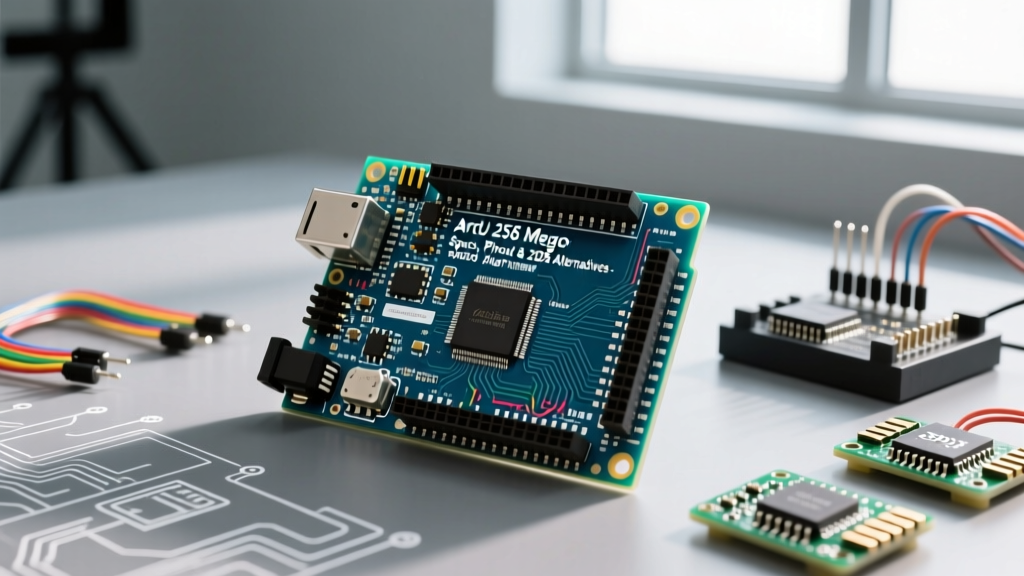
At the heart of the Mega 2560 is the ATmega2560-16AU, an 8-bit AVR microcontroller. Its primary advantage remains sheer physical pin count. The board breaks out 54 digital I/O pins (of which 15 can be used as PWM outputs) and 16 analog inputs. It also features four hardware UARTs (serial ports), a massive advantage for projects requiring simultaneous communication with a GPS module, a cellular modem, and a serial LCD.
According to the official Arduino Mega 2560 documentation, the board operates at 5V logic, which remains a critical compatibility factor for legacy industrial sensors and 5V relay modules that lack optocoupler isolation.
2026 Microcontroller Heavyweight Comparison Matrix
| Feature | Arduino Mega 2560 (Rev3) | ESP32-S3-WROOM-1 | Raspberry Pi Pico (RP2040) |
|---|---|---|---|
| Processor | 8-bit AVR @ 16 MHz | 32-bit Dual-Core Xtensa @ 240 MHz | 32-bit Dual-Core ARM Cortex-M0+ @ 133 MHz |
| Flash Memory | 256 KB | 8 MB (Typical Module) | 2 MB (On-board QSPI) |
| SRAM | 8 KB | 512 KB | 264 KB |
| Digital I/O Pins | 54 | 36 (GPIO) | 26 (Multi-function) |
| Hardware UARTs | 4 | 3 | 2 |
| Native Wireless | None | Wi-Fi 4 & Bluetooth 5 (LE) | None (Pico W has Wi-Fi/BT) |
| Average 2026 Price | $48.00 (Genuine) / $14.50 (Clone) | $7.50 - $12.00 | $4.00 - $6.00 |
Power Delivery and Thermal Failure Modes
One of the most misunderstood aspects of the Mega 2560 is its power delivery system. The board features an NCP1117 linear voltage regulator capable of dropping input voltage from the barrel jack (recommended 7-12V) down to 5V. However, this linear design is highly inefficient for high-draw projects.
Expert Warning: If you supply 12V to the barrel jack and attempt to draw more than 200mA from the 5V pin to power a servo shield or LED matrix, the NCP1117 regulator will enter thermal shutdown. The power dissipation (12V - 5V) * 0.2A = 1.4W is enough to overheat the small SMD package without active cooling.
The Actionable Fix: For projects drawing over 300mA at 5V, bypass the on-board linear regulator entirely. Use an external LM2596 switching buck converter to step down your main power supply to 5.1V, and feed it directly into the 5V pin (bypassing the USB and barrel jack). Additionally, the Mega features a resettable PTC polyfuse on the USB VBUS line, which trips at 500mA to protect your host computer's USB port from short circuits.
The Clone Conundrum: CH340G vs ATmega16U2
Given the $48.00 price tag of a genuine Arduino Mega 2560 Rev3, the market is flooded with $14.50 third-party clones. While the ATmega2560 chip on these clones is often genuine (or highly functional domestic equivalents), the USB-to-Serial converter is where corners are cut.
- Genuine Boards: Use the Microchip ATmega16U2 programmed as a USB-to-serial bridge. This supports native HID capabilities (turning the Mega into a custom keyboard/mouse) and handles high baud rates (up to 2Mbps) flawlessly.
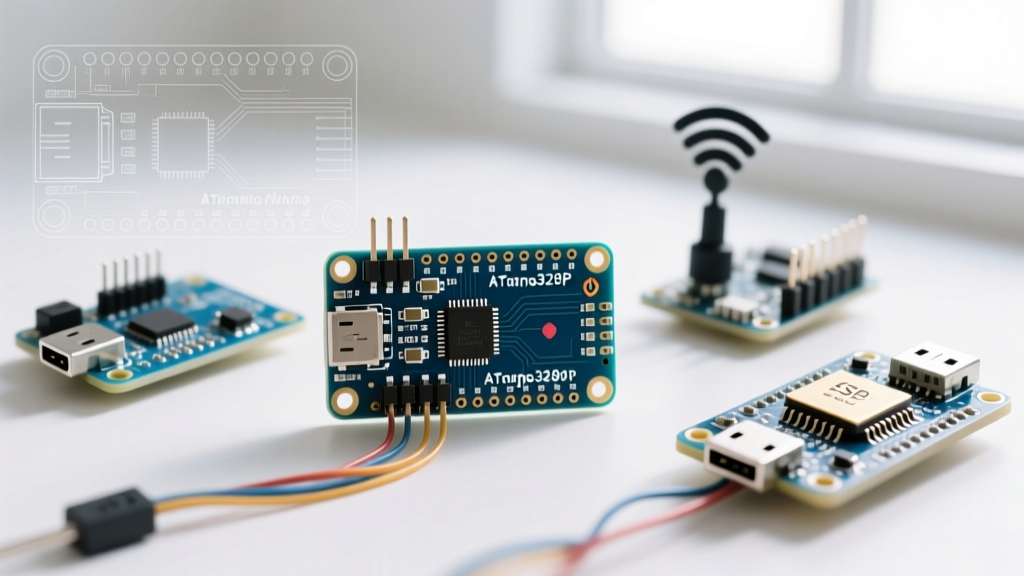
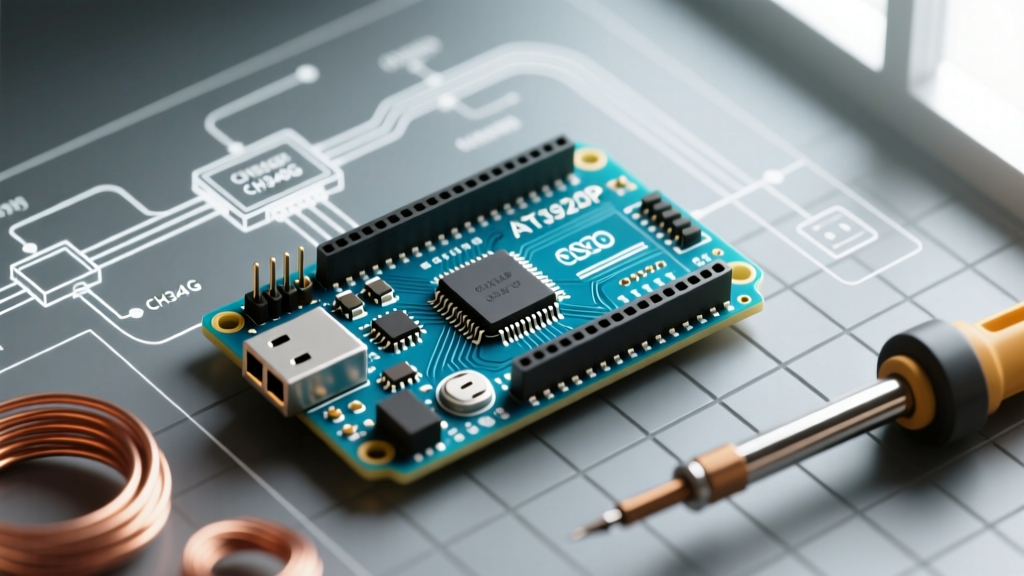
- Clone Boards: Typically utilize the WCH CH340G or CH340C chip. While the CH340C (surface mount) is highly reliable in 2026 and requires no external crystal, the older through-hole CH340G often struggles with baud rates above 115200, leading to corrupted data transfers when flashing large hex files or streaming high-speed sensor telemetry.
If your project relies on native USB HID libraries or high-speed serial data logging, the $33 premium for a genuine board is a mandatory investment.
Interrupt Limitations in Advanced Robotics
A common trap for intermediate developers migrating from the Arduino Uno to the Mega 2560 is the assumption that more pins equal more hardware interrupts. Despite having 54 digital pins, the ATmega2560 only supports six external hardware interrupts (INT0 to INT5), mapped strictly to pins 2, 3, 18, 19, 20, and 21.
If you are building a hexapod robot requiring quadrature encoders on six drive motors, you will quickly exhaust these hardware interrupt pins. While you can use Pin Change Interrupts (PCINT) via libraries like EnableInterrupt, PCINTs share vectors across pin banks, requiring software overhead to determine which specific pin triggered the interrupt. For high-RPM motor encoding where microsecond latency is critical, the ESP32's ability to map GPIO interrupts to almost any pin via its GPIO matrix makes it vastly superior for advanced robotics.
Shield Compatibility and Wiring Quirks
The Mega 2560 maintains physical backward compatibility with standard Arduino Uno shields, utilizing the same 1x10 and 1x8 female headers. However, the hardware schematic reveals a critical divergence in SPI routing.
On the Uno, the SPI bus (MOSI, MISO, SCK, SS) is located on pins 11, 12, 13, and 10. On the Mega 2560, these pins are repurposed for other functions, and the SPI bus is moved to pins 50 (MISO), 51 (MOSI), 52 (SCK), and 53 (SS). To maintain shield compatibility, Arduino duplicated the SPI bus onto the 2x3 ICSP header. If you are designing a custom shield or hardwiring an SD card module, always use the ICSP header pins to ensure cross-platform compatibility.
I2C Pull-Up Resistor Conflicts
Pins 20 (SDA) and 21 (SCL) are dedicated to the I2C bus. When stacking multiple I2C shields (e.g., an RTC module, an OLED display, and an MPU6050 IMU), the cumulative effect of multiple 4.7kΩ pull-up resistors on each board can drag the equivalent resistance down below 1.5kΩ. This overloads the ATmega2560's internal I2C buffer drivers, resulting in corrupted data packets. Always check shield schematics and physically remove redundant pull-up resistors when daisy-chaining more than three I2C devices on a single Mega 2560 bus.
Modern Alternatives: When to Choose ESP32 or Pi Pico
While the Mega 2560 is a legendary workhorse, modern alternatives offer compelling advantages for specific 2026 use cases.
The ESP32-S3 for IoT and Processing Power
If your project requires Wi-Fi, Bluetooth, or heavy mathematical processing (like FFT audio analysis or basic machine learning via TensorFlow Lite), the Espressif ESP32 series is the definitive upgrade. The ESP32-S3 features vector instructions for AI acceleration and dual 240MHz cores. Furthermore, its capacitive touch GPIOs eliminate the need for external touch sensor ICs. The trade-off? The ESP32 operates at 3.3V logic, requiring level shifters (like the TXS0108E) to interface with legacy 5V industrial equipment.
Raspberry Pi Pico for PIO and Budget Constraints
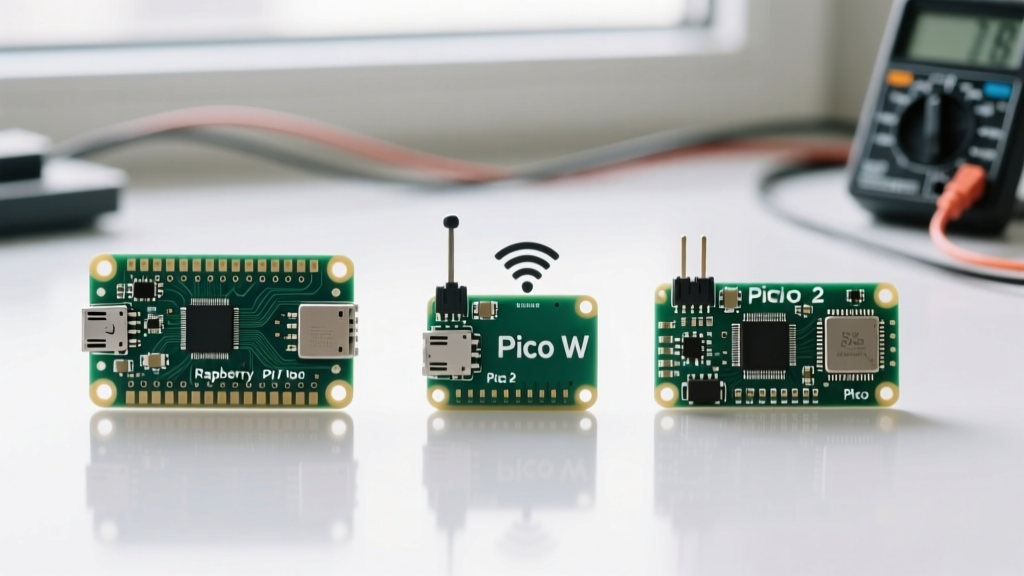
For projects requiring precise, custom timing protocols (like driving WS2812B addressable LEDs without blocking the main CPU loop), the Raspberry Pi Pico's Programmable I/O (PIO) state machines are revolutionary. The RP2040 datasheet details how PIO can emulate hardware interfaces like VGA output or custom serial protocols at the hardware level, a feat impossible on the Mega's AVR architecture. At roughly $4.00, the Pico is also significantly cheaper, though it lacks the Mega's vast array of 5V-tolerant breakout pins.
Final Verdict: Who Should Buy the Mega 2560 Today?
The Arduino Mega 2560 is no longer the default choice for every complex project, but it remains entirely unmatched for 5V legacy integration and rapid prototyping with existing shields. If you are building a RAMPS-based 3D printer, an automated greenhouse relying on 5V solenoid valves, or a flight simulator cockpit requiring dozens of simple push-button inputs, the Mega 2560's 5V tolerance and massive pin count save you from the headache of designing logic-level translation circuits.
However, if your 2026 project involves wireless telemetry, high-speed motor encoders, or audio processing, leave the Mega on the shelf. Opt for the ESP32-S3 for connectivity, or the Raspberry Pi Pico for deterministic timing and budget efficiency. Choose the tool that matches your electrical constraints, not just the one with the most pins.