
The Hidden Engineering Skill: Component Sourcing
In the post-shortage landscape of 2026, the global semiconductor supply chain has largely stabilized. However, for hardware engineers and advanced DIY makers, sourcing parts remains a critical vulnerability. Finding quality electronic components suppliers is not merely a purchasing task; it is a core engineering competency. A poorly vetted Bill of Materials (BOM) can lead to catastrophic field failures, thermal runaway, and endless debugging sessions caused by counterfeit or sub-spec silicon.
This guide maps the skill-building path from hobbyist marketplace reliance to professional-grade supply chain management, teaching you how to vet suppliers, detect counterfeits, and manage component lifecycles.
The Sourcing Skill Tree: From Hobbyist to Pro
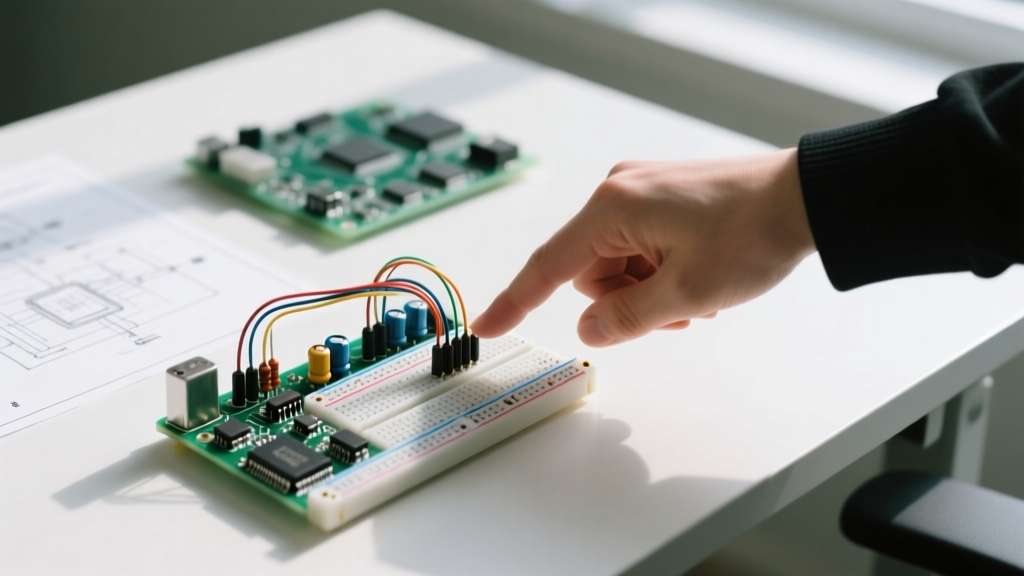
Component sourcing evolves as your projects move from breadboard prototypes to deployed, high-reliability systems. Understanding where you sit on this skill tree is the first step toward optimizing your BOM.
Tier 1: The Hobbyist Trap (Open Marketplaces)
Beginners often default to AliExpress, eBay, or Amazon for components due to low upfront costs and free shipping. While acceptable for blinking LEDs with generic 555 timers, these platforms are riddled with counterfeit ICs. A notorious example is the LM2596 buck converter module. Counterfeit versions often contain a drastically smaller internal silicon die that cannot handle the advertised 3A continuous current, leading to thermal failure at just 1.2A. Relying on open marketplaces for critical microcontrollers or power management ICs is a failure mode waiting to happen.
Tier 2: Authorized Franchised Distributors (The Gold Standard)
The intermediate skill level involves migrating to authorized distributors like Mouser, Digi-Key, Farnell, and Arrow. These suppliers maintain direct, contractual chain-of-custody agreements with original component manufacturers (OCMs). When you buy an STM32F407VGT6 from Digi-Key, you are guaranteed authentic silicon stored in climate-controlled warehouses. The trade-off is higher per-unit pricing and shipping costs (typically $8 to $12 flat-rate for domestic US orders in 2026), but the elimination of fake parts saves hundreds of hours in debugging.
Tier 3: Direct Asian & Specialized Suppliers
Advanced engineers learn to leverage high-volume Asian suppliers like LCSC for passives (Yageo, Uniroyal) and domestic Chinese silicon (Holtek, GigaDevice). LCSC offers genuine components directly from Asian manufacturers at a fraction of Western distributor markups. However, shipping via DHL for small orders can cost $15 to $30, making it viable primarily for batch PCB assembly orders rather than single prototype builds.
Vetting Matrix: Comparing Top Quality Electronic Components Suppliers
Use this comparison matrix to select the right supplier based on your current project phase and risk tolerance.
| Supplier | Tier | Best For | MOQ | Est. Shipping (2026) | Counterfeit Risk |
|---|---|---|---|---|---|
| Digi-Key / Mouser | Authorized | Prototyping, critical ICs, FPGAs | 1 | $8 - $12 (US) | Zero |
| LCSC | Direct/Asian | Passives, connectors, Asian MCUs | 1 | $15 - $30 (Global) | Very Low |
| Arrow / Avnet | Authorized | High-volume production, BOM kitting | Reel | Freight / Net 30 | Zero |
| WIN SOURCE / Broker | Secondary | Obsolete parts, emergency shortages | Varies | $30+ (Express) | High (Requires Vetting) |
Advanced BOM Management: The Pro Skill
Vetting the supplier is only half the battle; vetting the component's lifecycle and storage requirements is what separates senior engineers from the rest.
1. Lifecycle Status and NRND Traps
Before finalizing a PCB layout, always run your BOM through an aggregator like Octopart. Check the lifecycle status of every active component. Designing a new product around an IC marked as NRND (Not Recommended for New Designs) is a critical error. By the time your product reaches manufacturing, the part may be obsolete, forcing a costly PCB respin. Always filter your supplier searches for 'Active' status only.
2. Moisture Sensitivity Levels (MSL) and Baking
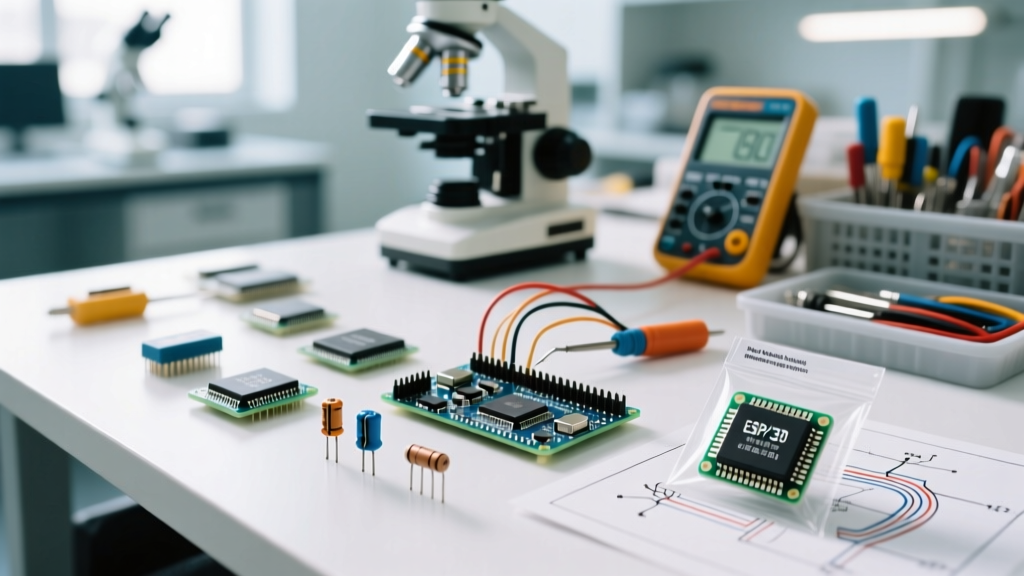
According to the JEDEC J-STD-033 standard, surface-mount components are assigned a Moisture Sensitivity Level (MSL). If you purchase MSL 3 components (like BGA FPGAs or QFN microcontrollers) from a secondary supplier, they must arrive in sealed Moisture Barrier Bags (MBB) with Humidity Indicator Cards (HIC). If a supplier ships MSL 3 parts in standard anti-static bags without dry packs, the internal moisture will cause the 'popcorn effect' (delamination and cracking) during reflow soldering. Rejecting suppliers who ignore MSL packaging is a mandatory quality control step.
The Golden Rule of Sourcing: If a price seems too good to be true on the secondary market, the silicon inside is likely a salvaged, remarked, or entirely different die. Authenticity is never discounted.
Spotting Counterfeits: A Practical Checklist
When you are forced to use secondary market brokers for obsolete parts (e.g., legacy analog-to-digital converters for legacy industrial equipment repair), you must perform physical inspections upon receipt. The University of Maryland CALCE Center and ERAI maintain extensive databases on counterfeit detection. Use this checklist when vetting broker-supplied ICs:
- The Acetone Test: Soak a cotton swab in pure, lab-grade acetone (not cosmetic nail polish remover). Rub the top surface of the IC casing firmly for 10 seconds. If black residue appears on the swab, or if the laser etching smears, the part has been sanded down and remarked to hide its true identity.
- Pin 1 Indicator Inspection: Counterfeiters often sand the top of the IC but forget to replicate the molded indentation or laser-etched dot indicating Pin 1. Compare the indentation depth against a known authentic datasheet diagram.
- Lead Oxidation and Solder Dips: Authentic new components have pristine, matte-finish leads. Counterfeiters frequently pull parts from e-waste, straighten the bent pins, and dip them in fresh solder to make them look new. Inspect the leads under a 10x loupe for scratch marks from pliers or uneven solder meniscus lines.
- Decapsulation (Destructive): For high-stakes batches, sacrifice one unit. Use fuming nitric acid or a laser decapsulation service to expose the silicon die. Check the die markings against the OCM's known database to verify the exact silicon revision.
Building Your Approved Vendor List (AVL)
The ultimate goal of this skill-building path is to establish a strict Approved Vendor List (AVL) for your workshop or engineering firm. Your AVL should categorize suppliers by risk tier. Tier 1 (Authorized) requires no incoming inspection. Tier 2 (Direct Asian) requires visual inspection of packaging and reel barcodes. Tier 3 (Brokers) mandates full SAE AS5553 counterfeit inspection protocols, including X-ray and decapsulation for high-value components.
By treating component sourcing as an engineering discipline rather than an administrative chore, you insulate your projects from the hidden costs of fake parts, ensuring that the schematic on your screen matches the physical reality on your workbench.