
The 2026 Procurement Landscape: Why Buyers Must Become Troubleshooters
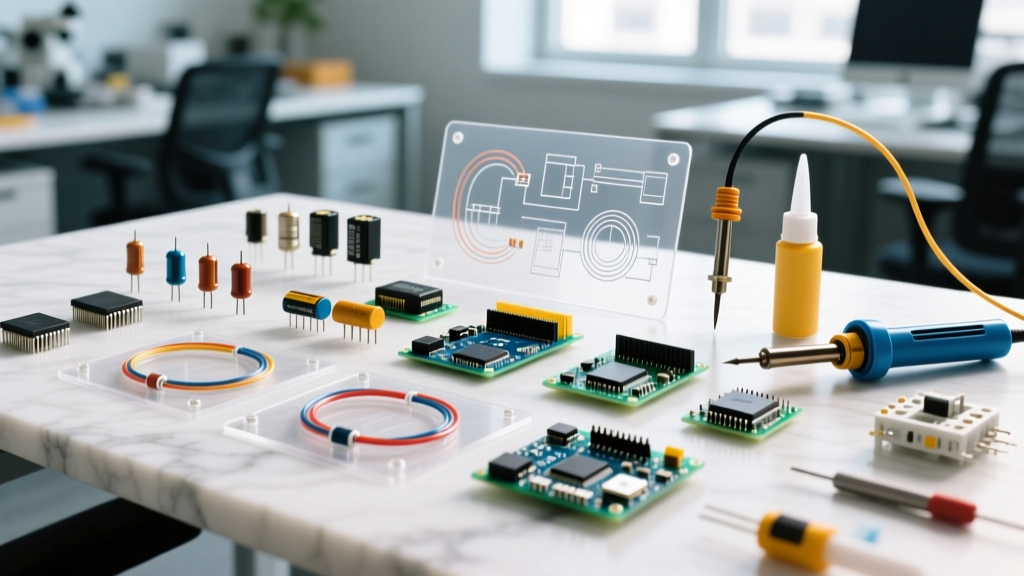
In the modern electronics supply chain, the role of electronic components buyers extends far beyond negotiating lead times and unit pricing. With the persistent volatility of global semiconductor manufacturing and the proliferation of gray-market brokers, procurement professionals are now the first line of defense against counterfeit, refurbished, and out-of-spec components. When a batch of microcontrollers or voltage regulators arrives from an unauthorized distributor, buyers must possess the technical acumen to troubleshoot and authenticate the inventory before it reaches the SMT assembly line.
Troubleshooting suspect components requires a systematic approach, moving from non-destructive visual inspections to rigorous electrical parameter testing, and finally to destructive physical analysis (DPA) if necessary. This guide provides a comprehensive, engineering-grade framework for electronic components buyers to identify, isolate, and resolve defective or fraudulent parts.
2026 Supply Chain Alert: According to data from the Electronic Resellers Association International (ERAI), counterfeit incidents involving remarked microcontrollers and degraded passives remain a critical threat. Furthermore, industry standards like SMTA and IPC emphasize that buyers must implement incoming inspection protocols to mitigate the risk of latent field failures caused by gray-market parts.
Phase 1: Visual and Microscopic Triage
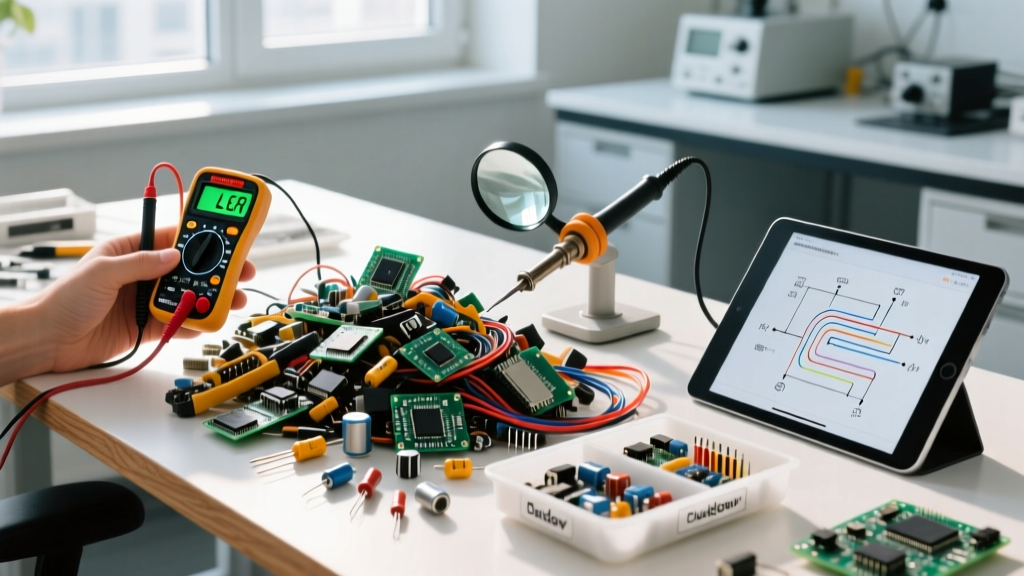
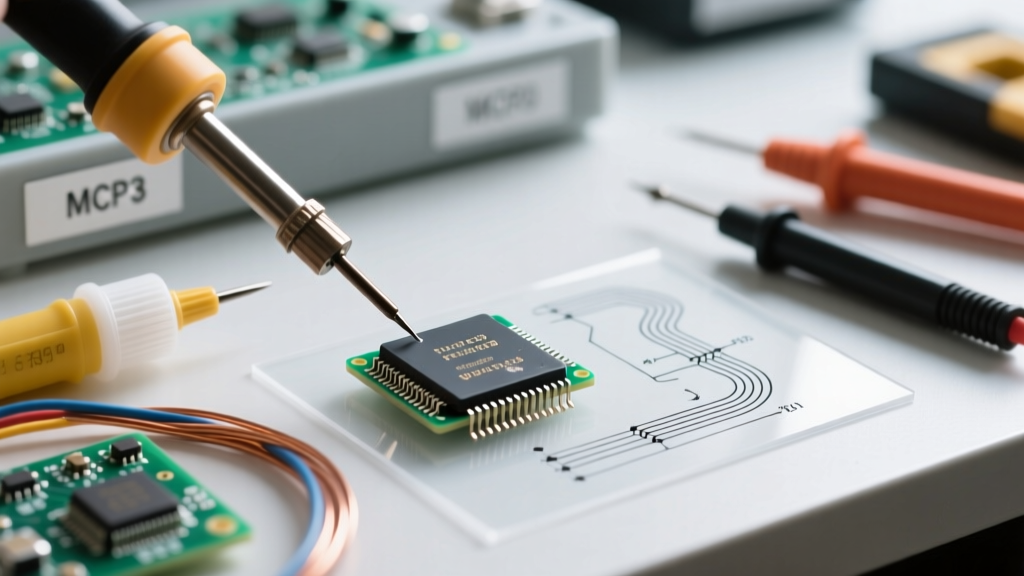
The first step in troubleshooting a suspect batch of components is high-magnification visual inspection. Counterfeiters often use a process called "blacktopping"—sanding down the original epoxy package of a cheaper or older chip and reprinting the markings of a more expensive or in-demand part. Buyers should utilize a digital microscope, such as the Keyence VHX-7000, at 50x to 200x magnification to look for specific anomalies.
- Surface Texture Discrepancies: Authentic IC packages have a specific matte or textured finish. Sanded packages often appear unnaturally smooth or exhibit microscopic, unidirectional scratch patterns under angled lighting.
- Marking Inconsistencies: Genuine manufacturers use precise laser etching or high-grade epoxy ink. Look for variations in font weight, misaligned logos, or ink that sits on top of the package rather than being etched into it. Acetone testing (swabbing the surface with 99% isopropyl alcohol or acetone) can reveal inferior ink that smudges or dissolves.
- Pin Coplanarity and Oxidation: Refurbished parts pulled from old PCBs often show signs of re-tinning. Inspect the leads for solder wicking, uneven coating thickness, or deep oxidation between the pins. Bent or non-coplanar leads indicate the part was previously socketed or wave-soldered.
- Date Code Logic: Cross-reference the manufacturer's date code format. If a batch of TI chips features a date code claiming to be from a week when the specific fabrication plant was undergoing documented maintenance, the parts are likely remarked.
Phase 2: Electrical Parameter Troubleshooting
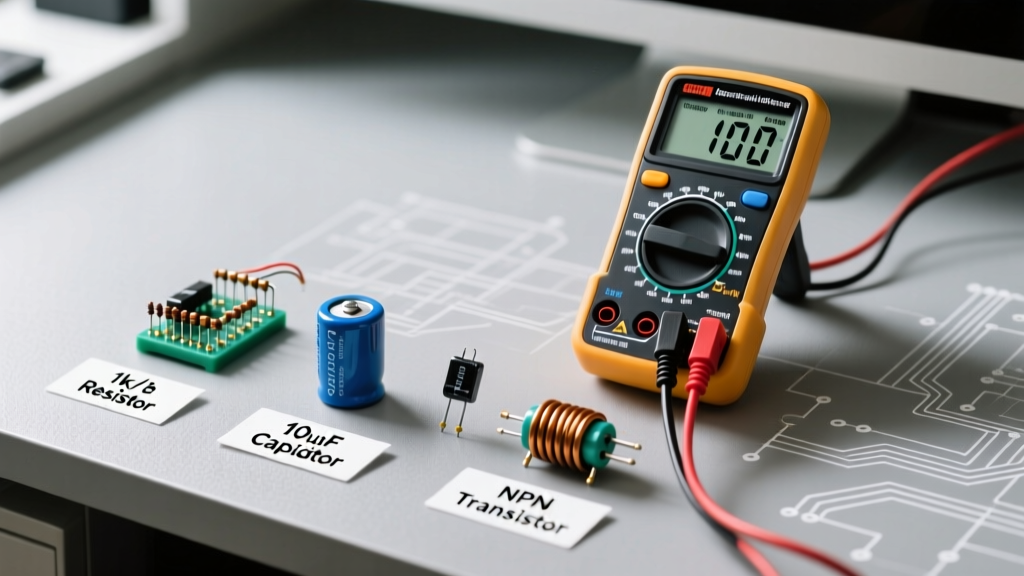
When visual inspection passes but the parts still exhibit anomalous behavior on the test bench, electronic components buyers must escalate to electrical troubleshooting. This involves verifying that the internal silicon die matches the external package specifications. Curve tracers and precision LCR meters are essential tools here.
| Component Type | Common Fake Variant | Failure Symptom in Circuit | Troubleshooting Test & Equipment |
|---|---|---|---|
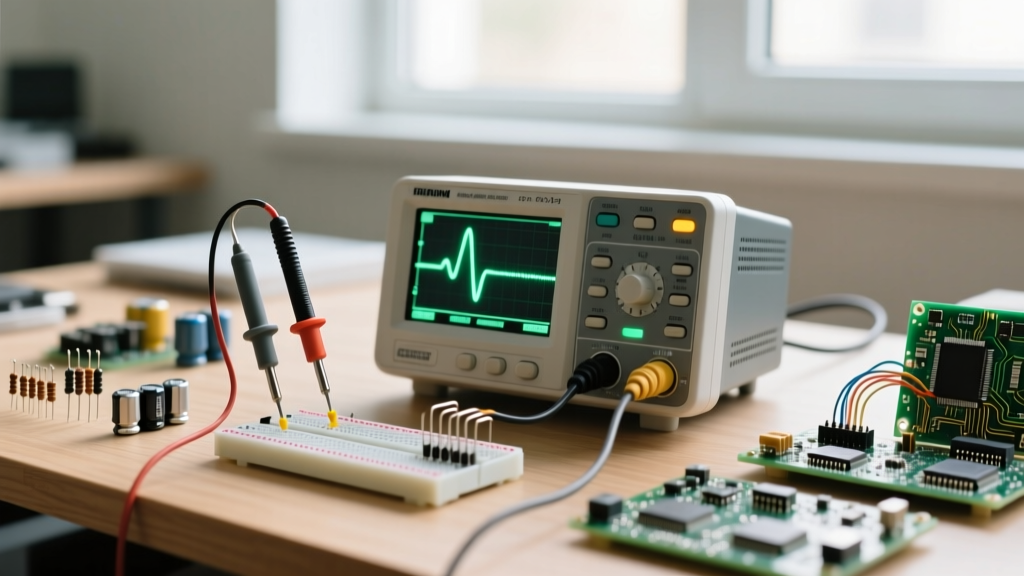
| TI LM2596S Buck Converter | LM2576 relabeled as LM2596 | Overheating, excessive output ripple, requires much larger inductors than designed. | Oscilloscope ripple analysis. LM2596 switches at 150kHz; fake LM2576 switches at 52kHz. |
| STM32F103C8T6 MCU | Lower-flash die or GD32 clone | HardFault exceptions when code execution crosses the 64KB flash boundary. | J-Link debugger to read the DBGMCU_IDCODE register and verify exact silicon revision and flash size. |
| X7R MLCC Capacitors | Y5V dielectric relabeled as X7R | Decoupling failure under load; capacitance drops up to 80% when DC bias is applied. | Precision LCR meter (e.g., Keysight E4980A) performing a capacitance vs. DC bias voltage sweep. |
| Optocouplers (e.g., PC817) | Low CTR (Current Transfer Ratio) bins | Feedback loop instability in isolated SMPS designs; failure to trigger logic gates. | Curve tracer to plot the I-V characteristics of the internal LED and phototransistor against the datasheet CTR bins. |
The Power of Curve Tracing
For discrete semiconductors and basic ICs, a curve tracer is the buyer's most powerful troubleshooting asset. By applying a swept AC voltage to the pins and measuring the current, the tracer generates an I-V (current-voltage) signature. By comparing the signature of a suspect part against a known-good "golden sample" from an authorized franchised distributor, buyers can instantly detect if the internal die structure is different, even if the external laser markings are flawless.
Phase 3: Advanced Destructive and Non-Destructive Testing
When visual and electrical tests yield inconclusive results, or when a high-value batch of FPGAs and ASICs is in question, buyers must authorize advanced laboratory testing. This is particularly common in aerospace, medical, and automotive procurement sectors where a single counterfeit component can result in catastrophic field failures.
X-Ray Fluorescence (XRF) and Radiography
Non-destructive X-ray inspection allows buyers to view the internal structure of the component without breaking the epoxy seal. Inspectors look for:
- Die Size and Paddle Proportions: A counterfeit part may house a physically smaller die than the authentic version, indicating a downgraded silicon revision.
- Wire Bonding Topology: Authentic components feature precise, uniform gold or copper wire bonds. Fakes often exhibit irregular wire loops, missing bonds, or the use of cheaper aluminum wires that are prone to thermal fatigue.
- Lead Frame Architecture: Remarked parts often reuse salvaged lead frames. X-rays can reveal if the internal lead frame geometry matches the manufacturer's official package outline drawings.
Decapsulation (The "Acid Bath")
If X-ray analysis raises red flags, the ultimate troubleshooting step is decapsulation. This involves using fuming nitric acid or sulfuric acid to carefully dissolve the epoxy package, exposing the bare silicon die. Under a metallurgical microscope, buyers can read the manufacturer's proprietary die markings, stepper reticle codes, and copyright years etched directly into the silicon. If a chip marked as a 2025 production run reveals a 2018 copyright etched on the silicon, the buyer has definitive proof of a counterfeit or refurbished pull.
Resolution Framework: RMA and Supplier Auditing
Identifying a defective or counterfeit batch is only half the battle. Electronic components buyers must also troubleshoot the supply chain failure itself. When a batch fails incoming inspection, buyers should immediately quarantine the inventory and initiate a structured resolution process.
- Quarantine and Documentation: Isolate the suspect parts in an ESD-safe environment. Compile a comprehensive dossier including high-res microscope images, electrical test logs, and X-ray scans.
- Confronting the Broker: Present the technical evidence to the supplier. Gray-market brokers often rely on the buyer's lack of technical depth to deny RMA claims. Providing irrefutable data, such as a failed DC bias sweep on MLCCs or an incorrect DBGMCU_IDCODE on an MCU, forces the supplier to accept the return.
- Reporting to Authorities: Submit the findings to industry watchdogs. Reporting the incident to organizations like ERAI helps build a global database of fraudulent part numbers, date codes, and offending supply chain nodes, protecting other buyers from receiving the same compromised inventory.
- Supplier Scorecard Adjustment: Downgrade the supplier's risk rating in your ERP system. Mandate that future purchases from this vendor require third-party testing (such as White Horse Laboratories or WIN SOURCE) prior to shipment.
Frequently Asked Questions
How can buyers troubleshoot components that pass all tests but fail during reflow soldering?
This is a classic symptom of "popcorning" caused by improper moisture storage. If a batch of ICs cracks or delaminates during the 260°C lead-free reflow profile, the parts were likely salvaged from e-waste and stored in high-humidity environments without proper Moisture Barrier Bags (MBBs) and desiccant. Buyers should troubleshoot this by performing a bake test and weighing the components before and after to measure moisture absorption, verifying if the supplier violated IPC/JEDEC J-STD-033 handling standards.
Is it cost-effective for mid-sized EMS companies to invest in in-house troubleshooting equipment?
While a high-end Keyence digital microscope or a Keysight Power Device Analyzer can cost upwards of $40,000, mid-sized EMS providers can achieve 90% of the troubleshooting capability by investing in a $2,500 USB metallurgical microscope, a $500 LCR meter with DC bias capabilities, and a basic curve tracer. For X-ray and decapsulation, it is highly recommended to outsource to specialized independent testing laboratories on a per-batch basis, which typically costs between $300 and $800 per sample lot.
What is the most commonly counterfeited passive component in 2026?
High-capacitance, small-footprint Multilayer Ceramic Capacitors (MLCCs), specifically in the 0402 and 0201 packages, are heavily targeted. Counterfeiters will package cheaper Y5V or Z5U dielectrics inside 0402 housings and laser-mark them as premium X7R or X5R automotive-grade parts. Because they are too small to visually inspect for remarking, buyers must rely on automated LCR sorting machines to troubleshoot and verify the dielectric stability across temperature and voltage gradients.