
The State of Integrated Circuits on the DIY Workbench
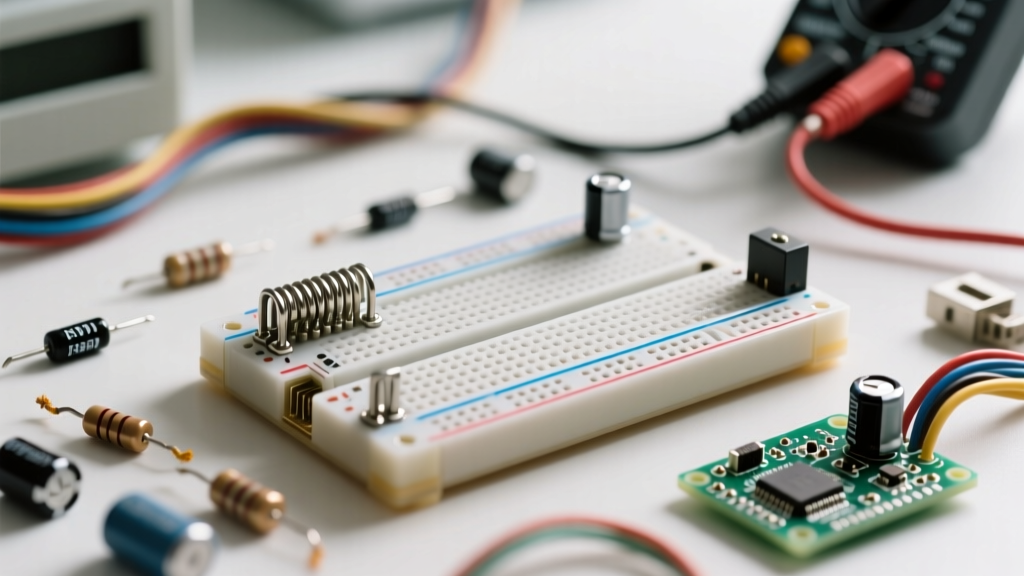
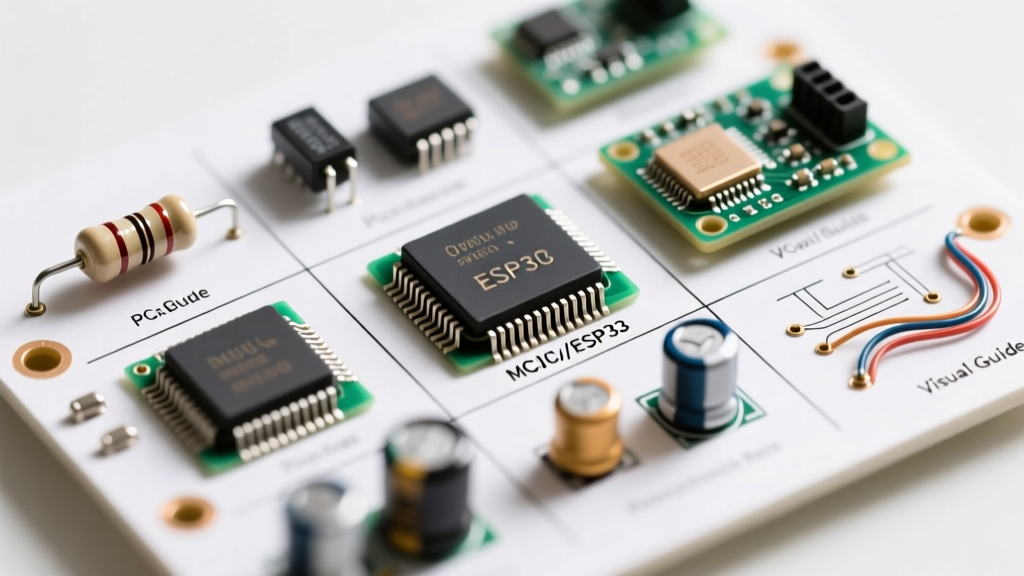
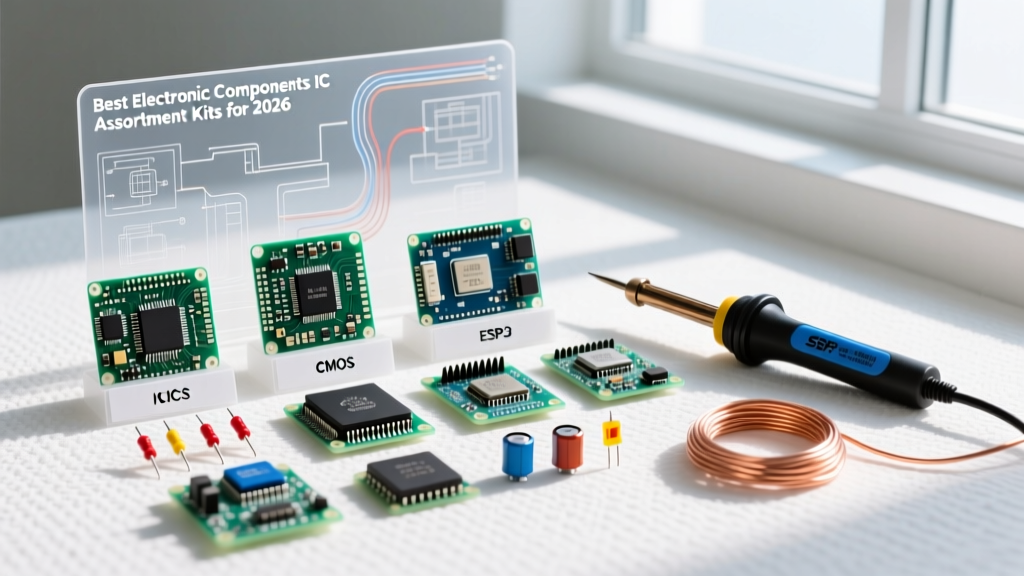
As we move through 2026, the global semiconductor supply chain has largely stabilized, but the landscape for hobbyists and independent engineers has permanently shifted. Local brick-and-mortar electronics surplus stores are nearly extinct, making curated online kits the most reliable way to stock your lab. When building a robust prototyping environment, having a dedicated stash of electronic components IC (Integrated Circuit) assortments is non-negotiable. Whether you are designing custom peripheral boards for an ESP32, repairing vintage audio gear, or teaching digital logic fundamentals, reaching for a through-hole DIP chip saves hours of waiting for individual part shipments.
However, not all assortment kits are created equal. Many cheap kits on the market are plagued by poor pin-straightness, mislabeled values, or high rates of electrostatic discharge (ESD) damage from improper packaging. In this roundup, we evaluate the top electronic components IC kits available this year, focusing on part diversity, package integrity, and real-world bench utility.
Top 3 Electronic Components IC Kits for Prototyping
1. RexQualis 600-Piece Logic & Timer Assortment Kit
Best for: Digital logic learners, Arduino peripheral expansion, and general-purpose timing.
Approximate Price: $18.99
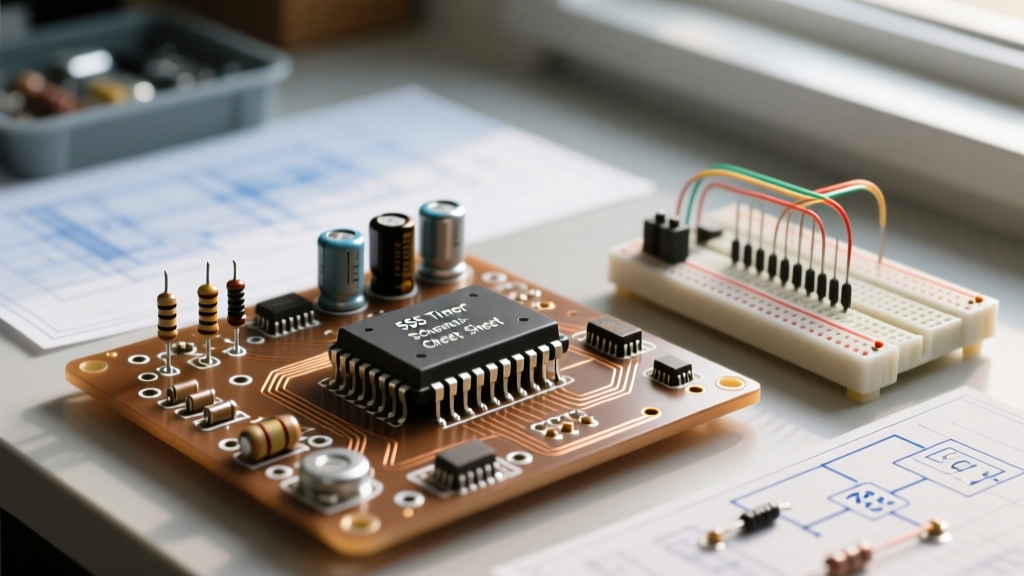
The RexQualis 600-piece kit is a staple for digital electronics. It focuses heavily on the 74HC (High-Speed CMOS) and CD4000 series, alongside the ubiquitous NE555 timer. What sets this 2026 batch apart is the improved packaging; chips arrive in anti-static ziplock bags grouped by value, rather than loose in a single compartmentalized plastic bin where pins bend during transit.
- Key ICs Included: NE555P (Precision Timers), CD4017BE (Decade Counters), 74HC595 (8-Bit Shift Registers), 74HC04 (Hex Inverters), and 74HC32 (Quad 2-Input OR Gates).
- Package Type: 100% PDIP (Plastic Dual In-line Package) with standard 2.54mm (0.1-inch) pitch, perfect for standard solderless breadboards.
- The Verdict: Excellent value. The inclusion of shift registers (74HC595) makes it highly relevant for modern microcontroller projects where I/O pin expansion is required.
2. Glarks 480-Piece Analog Op-Amp & Comparator Kit
Best for: Audio DIYers, sensor signal conditioning, and analog synthesizer builders.
Approximate Price: $24.50
Digital logic gets all the attention, but analog signal processing remains the backbone of sensor integration. The Glarks analog kit skips the logic gates and focuses entirely on operational amplifiers, voltage comparators, and audio pre-amps. This is a highly specialized electronic components IC collection that fills a critical gap in most beginner kits.
- Key ICs Included: LM358N (Dual General-Purpose Op-Amp), LM393N (Dual Differential Comparator), NE5532P (Low-Noise Dual Op-Amp for audio), and TL072CP (JFET-Input Dual Op-Amp).
- Failure Mode Warning: When using the LM393 comparators in this kit, remember they feature open-collector outputs. You must use external pull-up resistors (typically 4.7kΩ to 10kΩ) on the output pins, or your microcontroller will never register a HIGH state.
- The Verdict: A must-have for analog work. The NE5532P chips alone are worth the price of admission for anyone building guitar pedals or custom microphone pre-amplifiers.
3. HiLetgo 10-Value CMOS Multiplexer & Bus Transceiver Kit
Best for: Advanced digital design, data bus routing, and complex state machines.
Approximate Price: $14.25
HiLetgo's offering is smaller in total volume (around 200 pieces) but targets intermediate-to-advanced engineers who need specific data-routing chips. Instead of basic AND/OR gates, this kit provides the building blocks for complex memory mapping and signal multiplexing.
- Key ICs Included: CD4067 (16-Channel Analog Multiplexer), 74HC245 (Octal Bus Transceivers), 74HC138 (3-to-8 Line Decoders), and CD4051 (8-Channel Analog Mux).
- Edge Case Note: The CD4067 is incredibly useful for reading arrays of resistive sensors (like FSRs or photoresistors) using only a single ADC pin on a microcontroller. However, its on-resistance (Ron) can vary slightly between channels; always calibrate your ADC readings in software when using this chip for precision measurements.
- The Verdict: Niche but incredibly useful. If you are building LED matrices or sensor grids, the multiplexers in this kit will save you dozens of GPIO pins.
Head-to-Head Comparison Matrix
| Feature | RexQualis 600-Piece | Glarks 480-Piece Analog | HiLetgo Multiplexer Kit |
|---|---|---|---|
| Primary Focus | Digital Logic & Timing | Analog Signal Processing | Data Routing & Muxing |
| Price (2026 Avg) | $18.99 | $24.50 | $14.25 |
| Standout Chip | 74HC595 (Shift Register) | NE5532P (Audio Op-Amp) | CD4067 (16-Ch Mux) |
| ESD Packaging | Good (Bagged) | Excellent (Foam/Bagged) | Fair (Loose in bin) |
| Breadboard Ready? | Yes (PDIP) | Yes (PDIP) | Yes (PDIP) |
The Silent Killers: ESD and Counterfeit ICs
When buying bulk electronic components, IC integrity is your biggest risk. Two primary threats can ruin your project before you even apply power: Electrostatic Discharge (ESD) and counterfeit silicon.
Understanding ESD Sensitivity
Modern CMOS chips are highly sensitive to static electricity. According to the EOS/ESD Association, the Human Body Model (HBM) simulates the discharge from a person touching a component. Many older CD4000-series chips can survive HBM strikes up to 2,000V (Class 2), but modern, smaller-geometry logic chips can be destroyed by discharges well below 500V (Class 1B)—a shock you won't even feel.
Pro-Tip: Always store your IC kits in a low-humidity environment with desiccant packs. When handling loose chips outside of anti-static bags, ground yourself using a 1MΩ wrist strap connected to your bench's common ground point before touching the pins.
Spotting Counterfeit Silicon
The secondary market and ultra-cheap online marketplaces are flooded with counterfeit ICs. These are often salvaged chips pulled from e-waste, re-tinned, and laser-marked to look new. The Electronic Resellers Association International (ERAI) tracks millions of counterfeit incidents annually. Using a fake NE555 might just result in timing drift, but a fake power op-amp or voltage regulator can catch fire.
How to verify your kit's authenticity:
- The Acetone Test: Rub the top of the IC with a cotton swab soaked in pure acetone. Genuine laser-etched markings will not smear. Counterfeiters often use cheap ink or paint over old markings (black-topping), which will wipe away.
- Pin Inspection: Look at the leads under a 10x loupe. Genuine PDIP chips have uniform, matte-finish solder plating. Salvaged chips often show scratch marks from desoldering irons or uneven, shiny re-tinning.
- The Pin-1 Dimple: Check the physical indentation that marks Pin 1. Genuine Texas Instruments or STMicroelectronics chips have a clean, machined half-moon or laser dot. Fakes often have shallow, poorly molded dimples.
Storage Best Practices for Long-Term Viability
To ensure your electronic components IC inventory survives for years, abandon the cheap plastic compartment boxes that ship with most kits. The metal hinges on these boxes can generate static, and the lids rarely seal out moisture.
Instead, invest in a set of conductive black plastic bin boxes or heavy-duty anti-static Mylar bags. Store your ICs with their pins pressed into high-density black anti-static foam. This not only prevents the pins from bending during transit but also shorts all pins together, equalizing their electrical potential and protecting the internal gate oxides from ESD events.
Frequently Asked Questions
Can I use 74HC series chips with 3.3V microcontrollers like the ESP32?
Yes. The 74HC (High-Speed CMOS) family operates safely between 2.0V and 6.0V. However, be careful not to confuse them with the 74HCT series, which is specifically designed to accept 5V TTL logic levels but still requires a 5V VCC supply. For native 3.3V logic translation, stick to standard 74HC or 74LVC families.
Why are my analog op-amps outputting a constant high voltage?
A common beginner mistake with kits containing the LM358 or TL072 is leaving unused op-amp channels floating. An unused, floating op-amp can oscillate at high frequencies, causing internal thermal drift that affects the active channels on the same silicon die. Always tie the output of an unused op-amp to its inverting input, and ground the non-inverting input.
Are PDIP chips becoming obsolete?
While surface-mount packages (SOIC, QFN, BGA) dominate commercial manufacturing, PDIP remains the undisputed king of the prototyping and education sectors. Manufacturers like Texas Instruments and Microchip continue to produce PDIP variants of essential logic and analog chips specifically to support the educational and maker markets, ensuring these kits will remain relevant for years to come.