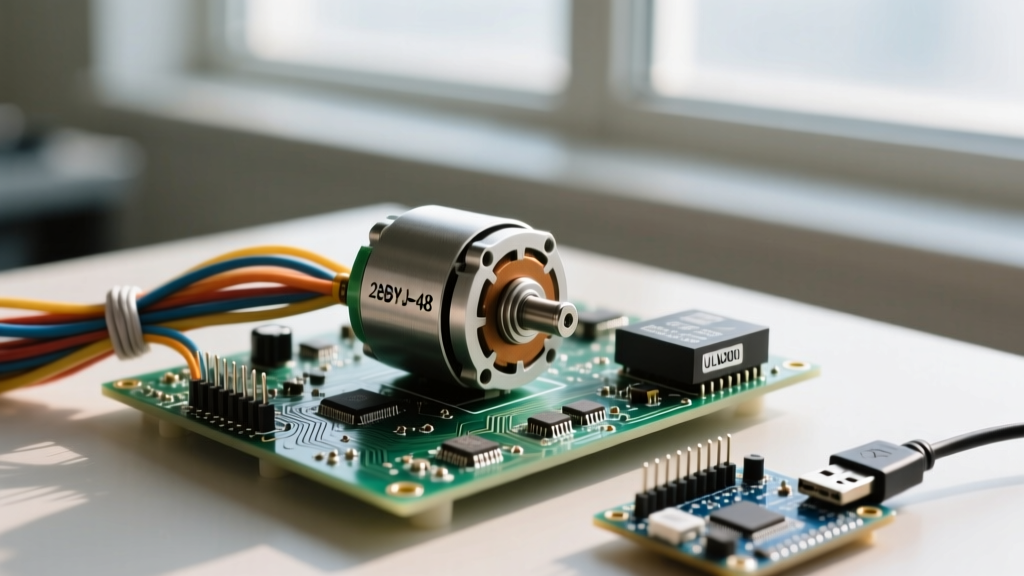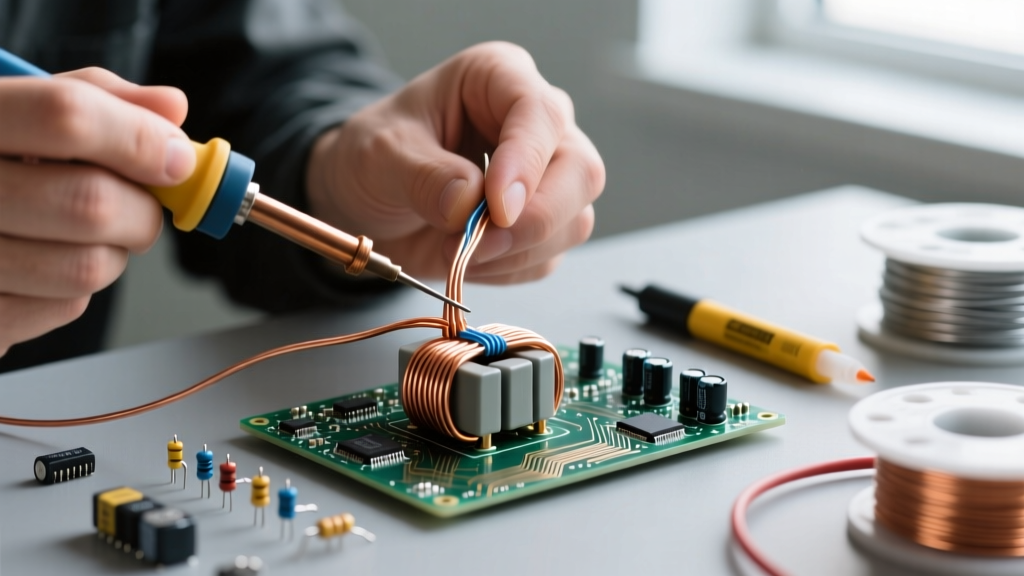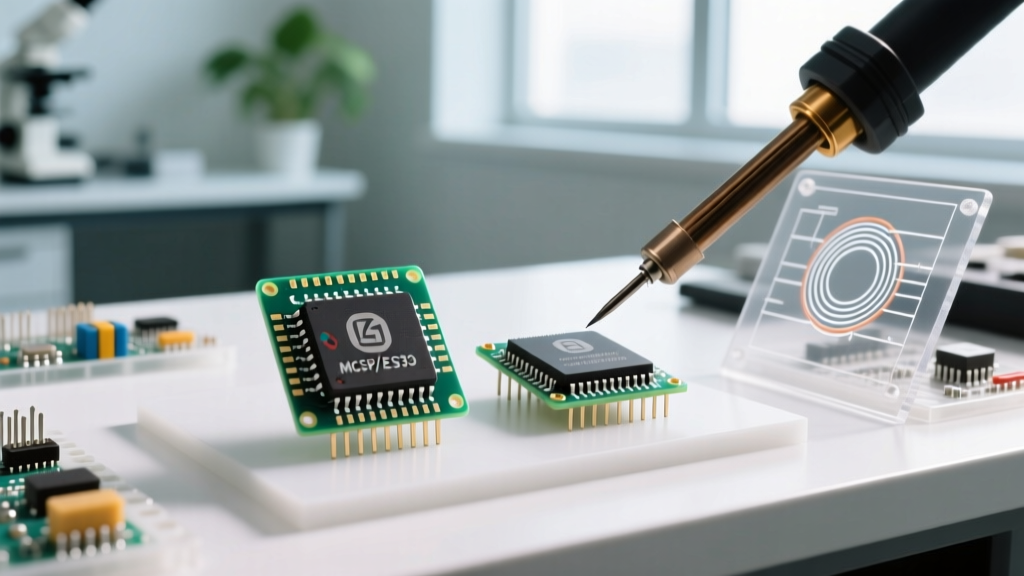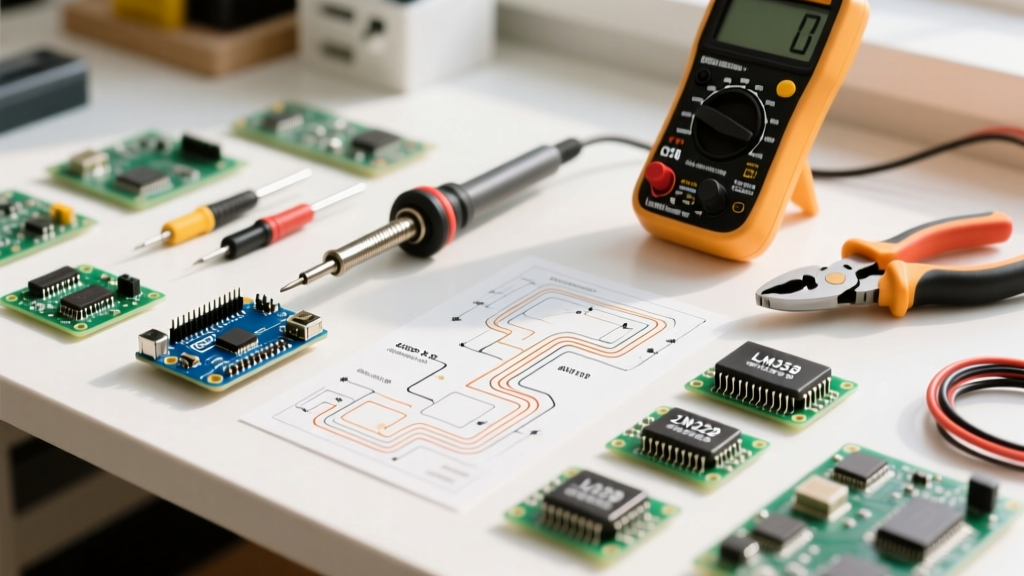

The 2026 Landscape of Active Electronic Components
Unlike passive components that merely dissipate or store energy, active electronic components—such as transistors, integrated circuits (ICs), operational amplifiers, and thyristors—can amplify signals, switch power, and process logic. As we move through 2026, the hobbyist and prosumer electronics landscape has shifted dramatically. The global supply chain has fully stabilized, and wide-bandgap (WBG) semiconductors like Gallium Nitride (GaN) and Silicon Carbide (SiC) are finally trickling down into accessible prototyping kits.
Whether you are designing a custom motor controller, building a precision analog audio preamp, or simply stocking your lab bench, choosing the right assortment of active components is critical. This roundup evaluates the most practical, high-value active electronic components kits and the essential testing equipment required to verify them before they reach your breadboard or PCB.
Top Active Component Kits for Prototyping
1. BOJACK 1080-Piece BJT & MOSFET Assortment Kit
Price Range: $18.00 – $22.00
Best For: Digital logic switching, basic amplification, and low-frequency power control.
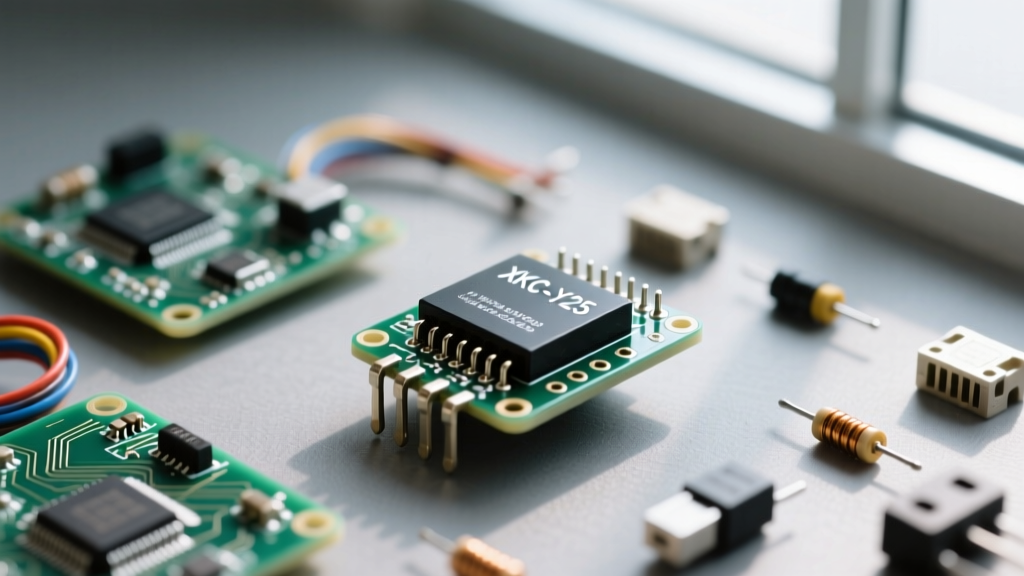
The BOJACK 1080-piece kit remains a staple for general-purpose active components. It includes a comprehensive spread of TO-92 and TO-220 packaged semiconductors. You get the classic 2N3904 (NPN) and 2N3906 (PNP) for small-signal switching, alongside heavier hitters like the TIP120 Darlington pair and IRFZ44N power MOSFETs.
Expert Edge Case: Many beginners use the TIP120 Darlington transistor for switching high-current loads (like 5A LED strips) directly from a microcontroller. However, the TIP120 has a notoriously high collector-emitter saturation voltage (Vce(sat)) of roughly 2.0V at 5A. This results in 10W of wasted heat, requiring a massive heatsink. For modern 3.3V or 5V MCU designs in 2026, swap the TIP120 for a true logic-level MOSFET like the IRLZ44N (included in some updated variants of this kit) to drop that dissipation to under 0.5W.
2. Rex Qualis 600-Piece IC & Op-Amp Assortment
Price Range: $24.00 – $28.00
Best For: Digital logic, timing circuits, and basic analog signal conditioning.
This kit bridges the gap between digital and analog active components. It features the legendary NE555 timer, LM317 adjustable linear regulators, and a mix of 74HC and 4000-series CMOS logic gates. Crucially, it includes a solid selection of LM358 and TL072 operational amplifiers.
When working with the included 74-series logic ICs, pay strict attention to the sub-family. The kit primarily supplies 74HC (High-speed CMOS) chips. If you are interfacing these with legacy 5V TTL outputs, you must use 74HCT (TTL-compatible input thresholds) chips, as standard HC chips require a higher voltage threshold to register a logic 'HIGH' from older TTL devices.
3. Texas Instruments OPA-EVM (Op-Amp Evaluation Module)
Price Range: $149.00
Best For: Precision analog design, sensor signal conditioning, and audio engineering.
For engineers moving beyond basic hobbyist kits, the TI OPA-EVM series represents the gold standard for active analog components in 2026. Rather than a grab-bag of generic chips, this is a highly engineered evaluation module featuring precision op-amps like the OPA1612 (audio) or OPA211 (precision DC). These modules come with optimized PCB layouts that minimize parasitic capacitance and input bias current leakage—critical factors when dealing with high-impedance sensor inputs.
Essential Equipment for Testing Active Components
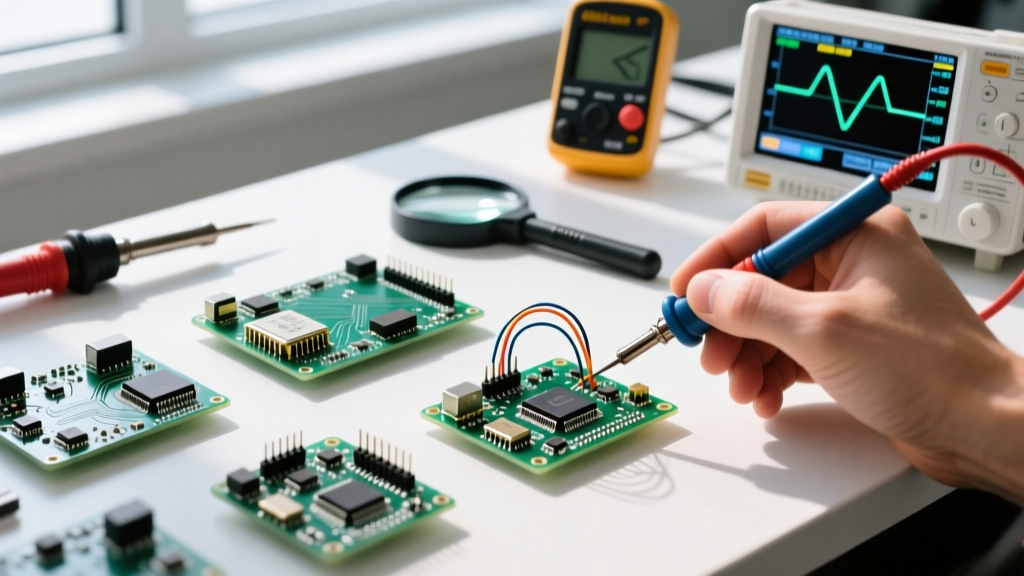
Having a bin full of active electronic components is useless if you cannot verify their health and pinouts. Counterfeit and degraded semiconductors are a persistent issue, even post-supply-chain crisis. Here is the equipment you need to validate your stock.
Atlas DCA75 Pro Semiconductor Analyzer
Price: ~$145.00
The DCA75 Pro is an indispensable bench tool. Unlike basic multimeters that only check diode drops, the DCA75 automatically identifies the pinout (Base, Collector, Emitter / Gate, Drain, Source) of unknown active components. More importantly, it measures critical parameters like hFE (current gain), Vbe (base-emitter voltage), and leakage current at configurable test currents up to 5mA. This allows you to match NPN/PNP pairs for precision differential amplifier stages, a task nearly impossible with a standard DMM.
Brymen BM235 True-RMS Digital Multimeter
Price: ~$110.00
While primarily a DMM, the Brymen BM235 features a dedicated hFE testing socket and an exceptionally sensitive diode test mode (resolving down to 0.001V at 3mA). It is highly recommended by MIT OpenCourseWare electronics curricula and independent metrology labs for its robust input protection and accurate semiconductor junction testing, making it a perfect companion to your component kits.
Comparison Matrix: 2026 Active Component Kits
| Kit / Tool | Primary Focus | Est. Price (2026) | ESD-Safe Packaging? | Best Application |
|---|---|---|---|---|
| BOJACK 1080-Pc | Discrete Transistors & MOSFETs | $20 | No (Anti-static bags) | Power switching, basic amplification |
| Rex Qualis 600-Pc | ICs, Timers, & Logic Gates | $26 | No (Bulk plastic bins) | Digital logic, basic analog timing |
| TI OPA-EVM Series | Precision Op-Amps | $149 | Yes (Strict ESD protocols) | High-fidelity audio, sensor conditioning |
| Atlas DCA75 Pro | Semiconductor Testing (Tool) | $145 | N/A (Test Equipment) | Pinout ID, hFE matching, leakage tests |
Critical Failure Modes & Prototyping Edge Cases
When integrating active electronic components into your designs, understanding their physical limitations and failure modes is what separates novices from seasoned engineers.
- Thermal Runaway in BJTs: Bipolar Junction Transistors have a negative temperature coefficient for their base-emitter voltage (Vbe). As the transistor heats up, it requires less Vbe to maintain the same base current, which causes it to draw more collector current, generating more heat. Without proper emitter degeneration (adding a small resistor in series with the emitter), paralleling BJTs for higher current capacity will result in one transistor hogging the current and catastrophically failing.
- MOSFET Gate Oxide Rupture: The gate of a MOSFET is insulated by a microscopic layer of silicon dioxide. Exceeding the maximum Gate-to-Source voltage (Vgs), typically ±20V for standard power MOSFETs, will punch through this oxide layer, permanently shorting the gate. Always use a 12V to 15V Zener diode clamped between the gate and source when driving MOSFETs from inductive or noisy environments.
- CMOS Latch-Up: The 4000-series and 74HC CMOS ICs found in hobbyist kits contain parasitic silicon-controlled rectifiers (SCRs) within their silicon substrate. If an input pin is driven above the VCC rail or below ground (even briefly during power-up sequencing), it can trigger this parasitic SCR, creating a dead short from VCC to Ground. This "latch-up" will destroy the IC unless current-limited. Always use series resistors on inputs that connect to external cables.
ESD Protection and Sourcing Best Practices
Active components, particularly MOSFETs and precision CMOS ICs, are highly susceptible to Electrostatic Discharge (ESD). A human body model (HBM) zap of just 100V—well below the threshold of human perception—can degrade a gate oxide, leading to a "walking wounded" component that fails weeks later in the field. According to the ESD Association, implementing a grounded wrist strap and using dissipative mats is non-negotiable when handling bare active components outside of their shielding.
Finally, while Amazon and eBay assortments are fine for learning basic logic, the precision analog market is plagued by counterfeit op-amps that fail to meet slew-rate and noise specifications. For any active component that dictates the safety or precision of your final 2026 product, always source directly from authorized distributors like Digi-Key, Mouser, or Farnell to guarantee silicon traceability.