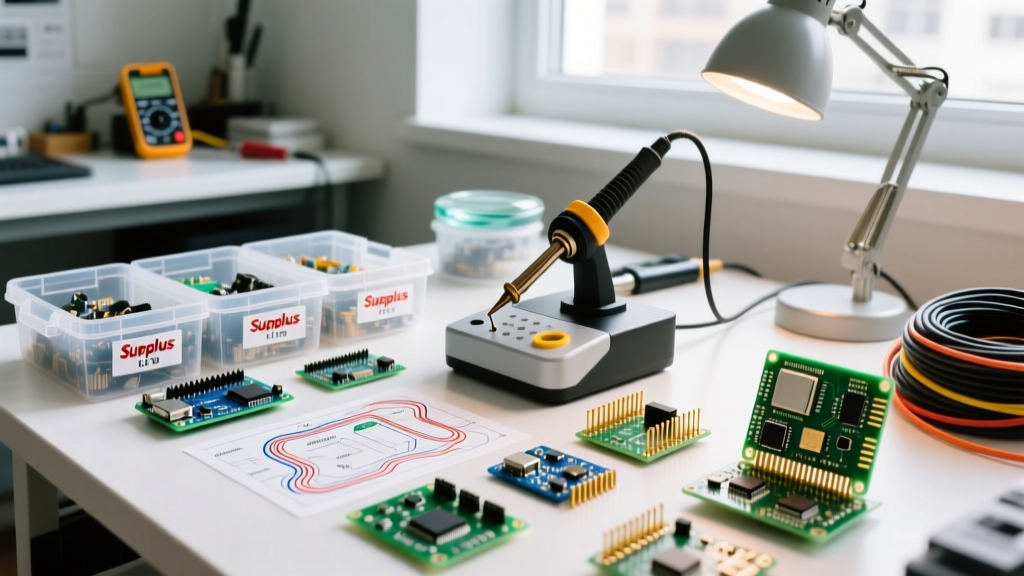

Every maker's workbench eventually becomes a graveyard of surplus silicon. You bought a reel of 5,000 0805 10kΩ resistors for a single IoT project, or you have a dozen surplus STM32F411 'Black Pill' dev boards gathering dust in a drawer. In 2026, with global supply chains stabilizing but niche component lead times still fluctuating, there is a thriving secondary market for surplus parts. However, successfully selling electronic components requires more than just snapping a photo and uploading it to an auction site. It demands an understanding of ESD (Electrostatic Discharge) packaging, strategic lotting, and platform-specific fee structures.
The DIY Sorting Station: Prepping Surplus for the Secondary Market
Before you list a single MOSFET, you need an inventory system. Buyers in the DIY community expect exact part numbers, not vague descriptions like 'assorted transistors.' Invest in a Brother PT-P710BT label printer (approx. $130) paired with continuous tape. This allows you to print scannable 1D barcodes and stick them directly onto Akro-Mils 10164 drawer cabinets or static-shielding bags.
When sorting SMD components, use a digital microscope (like the Plugable USB 2.0) to verify laser-etched codes on 0603 and 0805 packages. Misidentifying an LDO regulator as a standard NPN transistor will result in immediate returns and burned buyer feedback.
Platform Matrix: Where to Start Selling Electronic Components
Choosing the right marketplace dictates your profit margins and target audience. Here is how the top platforms compare for makers in 2026:
| Platform | Best For | Estimated Fees (2026) | Audience |
|---|---|---|---|
| Tindie | Custom PCBs, DIY Kits, Niche Sensors | 5% platform + ~3% payment processing | Hardcore makers, hardware startups |
| eBay | Surplus ICs, Connectors, Bulk Passives | ~13% Final Value Fee + $0.30/order | Repair techs, hobbyists, global buyers |
| EEVblog Forum | High-end test gear, vintage ICs, trays | Free (Direct PayPal/Goods & Services) | Professional engineers, serious collectors |
| Mercari | Dev boards, Arduino clones, starter kits | 10% selling fee | Casual hobbyists, students, bargain hunters |
The Art of 'Lotting': Maximizing Margin on Low-Cost Parts
The biggest mistake beginners make when selling electronic components is listing individual low-value items. Selling a single $0.80 NE555 timer or a $2.10 BME280 sensor is financially unviable once you factor in the 45 minutes of packing time and the $4.00 minimum shipping cost. The solution is strategic lotting.
Example: The IoT Environmental Sensor Bundle
Instead of listing raw sensors, bundle them into a 'DIY Project Kit'. A highly profitable lot looks like this:
- 2x ESP32-S3-WROOM-1 Dev Boards (Value: $7.00)
- 2x BME280 Temp/Humidity/Pressure Breakouts (Value: $4.20)
- 4x TXS0108E Logic Level Shifters (Value: $3.20)
- 1x Pre-cut silicone wire kit (Value: $2.00)
While the raw component cost is around $16.40, packaging this as a 'Complete Smart Greenhouse IoT Bundle' allows you to price it at $34.99. You are no longer selling parts; you are selling convenience and curated compatibility.
ESD Packaging: Preventing DOA Disputes (ANSI/ESD S541)
Nothing destroys a seller's reputation faster than a buyer receiving Dead-On-Arrival (DOA) CMOS ICs or raw MOSFETs. If you are shipping static-sensitive components like the IRF520, IRLZ44N, or any bare microcontrollers, you must adhere to proper packaging standards.
CRITICAL WARNING: Pink polyethylene bags are NOT static shielding. According to the ESD Association, pink poly is merely 'anti-static' (it prevents the bag itself from generating a charge), but it offers zero protection against external electrostatic discharges. A zap from a buyer's finger will pass right through the pink plastic and fry the silicon gate oxide.
You must use metalized static shielding bags (compliant with MIL-PRF-81705 Type III or ANSI/ESD S541). These bags feature a multi-layer structure with an inner polyester layer for strength, a metalized aluminum layer for Faraday cage shielding, and an outer dissipation layer. They cost roughly $0.08 to $0.15 each in bulk—a necessary expense to protect a $12 microcontroller.
Shipping Logistics for Micro-Components
For domestic US shipping, the gold standard for lightweight electronics in 2026 is USPS Ground Advantage. This service replaced the old First-Class Package and Retail Ground tiers, offering a streamlined rate structure for packages up to 70 lbs, though your sweet spot for component lots is under 15.99 oz.
Packaging Hierarchy for Safe Transit
- Inner Layer: Components in sealed static-shielding bags.
- Rigidity: Tape the bags to a piece of 2mm corrugated cardboard. This prevents the bag from bending and snapping the delicate pins on DIP or SOIC packages.
- Outer Layer: Use a rigid bubble mailer (size #000 or #0). Standard non-padded envelopes will result in crushed header pins if the package goes through automated USPS sorting machines.
Handling 'New Old Stock' (NOS): Re-tinning Oxidized Leads
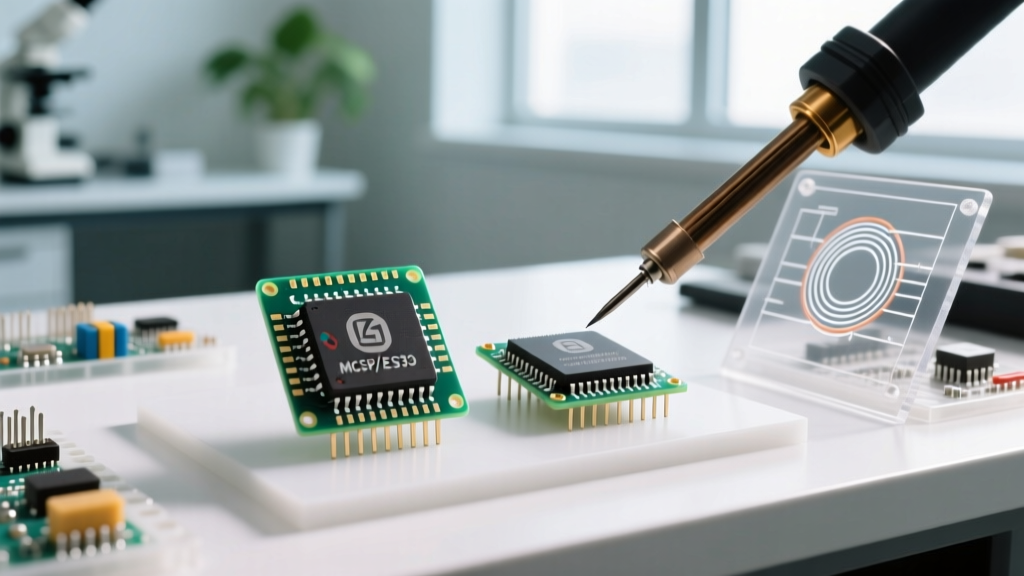
If you are liquidating vintage NOS components (e.g., 1980s Motorola logic gates or early 2000s audio DACs) sourced from estate sales, the leads are likely oxidized. Oxidized leads will not accept solder, leading to frustrated buyers and failed DIY projects.
The Re-tinning Process:
- Apply a generous coat of Kester 245 No-Clean Flux to the leads.
- Set your soldering station (e.g., Hakko FX-888D or Pinecil V2) to 320°C.
- Use a chisel tip loaded with fresh 63/37 leaded solder to gently drag across the pins. The flux will strip the oxidation, and the fresh solder will wick onto the copper alloy.
- Wipe the excess with brass wool, leaving perfectly bright, solderable pins. Note this restoration in your listing to build immense trust with vintage audio and synth DIYers.
Frequently Asked Questions
Can I sell cloned development boards?
Proceed with extreme caution. While selling open-source hardware clones (like standard Arduino Uno R3 replicas) is generally tolerated on eBay, platforms like Tindie have strict policies against selling counterfeit ICs or unauthorized clones of proprietary designs. Always verify the silicon markings; selling a CH340G USB-serial chip disguised as an FT232RL is fraud and will result in a permanent ban.
How do I handle moisture-sensitive SMD components?
If you are selling BGA or fine-pitch QFP ICs, they must be stored and shipped with desiccant packets and a Humidity Indicator Card (HIC) inside a sealed Moisture Barrier Bag (MBB). If the HIC shows the humidity exceeded 10%, the buyer must bake the components in a convection oven at 40°C for 24 hours before reflow soldering to prevent the 'popcorn effect' (internal steam explosion cracking the IC package).
Is it worth selling passives like capacitors and resistors?
Only in bulk or as part of a kit. A single reel of 5,000 Yageo 0805 100nF X7R capacitors can sell for $12-$15 to a maker setting up a pick-and-place machine. Individual through-hole resistors are virtually worthless on the secondary market unless bundled into 'Assorted Values for Audio Crossover Networks' or similar highly specific DIY niches.